Table olive tasting panel training in Aydın
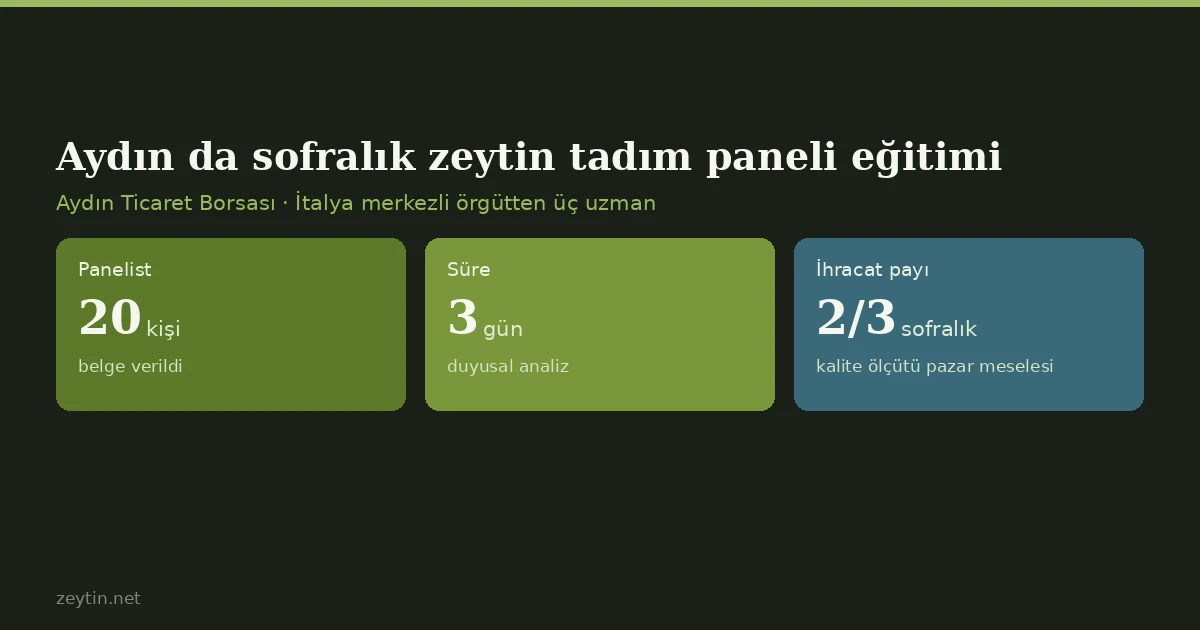
Aydın Commodity Exchange is extending its sensory analysis experience from olive oil to table olives, with 20 panellists trained over three days.
A three-day tasting panel training was held in Aydın to assess table olive quality criteria against international standards. Three experts from an Italy-based national olive oil tasters' organisation took part, and 20 panellists were trained.
What was covered
Four topics:
- the sensory characteristics and defects of table olives
- the effect of processing methods on quality
- identifying basic defects
- statistical evaluation of tasting results
Certificates were awarded to successful participants.
Why it matters
Sensory analysis is well established for olive oil: the definition of the extra virgin grade depends on a panel test alongside chemical criteria. For table olives that infrastructure is far weaker in Turkey.
The exchange's aim is to carry its olive oil panel experience across to the table olive side and build capacity in line with international standards.
The practical consequence shows up in exports: buyers expect a shared language for defect definition and grading. Given that two-thirds of our exports are table olives, establishing measurable quality criteria here is directly a market question.
We covered the variety of processing methods for table olives, and how defects arise, in table olives.
One rating per visitor; you can change yours at any time. Ratings are real reader votes — no seeded or default scores.
Related
 Article
Table olives with half the salt: potassium, calcium and magnesium instead of sodium
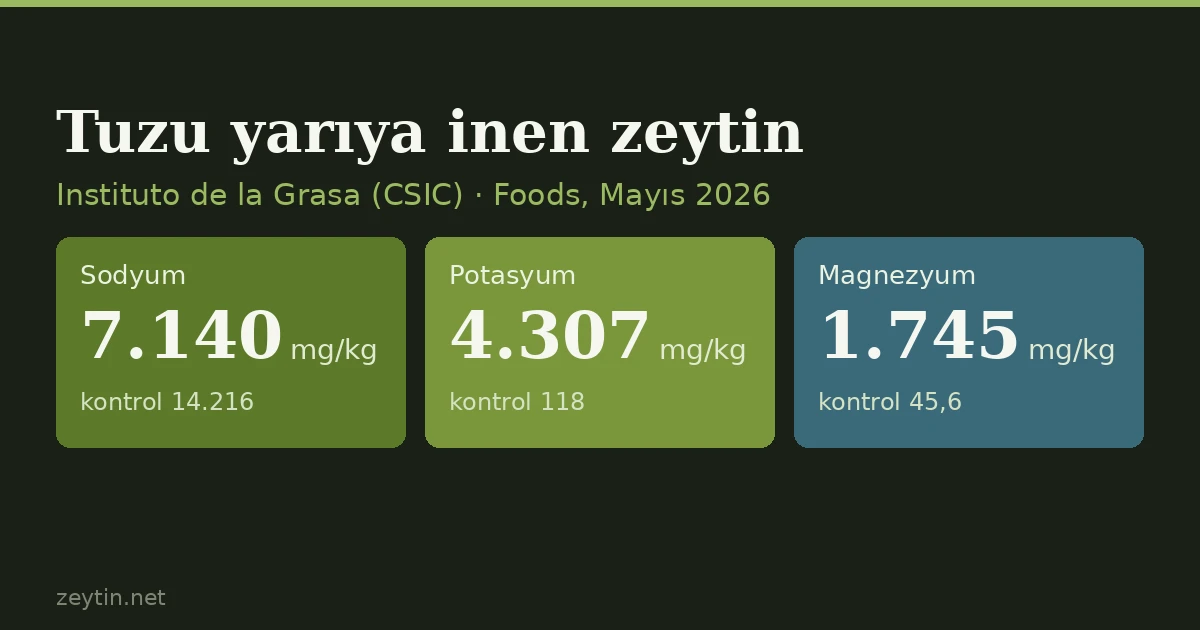
Researchers at Spain's Instituto de la Grasa (CSIC) cut sodium in pimento-stuffed green Manzanilla olives from 14,216 mg to about 7,100 mg per kilogram. Potassium, calcium and magnesium salts added to the packing brine made the olives a source of these minerals.
 Article
Twenty-one olive oils on the ministry's adulteration list in one day, eleven from a single Antakya business
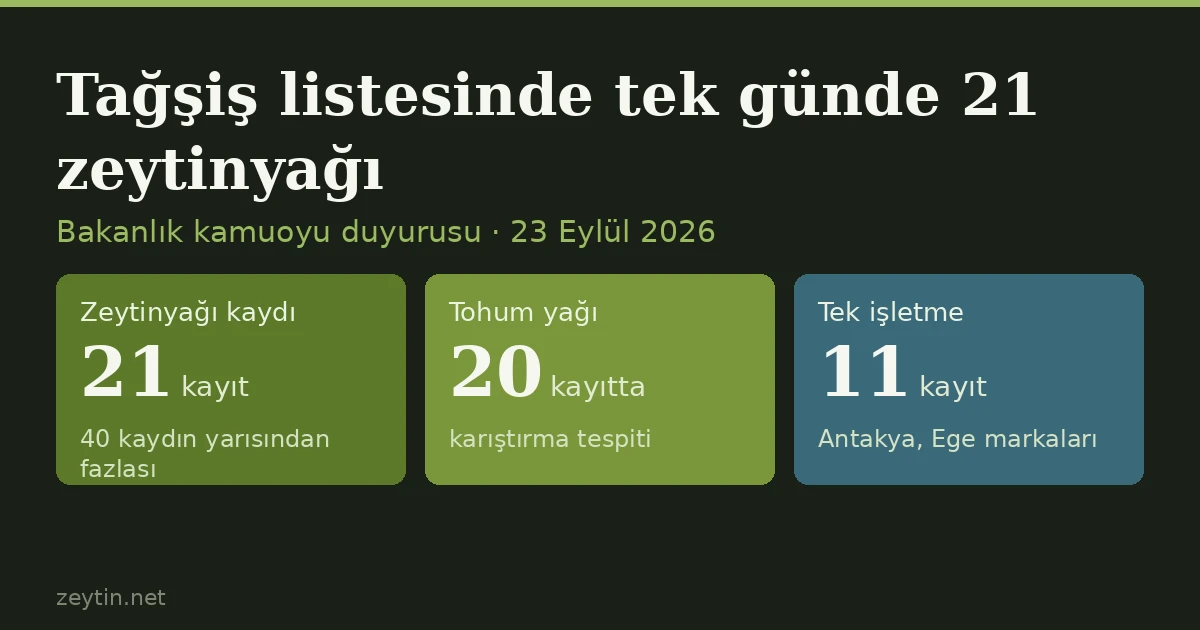
Of the 40 records added to Turkey's counterfeit-and-adulteration list on 23 September 2026, 21 are olive oil, and 20 of those were found to contain seed oil. Eleven records belong to a single business registered in Antakya, marketing under Aegean origin names such as Ayvalık, Akçay-Altınoluk and Kazdağları. Sixteen of the containers were five litres.
 Article
12 October adulteration list: five of 29 records are olive oil, four with seed oil
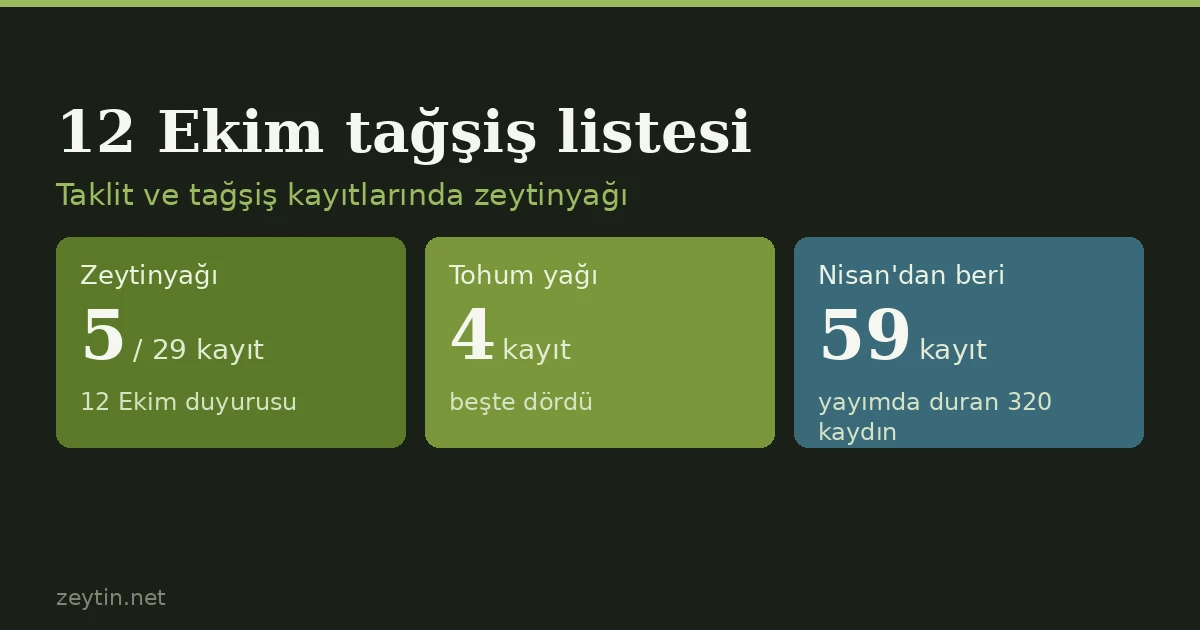
The ministry's 12 October 2026 notice added 29 records to Türkiye's counterfeit-and-adulteration list, five of them olive oil: four with seed oil blended in, one with lower-grade olive oil. Of the 320 records currently published, 59 are olive oil, and Manisa's count rose from one to three.
 Article
Algeria expects a record 150,000 tonnes: the Mediterranean supply map is shifting
Algeria's 2025/26 olive oil output is expected to exceed 150,000 tonnes — up 76% on the previous season and a third consecutive rise. With domestic consumption near 81,000 tonnes, an exportable surplus appears. In a season when Turkish exports fell 62% by value, that means new competition in the bulk market.