Aydın Memecik Olive Oil: bitterness and pungency written into the definition
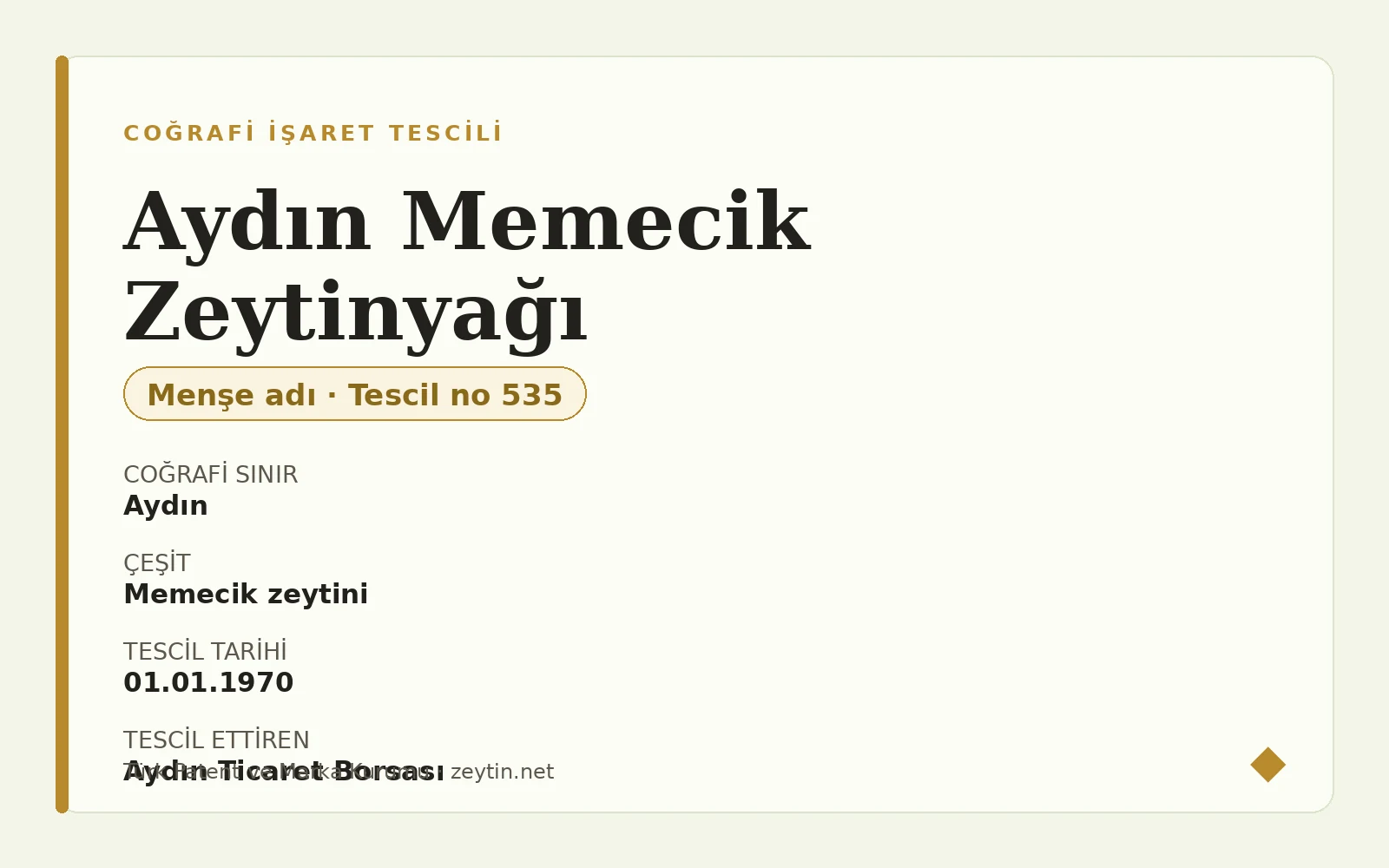
Registered in 2020. Total phenols > 100 mg/kg, peroxide ≤ 18, defect median 0. Intense fruit aroma with pronounced bitterness and pungency.
In olive oil, bitterness and pungency are character, not defect. Aydın Memecik Olive Oil's certificate places them inside the product definition.
The record
| Registration no | 535 |
| Registration date | 17.09.2020 |
| Application | C2019/025 · 04.03.2019 |
| Type | Designation of origin |
| Registered by | Aydın Commodity Exchange |
| Area | The province of Aydın |
| Cultivar | Memecik |
The definition
According to the certificate the oil's colour runs from green to golden yellow, its fruit aroma is intensely perceived, and its bitterness and pungency are pronounced.
This is a definition built not on adjectives but on the product's actual profile: Memecik is known for high polyphenol content, and that property is written directly into the definition.
Criteria
| Criterion | Value |
|---|---|
| Free acidity (% oleic) | ≤ 0.8 |
| Peroxide value | ≤ 18 meq/kg |
| Total phenolic content | > 100 mg/kg |
| Defect median | 0 |
| Fruitiness median | > 0 |
Peroxide ≤18 sits below the codex ceiling of 20. Total phenols >100 mg/kg is a floor written into the definition — the chemical counterpart of the claim to bitterness and pungency.
A defect median of zero means no defect may be detected by the sensory panel.
Climate
The certificate describes the belt the olive tree wants: mild wet winters, dry summers, and springs that are partly cool and wet. Aydın fits that description.
Three registrations, one exchange
The Aydın Commodity Exchange holds three olive registrations: Aydın Memecik Olive (749), Aydın Memecik Olive Oil (535) and Aydın Yamalak Sarısı Olive (732). Two are the table and oil lines of one cultivar; the third is a separate cultivar.
The criteria the document binds
The registration does not only protect a name; it defines the product numerically:
| Criterion | Value in the document |
|---|---|
| Peroxide value | 18 meq O₂/kg (max) |
| Total phenolic content | 100 mg/kg min |
| Harvest-to-pressing window | max 24 saat |
That the document sets a floor for total phenolic content is notable — most registrations never define phenol levels, although bitterness, pungency and shelf-life behaviour largely depend on them. Limiting the time from harvest to pressing binds the operation rather than the outcome: free fatty acidity rises while the fruit waits. The document also bars windfall olives — fruit picked off the ground is the main source of mould and fermentation defects.
Inspection. Members: Aydın Ticaret Borsası, Aydın İl Tarım ve Orman Müdürlüğü. Results are reported under Industrial Property Law no. 6769 and submitted to the Turkish Patent and Trademark Office.
The production steps in the document
The registration describes production step by step. The document's own sequence:
1. Zeytinlerin Hasadı — Aydın Memecik Zeytinyağı, ağaçtan meyveye hasar vermeyecek makine veya elle hasat edilerek toprakla temas etmeden toplanmış̧ zeytinlerden elde edilir.
2. Zeytinlerin Saklama ve Taşıma Koşulları — Zeytinler gıda ile temasa uygun, temiz, tercihen plastik kasalarda, hava alacak şekilde depolanır ve taşınır.
3. Zeytinlerin Temizlenmesi ve Yıkanması — Yaprak ince dal, diğer bitkisel maddeler, toprak, toz gibi mineral maddeler, çakıl taşı ve taşlar vibrasyon, hava akımı veya elek ile ayrılır.
4. Zeytinlerin Kırılması ve Ezilmesi — Kırma işlemi, meyvenin kırılarak yağ̆ fazının ayrılacağı hamurun elde edilmesi işlemidir.
5. Zeytinlerin Yoğurulması (malaksasyon) — Zeytin hamurunun sıcaklığı yağın viskozitesini azaltmak ve yağ̆ damlalarının kolay birleşmesini sağlamak amacıyla 25- 35°C arasında olmalıdır.
6. Zeytin ezmesinden yağın ekstraksiyonu — Ekstraksiyon hidrolik presleme, sinolea / perkolasyon / soğuk damlama/seçici filtrasyon, kontinü santrifüj sistem metotlarından herhangi birisiyle gerçekleştirilebilir.
7. Karasuyun Zeytinyağından Ayrılması — Bu aşamada yağ̆, su ve posanın tamamen ayrılması amaçlanır.
8. Zeytinyağının Depolanması — Zeytinyağının depolanmasında gıda ile temasa uygun malzeme kullanılır.
That this sequence is binding is what separates a geographical indication from a trade mark: a mark says who produced something, a geographical indication also sets down how it must be produced.
The cultivar behind it, measured
The registration is granted to a place, but the cultivar the definition rests on has measurable values:
| Property | Value |
|---|---|
| 1 kg’daki tane sayısı | 210 |
| Et oranı | %88 |
| Et / çekirdek oranı | 5,86 |
| Et/çekirdek oranı | 6,7 |
| Yağ oranı | %25-28 |
| Toplam fenol | 296-407 mg CAE/kg |
| α-tokoferol | 219-324 mg/kg |
| Olgunlaşma | Kasım ortası - aralık ortası |
| Kendine verimlilik | Kısmi |
| Soğuğa dayanım | Orta |
| Kullanım | Yağlık; yeşil ve siyah sofralık olarak da tüketilir |
| Ağaç | yarı dik, kuvvetli |
Oil content reaches 28% at the top of its range — on its own enough to justify pressing. The cultivar is partially self-fertile; pollinators are used to secure yield. A flesh-to-stone ratio of 5.86 is the basic measure of how much of a table olive is actually eaten.
Its place in Aydın's olive production
| Item | Value |
|---|---|
| Fruit production | 478,484 t |
| — for oil | 380,008 t |
| — for the table | 98,476 t |
| Olive oil production | 57,577 t |
| Trees | 22,772 thousand |
| Yield per tree | 21.0 kg |
79% of the province's fruit goes to oil. An oil-based registration matches how the province actually produces.
One rating per visitor; you can change yours at any time. Ratings are real reader votes — no seeded or default scores.
Related
 Article
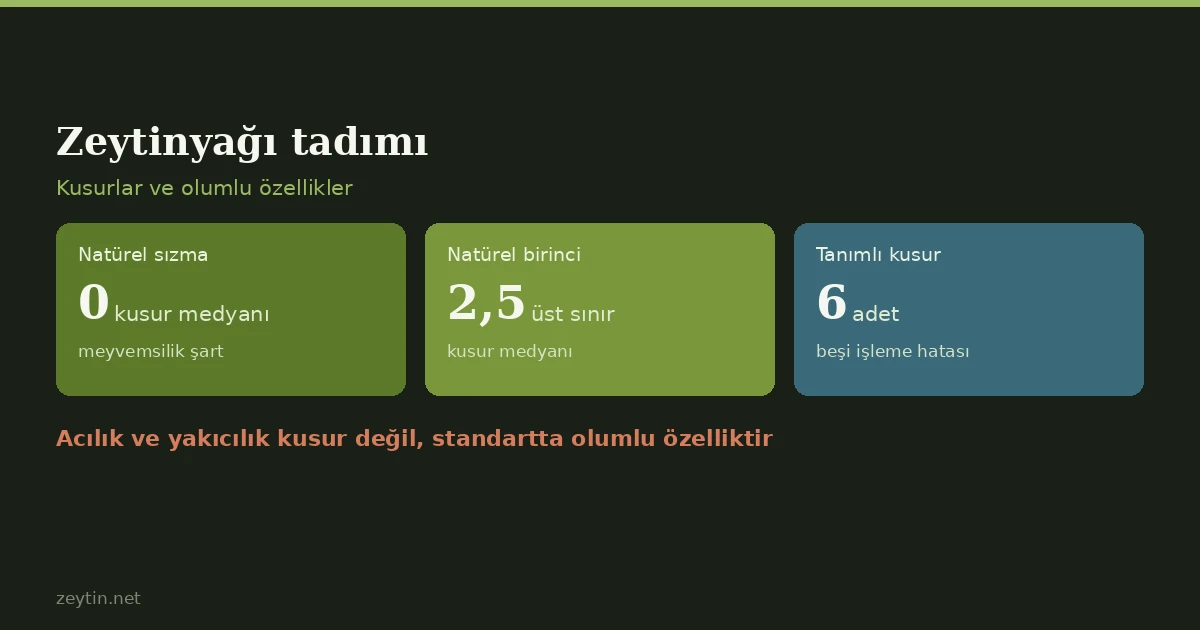
Tasting olive oil: defects and positive attributes
Laboratory tests alone do not make an oil extra virgin — it must pass a tasting panel. The three positive attributes, the six defects in the standard, and what each one says about how the oil was made.
 Article
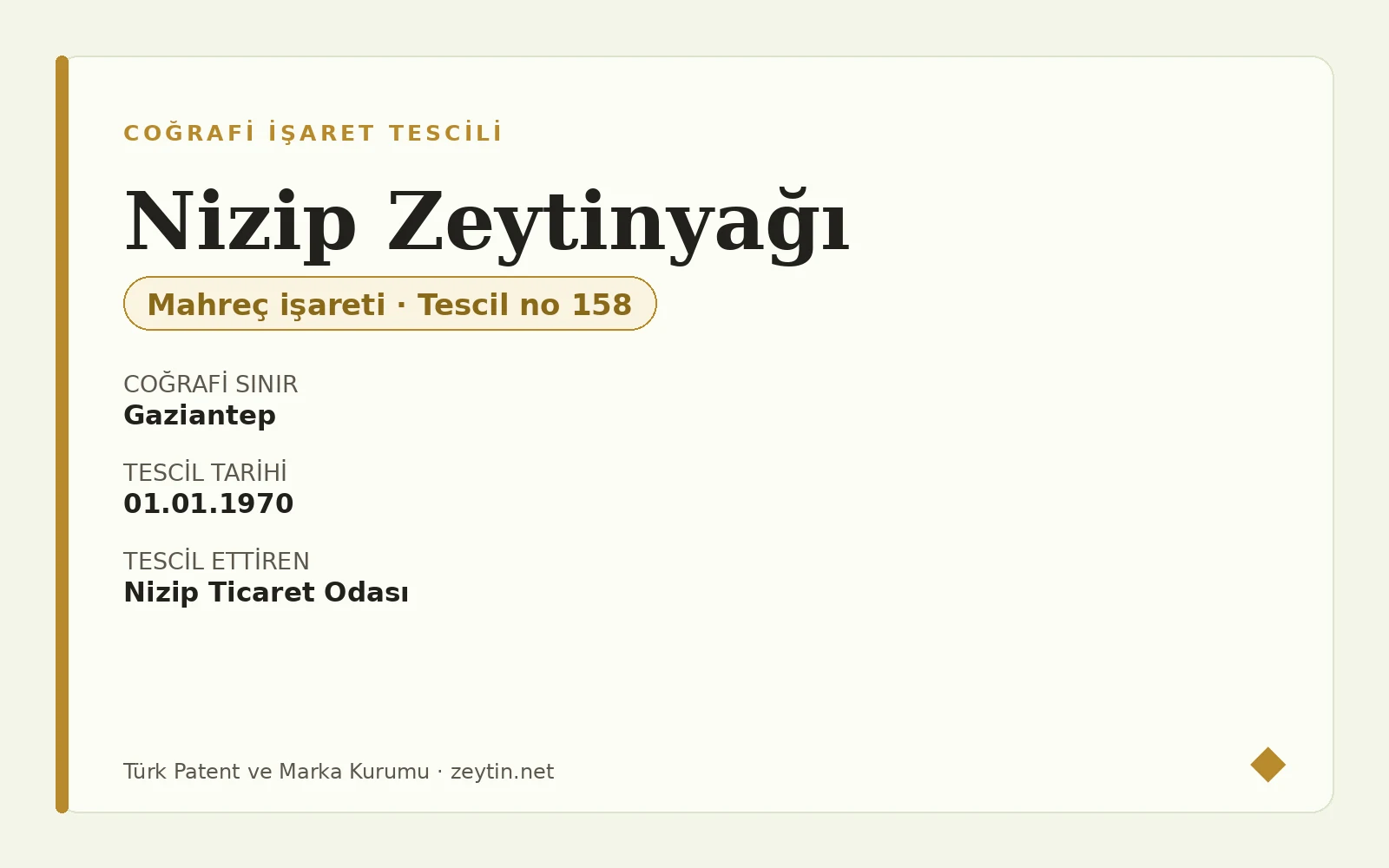
Nizip Olive Oil: a registration that sets a floor for its raw material
Registered in 2011. The certificate sets conditions on the fruit, not just the oil: 15-17 mm wide, 19-20 mm long, at least 25% oil. Fruit outside that cannot be used.
 Article
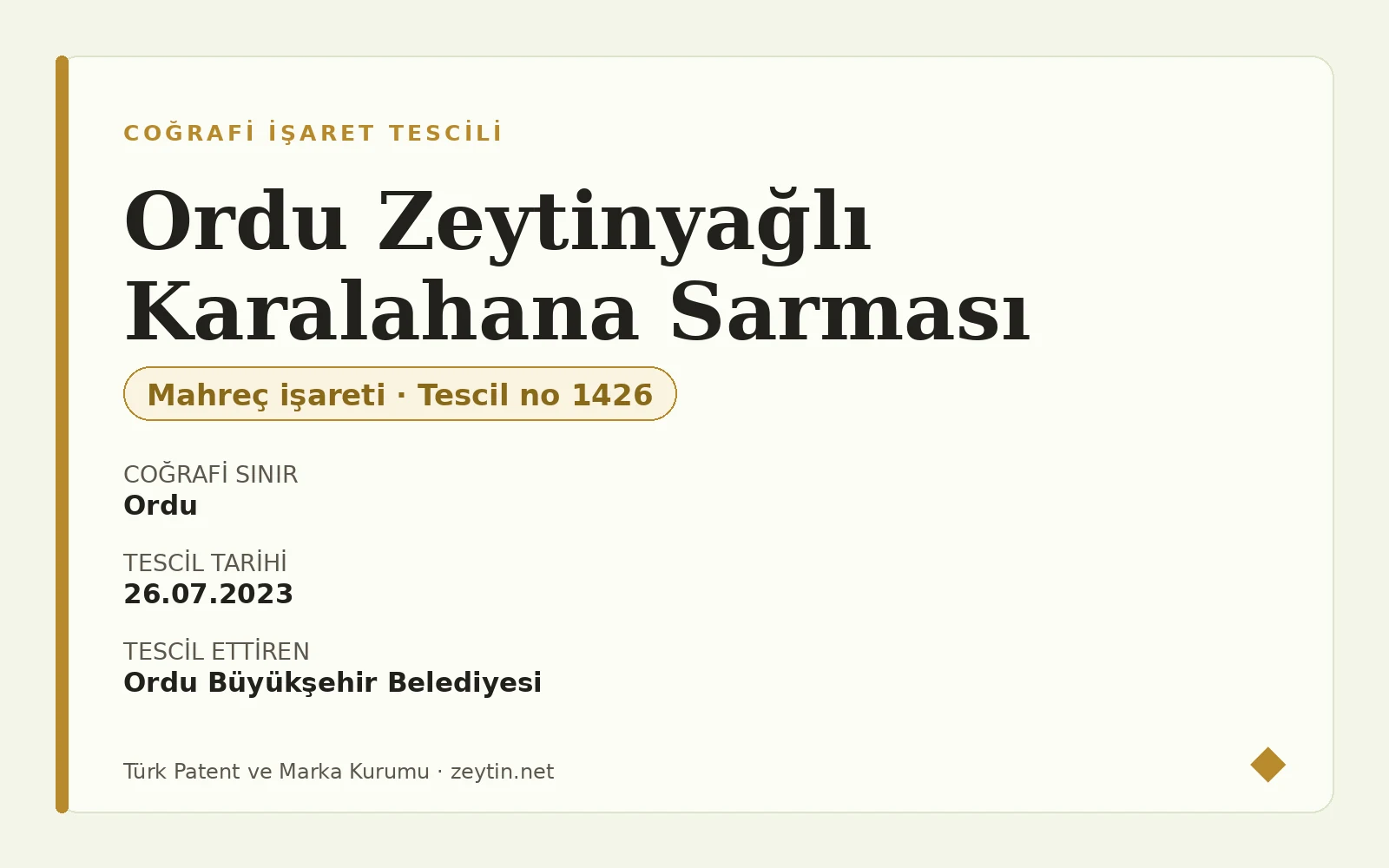
Ordu Collard Rolls in Olive Oil: the name says olive oil, the document says 'oil'
Registered in 2023. An "olive oil" dish from a Black Sea province with no recorded olive harvest; the document lists the fat simply as "oil".
 Article
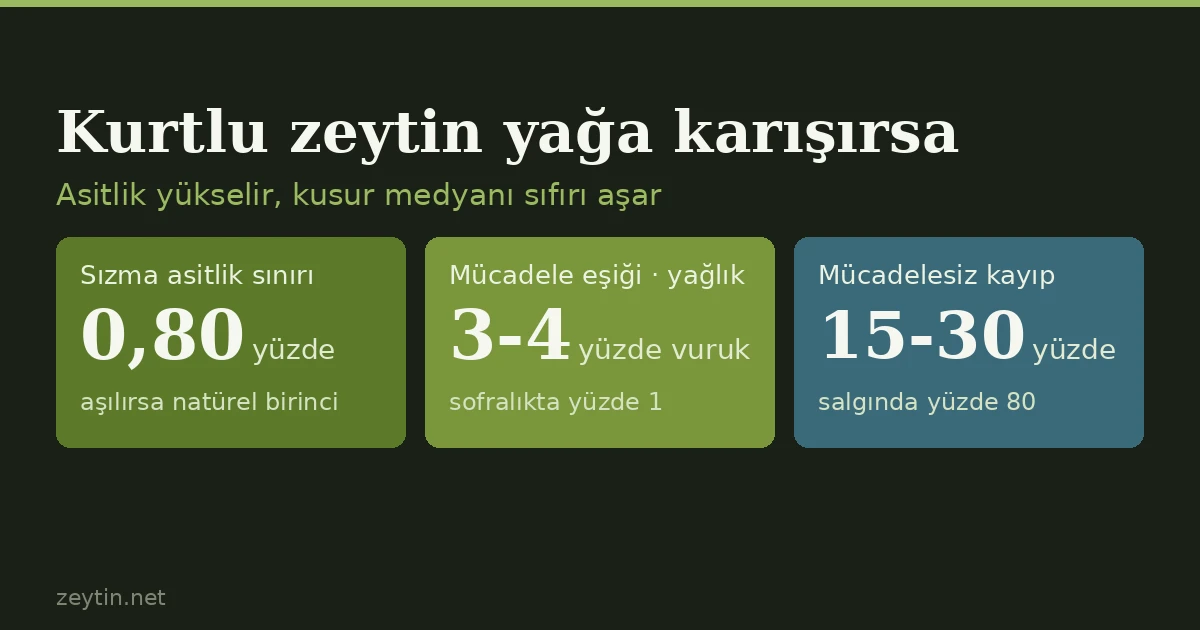
What happens if fly-damaged olives go into the oil?
If fly-struck olives reach the mill, the oil drops a grade: free acidity and peroxide rise, phenolics fall, and sensory analysis turns up fermentative defects plus the "grubby" attribute. Turkey's official integrated pest management instruction sets the action threshold at 3-4 percent of 800-1,000 fruits for oil olives and 1 percent for brining olives. Infested fruit cannot be sorted out at the mill; the decision is made in the grove and in the timing. This article explains exactly what fly damage changes in the oil, what share is manageable, and why an infested batch should be milled separately.