What does strong wind do to an olive tree? Broken branches, drying wind, salinisation and protection
Wind both helps and harms olives depending on the season: a light breeze in April and early May aids fertilisation, the drying samyeli of late May spoils it, storms break branches and topple trees, and sea wind salinates the soil. The article rests on a review from the Olive Research Institute and states plainly that no olive-specific windbreak dimensions were found.
Wind cannot be described in a single word as "good" or "bad" for olives: a light breeze in April and early May helps flowers get fertilised, a drying wind from the south at the end of May prevents the same fertilisation, a winter storm can knock trees over, and a strong wind off the sea can salinate the soil. This article sets out those effects one by one, with sources. Our main source is the 2015 review in Zeytin Bilimi by Ayaz and Varol of the Olive Research Institute (Bornova, İzmir), supplemented by a disease leaflet from a research institute of the Ministry of Agriculture and Forestry and, for windbreak principles, orchard sources that are not specific to olives. A caution: we found no olive-specific source on how tall or how dense an olive windbreak should be, so we give no dimensions.
Light wind helps, drying wind harms
The Ayaz and Varol review sorts wind by season:
- Light winds in April and early May help fertilisation.
- Light breezes passing between branches hold back the spread of some fungal diseases such as peacock spot. We cover that disease in our peacock spot article.
- Humid winds blowing in summer partly prevent the trees from suffering from drought.
- *Drying winds from the south at the end of May (samyeli)* prevent flowers from being fertilised. According to the summary of the review, excessive heat and drying wind dry out the tip of the pistil, reducing pollination and fruit formation.
- Dry winds cause fruit drop; the review says irrigation must be taken seriously in such places.
- *Winds blowing at the end of winter (kesişleme)* reduce soil moisture.
- Winds from the south in summer carry soil moisture away and, if they blow continuously, shrivel the fruit.
Why flowering is so sensitive to wind is explained in our pollination article, which describes how the olive is pollinated. What matters here is that the effect of a drying wind has to be read together with temperature and humidity: the review mentions excessive heat and drying wind together.
A storm can topple trees, break branches and shake fruit off
According to the review, storms knock trees over and so prevent fruit set. Its summary adds that storms and hail cause flower and fruit drop, leaf injuries and broken branches. We found no figure showing how severe this type of damage is in olives.
A farming guide from Ontario, Canada, which is not olive-specific and was written for apple and other orchards, lists wind damage like this: broken branches (especially the leader of the tree), bruised and dropped fruit, torn-off graft unions, strained tree support systems; disease entering through wounds made by wind; and, in autumn storms with heavy rain, loosened soil around the roots of trees carrying a crop. That list is for another fruit, but broken branches, fruit drop and disease entering through wounds appear separately in our olive sources too.
Wounds opened by wind are doors for disease
The olive disease leaflet from the Alata institute of the Ministry of Agriculture and Forestry says the olive knot pathogen enters through wounds made at harvest and after frost, hail and excessive wind. The leaflet also says the disease spreads by wind when branches touch each other. So a branch cracked or bruised in a storm is an entry point, just as pole-beating or hail wounds are. We describe the disease in detail in our olive knot article.
Wind from the sea can salinate the soil
According to the review, strong winds from the sea cause salinisation of olive soils. The same review recommends planting olives at least 1-2 kilometres inland, but adds that some varieties grow without harm by the sea. How far olives tolerate salt is a separate subject, covered in our article on salty soil and water.
The southerly lodos: a false awakening in winter
The review writes that in places not sheltered to the south, the lodos wind in winter wakes trees too early and leaves them more exposed to cold. This is an indirect effect of wind: the damage comes not from the wind itself but from the cold that follows. Our frost damage article covers the consequences of that cold.
Protection from wind: principles that are not olive-specific
The review's recommendation on orchard layout comes after it mentions storms, lodos and sea wind: when planting olives, favour training the trees low from the bottom up rather than dense planting. You will find other aspects of dense planting in our high-density orchard guide.
On windbreaks we have no olive-specific source. Two fruit-growing sources that are not olive-specific say the following; read these as general principles, not firm rules for olives:
| Principle | What the source says |
|---|---|
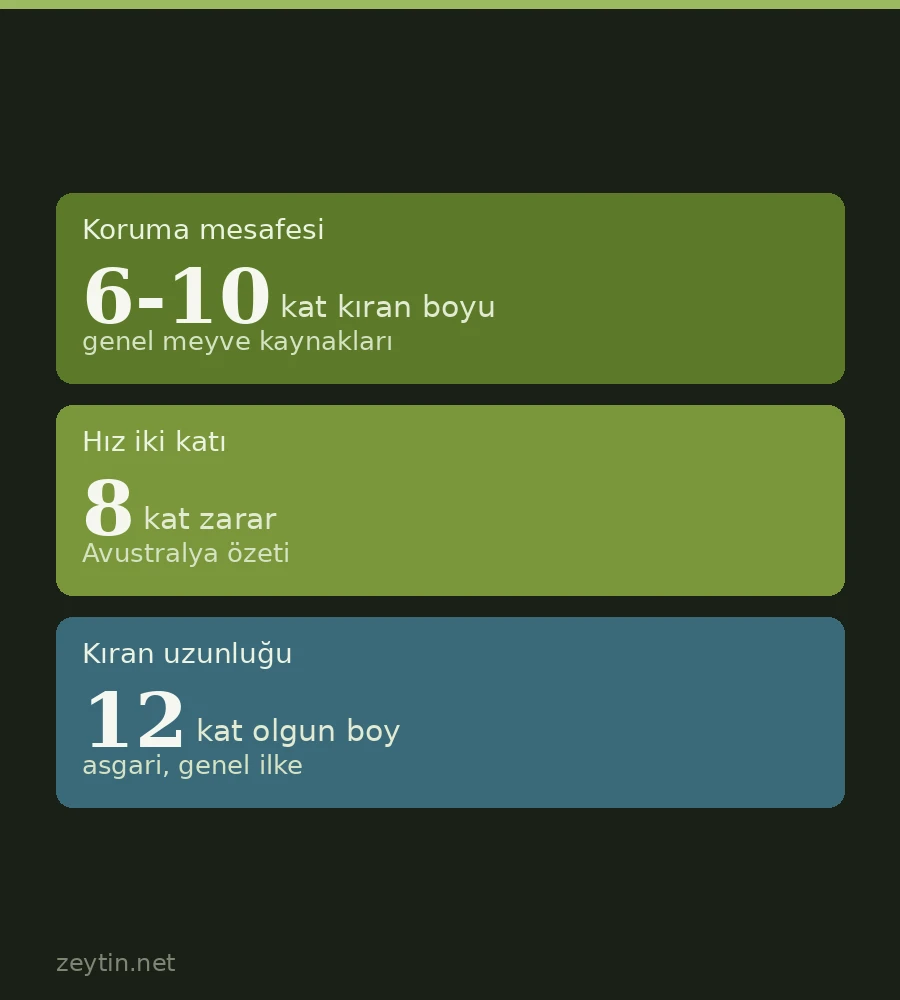
| Protected distance | A windbreak on the windward side protects trees up to about 10 times its height (Ontario guide); the greatest protection is usually taken as 6 times the windbreak height (Australian summary) |
| Wind speed and damage | If wind speed doubles, damage is 2×2×2 = 8 times greater (Australian summary) |
| Length of the windbreak | Minimum length is 12 times the mature height; a short windbreak has little effect (Australian summary) |
| Gaps | Gaps such as tracks funnel the wind; they can be fixed by staggering or angling the break (Australian summary) |
| Underside of the windbreak | The lower part should not be cleared, otherwise turbulence results (Australian summary) |
| Row direction | Aligning rows with the prevailing wind lets wind pass through the orchard (Ontario guide) |
| Timing | A windbreak should if possible be planted some years before the crop (Australian summary) |
The Australian summary adds that a badly designed windbreak (with gaps, or too thick) can itself create wind damage. The Ontario guide lists the drawbacks too: a windbreak takes time to establish and takes some production area from the land.
What to do after a storm
We found no olive-specific protocol for after a storm. Putting together the principles in the sources, these are reasonable steps:
1. Cut broken branches cleanly on a dry day. The ministry instruction says knotted trees should not be pruned on damp, rainy days, and asks for tools to be disinfected and for pruning cuts to be painted with a 5% lime-sulphur solution and, once dry, grafting paste.
2. Support newly planted saplings. The Ontario guide (written for apple orchards) says trees left unsupported right after planting sway in the wind, which changes their growth and reduces later yield. Our planting article covers the planting steps.
3. Look for galls on wounded branches in spring. Olive knot can also enter through wounds opened by wind.
4. Do not neglect irrigation if drying wind blows during flowering. The review says this explicitly; details are in our irrigation article.
Summary
In olives, wind has different results depending on direction, season and strength: a light breeze in April and early May helps fertilisation, the samyeli at the end of May spoils it, storms break branches and topple trees, strong sea wind salinates the soil, and the lodos wakes the tree too early. Wounds opened by wind are an entry point for olive knot. We found no olive-specific windbreak dimensions; the principles from general fruit-growing sources (a protected distance of 6-10 times windbreak height, a windbreak without gaps but not overly dense) are a guide, not a certainty.
One rating per visitor; you can change yours at any time. Ratings are real reader votes — no seeded or default scores.
Related
 Article
What to do for olive trees after harvest: a November-to-March care guide
The work in the grove does not end with the olive harvest; next year's crop is prepared in exactly these months. From collecting fallen fruit and protecting harvest wounds to region-specific peacock spot sprays, the right pruning time, autumn feeding and winter soil work, here is what needs doing after harvest.
 Article
How to Grow an Olive Tree
Soil, climate, watering, pruning and patience. A basic care guide for anyone planting an olive tree.
 Article
Can olive prunings be burned? What the law says and what to do with diseased wood
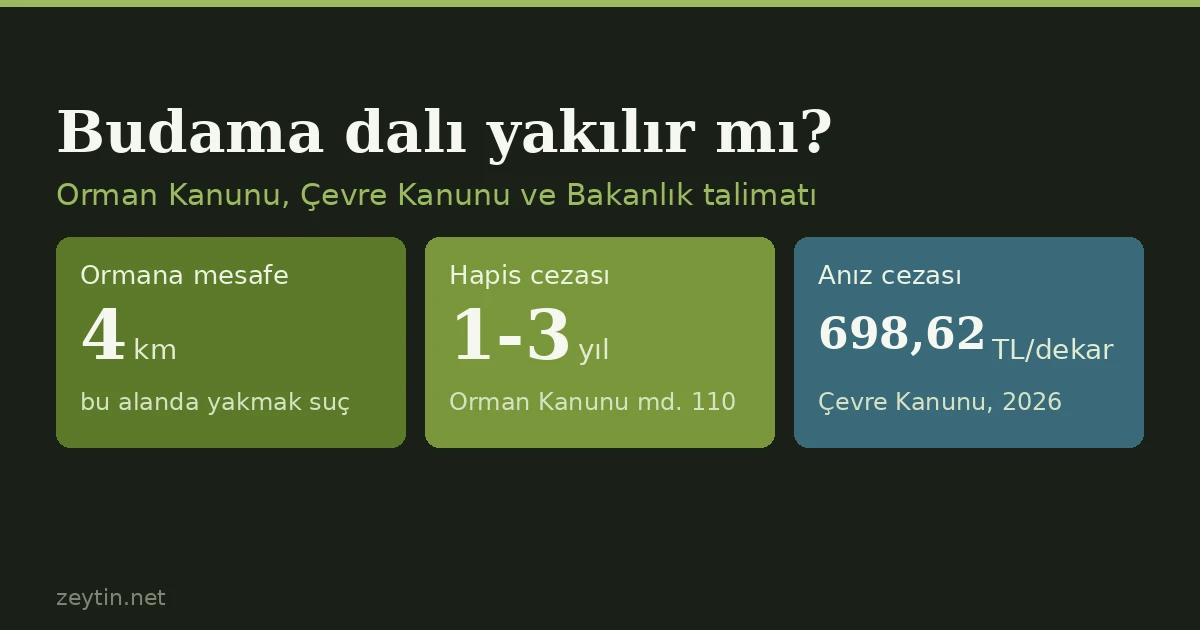
Burning prunings within four kilometres of a forest, or in a village with state forest inside its boundary, is an offence under Türkiye's Forest Law carrying one to three years in prison, and many governors' orders also ban burning to clear olive groves. The ministry's own technical guidance, however, recommends burning diseased residues. The way between: use healthy wood, remove diseased wood from the grove.
 Article
Choosing certified olive saplings: labels, documents and variety
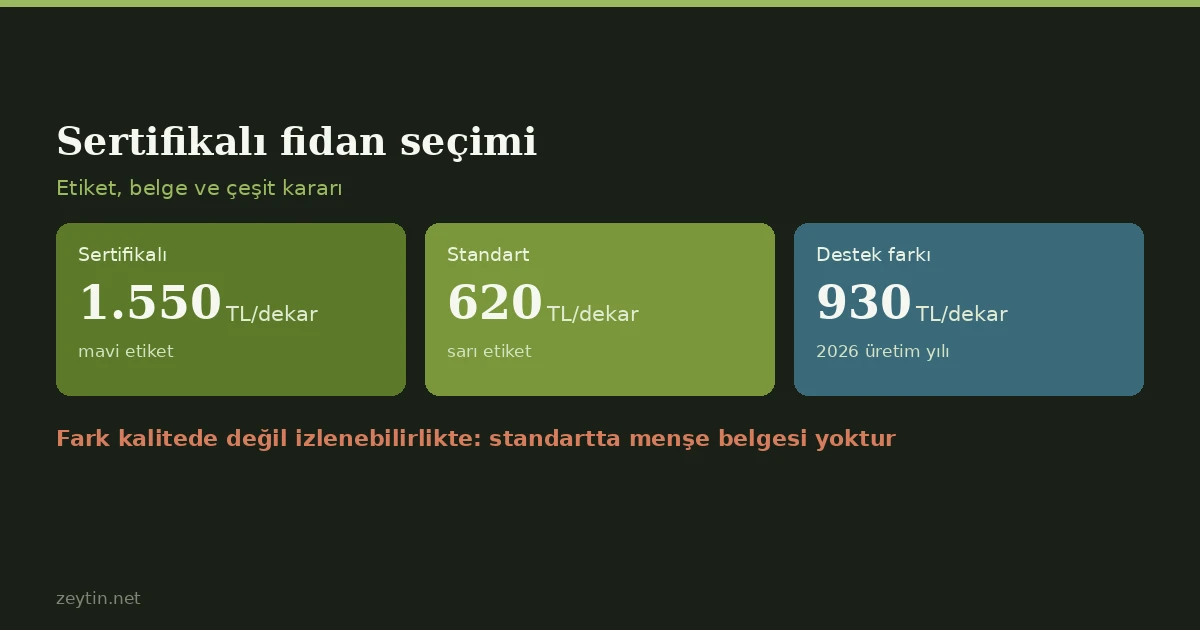
Label colour shows the certificate class: blue certified, yellow standard. The difference is traceability, not quality. The support gap is 930 lira per decare. Four questions that settle variety choice.