In Söke, one day's wage costs ten kilos of olive oil
Over 1,000 tonnes of table olives are expected in Söke's Ağaçlı. Two figures given by the headman sum up the season: oil at 160 lira wholesale, a day's wage at 1,600.
Over 1,000 tonnes of table olives are expected this season in the Ağaçlı neighbourhood of Söke, Aydın. The headman, Serkan Tarakçı, says rain in March, April and May raised quality, the fruit is large, and no worm or similar disease has appeared.
Ağaçlı is counted among Söke's top three neighbourhoods for table olive production.
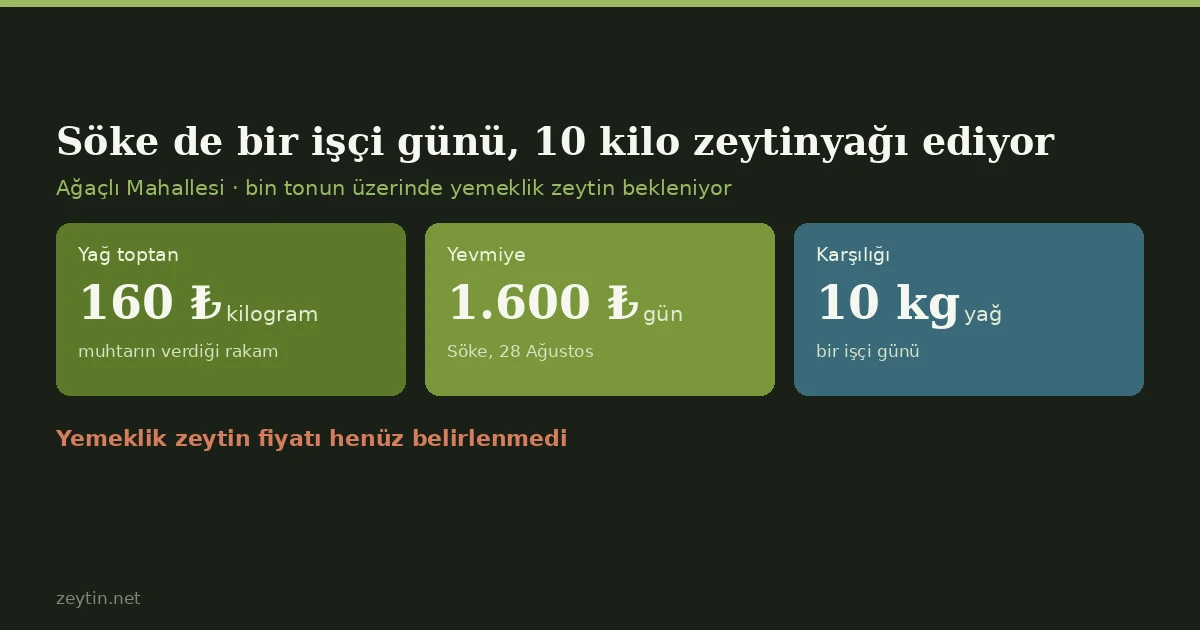
Two figures that sum up the season
Two numbers given by Tarakçı describe the harvest economy in a sentence:
| Item | Value |
|---|---|
| Wholesale olive oil purchase price | TRY 160/kg |
| Daily wage | TRY 1,600/day |
| Oil equivalent of one day's wage | 10 kg |
In his own words: "The grower will hand over ten kilos of olive oil a day as one worker's wage."
That ratio takes the cost debate out of the abstract. Whatever a worker can pick in a day must yield more than ten kilos of oil for the work to pay for itself. We ran that calculation item by item in what does a kilo of olives cost to produce.
Why being table-olive country helps
Tarakçı says olives not of table quality are sent to the mills for oil, and adds that because table olives come first here, they expect to close the season with fewer problems than neighbourhoods focused on oil.
The reason is the price gap: table olives fetch more per kilo than oil olives, because they go directly to the consumer and are judged by different quality criteria. We covered that distinction in table olives.
⚠ The table olive price has not yet been set. The headman's hope is to close the season without a loss.
Compared with other regions
The picture matches the figures in our report on costs and carry-over stock before the harvest: daily labour in Edremit has also passed 1,500 lira. Söke's 1,600 sits slightly above that trend.
We publish current registered exchange prices in our weekly bulletin.
One rating per visitor; you can change yours at any time. Ratings are real reader votes — no seeded or default scores.
Related
 Article
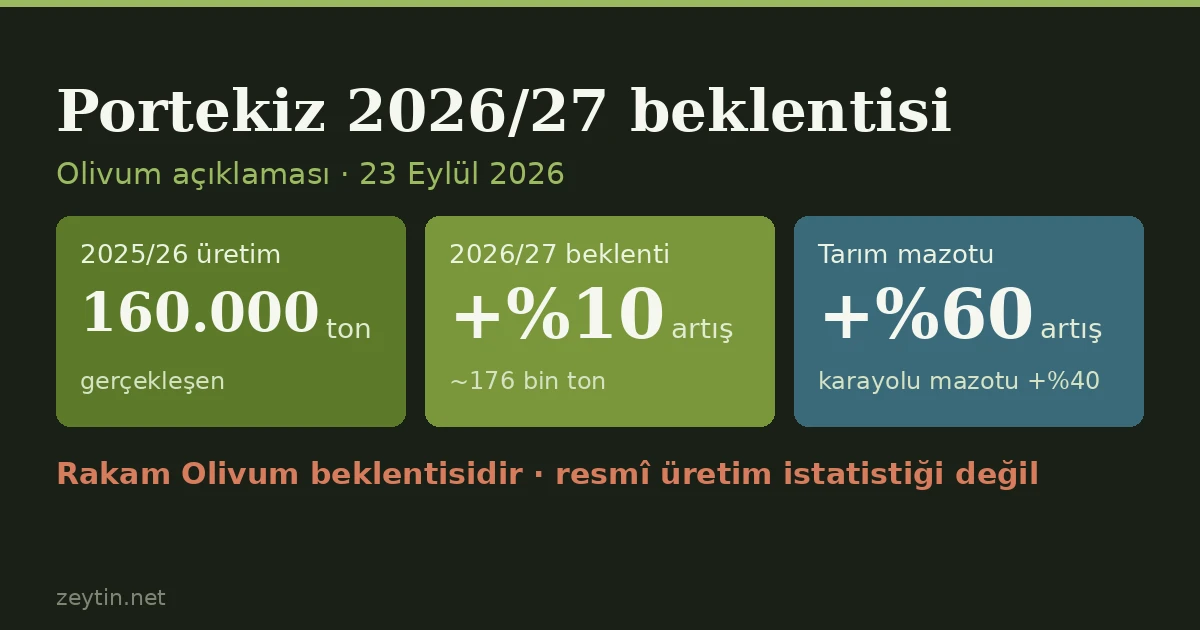
Portugal heads back to 177,000 tonnes: output up 10%, farm diesel up 60%
Portugal's olive association Olivum expects production to rise by about 10% in 2026/27 — a return from 160,000 tonnes to the 177,000 of two years ago. The same statement records a 60% rise in the price of agricultural diesel.
 Article
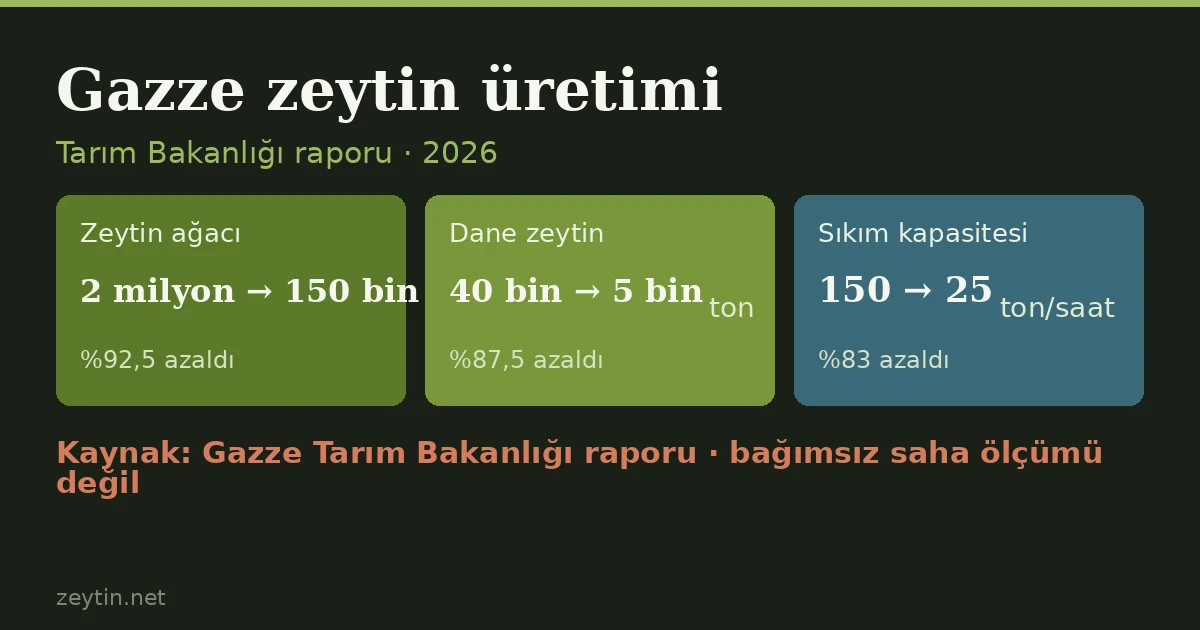
Gaza's olive report: 150,000 trees left of two million, production down 87.5%
According to a report from Gaza's Ministry of Agriculture, olive groves have shrunk from 50,000 dunums to 5,000 and the olive crop from 40,000 tonnes to 5,000. The loss is not confined to the grove: milling capacity has fallen from 150 tonnes an hour to 25, and the number of growers from 20,000 to 1,000.
 Article
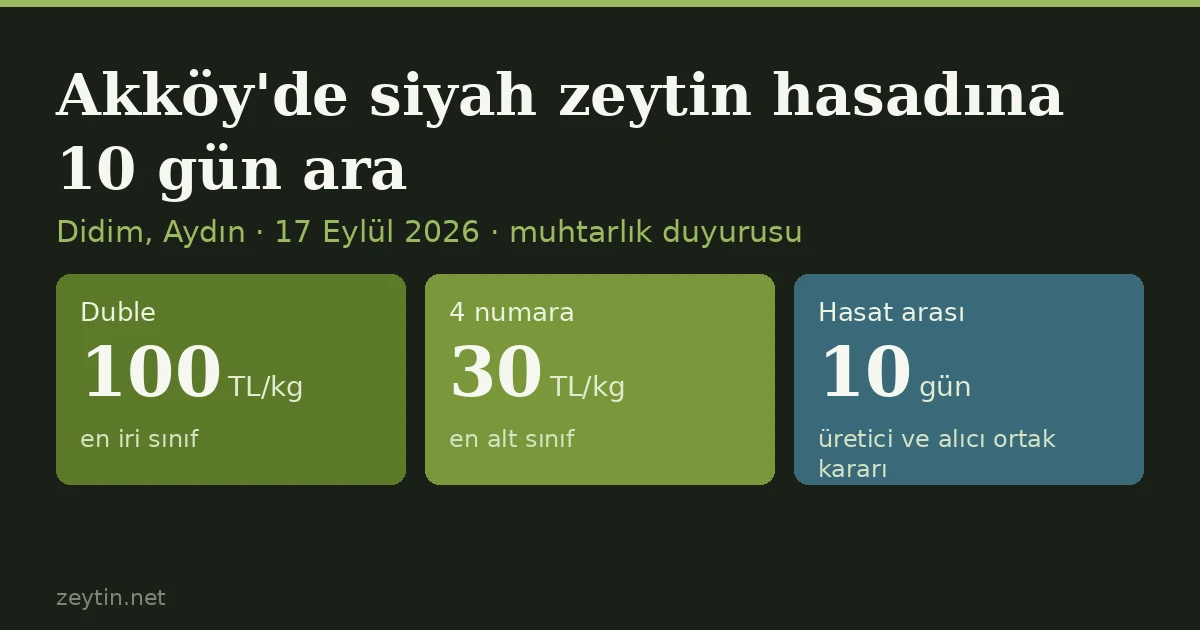
Black olive harvest paused for ten days in Akköy, Didim: a price ladder from 30 to 100 lira
In Akköy, a village in the Didim district of Aydın, growers and olive buyers have jointly agreed to suspend black olive harvesting and buying for ten days, saying announced prices do not cover costs. The price ladder published by the village headman's office runs from 100 lira a kilo for the largest grade down to 30 lira for the smallest. Growers say picking costs alone exceed the price on the lower grades.
 Article
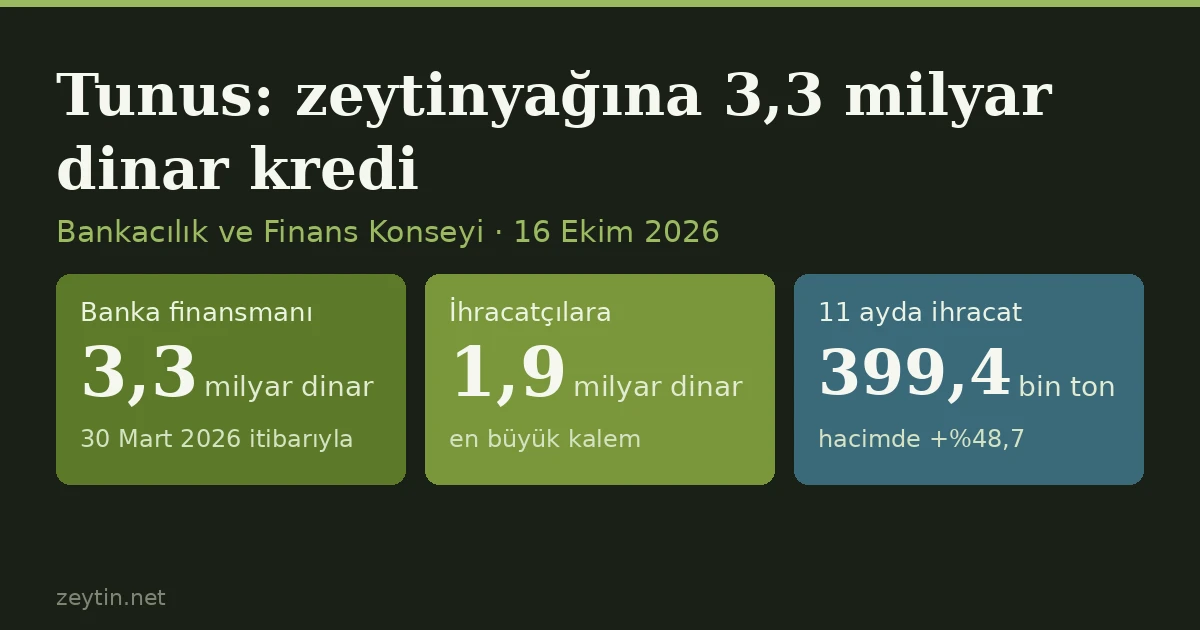
Tunisian banks lent 3.3 billion dinars to the olive oil season; the 2027 draft budget earmarks bulk export duties for a sector fund
According to Néji Ghandri, president of the Tunisian Banking and Financial Council, banks extended 3.2-3.3 billion dinars to the 2025/26 olive oil season by 30 March, up from 2.2 billion the season before; 1.9 billion went to exporters. Tunisia exported 399,400 tonnes in eleven months. The 2027 draft budget opens a 100-million-dinar credit line for small growers and earmarks 10 per cent of bulk export duty revenue for a sector fund; it is not a new tax.