Does oil pulling with olive oil help oral health?
Oil pulling is the practice of swishing oil in the mouth for minutes. A meta-analysis of nine randomised trials reports that bacteria counts in saliva fell but plaque and gum inflammation scores showed no significant difference, and a systematic review rates the quality of evidence as low. The article explains these findings, their limits and the points of safe use.

Oil pulling is an old Indian (Ayurvedic) practice: about a tablespoon of oil is taken into the mouth, swished between the teeth for minutes and spat out. In recent years it has spread on social media with claims that it "whitens teeth and heals the gums", and olive oil has come to be suggested for the purpose. The question is simple: what does the scientific data say?
The information below rests on reviews that examined oil pulling in general (whatever oil was used). We do not report a separate result specific to olive oil.

Two reviews, two results
Meta-analysis. A meta-analysis published in 2022 pooled nine randomised controlled trials of oil pulling for oral health. The result: the bacterial colony count in saliva fell significantly in the oil pulling group compared with the control group. However, there was no significant difference between the two groups in plaque index or gingival index scores.
Systematic review. A review that screened 80 articles published between January 2010 and March 2020 found that only 14 of them met the research question. According to the review most of the included studies had a high or unclear risk of bias, and the quality of evidence was judged low for recommending oil pulling as an adjunct to conventional oral hygiene.
| Measure | Finding |
|---|---|
| Bacterial colony count in saliva | Significant reduction in the oil pulling group (meta-analysis of 9 trials) |
| Plaque index | No significant difference between groups |
| Gingival (gum) index | No significant difference between groups |
| Overall quality of evidence (systematic review) | Low; most studies have a high or unclear risk of bias |
What these findings mean
A fall in the number of bacteria in the mouth is a real measurement, but it is not an oral disease outcome. In the real problems, such as tooth decay, plaque build-up and gum inflammation, no difference was seen. In short: oil pulling may reduce the number of bacteria in the mouth temporarily, but a concrete benefit to teeth and gums has not been shown in these reviews.
Some things are missing too. These reviews do not answer whether it replaces tooth brushing and interdental cleaning, and the systematic review reports a risk of bias in most of the studies. The claim that it "whitens teeth" is not among the data reported here, so we cannot say it is supported.
Does it make a difference that it is olive oil
The oils used in oil pulling can differ. In the summaries of these reviews no separate result for olive oil stands out. What is known about the health benefits of olive oil (for example the evidence on the heart and blood vessels) applies to oil swallowed as food; it does not mean that oil swished in the mouth and spat out gives the same benefit. For the evidence on swallowed oil see our olive oil and heart health article.
For safe use
- Do not swallow or inhale. The oil is swished and spat out. Because accidentally inhaled oil can cause lung problems, it is not right to try it in children or in people with swallowing difficulties.
- Do not pour it down the sink. Oil can build up in pipes; spitting into a tissue or the bin is more suitable.
- Do not use it in place of brushing or dental check-ups. If there is gum bleeding, decay or persistent bad breath, the cause should be found by examination.
Practical summary
- Oil pulling may lower the bacterial count in saliva; no significant difference was shown in plaque and gum inflammation.
- The systematic review rates the quality of evidence as low, insufficient to recommend it as an adjunct to conventional oral hygiene.
- The benefits of olive oil apply to eating it; swishing it in the mouth does not prove them.
- It does not replace brushing, interdental cleaning or a dental check-up.
One rating per visitor; you can change yours at any time. Ratings are real reader votes — no seeded or default scores.
Related
 Article
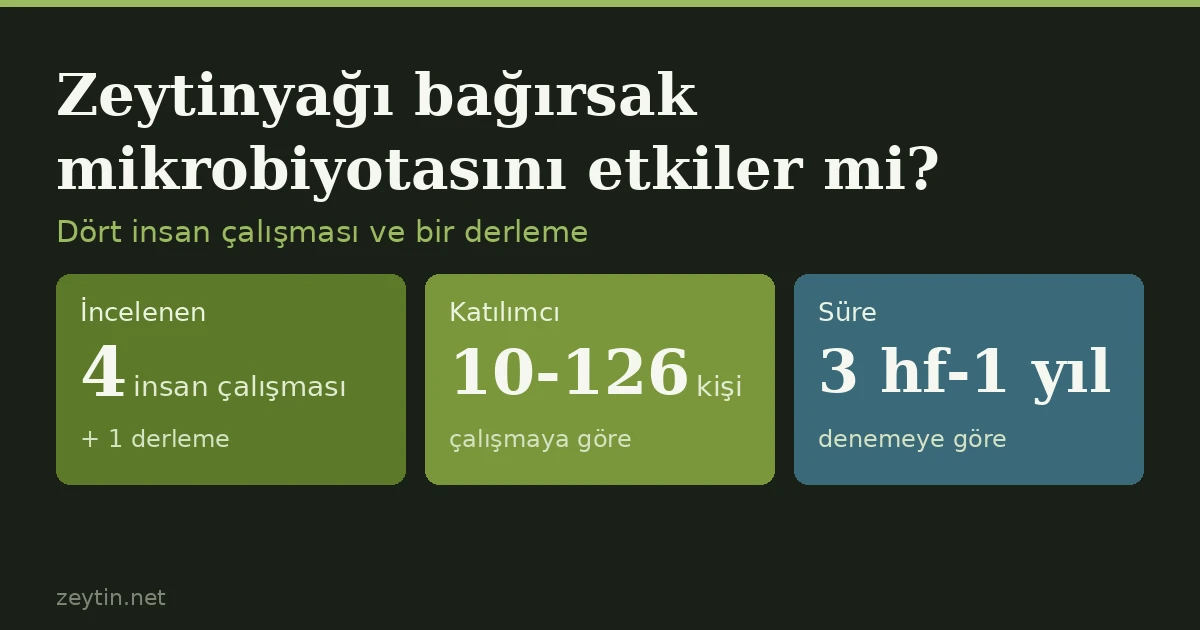
Does olive oil affect the gut microbiota? What four human studies and a review show
In small human trials, olive oil or olive-oil-based diets shifted the proportions of some gut bacteria, but the findings differ from trial to trial. What did the 20-person year-long, the 12- and 10-person three-week and the 126-person trials show, and what could they not show?
 Article
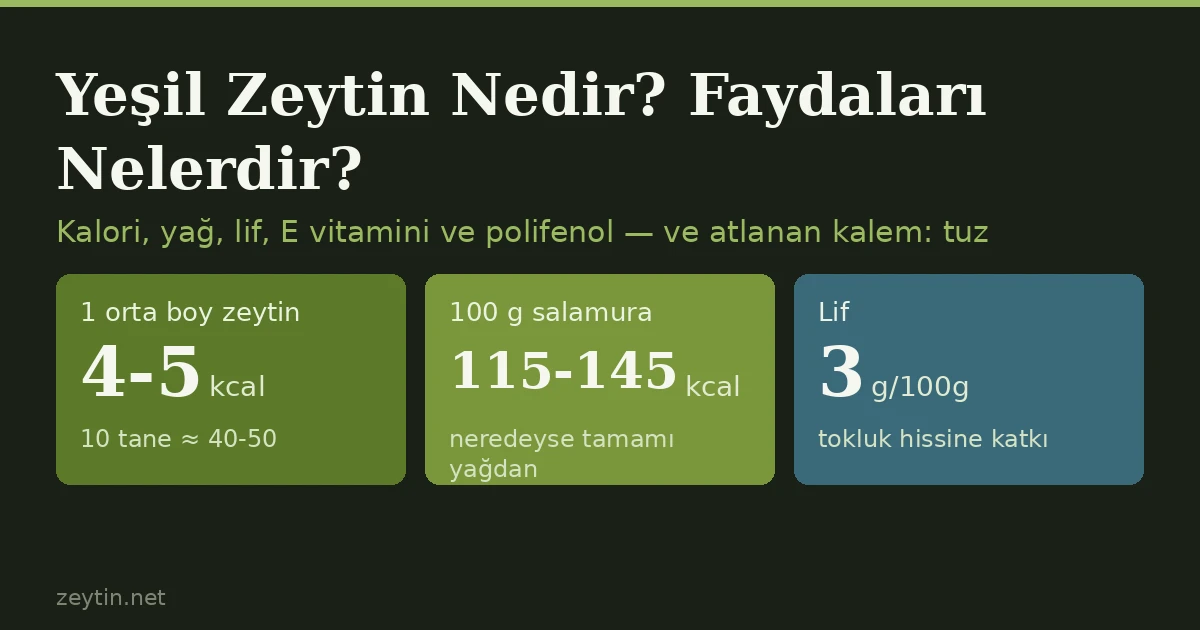
What Are Green Olives? What Are Their Benefits?
What green olives are, what they contain and how many calories. Fat, fibre, vitamin E and polyphenols — and the salt that portion talk must not skip.
 Article
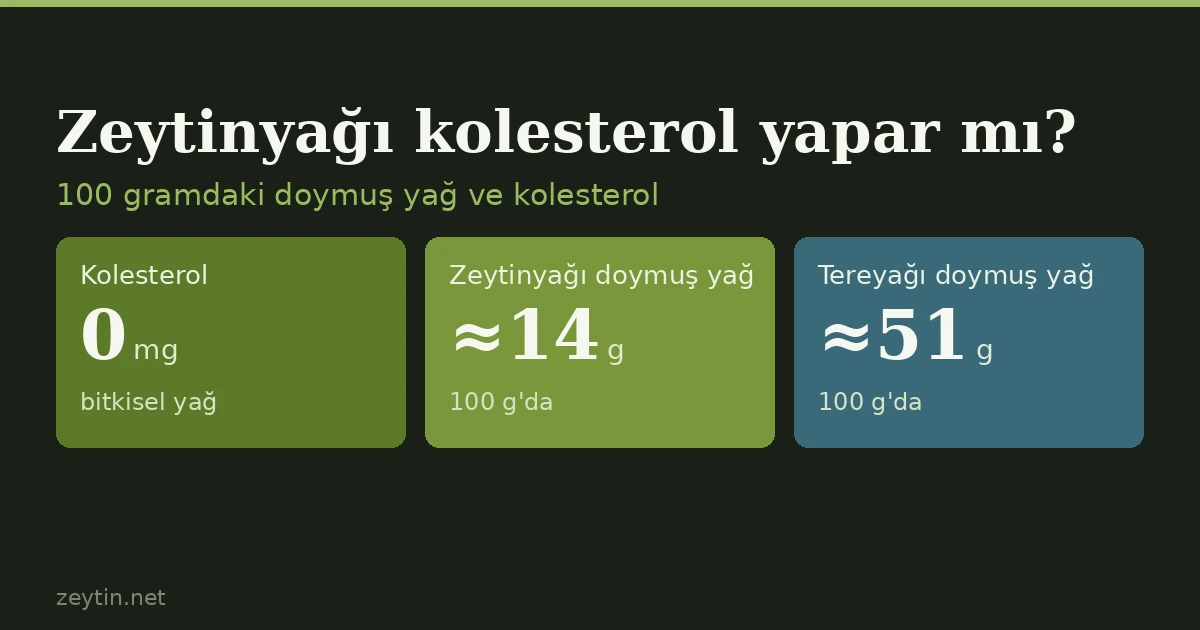
Does olive oil raise cholesterol? Cholesterol content, LDL and the "clears arteries" claim
Olive oil contains no cholesterol, and when it replaces saturated fat it helps maintain normal blood cholesterol levels. But every spoonful added to a diet also brings calories, and there is no evidence that olive oil clears arteries. A saturated fat table and the authorised health claims.
 Article
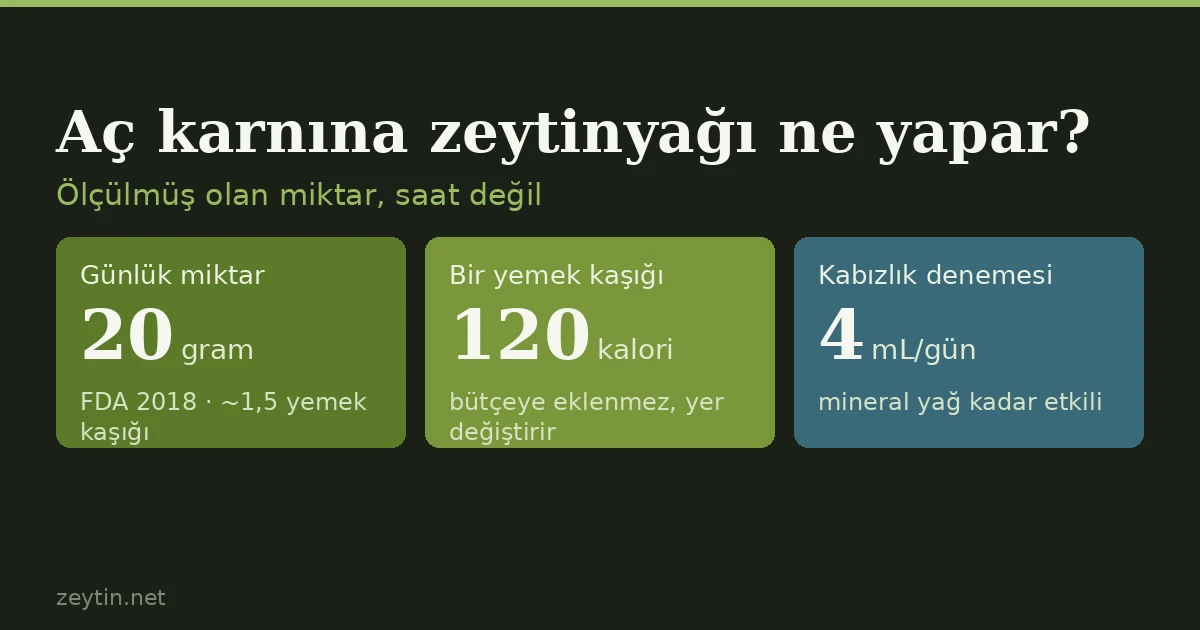
What does drinking olive oil on an empty stomach actually do?
A spoonful of olive oil in the morning is a common habit, but there is no proven separate benefit to taking it on an empty stomach. What actually happens in the body, which claims have been measured and which are myth: the gallbladder, constipation, the calorie arithmetic and the truth about "liver flush" stones.