The History of the Olive in Anatolia
Where did the olive come from, and when was it first cultivated in Anatolia? From the stone workshop at Klazomenai to today's Aegean groves.
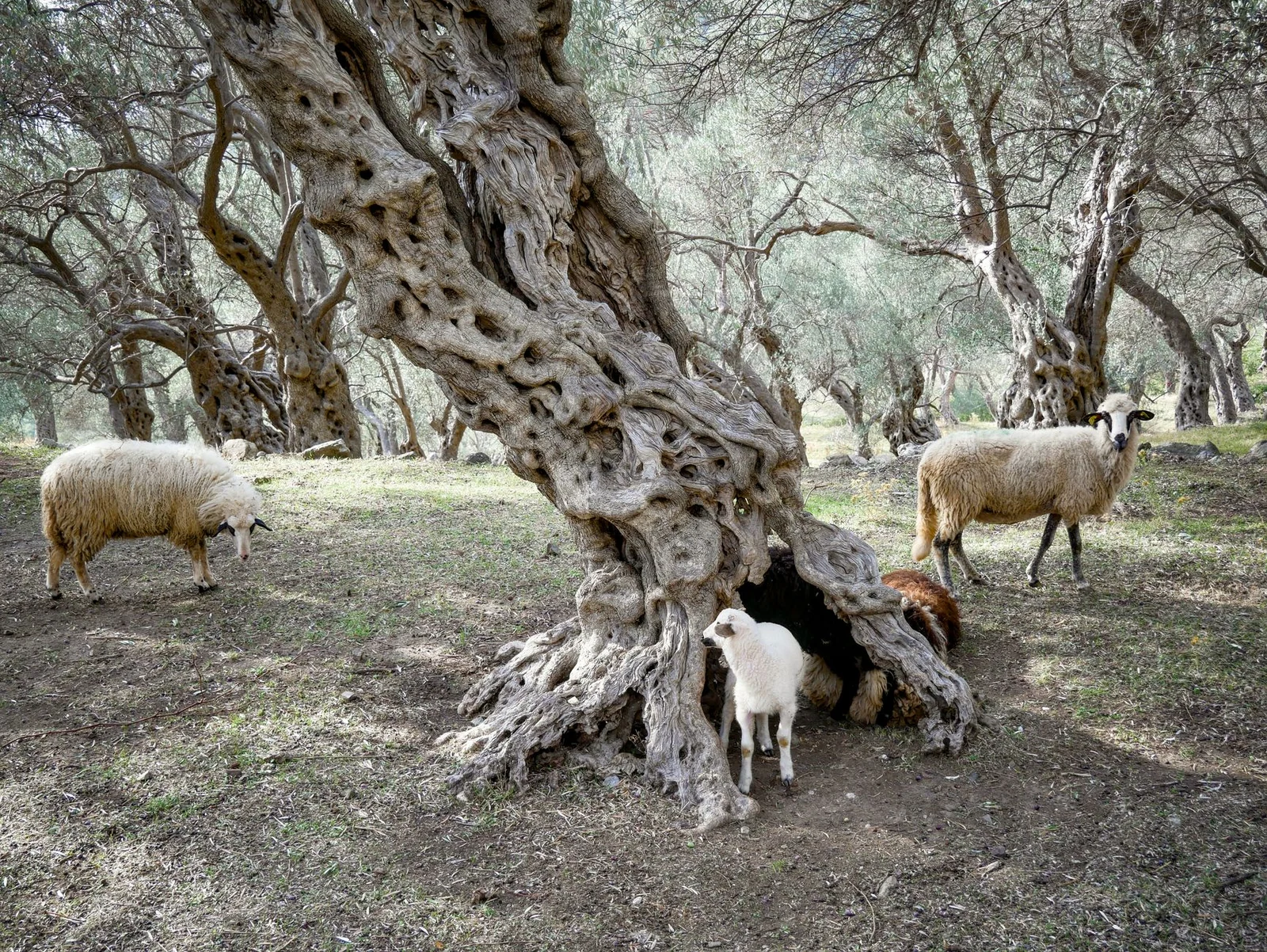
The domestication of the olive tree is one of the oldest chapters in the history of agriculture. On current evidence, the shift from wild olive (Olea europaea var. sylvestris) to the cultivated form took place in the eastern Mediterranean basin, roughly in the fourth millennium BCE. The clearest proof comes from submerged Chalcolithic sites on the Israeli coast, where heaps of crushed olive stones and oil residues have been recovered.
Spreading north and west from there, the olive found perhaps its most suitable ground on the western shores of Anatolia: a belt with mild winters, dry summers, and stony, calcareous soil.
In tablets and in kitchens
In the Bronze Age Aegean, olive oil was more than a foodstuff. The Linear B tablets kept in the palace archives of Crete and mainland Greece record oil as a state commodity — counted, weighed, stored and distributed. It was burned for light, offered in temples, used as a carrier for perfume, and rubbed on the body as a cleanser. Its role was far wider than that of a modern cooking oil.
Klazomenai: a factory in stone
The most striking find in Anatolia lies at ancient Klazomenai, in the Urla district of İzmir. An olive oil workshop dating to the 6th century BCE was uncovered here, complete with pressing stones, settling basins and a separation system for parting oil from water. The process was not a single press but a production line divided into stages.
Part of the workshop has been reconstructed on site and made operable again. Klazomenai is among the clearest indications that Aegean olive oil was produced not merely for local use but for export: the city shipped its oil in amphorae bearing its own stamp as far as the Black Sea and Egypt.
Continuity from Rome to the Ottomans
Olive growing in western Anatolia continued through the Roman period; press stones found at rural settlements around the cities show how widespread it was. Production was not interrupted under Byzantine or Ottoman rule either. Ottoman groves were counted among pious foundation revenues, and the oil was traded for cooking, for soap and for lamps alike. Ayvalık, the Gulf of Edremit and Lesbos formed the centre of gravity of that trade.
Today
Turkey ranks today among the world's leading producers of olives and olive oil. The weight of production still sits in the same geography: the Aegean and Marmara coasts, the western Mediterranean, and the Kilis-Gaziantep line in the south-east. Local varieties such as Ayvalık, Memecik, Gemlik, Domat and Nizip Yağlık are types that diverged over centuries according to the soil and climate of their own region.
Given that an olive tree can live for centuries, it is no surprise that some trees harvested at Edremit or Urla today were planted long after the Klazomenai workshop but long before the Ottomans. In Anatolia the olive is not an interrupted crop; it is a habit that never stopped.
One rating per visitor; you can change yours at any time. Ratings are real reader votes — no seeded or default scores.
Related
 Article
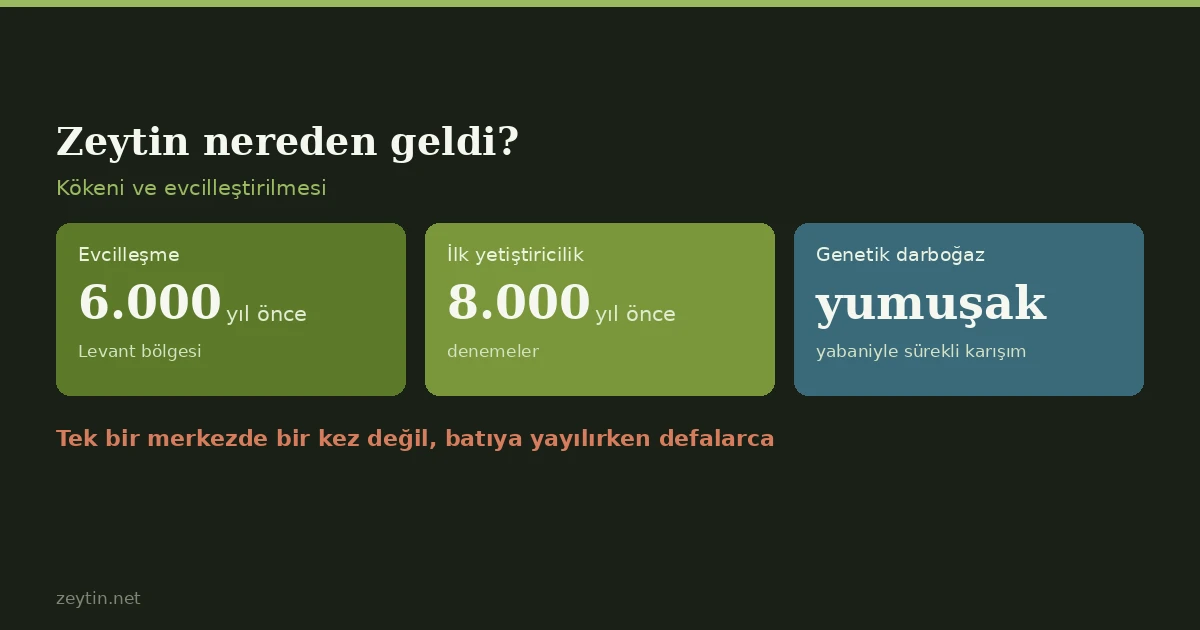
Where did olives come from? Origin and domestication
The olive was domesticated about 6,000 years ago in the Levant — but not at a single centre. Genetic work shows the cultivated olive kept mixing with the wild oleaster throughout its spread.
Article
Where did olives come from? Origin and domestication
The olive was domesticated about 6,000 years ago in the Levant — but not at a single centre. Genetic work shows the cultivated olive kept mixing with the wild oleaster throughout its spread.
 Article
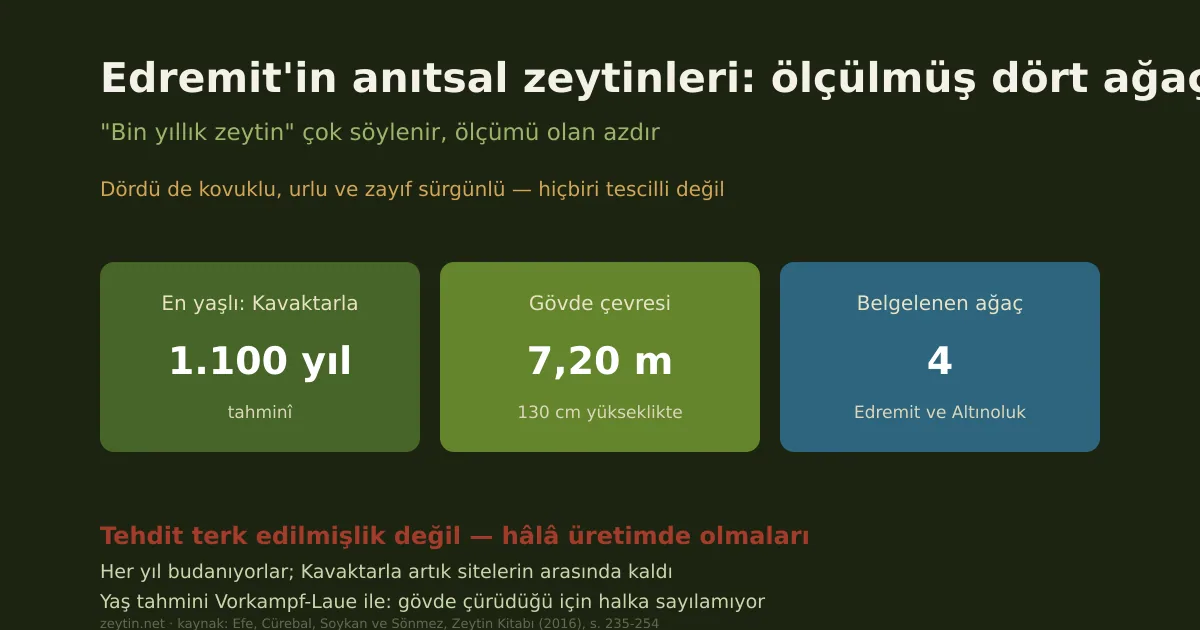
Edremit's monumental olives: four old trees, measured
At an estimated 1,100 years and a 7.20 m girth, Kavaktarla is Edremit's oldest olive. All four are hollowed and galled, none is registered, and the real threat is that they are still in production.
Article
Edremit's monumental olives: four old trees, measured
At an estimated 1,100 years and a 7.20 m girth, Kavaktarla is Edremit's oldest olive. All four are hollowed and galled, none is registered, and the real threat is that they are still in production.
 Article
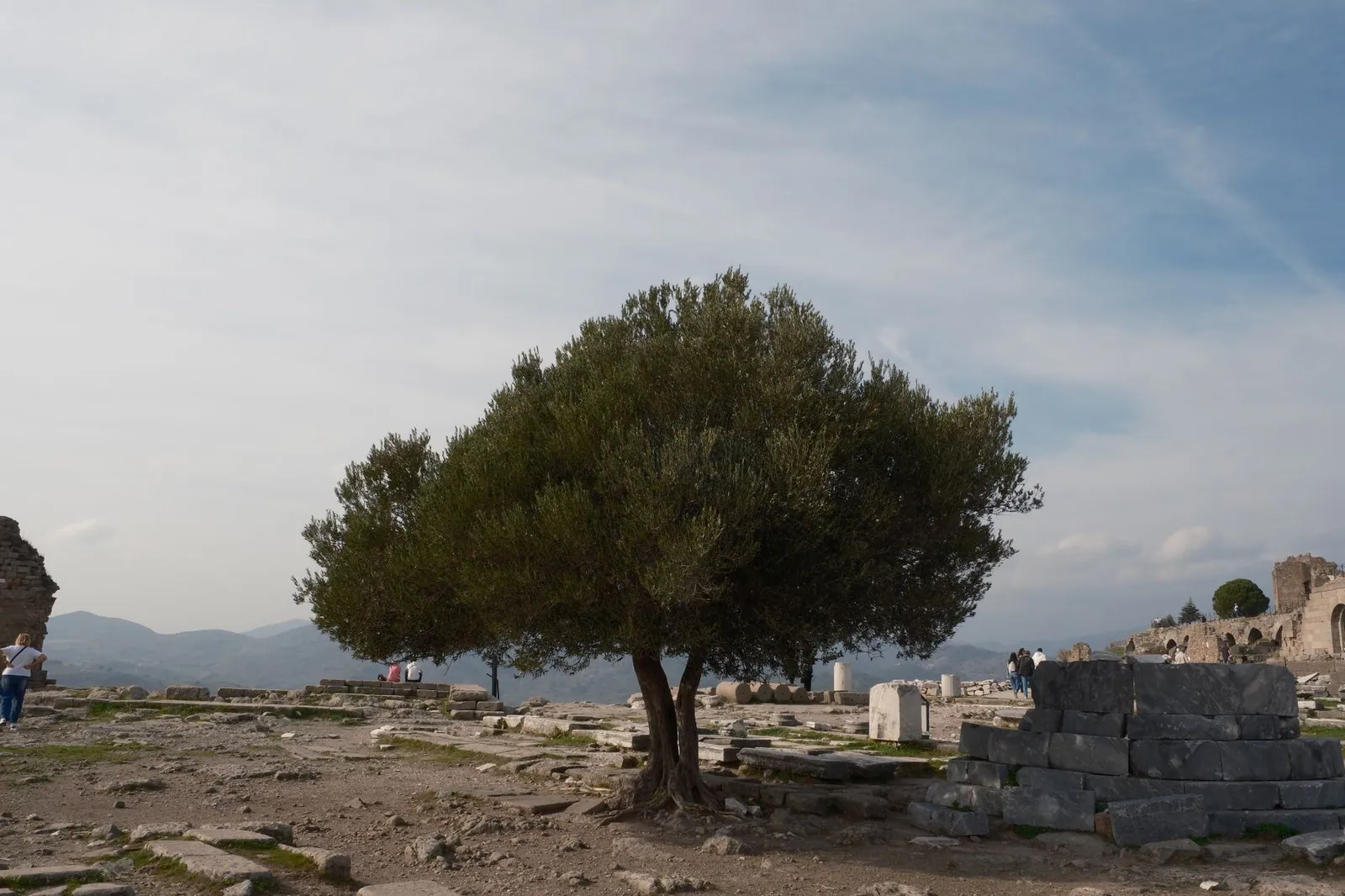
History of the Olive Tree
From remains dated to 6000 BC to modern plantations: the olive tree's journey alongside humanity, and one of farming's longest stories.
Article
History of the Olive Tree
From remains dated to 6000 BC to modern plantations: the olive tree's journey alongside humanity, and one of farming's longest stories.
 Article
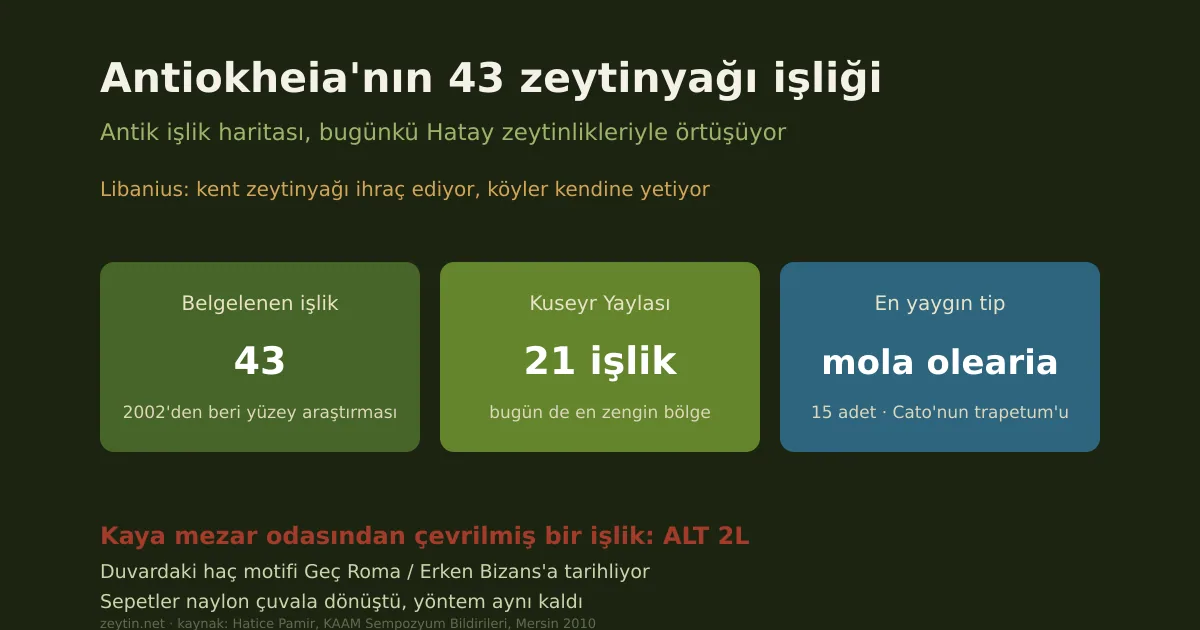
The 43 olive oil workshops of Antiokheia: two thousand years of continuity in Hatay
Forty-three ancient workshops documented across Antakya, Altınözü, Yayladağı and Samandağ map onto today's groves. Twenty-one sit on the Kuseyr Plateau — still Hatay's richest olive district.
Article
The 43 olive oil workshops of Antiokheia: two thousand years of continuity in Hatay
Forty-three ancient workshops documented across Antakya, Altınözü, Yayladağı and Samandağ map onto today's groves. Twenty-one sit on the Kuseyr Plateau — still Hatay's richest olive district.