Tarsus Sarıulak Olive: the same cultivar behaving differently in one place
The certificate measures Sarıulak in Tarsus and generally, side by side: it flowers a month earlier, ripens a month later, and has larger fruit and more flesh.
One question always comes up in debates about geographical indications: what changes if the same cultivar is planted elsewhere? The certificate for Tarsus Sarıulak Olive answers it in figures — because it measured the cultivar both in Tarsus and generally, and set the two columns side by side.
The record
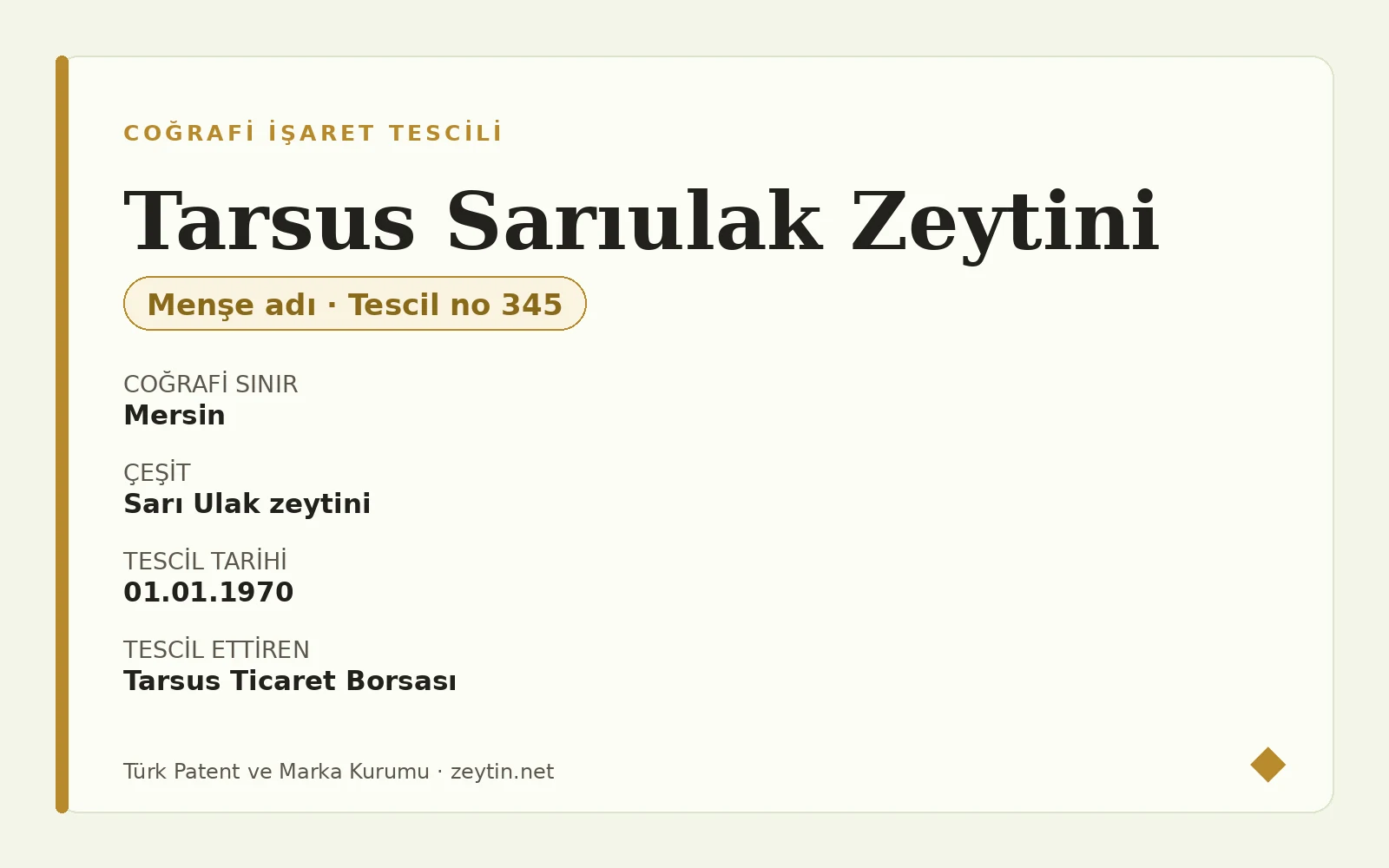
| Registration no | 345 |
| Registration date | 16.04.2018 |
| Application | C2017/030 · 18.04.2017 |
| Type | Designation of origin |
| Registered by | Tarsus Commodity Exchange |
| Area | The Tarsus district of Mersin |
| Cultivar | Sarı Ulak |
Two columns
This comparison is what sets the certificate apart:
| Criterion | Tarsus Sarıulak | Sarıulak (general) |
|---|---|---|
| Flowering | 15 April – 14 May | 15 May – 14 June |
| Black maturity | December | second half of November |
| Fruits per kilogram | 228-281 | 266 |
| Length | 25-26 mm | 24.23 mm |
| Width | 18.50-19.06 mm | 14.97 mm |
| Length/width ratio | 1.10-1.50 | 1.61 |
| Flesh ratio | 78.20-80.70% | 71.85% |
| Oil content | 18.72-19.56% | 18.84% |
| Moisture | 48.60-56.20% | 52.86% |
Three differences stand out:
Flowering a month earlier. In Tarsus it begins on 15 April, generally on 15 May. The Mediterranean warms early.
Blackening a month later. December in Tarsus, mid-November generally — so the fruit stays on the branch longer.
Distinctly larger and fleshier fruit. Width rises from 14.97 mm to 18.50-19.06 mm; flesh from 71.85% to 78-80%. Oil content is almost unchanged (18.8% ↔ 18.7-19.6%) — so the difference is not in the oil but in the fruit and its flesh.
That is exactly the direction a table olive wants: large, fleshy, with a relatively small stone. We covered the table-versus-oil distinction separately.
Tree numbers
Tarsus has 1.7 million olive trees, of which about 25% are Sarıulak. The distribution is interesting: 95,000 trees in planted orchards, and around 400,000 among wild trees brought into cultivation by grafting. Most of the cultivar, in other words, stands not in planted groves but on grafted wild trees. We described the technique in grafting olives.
Tree and leaf
The tree is vigorous and forms a large, spreading, open crown with dense branching and heavy foliage. Older branches are milky brown, young ones beige-green. The trunk is dark grey and grooved, roughened by bark fissures.
The leaf is medium-long, broad and elliptical: on average 53.38 mm long, 13.38 mm wide, a ratio of 3.98. Inflorescences run 16-27 mm, averaging 22 mm, with 1-28 flowers and an average of 17.
Its weakness
The certificate also records the cultivar's fragility without concealing it: it is damaged by low temperatures. When the temperature falls to a critical level, bark splits appear on shoots, thin branches and twigs, and fruit losses can reach 90%.
That explains why the cultivar concentrates along the Mediterranean coast.
In short
Tarsus Sarıulak Olive is one of the rarer certificates showing that a single cultivar differentiates measurably in one locality. The case for the geographical indication is not rhetorical here: two columns sit side by side, and the difference reads out in width, flesh ratio and the ripening calendar.
The production steps in the document
The registration describes production step by step. The document's own sequence:
1. Dikim — Yeni bir kapama bahçe tesisi kurulmadan önce toprak tabakasının parçalanması için derin işleme yanında, zorunlu hallerde tesviye, teraslama vb.
2. Zeytinin İşlenmesi — Zeytinler, meyve kabuğu renk skalasına göre kabuk rengi koyu yeşilimsi - sarı veya koyu yeşil olduğu dönem ile siyah tüketim için meyve kabuğu rengi siyahımsı olduğu dönemde yıllara göre değişmek ile birlikte 1 Ekim-30 Kasım tarihleri…
3. Hızlı Tüketim — Hızlı tüketim amacıyla gerçekleştirilen tatlandırma doğal içme suyunda yapılır ve hiçbir şekilde kimyasal eklenmez, ısıl işlem uygulanmaz ve tuz çözeltisi hazırlanmaz.
That this sequence is binding is what separates a geographical indication from a trade mark: a mark says who produced something, a geographical indication also sets down how it must be produced.
The cultivar behind it, measured
The registration is granted to a place, but the cultivar the definition rests on has measurable values:
| Property | Value |
|---|---|
| 1 kg’daki tane sayısı | 263 |
| Et oranı | %72 |
| Yağ oranı | %19 |
| Kullanım | Sofralık |
| Başlıca yöreler | Erdemli, Mersin |
| Meyve boyu | 24 mm |
| Meyve eni | 15 mm |
| Çekirdek ağırlığı | 1,05 g |
At 19% the oil content sits mid-range; yield alone is not the argument here, aroma is.
Its place in Mersin's olive production
| Item | Value |
|---|---|
| Fruit production | 305,159 t |
| — for oil | 227,098 t |
| — for the table | 78,061 t |
| Olive oil production | 34,938 t |
| Trees | 11,201 thousand |
| Yield per tree | 27.2 kg |
74% of the province's fruit goes to oil — so this table-olive registration defines a niche outside the main flow.
One rating per visitor; you can change yours at any time. Ratings are real reader votes — no seeded or default scores.
Related
 Article
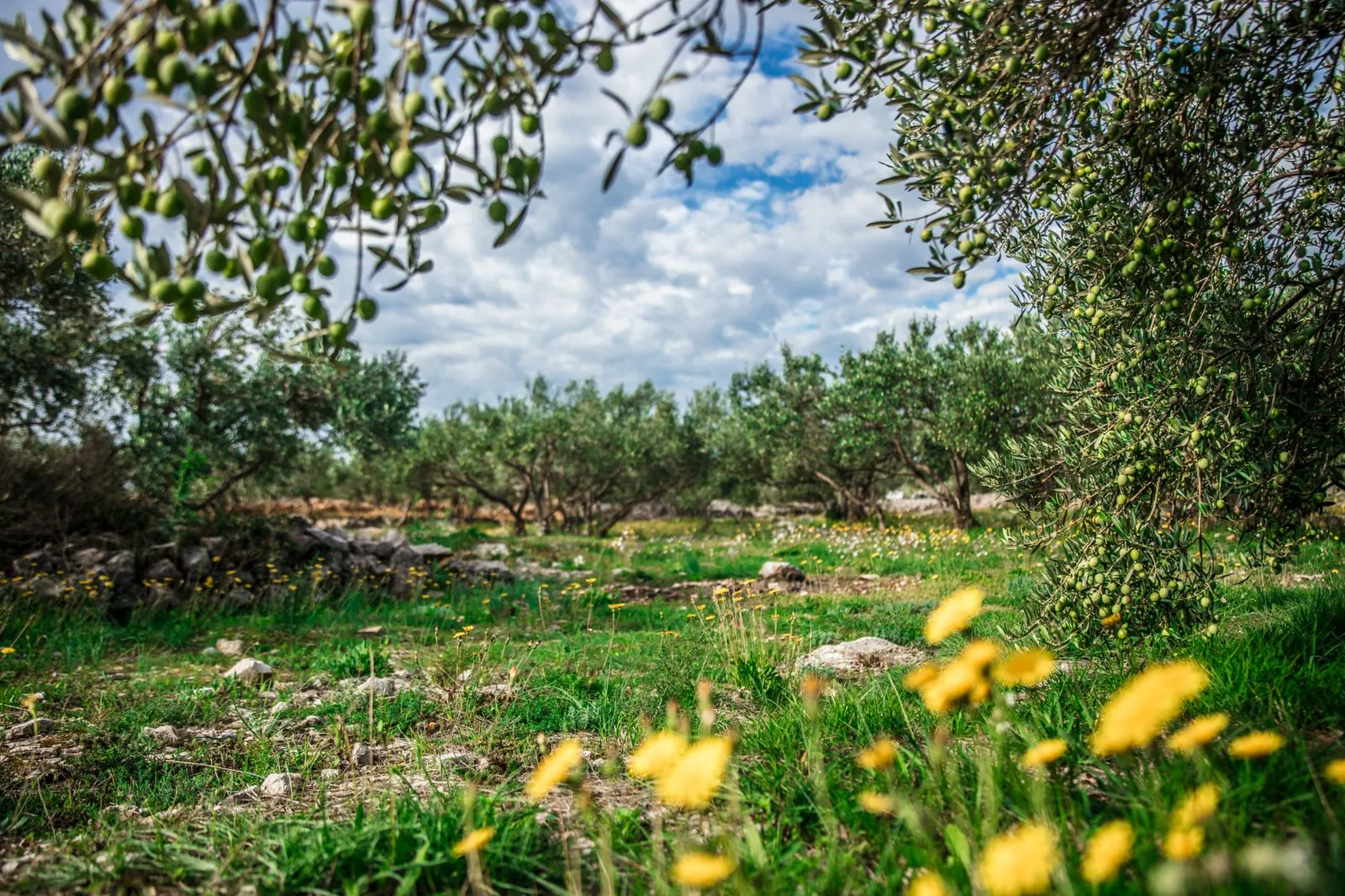
The Olive Tree
Olea europaea: botany, lifespan, root and leaf structure, monumental trees. The identity of the Mediterranean's emblematic tree and how it lives.
Article
The Olive Tree
Olea europaea: botany, lifespan, root and leaf structure, monumental trees. The identity of the Mediterranean's emblematic tree and how it lives.
 Article
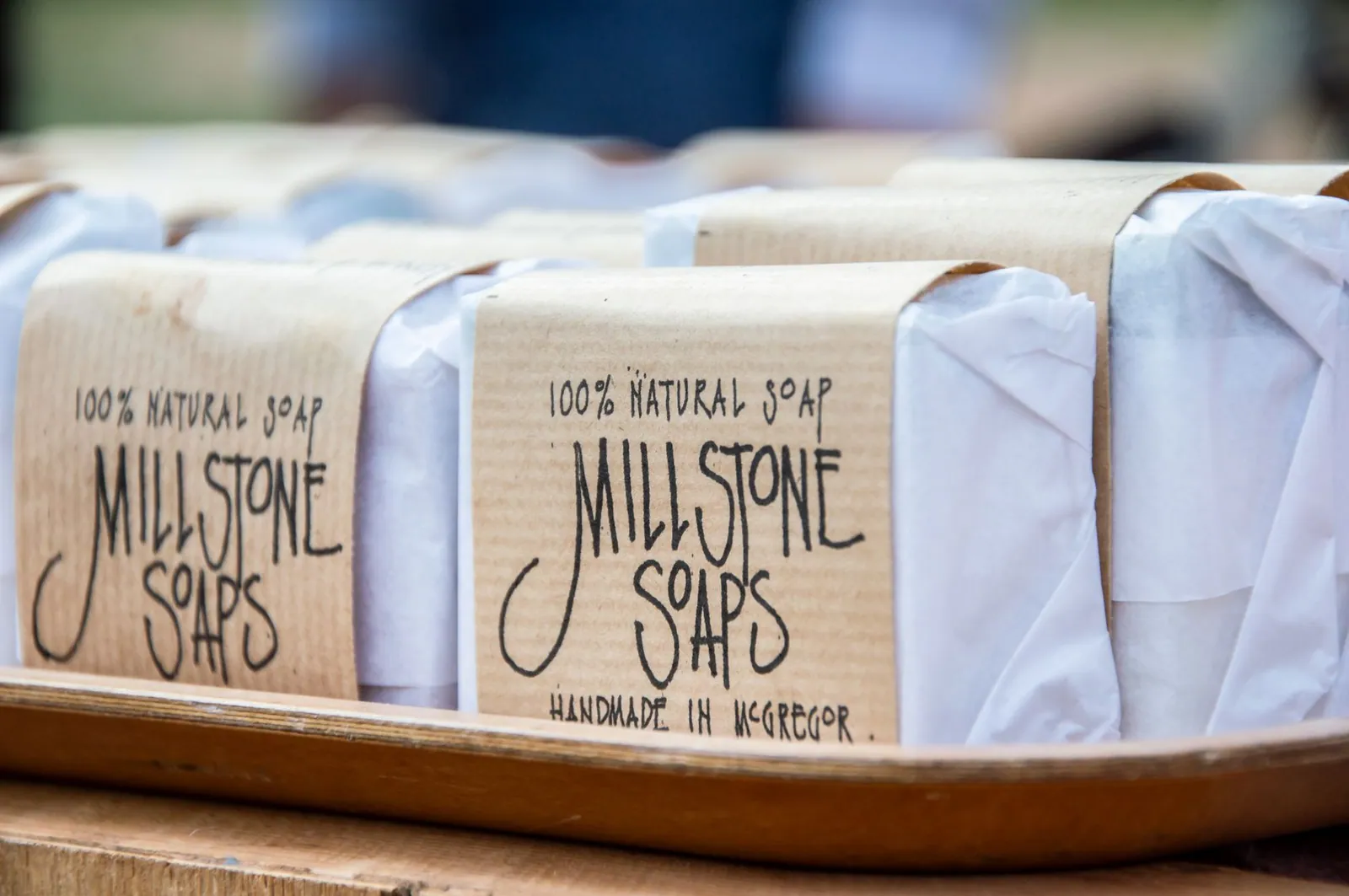
Products from Olive
Table olives, oil, pomace, leaf and soap: what is made from each part of the tree, and what each is good for.
Article
Products from Olive
Table olives, oil, pomace, leaf and soap: what is made from each part of the tree, and what each is good for.
 Article
Büyük Topak Ulak olive
Büyük Topak Ulak is a recorded variety of the Mediterranean. Described in the source.
Article
Büyük Topak Ulak olive
Büyük Topak Ulak is a recorded variety of the Mediterranean. Described in the source.
 Article
Zoncuk olive
Zoncuk is a recorded variety of south-eastern Anatolia. No measured pomological data published.
Article
Zoncuk olive
Zoncuk is a recorded variety of south-eastern Anatolia. No measured pomological data published.