Field study for Şarköy olive oil: Tekirdağ's pick for "81 Provinces 81 Products"
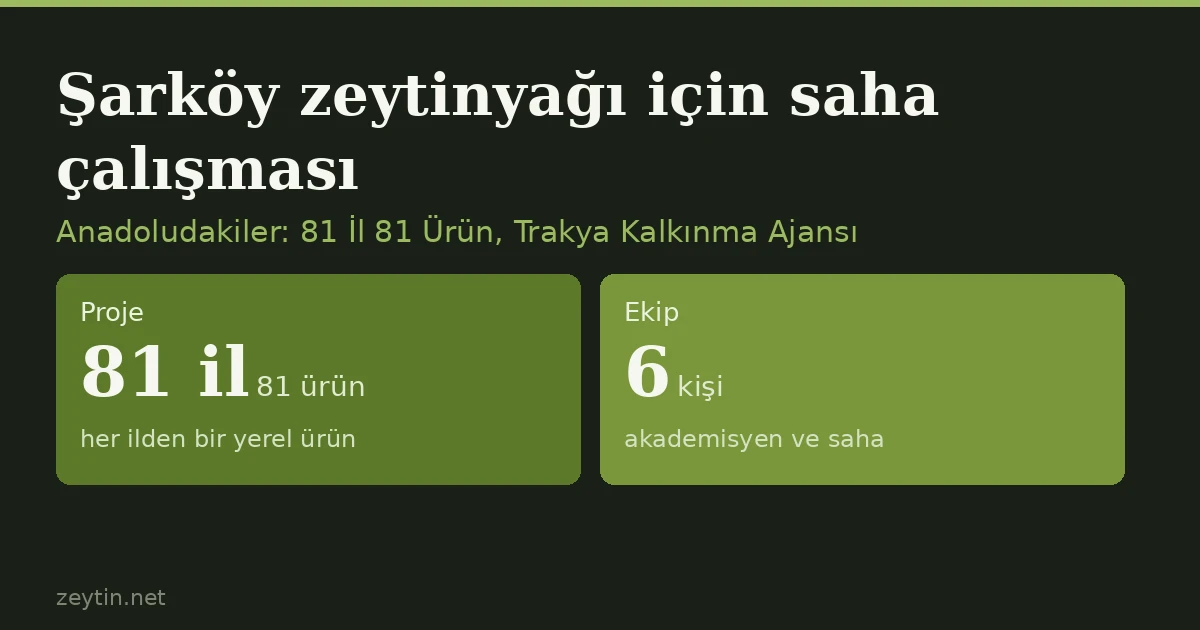
Şarköy olive oil has been chosen as Tekirdağ's product in the "Anatolians: 81 Provinces 81 Products" programme coordinated by the Ministry of Industry and Technology. The Thrace Development Agency and Namık Kemal University surveyed growers and businesses to map the value chain. The goal is branding; there is no geographical indication registration yet.
The regions that come to mind for olive oil are the Aegean, the southern Marmara and the southeast. Thrace rarely makes the list. A field study carried out in the first week of September aims to change that: Şarköy olive oil has been named Tekirdağ's distinctive product under the "Anatolians: 81 Provinces 81 Products Programme", coordinated by the Ministry of Industry and Technology, and the first comprehensive data-gathering exercise for the product has been completed.
What does the programme do?
The programme aims to identify the local products unique to each province, develop their production and commercial potential, and strengthen local production sustainably. One product is chosen per province, and the choice is made by the board of the regional development agency responsible for that province. For Tekirdağ, that decision fell to the Thrace Development Agency, which chose Şarköy olive oil.
Being chosen does not by itself mean support or registration. The programme's first step is to measure where the product stands today: who produces it, how it is processed, where it is sold and where it gets stuck.
What did the field study involve?
The study was carried out jointly by the Şarköy District Governorship, the Şarköy District Directorate of Agriculture and Forestry, the Thrace Development Agency and Tekirdağ Namık Kemal University. Surveys and face-to-face interviews were held with growers, cooperatives, mills and sector representatives along the olive oil value chain.
| Team | Role |
|---|---|
| Prof. İsmail Yılmaz | Namık Kemal University, Food Engineering |
| Assoc. Prof. Emine Yılmaz | Namık Kemal University, economics |
| Elif Öztüfekçi, Nuri Yılmaz, Merve Güneş | Thrace Development Agency specialists |
| Yalçın Güz | Şarköy District Director of Agriculture and Forestry |
The interviews covered the sector's current state, production and marketing processes, problems, needs and growth potential. Having a food engineer and an economist on the same team signals that the study will look at both product quality and the market side.
Why the value chain?
When a small growing area tries to build a brand, the problem is often not the product but the broken links in the chain. The olives may be good, but the mill may be far away, packaging may be lacking, or sales may be entirely in bulk. The oil then ends up under the brand of a company from outside the region, and its name appears on no label.
In a study like this, the questions asked at each link are concrete. How many hours after picking are the olives pressed? Where is the oil stored, in what containers and for how long? Are basic analyses such as acidity and peroxide carried out before sale? Is the product sold under its own label, or in bulk to another brand? Can cooperatives offer shared storage or bottling? The answers decide where support for the area should go: in some places the problem is milling capacity, in others simply the label.
A value chain study makes those gaps visible. According to the statements, the data collected will be turned into a roadmap for increasing production capacity, strengthening branding and marketing, adding value and raising national recognition.
Is there a geographical indication?
The list of GI-registered olive products that this site compiles from Türkpatent records contains no olive oil registered under the Şarköy name. The statements about the field study did not mention a registration application either.
The distinction matters. Being selected as a "distinctive product" under the programme is an administrative decision; a geographical indication is a legal registration that documents a product's link to its geography and defines its production method and boundaries. Areas pursuing a brand often apply for registration at some point, but as we showed in our piece asking what 25 registrations actually do, registration does not create a market by itself.
Similar cases on the Marmara coast
The obvious comparisons for Şarköy are small growing areas on the Marmara coast, where the sea slows ripening. In the southern Marmara, Edincik Su Olive Oil and Erdek Kapıdağ Olive Oil show that a narrow area can win a registration under its own name. Both registration documents define the product through climate and ripening conditions. A similar definition for Şarköy would first need the kind of data base that has just been gathered.
Read with care
⚠ No figures. The statements about the study did not give Şarköy's tree count, output, or the number of businesses or cooperatives, nor how many growers were interviewed. Those figures will appear in the study's report.
⚠ Being chosen is not being funded. The programme aims to set out the product's potential; any concrete support will be decided after the field data have been assessed.
⚠ Registration status may change. Geographical indication applications can take years; if one is filed, we will track it through Türkpatent records.
One rating per visitor; you can change yours at any time. Ratings are real reader votes — no seeded or default scores.
Related
 Article
In Söke, one day's wage costs ten kilos of olive oil
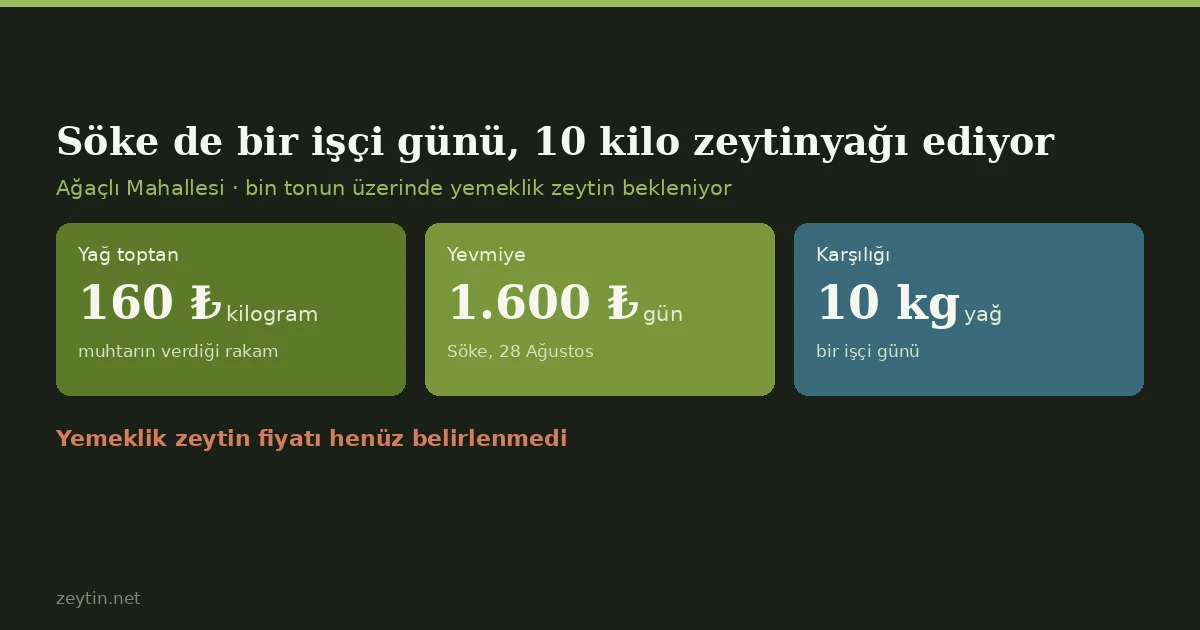
Over 1,000 tonnes of table olives are expected in Söke's Ağaçlı. Two figures given by the headman sum up the season: oil at 160 lira wholesale, a day's wage at 1,600.
Article
In Söke, one day's wage costs ten kilos of olive oil
Over 1,000 tonnes of table olives are expected in Söke's Ağaçlı. Two figures given by the headman sum up the season: oil at 160 lira wholesale, a day's wage at 1,600.
 Article
The International Olive Council grows: Iraq joins, Brazil and South Africa apply
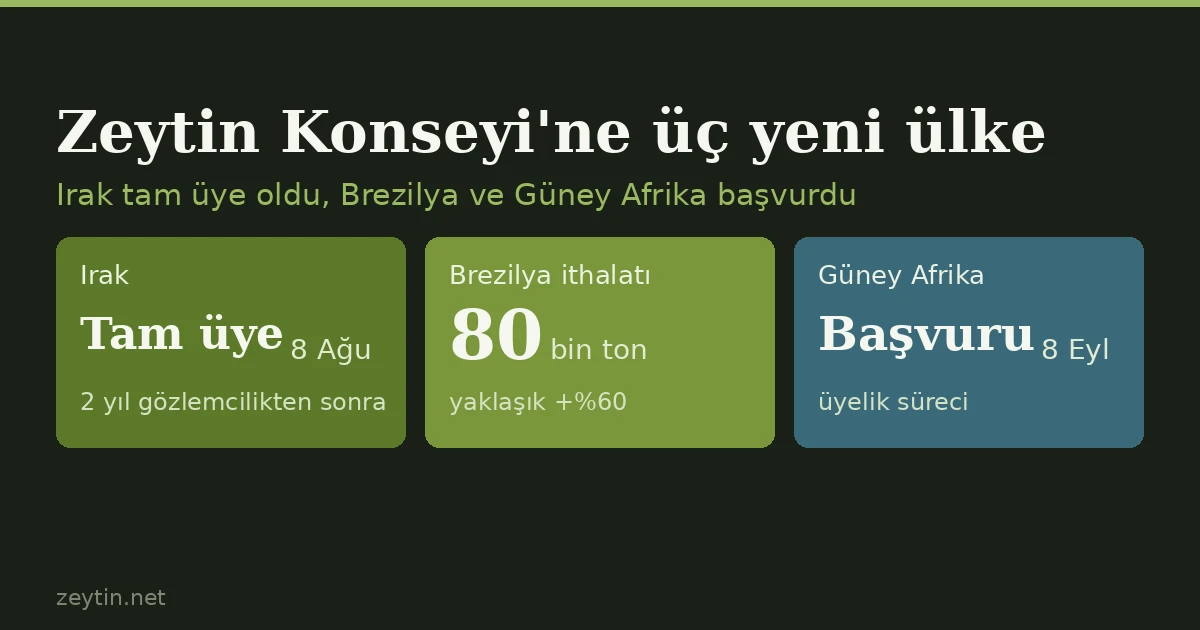
The International Olive Council (IOC) saw three developments in a month: Iraq became a full member on 8 August, South Africa submitted its membership request on 8 September and Brazil on 9 September. The expansion reflects olive oil's shift towards production and consumption areas beyond the Mediterranean.
Article
The International Olive Council grows: Iraq joins, Brazil and South Africa apply
The International Olive Council (IOC) saw three developments in a month: Iraq became a full member on 8 August, South Africa submitted its membership request on 8 September and Brazil on 9 September. The expansion reflects olive oil's shift towards production and consumption areas beyond the Mediterranean.
 Article
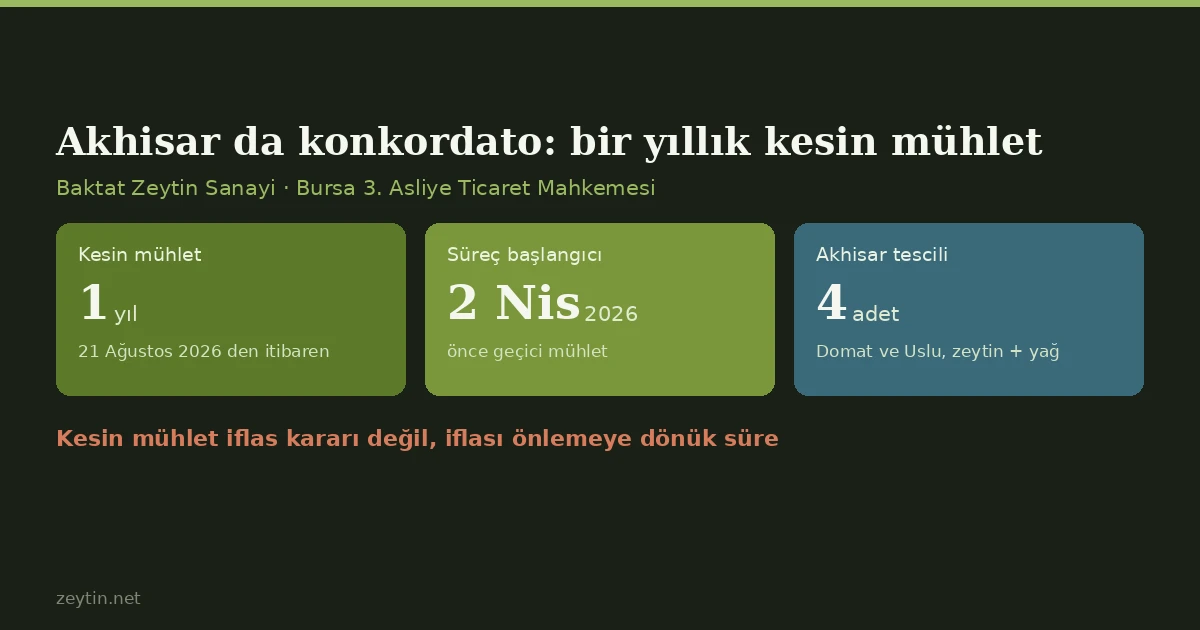
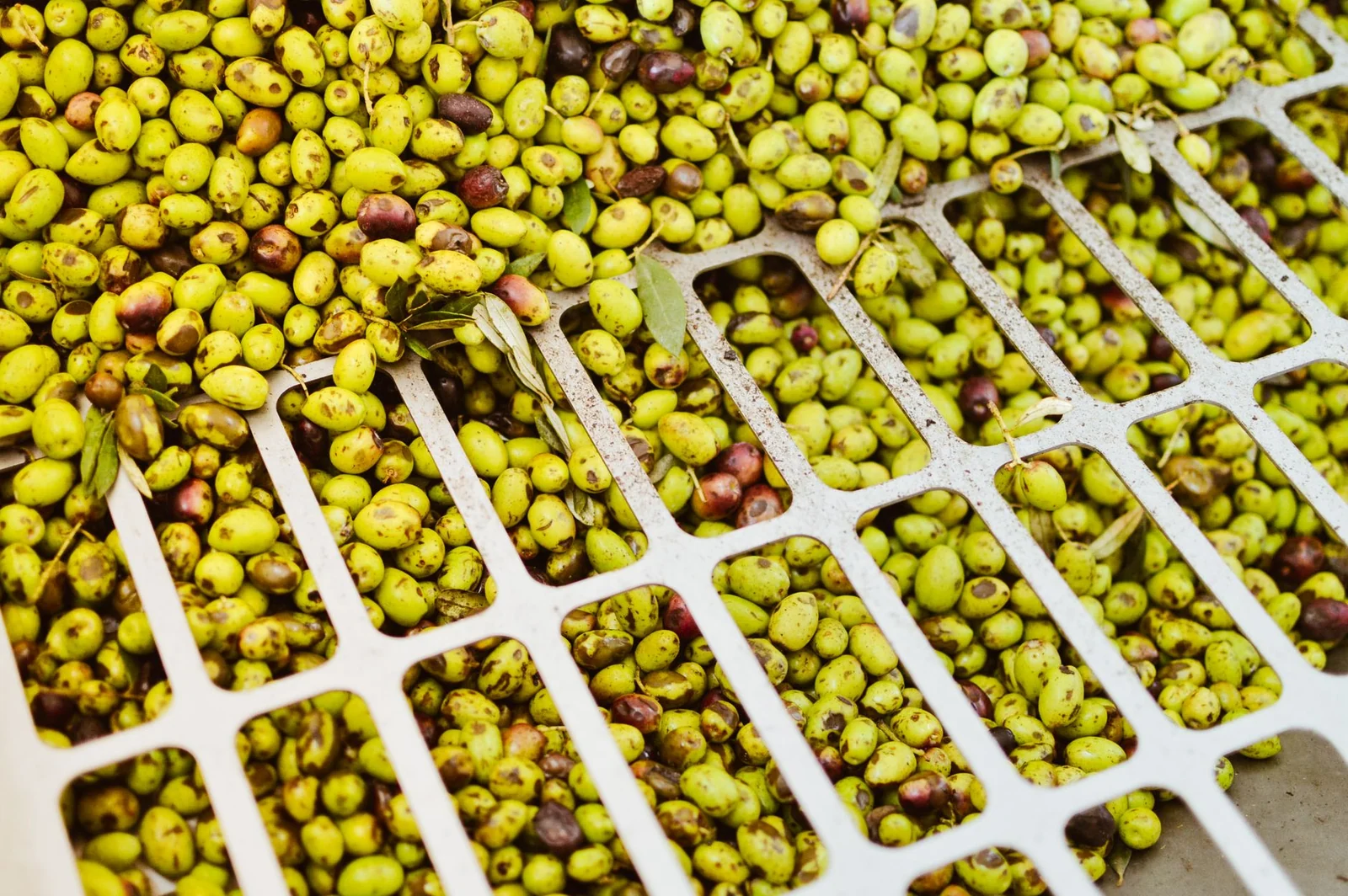
Concordat in Akhisar: a one-year moratorium for Baktat Zeytin
A Turkish commercial court has granted a one-year definitive moratorium to Baktat Zeytin, a table-olive processor in Akhisar. We set out what the ruling means and why it matters for the sector.
Article
Concordat in Akhisar: a one-year moratorium for Baktat Zeytin
A Turkish commercial court has granted a one-year definitive moratorium to Baktat Zeytin, a table-olive processor in Akhisar. We set out what the ruling means and why it matters for the sector.
 Article
Algeria expects a record 150,000 tonnes: the Mediterranean supply map is shifting
Algeria's 2025/26 olive oil output is expected to exceed 150,000 tonnes — up 76% on the previous season and a third consecutive rise. With domestic consumption near 81,000 tonnes, an exportable surplus appears. In a season when Turkish exports fell 62% by value, that means new competition in the bulk market.
Article
Algeria expects a record 150,000 tonnes: the Mediterranean supply map is shifting
Algeria's 2025/26 olive oil output is expected to exceed 150,000 tonnes — up 76% on the previous season and a third consecutive rise. With domestic consumption near 81,000 tonnes, an exportable surplus appears. In a season when Turkish exports fell 62% by value, that means new competition in the bulk market.