How Much Olive Oil a Day?
Olive oil being healthy does not make it unlimited. A practical look at portions, calories and the logic of replacement.
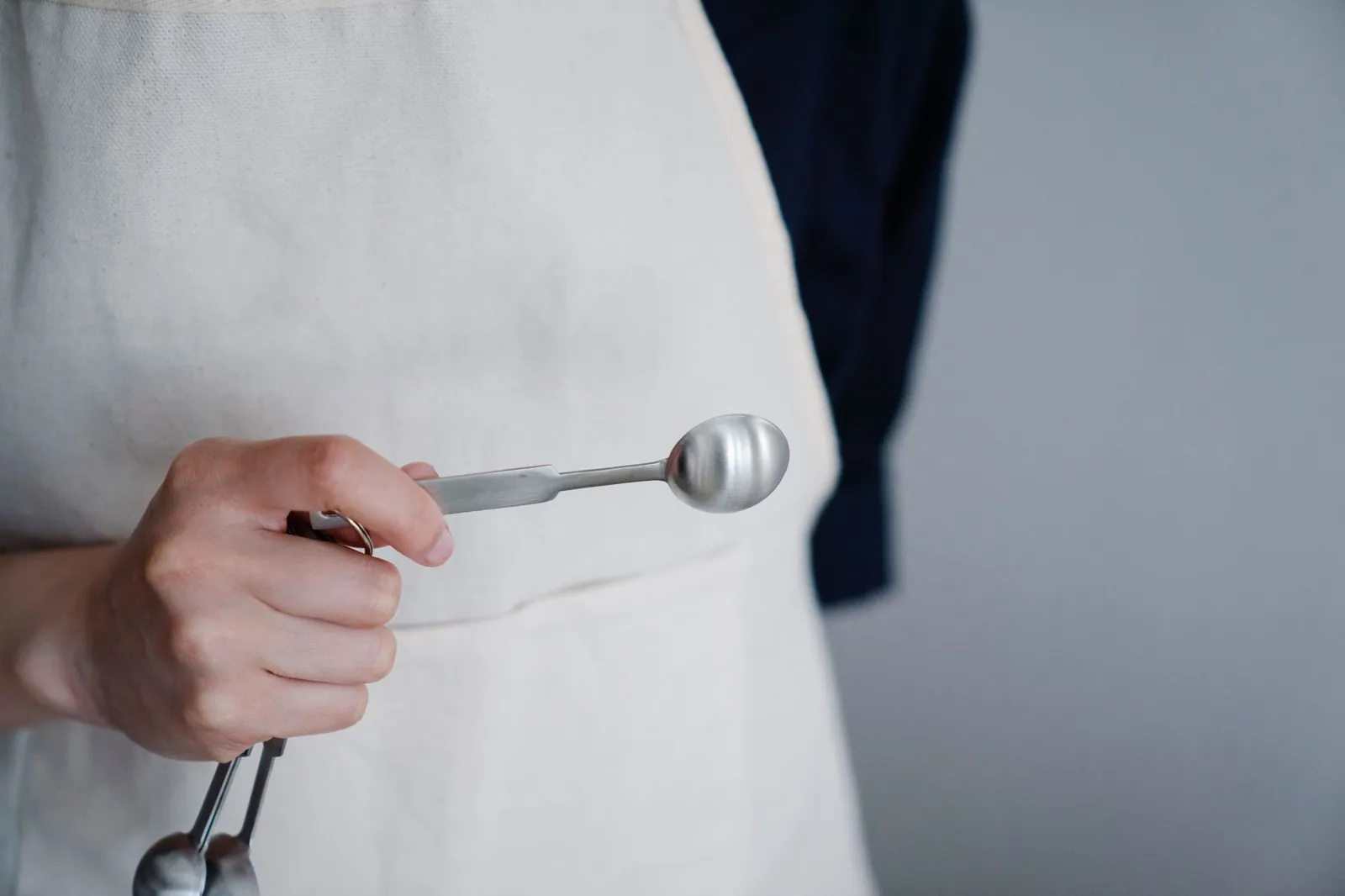
When olive oil's place in the diet is discussed, the question most often skipped is this: how much? People assume a "healthy" oil can be eaten without limit, but olive oil is pure fat and every spoonful counts. This article explains the commonly accepted ranges, what they are based on, and how to measure in daily life.
The short answer
There is no single figure that applies to everyone; it depends on a person's total energy needs, weight and the rest of their diet. Still, the practical range that often appears in studies describing the Mediterranean diet is 2-4 tablespoons a day, roughly 25-50 grams.
| Daily amount | Approx. grams | Calories | Share of a 2,000 kcal day |
|---|---|---|---|
| 1 tablespoon | 13.5 g | ≈120 kcal | 6% |
| 2 tablespoons | 27 g | ≈240 kcal | 12% |
| 3 tablespoons | 40 g | ≈360 kcal | 18% |
| 4 tablespoons | 54 g | ≈480 kcal | 24% |
The table makes one thing clear: four tablespoons of olive oil a day comes close to a quarter of an average adult's daily energy. That amount only makes sense when it replaces other fats.
Calories first
Olive oil is pure fat, and 1 tablespoon carries about 120 calories. A heaped tablespoon is more than twice the energy of a slice of bread. Spoon, millilitre and gram conversions are set out in how many calories are in olive oil.
That does not make olive oil bad, but "healthy" and "unlimited" are different things. Pouring three tablespoons over a salad by eye adds 350-400 calories without you noticing.
Where do these ranges come from?
Mediterranean diet studies. In the large Spanish study known as PREDIMED, participants in the extra virgin olive oil group were advised to use at least four tablespoons of olive oil a day, and their households were given a litre of extra virgin oil a week. That group saw a reduction in major cardiovascular events. But the result came from a whole dietary pattern including vegetables, pulses, fish and nuts, not from the number of spoonfuls alone. Details are in what is the Mediterranean diet.
The authorised health claim. The olive oil polyphenols claim, authorised following an assessment by the European Food Safety Authority, is defined on the basis of 20 grams of olive oil a day. So roughly one and a half tablespoons is the amount on which that benefit is calculated. The claim applies only to extra virgin oils high in polyphenols; details are in oleocanthal and polyphenols.
Actual consumption in Turkey. According to statements by sector representatives, per capita olive oil consumption in Turkey is around 2 litres a year. That works out at a little more than a teaspoon a day. So for most people the problem is not too much, but adding without replacing.
The real point: replace, don't add
This is the crucial part. If you add olive oil on top of your existing diet, all you do is raise your daily calories.
What matters is replacing:
- Olive oil instead of butter
- Olive oil instead of margarine
- Olive oil instead of sunflower oil
- Olive oil and lemon instead of ready-made salad dressing
Replacing saturated fat with monounsaturated fat is considered beneficial for blood cholesterol; the details are in olive oil and heart health. We compared it with butter in olive oil or butter.
A sample day
For an adult aiming at about three tablespoons a day, a realistic distribution could look like this:
- Breakfast: 1 teaspoon over cheese and tomatoes (≈40 kcal)
- Lunch: 1 tablespoon on a bowl of salad (≈120 kcal)
- Dinner: roughly 1 tablespoon in a portion of a vegetable dish cooked in olive oil (≈120 kcal)
- Cooking: greasing the pan with a brush uses far less oil than pouring
This distribution closes the day at around 280 calories of fat, with most other fats replaced by olive oil.
Learning to measure
Pouring straight from the bottle almost always gives more than you think. Simple fixes:
- Measure with a spoon, especially for salads and pasta.
- Use a pourer cap that controls the flow and stops the oil gushing out.
- Use a brush to grease the pan; pouring a spoonful into the pan is often unnecessary.
- Reducing the cooking water and adding the oil at the end improves both flavour and portion control.
Cooked or raw?
Both fit a healthy diet. The smoke point of olive oil is above home cooking temperatures and it resists oxidation under heat; the details are in is olive oil suitable for frying. Even so, polyphenols and aroma are best preserved in raw use. A practical balance: measured amounts for cooking, good extra virgin oil over salads and vegetable dishes.
Should someone trying to lose weight give up olive oil?
They don't need to give it up; they need to measure it. Weight loss is decided by daily energy balance, and because olive oil is one of the densest sources of calories in that balance, it is the item whose quantity slips most easily. The approach that works in practice is to cut total fat while keeping olive oil's share: butter, margarine and frying oils go, and measured amounts of olive oil in salads and vegetable dishes stay. One or two tablespoons a day fit comfortably into most weight loss plans. Cutting out fat entirely makes meals less satisfying and less tasty, and can make a diet harder to stick to. Planning with a dietitian is the healthiest way to reach a personal goal.
Is a spoonful of olive oil on an empty stomach necessary?
Drinking a spoonful of olive oil on an empty stomach in the morning is a common habit. It has no known harm for a healthy person, but no proven special benefit either. Olive oil's effect depends not on when it is taken but on what it replaces in the overall diet. That spoonful also counts towards the daily amount. For people with gallbladder problems, a load of fat on an empty stomach can trigger symptoms; they should not take up such a habit without consulting a doctor.
Olives count too
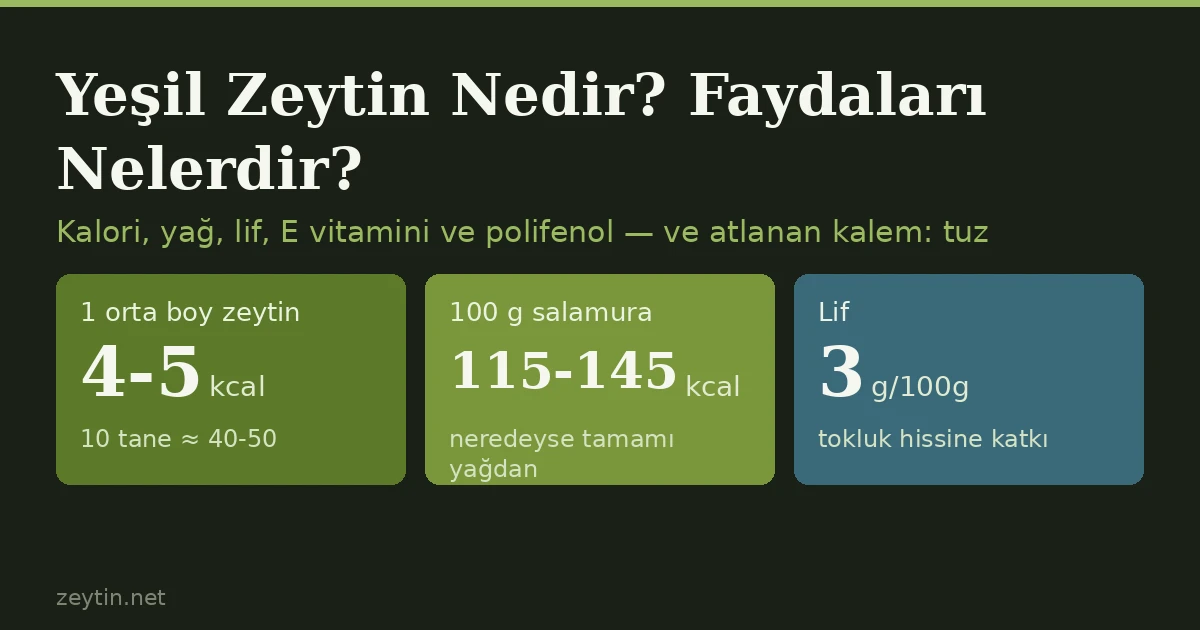
Olives themselves belong to the fatty foods group: one medium olive is about 4-5 calories. If you eat 10 olives a day, that adds to the fat share of your diet. The sodium in brined olives is a separate issue for people watching their blood pressure; it was covered in the nutritional profile of olives.
Who should be more careful?
- People watching their weight. Fat is the food whose portion slips most easily.
- People with gallbladder problems. Fatty meals can trigger symptoms; follow your doctor's advice.
- People taking medication that affects blood clotting. Discuss large, sudden dietary changes with your doctor.
- People on salt-restricted diets. This concerns table olives more than oil.
The information on this page is general nutrition information and does not replace medical advice; for an amount tailored to you, consult a doctor or dietitian.
One rating per visitor; you can change yours at any time. Ratings are real reader votes — no seeded or default scores.
Related
 Article
Olive pollen allergy: the quiet cause of May to July
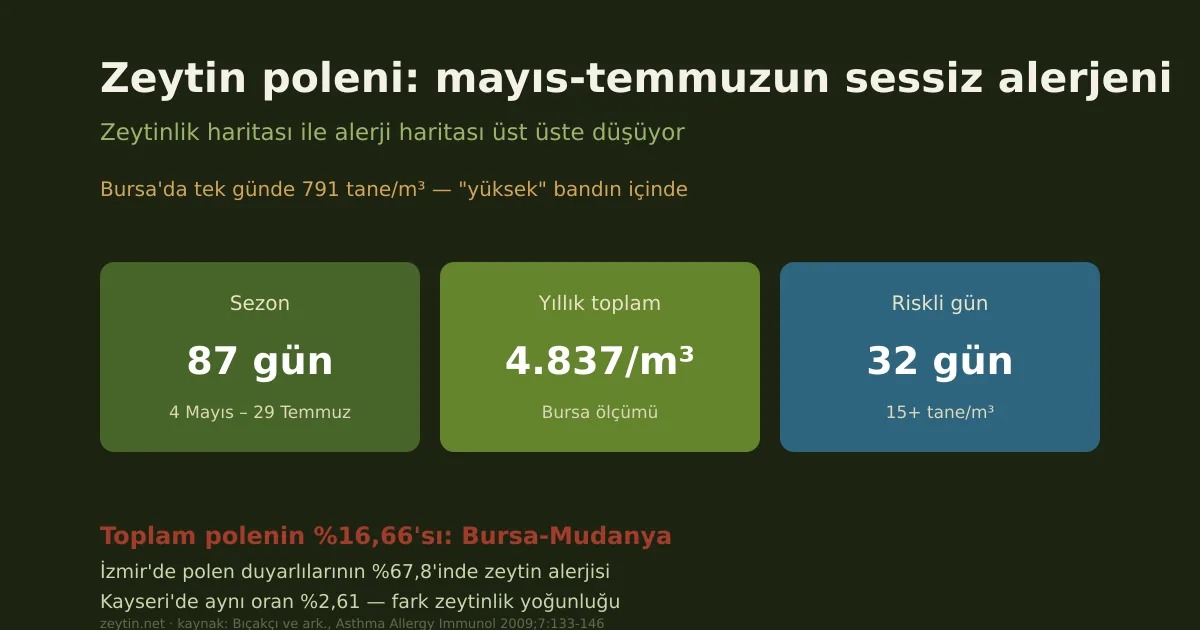
Olive pollen fills the air across western Türkiye from May to July. Bursa recorded 791 grains/m³ in one day over an 87-day season; 67.8% of pollen-sensitised patients in İzmir react to it.
Article
Olive pollen allergy: the quiet cause of May to July
Olive pollen fills the air across western Türkiye from May to July. Bursa recorded 791 grains/m³ in one day over an 87-day season; 67.8% of pollen-sensitised patients in İzmir react to it.
 Article
What Is the Mediterranean Diet?
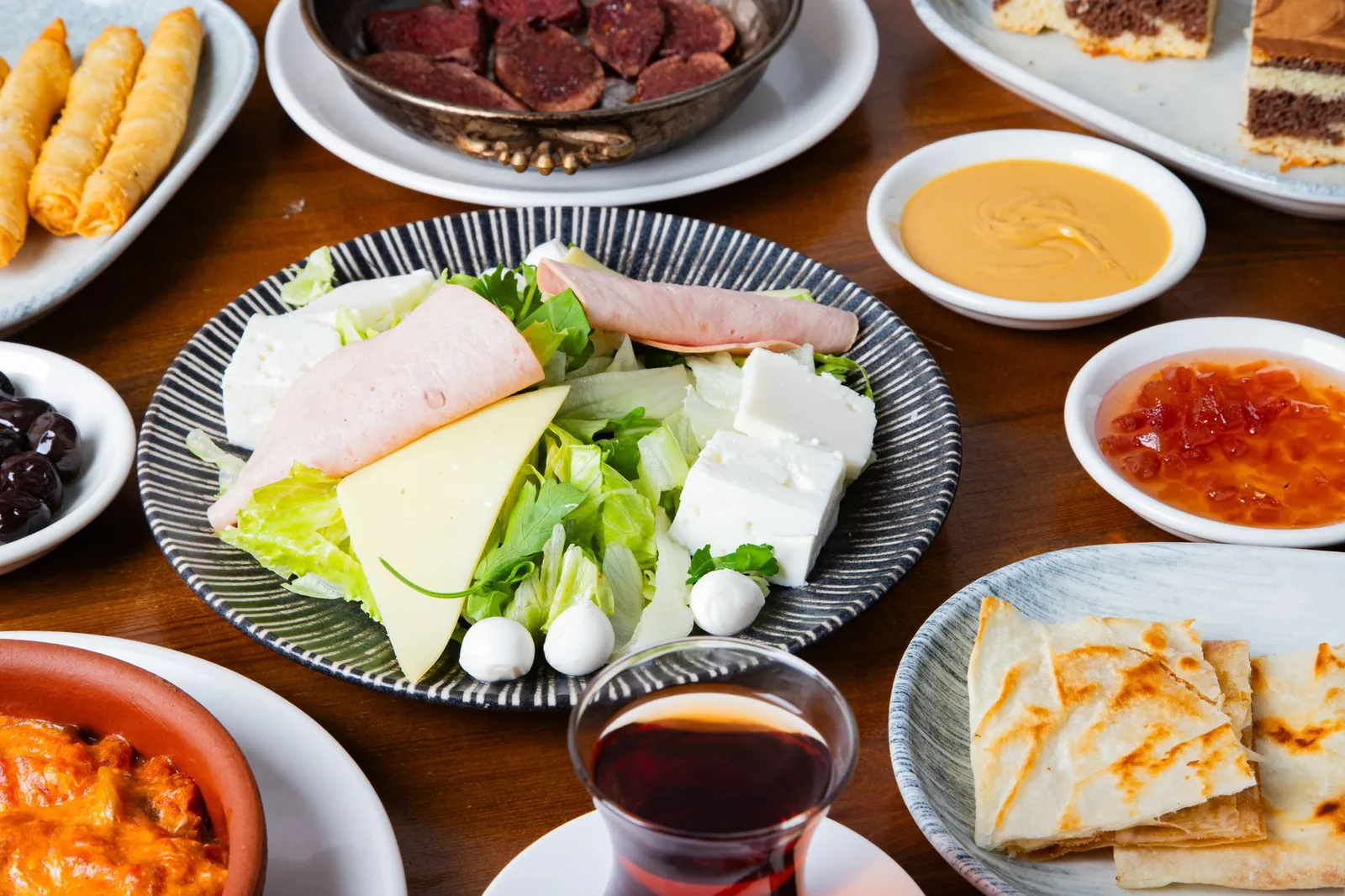
Not a weight-loss plan but a pattern of eating. The basics of the Mediterranean way of eating, recognised by UNESCO, and where olive oil sits within it.
Article
What Is the Mediterranean Diet?
Not a weight-loss plan but a pattern of eating. The basics of the Mediterranean way of eating, recognised by UNESCO, and where olive oil sits within it.
 Article
The nutritional profile of olive oil: fatty acids, vitamins E and K, polyphenols
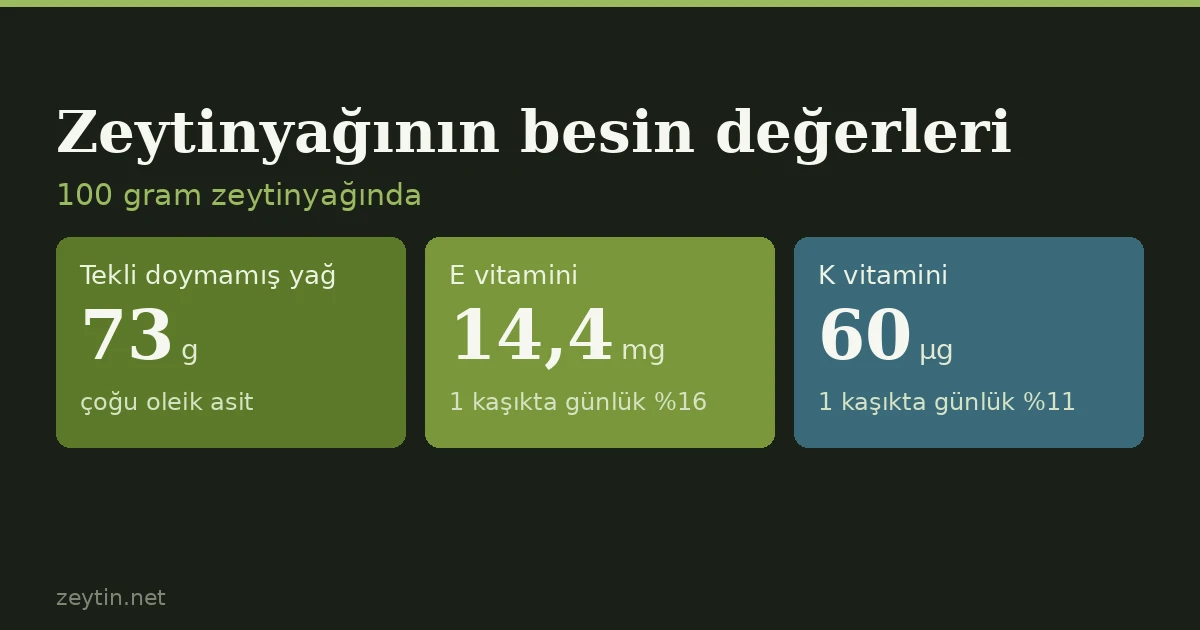
100 grams of olive oil contain 73 grams of monounsaturated fat, 14 mg of vitamin E and 60 micrograms of vitamin K, with no protein, carbohydrate or cholesterol. A per-tablespoon table, and why polyphenols do not appear on the label.
Article
The nutritional profile of olive oil: fatty acids, vitamins E and K, polyphenols
100 grams of olive oil contain 73 grams of monounsaturated fat, 14 mg of vitamin E and 60 micrograms of vitamin K, with no protein, carbohydrate or cholesterol. A per-tablespoon table, and why polyphenols do not appear on the label.
 Article
What Are Green Olives? What Are Their Benefits?
What green olives are, what they contain and how many calories. Fat, fibre, vitamin E and polyphenols — and the salt that portion talk must not skip.
Article
What Are Green Olives? What Are Their Benefits?
What green olives are, what they contain and how many calories. Fat, fibre, vitamin E and polyphenols — and the salt that portion talk must not skip.