Edincik Olive: high water content makes it a table olive
Registered in 2024. The certificate gives one reason why the cultivar goes to the table: high water content. Its volatiles include 1.5-25% ethyl acetate.
Oil content usually decides whether a cultivar goes to the table or to the mill. For Edincik Olive the deciding factor is water: the certificate attributes its table use directly to high water content.
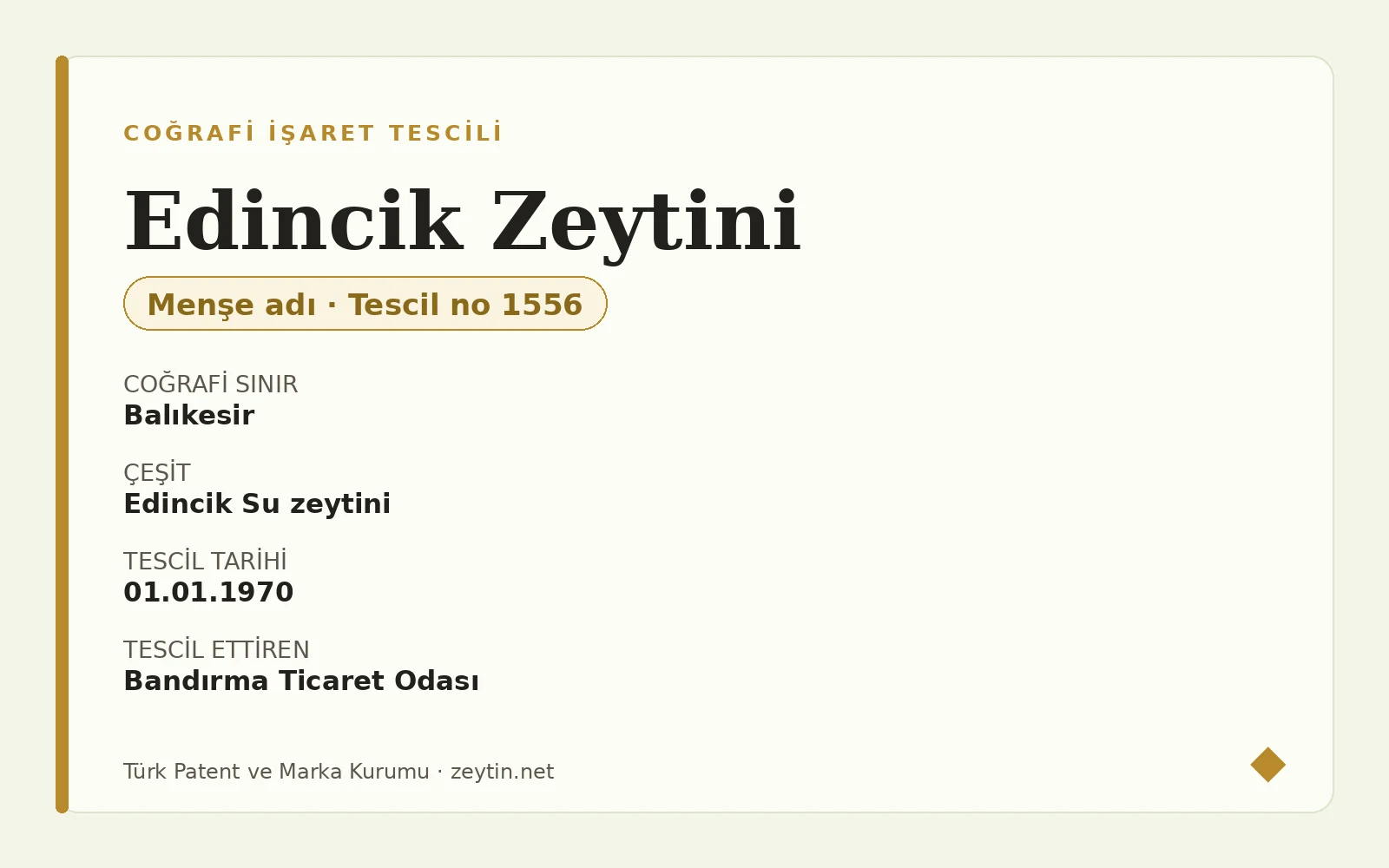
The record
| Registration no | 1556 |
| Registration date | 07.03.2024 |
| Protection from | 21.01.2022 |
| Type | Designation of origin |
| Registered by | Bandırma Chamber of Commerce |
| Area | The Bandırma district of Balıkesir |
| Cultivar | Edincik Su |
The cultivar grows densely in Bandırma's Edincik neighbourhood, from which it takes its name.
Measured values
| Criterion | Value |
|---|---|
| Fruit width | 14 – 21 mm |
| Fruit length | 18 – 26 mm |
| Weight of 100 fruits | 250 – 600 g |
| Moisture | 50 – 74% |
| Oil content | 13 – 24% |
Moisture of 50-74% is a wide and high band. Oil content dropping as low as 13% follows from the same cause: water displaces oil.
Phenolics and volatiles
| Phenolic (mg/kg) | Value |
|---|---|
| Oleuropein | 3.5 – 5.0 |
| Tyrosol | 4.0 – 5.0 |
| Hydroxytyrosol | 6.0 – 8.0 |
| Volatile (%) | Value |
|---|---|
| Ethyl acetate | 1.5 – 25.0 |
| 3-methyl-1-butanol | 4.0 – 14.0 |
| Mequinol | 7.0 – 18.0 |
The certificate describes the cultivar as rich in ethyl acetate, 3-methyl-1-butanol and mequinol — the three compounds that carry its aroma.
The tree
Growth is of medium vigour, forming a medium-sized, spreading, rounded crown. Branching is of medium density, as is foliage. Branches two years and older are beige-green, young ones green-grey. The leaves are long, narrow and elliptical.
A condition on planting
The certificate states one production requirement plainly: groves must be established on irrigable, fertile land. Where the slope exceeds 5%, terracing is required. Measures are taken where the water table is high or water collects.
A consistent requirement for a cultivar that wants water.
The oil registration of the same area
The Bandırma Chamber of Commerce also registered the cultivar's oil separately: Edincik Su Olive Oil (no 1595, designation of origin). An oil registration from a high-water cultivar is an interesting choice — the slow-ripening effect of the Erdek gulf is the argument made there.
The production steps in the document
The registration describes production step by step. The document's own sequence:
1. Toprak İşleme — Zeytinliklerde yılda 2-3 kez toprak işlemesi yeterli olur.
2. Gübreleme — İlk gübreleme sürgün faaliyeti başlamadan yaklaşık bir ay önce yapılır.
3. Sulama — Edincik Zeytinin yetiştiği bölgelerde genellikle ağaçlar sulanmaz.
4. Budama — Budama; şekil, verim ve gençleştirme budaması olmak üzere üçe ayrılır.
5. Yeşil sofralık zeytin üretimi — Hasat ve Sofralık Yeşil Zeytin Hazırlığı: Yeşil sofralık zeytin üretiminde hasat, Ekim ayının ilk haftasında başlar.
6. Salamura Suyu Hazırlığı — Zeytinlerin acılığının giderilmesi için fermantasyon işlemi uygulanır.
7. Tatlandırma — Fermantasyon süresince salamuranın tuzluluk ve asitlik oranları kontrol edilir.
8. Zeytinlerin Olgunlaştırılması — Zeytinler fermantasyon suyu içerisinde yaklaşık 9 ay bekleyerek olgunlaşır.
That this sequence is binding is what separates a geographical indication from a trade mark: a mark says who produced something, a geographical indication also sets down how it must be produced.
The cultivar behind it, measured
The registration is granted to a place, but the cultivar the definition rests on has measurable values:
| Property | Value |
|---|---|
| Meyve ağırlığı | 2,5-6 g |
| 1 kg’daki tane sayısı | 200 |
| Et oranı | %89 |
| Yağ oranı | %17 |
| Ana kullanım | siyah sofralık |
| Meyve boyu | 22 mm |
| Meyve eni | 18 mm |
| Sofralık sıralamasındaki yeri | ilk dokuz |
| Yöre | Balıkesir · Bandırma · Edincik |
At 17% the oil content sits mid-range; yield alone is not the argument here, aroma is.
Its place in Balıkesir's olive production
| Item | Value |
|---|---|
| Fruit production | 314,189 t |
| — for oil | 268,283 t |
| — for the table | 45,905 t |
| Olive oil production | 47,618 t |
| Trees | 11,345 thousand |
| Yield per tree | 27.7 kg |
85% of the province's fruit goes to oil — so this table-olive registration defines a niche outside the main flow.
One rating per visitor; you can change yours at any time. Ratings are real reader votes — no seeded or default scores.
Related
 Article
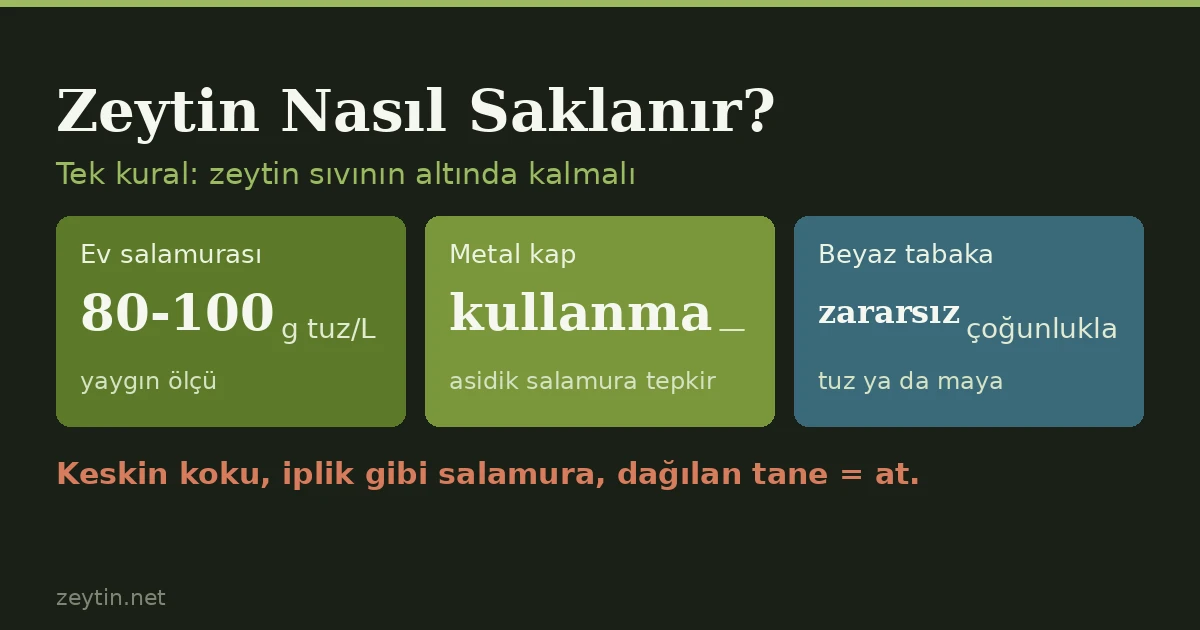
How to Store Olives: From an Opened Jar to a Winter Batch
How long does an opened jar last, what to do when the brine runs low, how to keep dry-cured olives? Why mould forms and what the white film actually is.
Article
How to Store Olives: From an Opened Jar to a Winter Batch
How long does an opened jar last, what to do when the brine runs low, how to keep dry-cured olives? Why mould forms and what the white film actually is.
 Article
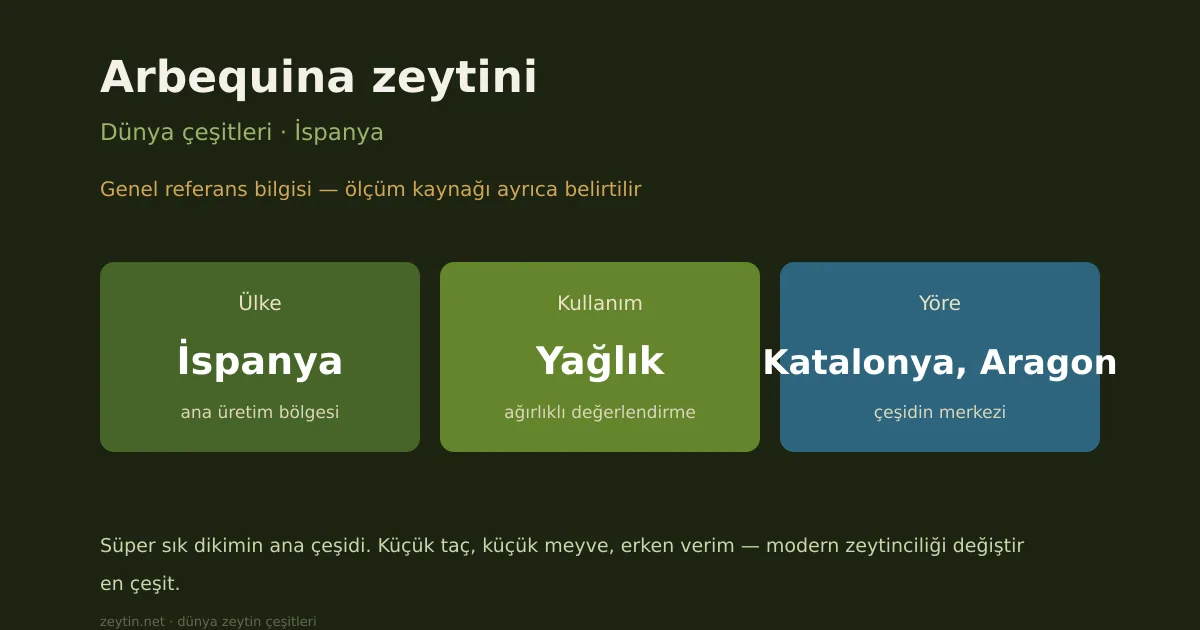
Arbequina olive: Spain's oil variety
The mainstay of super-high-density planting. Small canopy, small fruit, early bearing — the variety that changed modern olive growing.
Article
Arbequina olive: Spain's oil variety
The mainstay of super-high-density planting. Small canopy, small fruit, early bearing — the variety that changed modern olive growing.
 Article
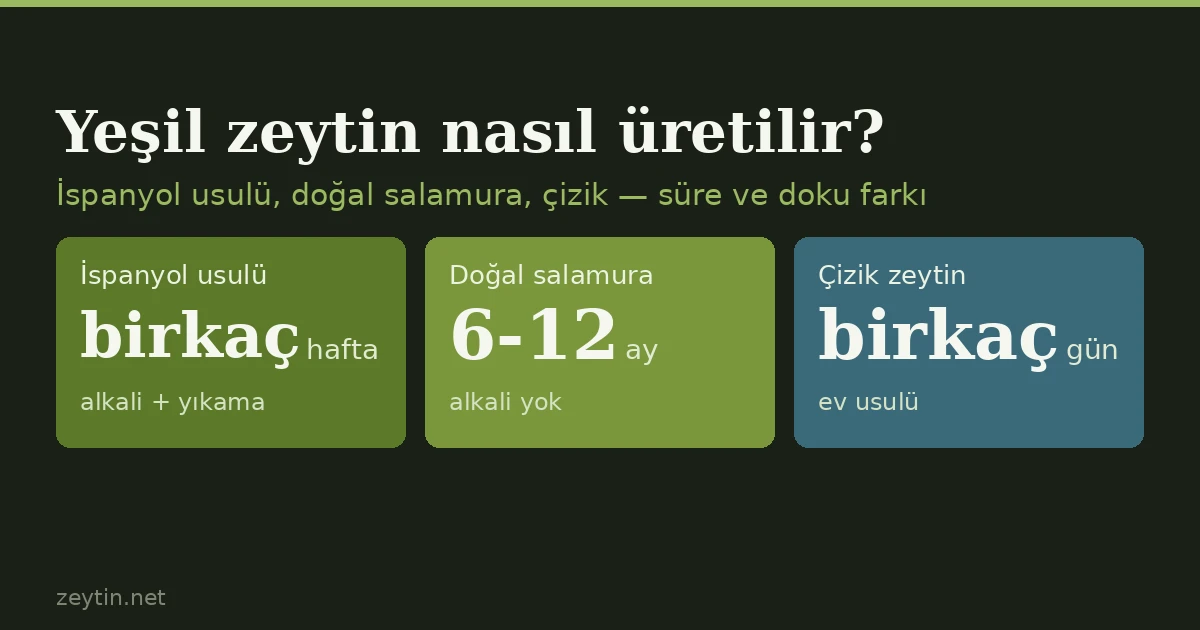
How are green table olives made? Three methods, three results
Green olives cannot be eaten off the tree; the bitterness must be removed. The difference between Spanish-style, natural brine and scored methods sets time, texture and taste.
Article
How are green table olives made? Three methods, three results
Green olives cannot be eaten off the tree; the bitterness must be removed. The difference between Spanish-style, natural brine and scored methods sets time, texture and taste.
 Article
Where do olives grow in Turkey? The picture in 45 provinces
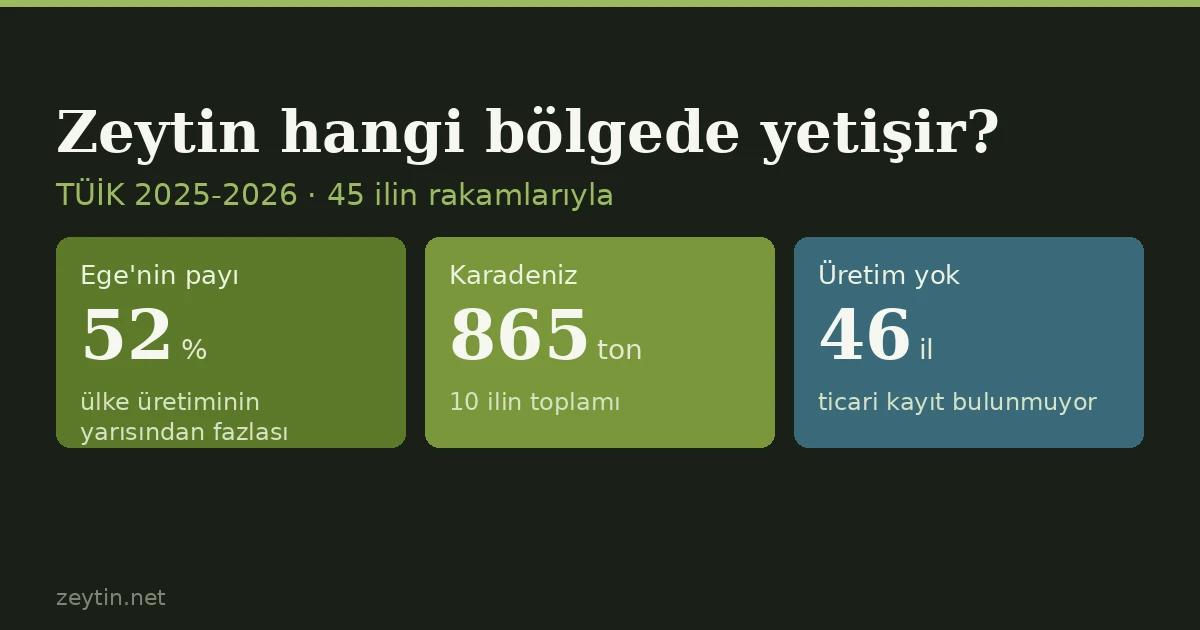
The Aegean alone produces half the national crop; ten Black Sea provinces together manage 865 tonnes. In 46 provinces there is no commercial production at all.
Article
Where do olives grow in Turkey? The picture in 45 provinces
The Aegean alone produces half the national crop; ten Black Sea provinces together manage 865 tonnes. In 46 provinces there is no commercial production at all.