What to check when buying an olive grove: title deed, shares and the trees
In Türkiye, an olive grove sale is valid only at the land registry, and a share-cropper's lease continues with the new owner. In co-owned groves, the pre-emption right can last up to a year and, since a 2025 amendment, is decided on market value; transfers of shares need ministry permission. Law 3573 bars reducing olive-growing areas. Trees, grafting, disease, water, frost and real yield from several seasons' receipts: a point-by-point checklist.
Short answer: when buying an olive grove in Türkiye, check three things separately. The title deed (who owns it, whether it is held in shares, what annotations it carries), what the law allows (whether it can be divided, whether trees can be removed, whether anything can be built) and the grove itself (number and age of trees, variety, disease, water, frost risk, real yield). The first two are checked at a desk; the third in the grove, ideally at harvest time.
This article is a checklist. The legal points are taken from the current texts of the laws concerned.
1. The title deed: a sale is valid only at the land registry
Under Article 706 of the Turkish Civil Code, a contract intended to transfer ownership of real property is valid only if it is drawn up in official form. A "private sale" paper signed in the village does not transfer ownership. Before paying a deposit, look at the land registry record. Check:
- Owner and share: Is the seller the sole owner, or selling one share of several?
- Type of land: Is the parcel recorded as "olive grove" (zeytinlik) or as "field" (tarla)?
- Annotations: Mortgage, attachment, pre-emption annotation, lease annotation.
If a share-cropper or tenant works the grove, the sale does not remove them. Under Article 310 of the Turkish Code of Obligations, if leased property changes hands, the new owner becomes a party to the lease. Ask who farms the grove and under what agreement before the sale.
2. Groves held in shares: two separate obstacles
Many olive groves have been divided through inheritance and are held in co-ownership. Buying a share carries two distinct risks.
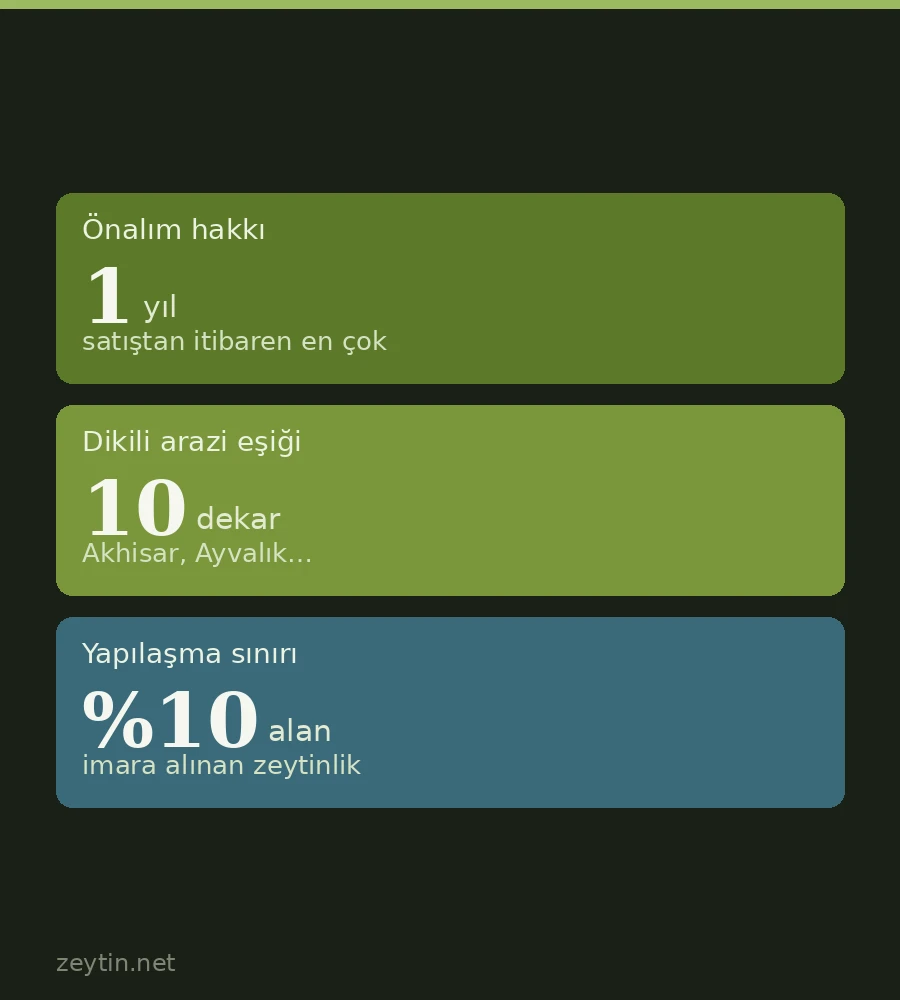
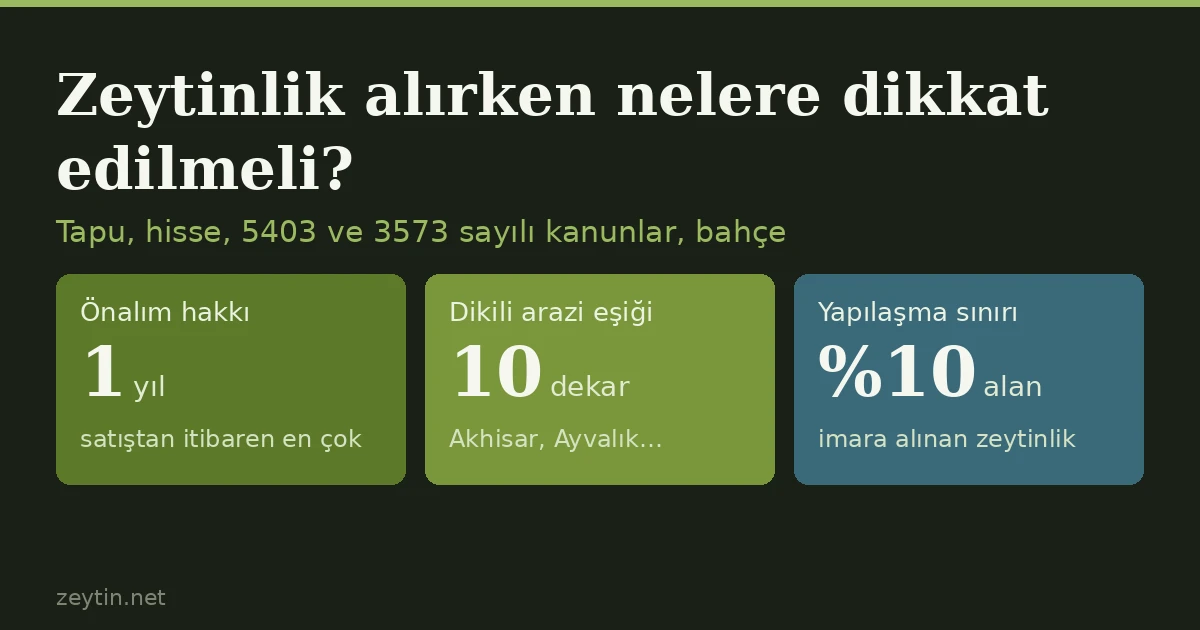
Pre-emption right. If one co-owner sells their share to a third party, the other co-owners may exercise a right of pre-emption (Civil Code art. 732). The sale must be notified to the other co-owners through a notary by the buyer or the seller. The right lapses three months after notification, and in any case one year after the sale (art. 733). It is exercised by filing a lawsuit against the buyer. Under an amendment dated 24 December 2025, the court now determines the market value of the share, and the holder of the right must deposit that amount together with the buyer's registry costs (art. 734). In practice, for up to a year after the sale you may be forced to hand your share over to a co-owner. Waiving the pre-emption right for a particular sale must be done in writing and can be done before the sale. Obtaining written waivers from the co-owners closes this risk.
Ministry permission. A paragraph added in 2020 to Article 8/B of the Soil Conservation and Land Use Law (No. 5403) provides that, on agricultural land, subdivision, creation of shares, transfer of shares, conversion of joint ownership into shared ownership and change of land type are carried out with the permission of the Ministry of Agriculture and Forestry. Buying a share of a co-owned grove therefore requires confidence, before going to the registry, that this permission can be obtained.
3. "Let's split off a few decares" may not be possible
Law No. 5403 sets two thresholds. The first is the minimum agricultural land size, which for land under perennial crops cannot be set below 0.5 hectares (5 decares). Below that size, land cannot be subdivided, divided into shares, or have its number of shares and co-owners increased (art. 8). The law does allow an exception for areas with crops that need particular climate and soil, such as olives: with the Ministry's approval, smaller parcels can be created.
The second is the sufficient-income agricultural land size, set district by district in a list annexed to the law (art. 8/A). In Akhisar, Ayvalık, Burhaniye, Edremit, Gemlik, Milas, Kemalpaşa, Tire, Mut, Nizip and Altınözü, the listed value for perennial-crop land is 10 decares. Under the law, agricultural land cannot be subdivided or divided below this size.
So buying part of a larger parcel and obtaining a separate title deed may not be possible as of right. Ask the provincial agriculture directorate and the land registry what can be done with the specific parcel before agreeing to buy.
4. An olive grove cannot be used like a field
Under Law No. 3573 on the Improvement of Olive Growing, designated olive-growing areas may not be reduced. Uprooting trees in these areas requires a ministry permit based on technical grounds, and even with a permit a tree may not be cut unless there is absolute necessity. Within 3 kilometres of these areas, no facility other than an olive oil mill may be built if it produces dust, smoke or chemical waste. Where olive-growing areas inside municipal limits are brought into a zoning plan, total built area cannot exceed 10% of the grove.
The practical consequence is simple. If the price of a grove has been set on the assumption that "I'll clear some trees and build a house or something else", that plan will very probably not work. We covered the history of the law in olive groves and mining legislation, and moving trees in can an olive tree be uprooted and moved.
5. The trees: count, look, ask
Number and age. Compare the area on the deed with the number of trees, and note gaps and new plantings separately. Old trees are not worthless: olives live for centuries and can recover with rejuvenation pruning. But expecting the yield of a young grove from them is a mistake.
Grafting. Ungrafted or wild trees may bear fruit, but their value is low. We explain how to tell them apart in does an ungrafted olive tree bear fruit.
Variety and pollination. In a single-variety grove, yield depends on that variety's self-fertility. Check whether there is a pollinator variety.
Disease. Trees dying back from the top or branch by branch may show Verticillium wilt. There is no effective chemical control for this soil-borne disease, and it directly affects the value of the grove. Galls on the branches are a sign of olive knot.
Real yield. Olive yields swing sharply between on and off years. Do not price a grove on one harvest. Ask the seller for mill receipts or producer receipts from the last two or three seasons. If there are no papers, compare the expected yield per tree with the ranges in how many kilos of olives one tree yields.
6. Water, soil and frost
An irrigated grove and a dry-farmed grove are different assets. If there is a well, ask whether it is licensed; if water comes from a shared irrigation cooperative, ask whether the right passes to the new owner. We discuss the effect of irrigation on olives separately. A soil analysis shows both fertiliser needs and how the grove has been looked after in the past.
Location is part of the price too. Hollows and valley floors where cold air settles raise the risk of frost. Asking the neighbours what happened in the grove during the last big frost tells you more than a map. For choosing a region, see cold-hardy olive varieties.
7. After the sale: ÇKS
Applications for agricultural support rely on the record in the Farmer Registration System (ÇKS). The seller's record does not pass to the buyer automatically. The new owner should register the grove in their own name at the district agriculture directorate. ÇKS records are not used to determine ownership; the only proof of ownership is the title deed.
Summary
- A sale of real property is valid only in official form at the land registry (Civil Code art. 706).
- A tenant's or share-cropper's lease continues with the new owner (Code of Obligations art. 310).
- In a co-owned grove, other co-owners' pre-emption right can last up to a year, and the case is decided on market value. Get written waivers.
- Transfers of shares and subdivision need ministry permission, and district thresholds for perennial-crop land limit division.
- Olive-growing areas may not be reduced, and uprooting trees needs a permit.
- Judge yield on receipts from several seasons, not on a single year.
⚠ This article provides general information and is not legal advice. Before buying, ask the land registry, the provincial or district agriculture directorate and, if necessary, a lawyer about the specific parcel.
One rating per visitor; you can change yours at any time. Ratings are real reader votes — no seeded or default scores.
Related
 Article
Should harvested olives be carried in crates or in sacks?
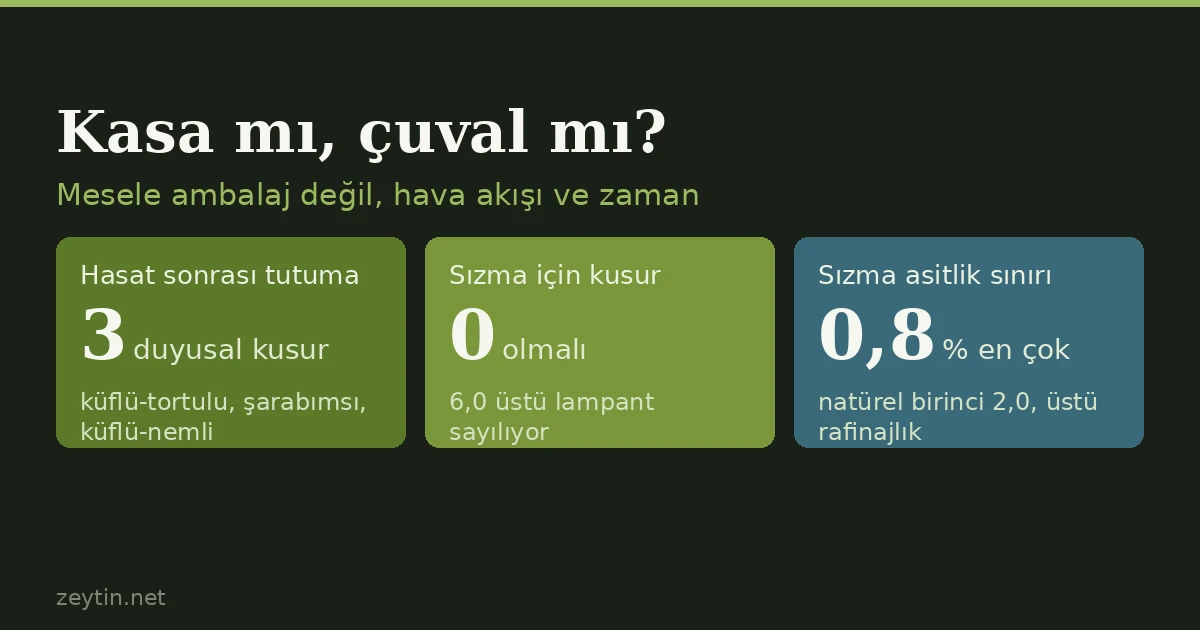
The cheapest decision of the harvest season is also one of the decisions that sets the grade of the oil. Three separate defects in the International Olive Council's vocabulary are defined directly by how the fruit was held after picking — and all three describe what a sack does.
 Article
When does the olive harvest begin?
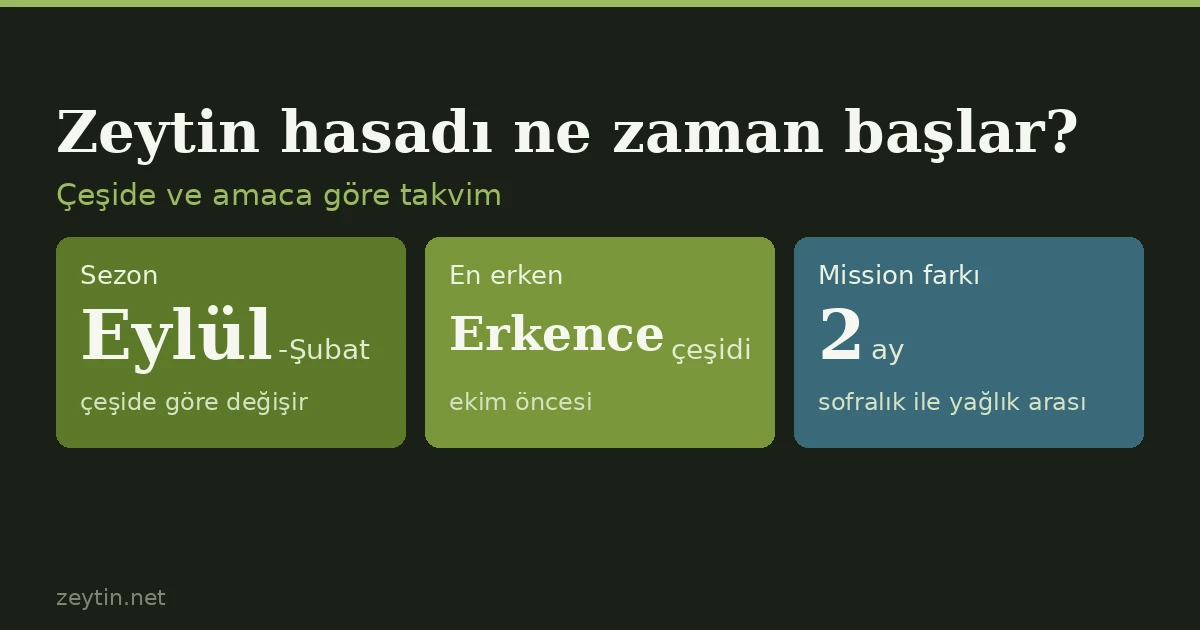
The harvest starts in late September and runs into February. Erkence is earliest, Memecik hangs into mid-December, and Mission's table and oil harvests are two months apart.
 Article
Olive Pruning: Why, When and How
Why olives are pruned, when to do it, formative and production pruning, rejuvenation and high-density systems.
 Article
Which olive variety is the most productive? Regular crops, early bearing and alternate bearing
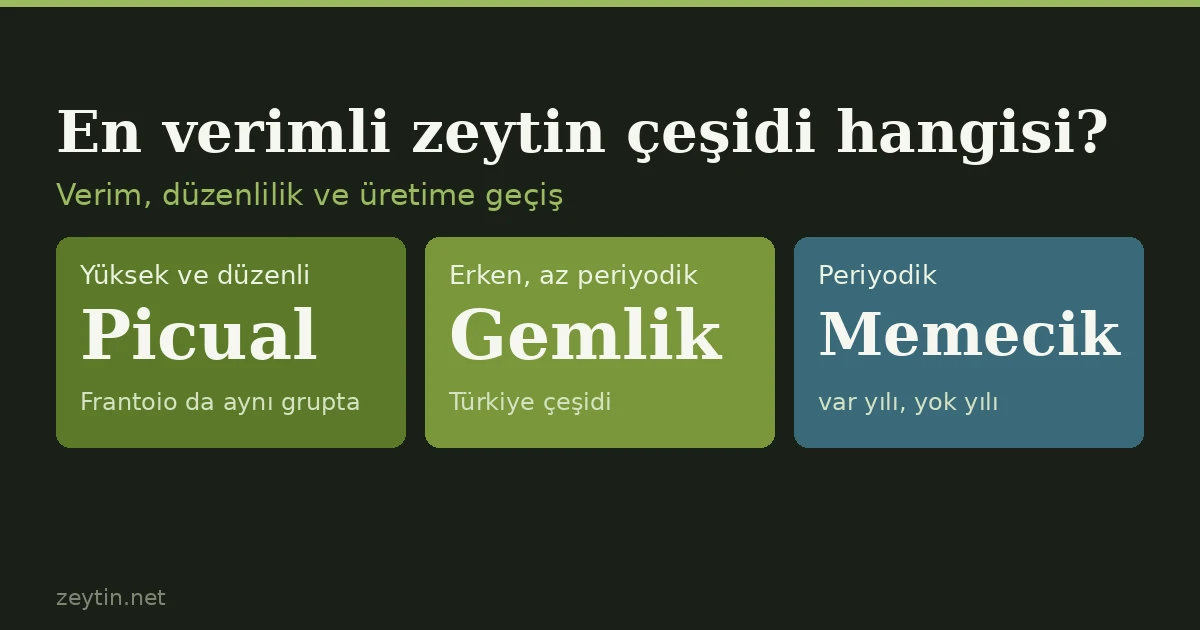
There is no single "most productive olive". Productivity depends on whether a tree bears regularly every year, how early it starts cropping and pollination. In our variety data, Picual and Frantoio are high and regular, Gemlik is early with low alternate bearing, while Kalamata, Hojiblanca and Memecik swing between on and off years.