Which table olive variety is best?
The leading varieties for black and green table olives, measured fruit weights, and how curing affects quality.
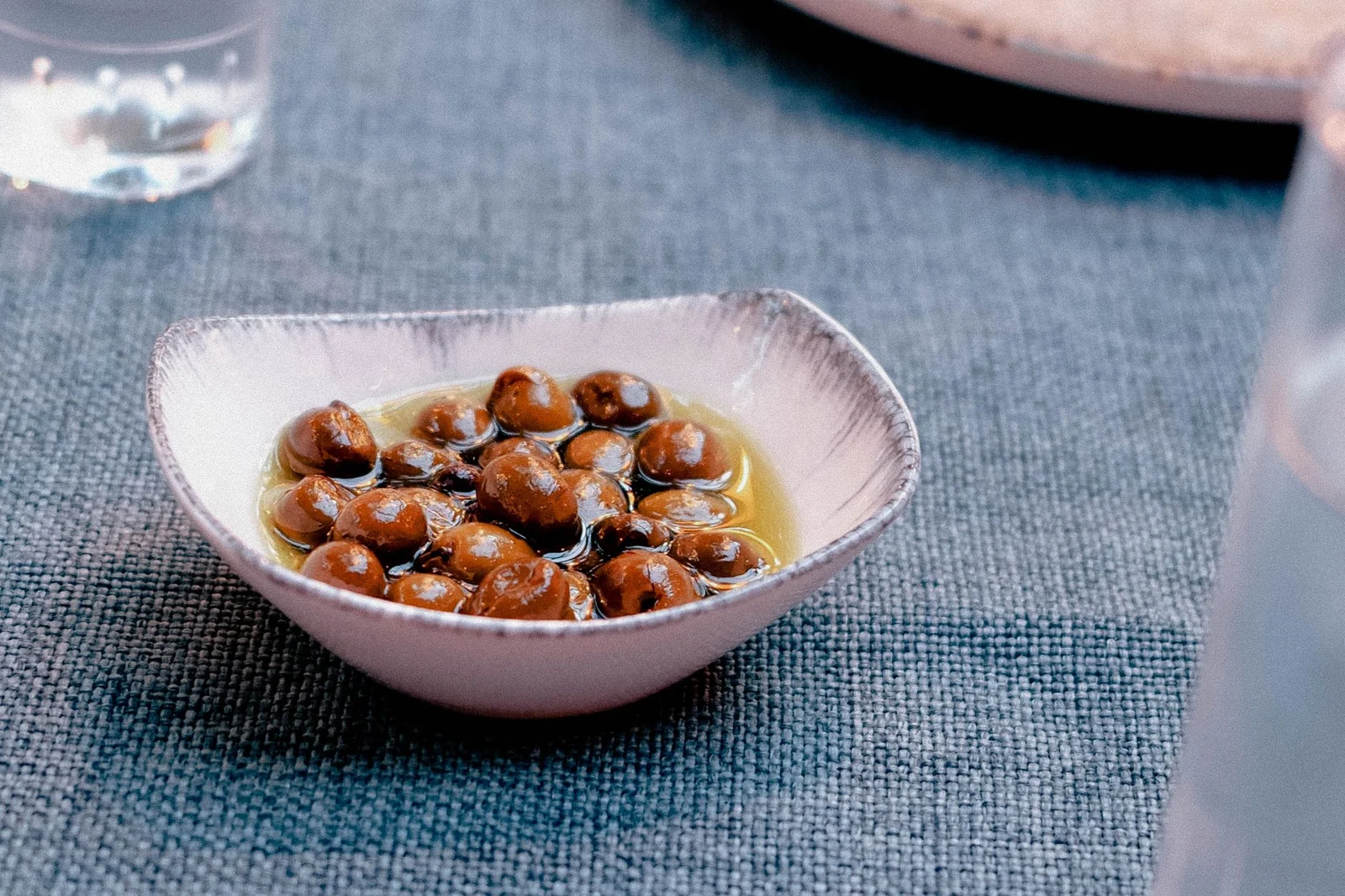
There is no single "best" table olive, because black and green table olives call for different varieties. In black olives the measure is flesh ratio and thin skin; in green ones, large fruit and firm flesh. No variety can lead in both.
Black table olives: Gemlik
Gemlik is Turkey's benchmark for black table olives — and not because of size. At 3.7 g it isn't a large fruit:
- High flesh-to-stone ratio: most of the fruit is edible
- Thin skin that softens in brine without breaking up
- Oil content of 29–30%, giving the flesh a rich texture
Curing it in Marmara by the natural dry-salt and brine methods brings these traits out. It holds 11% of the tree stock.
Other varieties doing the same job: Uslu (Akhisar, black table) and Erkence — the latter stands apart as the "hurma" olive that sweetens on the tree.
Green table olives: Domat
Domat is the variety for green table use and especially for stuffed olives:
- Fruit weight 7.96 g — more than twice Gemlik's
- Suits pitting and filling with pepper or almond
- Low oil content (20–23%), an advantage here: the fruit stays firm
Despite holding just 1.4% of the tree stock, it is one of the most visible varieties in shops. The reason is simple: it goes to the table, and its name is on the packaging.
Other green table options: Manzanilla (Spanish in origin, also grown in Turkey) and Sarı Ulak (Mersin–Adana).
Comparison
| Variety | Fruit | Type | Strength |
|---|---|---|---|
| Gemlik | 3.7 g | black | flesh ratio, thin skin |
| Domat | 7.96 g | green | large fruit, good for stuffing |
| Karamürsel Su | 9.44 g | green/black | among the largest fruit |
| Manzanilla | large | green | firm flesh, world standard |
| Uslu | medium | black | Akhisar brine |
| Sarı Ulak | large | green | early harvest |
As important as the variety: the curing
The same variety becomes a completely different product depending on how it is cured:
- Natural (dry salt / brine): The bitterness leaves over time, with water and salt. It takes weeks and protects texture and aroma.
- Accelerated (lye): The bitterness is removed chemically and quickly. It is cheaper, but texture and flavour suffer.
So along with "which variety", how it was cured decides the outcome. Where quality is lost: quality problems in table olives.
Frequently asked
Which olive for breakfast?
If you prefer black, Gemlik is the common choice; if green, Domat or Sarı Ulak. This is a matter of taste.
Are larger olives better quality?
No. Size is only a calibre measure. Gemlik has small fruit and is still the benchmark for black table olives.
What does it mean when no variety is named?
Most packers give only the size and type. Naming the variety is a transparency choice; leaving it out is not by itself a sign of poor quality.
One rating per visitor; you can change yours at any time. Ratings are real reader votes — no seeded or default scores.
Related
 Article
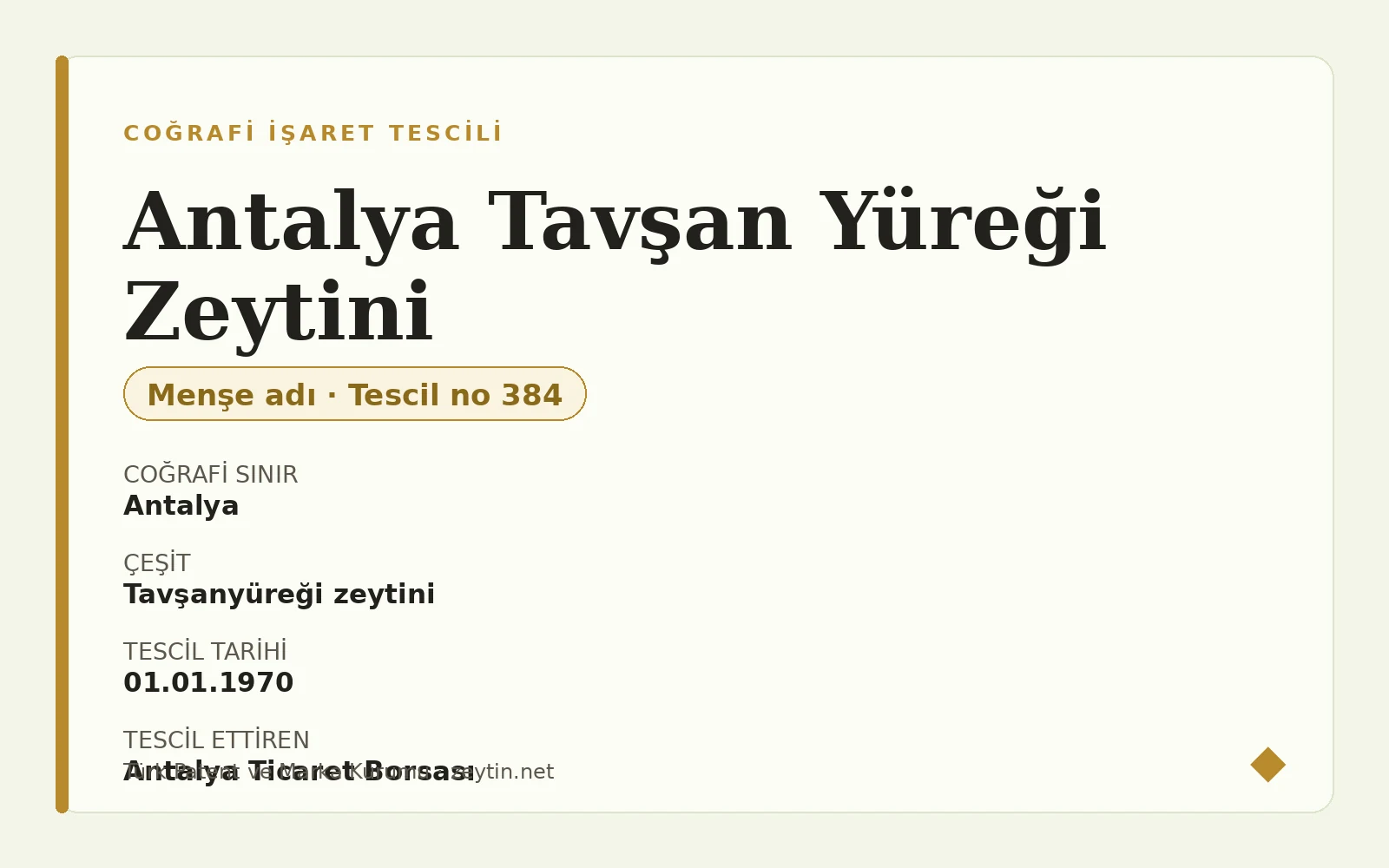
Antalya Tavşan Yüreği Olive: a registration named after the shape of its fruit
Registered in 2018. Fruit and stone are heart-shaped; picked green, its oil runs 9-20.2%, rising to 25% at black maturity.
Article
Antalya Tavşan Yüreği Olive: a registration named after the shape of its fruit
Registered in 2018. Fruit and stone are heart-shaped; picked green, its oil runs 9-20.2%, rising to 25% at black maturity.
 Article
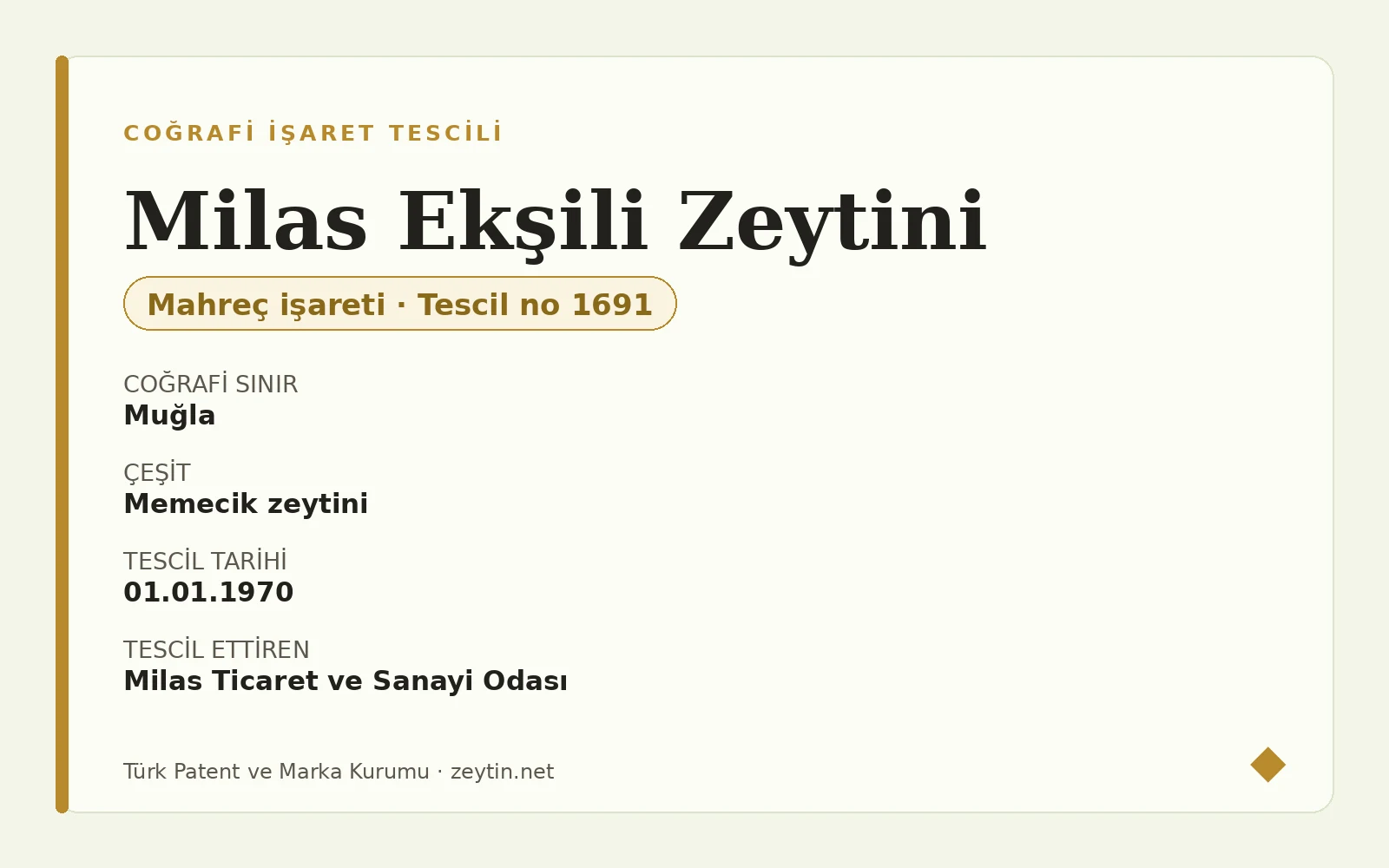
Milas Ekşili Olive: a table olive lightened with lemon
Registered in 2024. The aroma of lemon and olive oil is pronounced, and the astringency of other table olives is absent. Total phenols at least 135.38 mg/100 g.
Article
Milas Ekşili Olive: a table olive lightened with lemon
Registered in 2024. The aroma of lemon and olive oil is pronounced, and the astringency of other table olives is absent. Total phenols at least 135.38 mg/100 g.
 Article
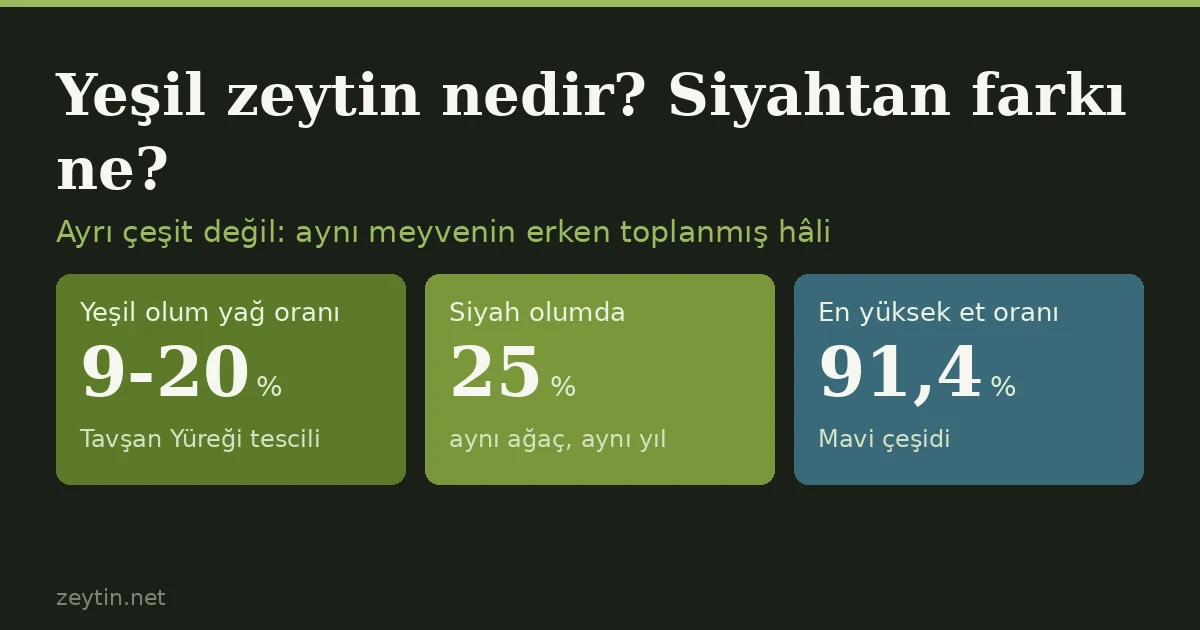
What are green olives, and how do they differ from black?
Green olives are not a separate variety but the same fruit picked early. What sets the colour, why pick green, and where the difference from black begins.
Article
What are green olives, and how do they differ from black?
Green olives are not a separate variety but the same fruit picked early. What sets the colour, why pick green, and where the difference from black begins.
 Article
Chilling requirement in olives: which variety grows where?
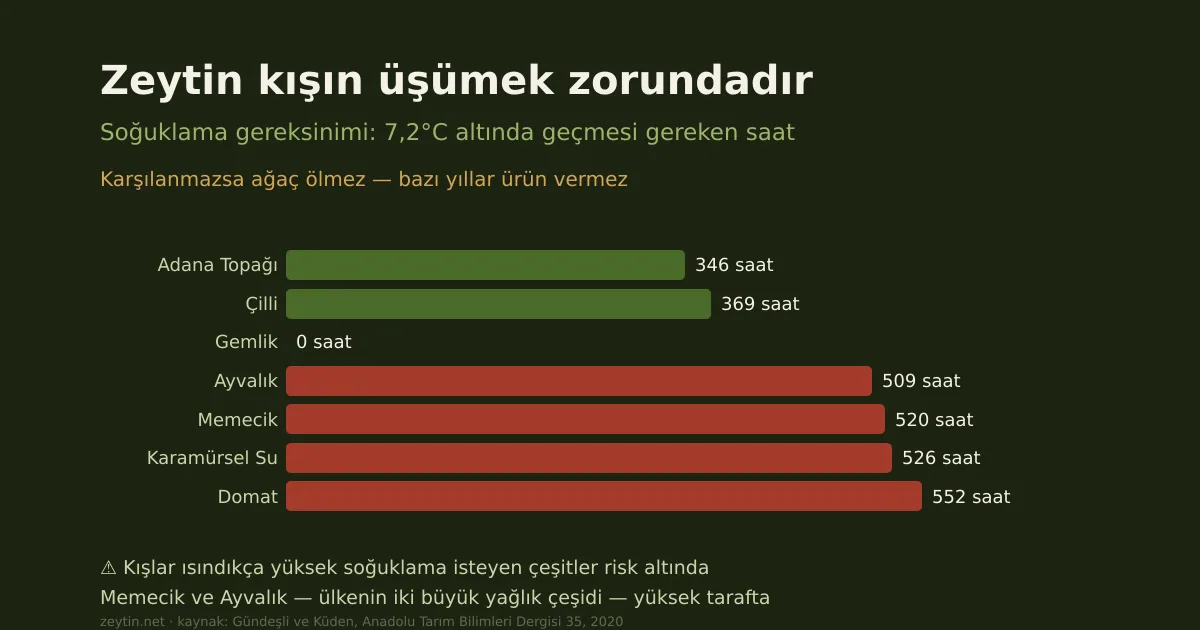
The olive must spend time below 7.2°C in winter. Adana Topağı needs 346 hours, Domat 552. Unmet, some years bring no crop.
Article
Chilling requirement in olives: which variety grows where?
The olive must spend time below 7.2°C in winter. Adana Topağı needs 346 hours, Domat 552. Unmet, some years bring no crop.