Weeds in the olive grove: bare soil is not the goal
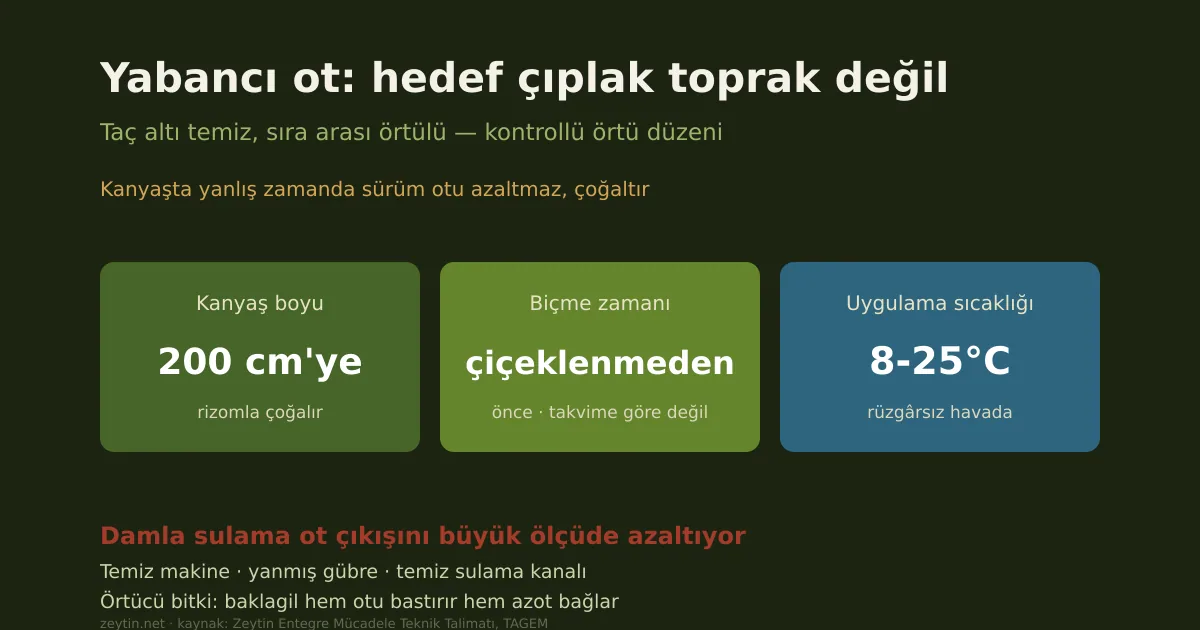
Johnson grass, Bermuda grass and fat hen. With perennials, ill-timed tillage spreads them while mowing stops the seed. Clean under the canopy, covered between rows.
Weeds in an olive grove are not only competition for water and nutrients. They raise humidity under the canopy and set the stage for anthracnose and peacock spot, they shelter pests, and they make harvest and machinery access harder. But bare soil is not the right answer either: it brings erosion, loss of organic matter and faster water loss under drought.
The right question is not "how do I eliminate the weeds" but "how do I manage the ground cover".
The grove's three main offenders
The technical instruction singles out three species as widespread and dense in olive groves:
| Species | Scientific name | Life cycle | Reproduction |
|---|---|---|---|
| Johnson grass | Sorghum halepense | Perennial | Seed and rhizome |
| Bermuda grass | Cynodon dactylon | Perennial | Seed, stolons and rhizomes |
| Fat hen | Chenopodium album | Annual | Seed |
Johnson grass grows from 50 cm to 200 cm; its finely toothed leaf margins are sharp enough to cut. The real problem is its rhizome: tillage fragments and multiplies it, so ploughing at the wrong time does not reduce Johnson grass — it spreads it.
The distinction matters in practice: annuals come from seed, so intervening "before they set seed" finishes them. Perennials come from underground organs, and one mowing is never enough.
Cultural measures: keeping weeds out
- Clean any implement or machine used on infested land before it enters the grove. In a newly planted grove this is the single most critical item — seeds and rhizome fragments travel in mud.
- Destroy weeds along irrigation channels before they set seed. Otherwise the seed falls into the channel and the water distributes it across the grove.
- Farmyard manure must be fully composted. Uncomposted manure carries live weed seed.
- Choose the irrigation system carefully. Furrow and flood irrigation wet a wider area and raise weed density; drip irrigation greatly reduces weed emergence and stops seed being carried around.
The common logic: the cheapest stage of weed control is the stage where the weed never enters the grove.
Mechanical control
Ploughing. The most commonly recommended method in groves. It removes weeds and loosens and aerates the soil. Two cautions: it must be shallow enough not to damage the root system, and over-tillage must be avoided. Excessive tillage burns organic matter and cuts surface roots.
Mowing. The best method on sloping ground where ploughing is impossible. The rule is simple: mow at intervals before the weeds flower, so they cannot set seed. Mowing also preserves the cover, working against erosion on slopes.
Physical control
Mulching. The soil surface is covered with living or non-living material; without light, weed seeds cannot germinate. Black plastic or straw can be used. The instruction, however, finds this suitable mainly for nurseries — cost and practicality limit it in a full grove.
Cover crops. One or more region-appropriate cover crops are sown between rows; they close the soil surface and suppress weed emergence.
- Legumes are usually preferred: Alexandrian clover, common vetch, burr medic. A legume's bonus is nitrogen fixation and its return to the soil as green manure.
- Some grasses can also be used.
- The choice must suit the region and should be made with a specialist: the cover crop must close the ground quickly without competing heavily with the olive for water.
Cover cropping is also a cornerstone of organic olive growing: it handles weed control and fertilisation together.
Chemical control: when and how
Herbicides are widely used because they are fast and cheap, but two drawbacks are well known: continuous use of the same mode of action creates resistance, and continuous high-rate use causes environmental pollution.
Timing
| Type | Timing |
|---|---|
| Pre-emergence | In spring after the grove is ploughed, prepared and cleared of weeds, while the soil is moist |
| Post-emergence | After weeds emerge, during their active growth |
Application rules
- Calibration is essential. An uncalibrated sprayer either wastes product or under-doses and fails.
- Air temperature should be 8–25 °C, with calm, wind-free conditions.
- With non-selective herbicides (which kill all herbaceous plants), the spray must not reach the tree's leaves, shoots or fruit.
- These herbicides must not be used in young groves where the trunk has not yet lignified.
- Read the label carefully before application and follow it.
⚠ No herbicide names or rates are given on this page. Consult your Provincial/District Directorate of Agriculture and Forestry for suitable products, rates and current registration status.
A practical approach
The arrangement that usually works in a grove:
1. Keep the area under the canopy clean — this is where humidity and competition do most harm.
2. Leave the inter-row covered with a cover crop or mown natural vegetation — it prevents erosion and moisture loss and returns organic matter.
3. Treat perennials (Johnson grass, Bermuda grass) spot by spot; do not blanket-treat the whole grove.
4. Set the mowing schedule by seed set, not by the calendar.
In short
The aim in weed management is not bare soil but controlled cover. With perennials, tillage can make things worse while mowing cuts off the seed. The cheapest control is never getting infested in the first place: clean machinery, composted manure, clean irrigation channels and drip irrigation do more than any herbicide.
One rating per visitor; you can change yours at any time. Ratings are real reader votes — no seeded or default scores.
Related
 Article
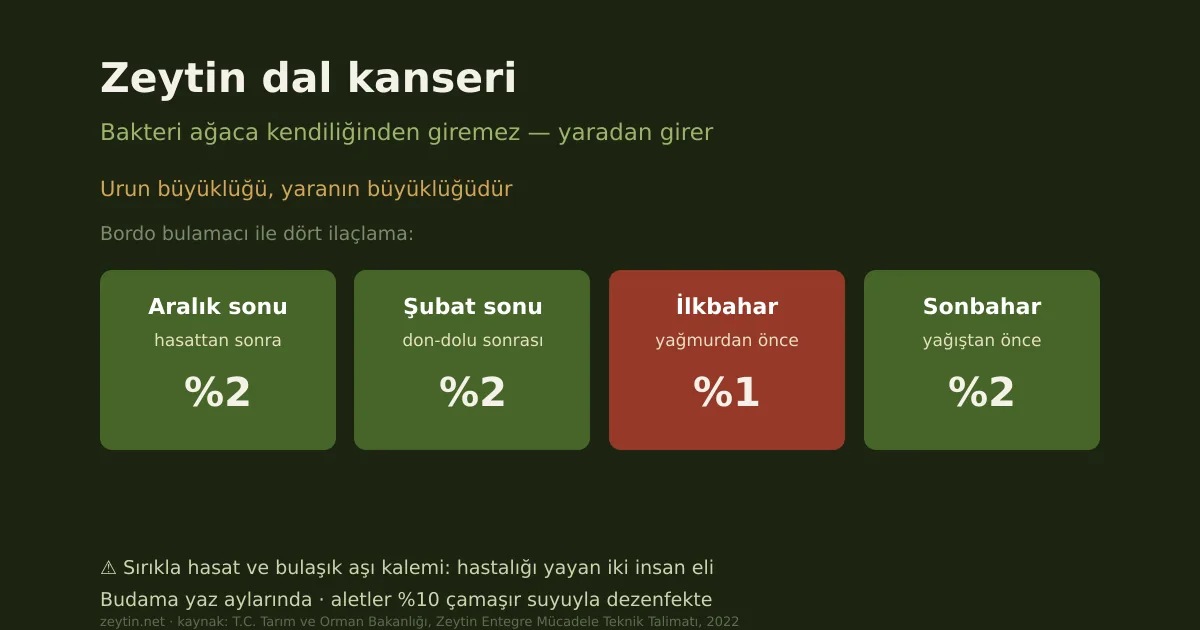
Olive knot: galls, warts and a bacterium that enters through wounds
The bacterial canker among olive tree diseases that enters through wounds: galls and warts. Pole harvest and pruning errors spread it.
Article
Olive knot: galls, warts and a bacterium that enters through wounds
The bacterial canker among olive tree diseases that enters through wounds: galls and warts. Pole harvest and pruning errors spread it.
 Article
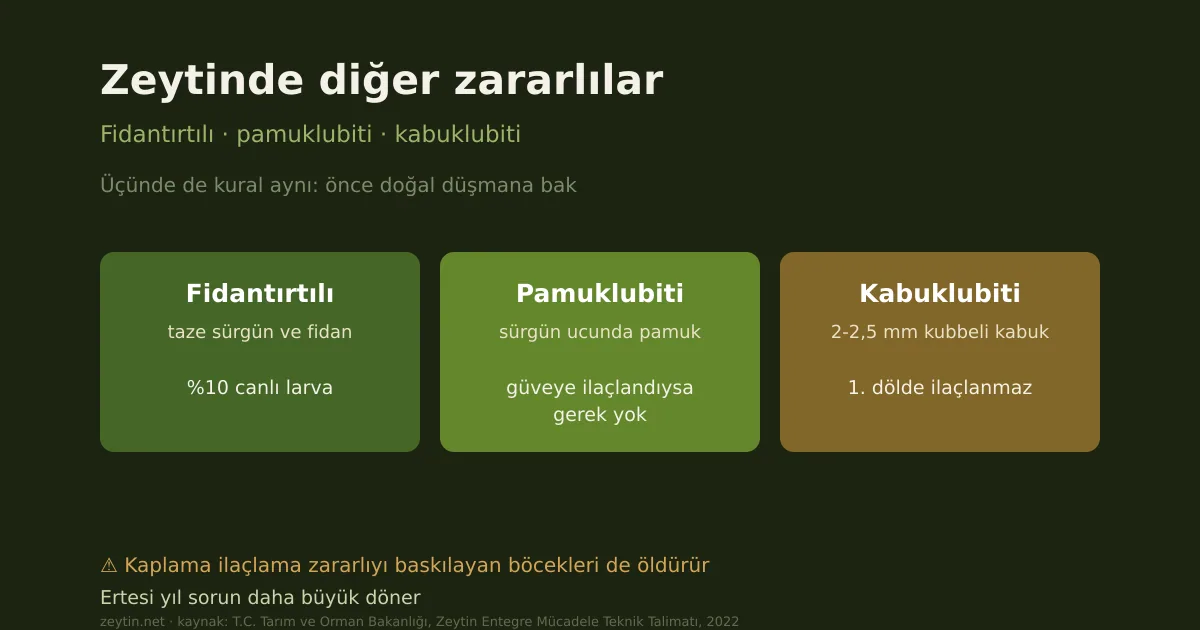
Other olive pests: jasmine moth, psyllid and olive scale
Three olive pests overshadowed by the fruit fly: the jasmine moth on tender shoots, the cottony psyllid, and olive scale.
Article
Other olive pests: jasmine moth, psyllid and olive scale
Three olive pests overshadowed by the fruit fly: the jasmine moth on tender shoots, the cottony psyllid, and olive scale.
 Article
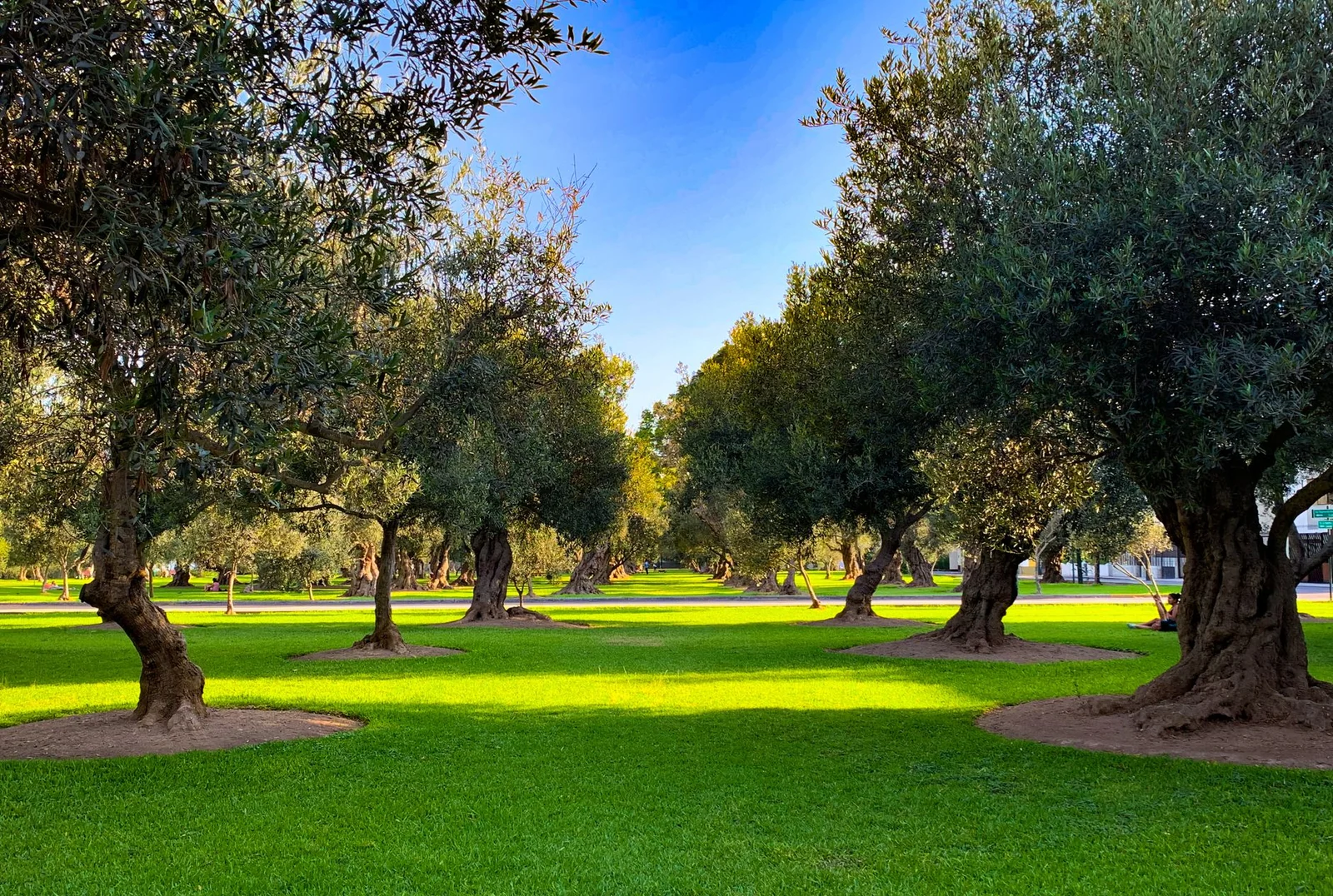
Herbicide-free weed management in olive groves: from cover crops to autonomous robots
Managing weeds rather than eliminating them: cover crops, mulch, grazing, flame weeding and AI-assisted precision farming — five tools and a practical order for combining them.
Article
Herbicide-free weed management in olive groves: from cover crops to autonomous robots
Managing weeds rather than eliminating them: cover crops, mulch, grazing, flame weeding and AI-assisted precision farming — five tools and a practical order for combining them.
 Article
Olive black scale and sooty mould: the H on its back
The olive pest behind sooty mould: a scale with an H on its back. Losses of 60-70%; if parasitism tops 50%, do not spray.
Article
Olive black scale and sooty mould: the H on its back
The olive pest behind sooty mould: a scale with an H on its back. Losses of 60-70%; if parasitism tops 50%, do not spray.