Should I switch to organic? A decision guide for olive groves
A four-year trial found no yield difference and put organic 11% ahead economically. But where does the real cost of switching lie, who does it suit, and how do you fight the fly without chemicals?
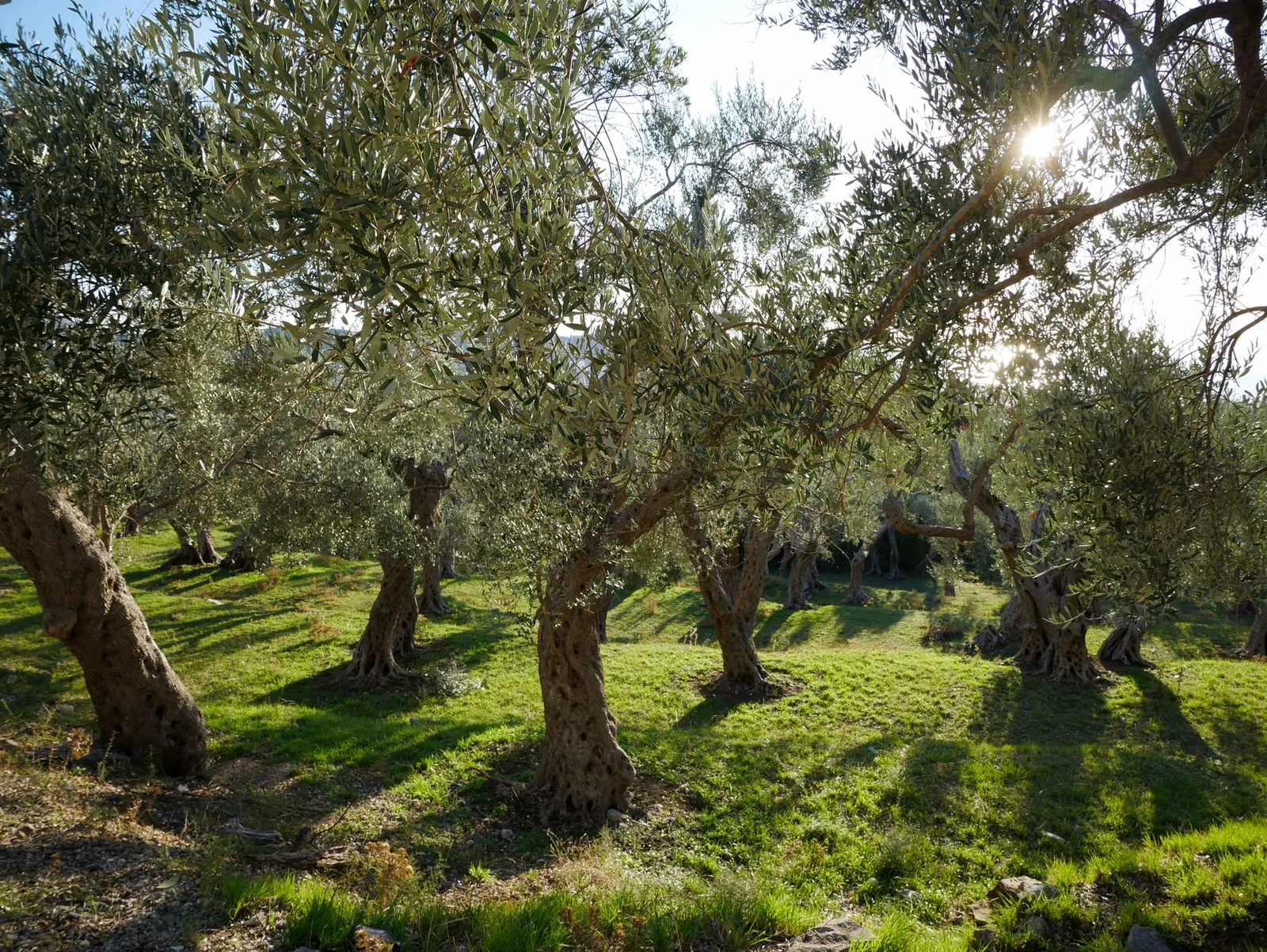
The first question anyone asks about organic farming is this: how much yield are we giving up? In olives that question has a measured answer.
The Olive Research Institute ran a four-year comparison at its Kemalpaşa production site between 2004 and 2007. In the same grove, with the same variety — Memecik, the southern Aegean's main oil variety — two plots were grown side by side: one organic, one conventional.
The result first
In a four-year trial run by the Olive Research Institute at Kemalpaşa between 2004 and 2007, organic and
conventional blocks were compared in the same orchard with the same variety (Memecik). The summary:
| Measure | Result |
|---|---|
| Yield | no significant difference between blocks |
| Oil quality | mixed — organic ahead on some measures |
| Residues | none in the organic block |
| Soil | the real difference — in favour of organic |
| Economics | organic 11% ahead |
The trial design, measurement detail and a result-by-result assessment are in a separate article:
Organic olive growing: the result of a four-year trial
This article does not repeat those results. Its question is: **what do they mean for your grove — should
you switch?**
Why the olive suits organic growing
The olive lends itself to organic production more than many crops:
- A perennial. No annual tillage and replanting; soil structure is preserved.
- Drought tolerant. It does not demand intensive irrigation.
- Few principal pests. The main struggle is against the olive fruit fly and the olive moth — and trap-based methods exist for both.
- Traditional groves are already low-input. Many of Turkey's traditional groves already use limited chemical inputs; the distance to certification is short.
Fighting the fruit fly without chemicals
The three methods used in the trial are the ones commonly relied on in organic olive growing:
- Ecotrap — a trap that attracts and holds the fly; the treatment goes on the trap, not the tree
- Neemazal — a naturally derived substance from the neem tree that disrupts the fly's development
- Kaolin — a mineral clay coating the fruit surface in white, making egg-laying difficult
None of these eliminates the fly; they aim to hold the population below the damage threshold. That is the difference in logic: the conventional approach focuses on killing, the organic one on suppressing. Pest management as a whole: integrated pest management in olives.
Where the real cost of conversion sits
That no yield difference appeared does not make organic free. The cost sits in other lines:
1. The conversion period. Before certified organic produce can be sold, the grove must complete a defined conversion period, during which the crop cannot fetch the organic price.
2. Certification and inspection. An annual cost item.
3. Labour. Setting traps, monitoring, mechanical weed control — more work than a chemical application.
4. Knowledge. Organic production is run by observation rather than by calendar: population monitoring and correct timing are essential.
What repays these costs is the higher price the produce can fetch. The equation only closes when the market pays that difference.
Who it makes sense for
Organic olive growing is not automatically the right choice for every grove. But it makes sense where:
- The grove is already managed with low inputs (a short distance to conversion)
- The risk of chemical drift from neighbouring plots is low
- The grower can sell directly or through a certified channel
- Time can be given to monitoring and timing
A whole view of grove economics: what does a kilo of olives cost to produce.
Where organic sits in Turkish olive growing
The olive is one of the products that stand out in Turkey's organic farming inventory. The reason is structural as much as chosen: a significant share of traditional groves is already run on low inputs. Old, unirrigated groves with limited chemical use sit closer to certification than intensive conventional farming does.
This is one of the rare points where a weakness of the sector is also an opportunity: what appears as "unmaintained trees" in the structural problems piece turns into an advantage for organic conversion.
What else the trial measured
The study was not only a yield comparison. Leaf and soil analyses also tracked changes in plant nutrients.
That answers one of the most common questions about conversion: does the soil become poorer once chemical fertiliser stops? In the trial three tools were used to raise soil fertility in the organic plot:
- Green manuring — sowing a cover crop and working it into the soil
- Organic fertiliser
- Mineral substances permitted by the organic farming regulation
That no difference appeared in yield or quality after four years suggests these three met the nutrient requirement.
Pest monitoring: counted, not guessed
A notable feature of the trial is that control rested on monitoring:
- McPhail and yellow sticky traps — tracking the olive fruit fly population
- Delta pheromone traps — tracking the olive moth
This is the most misunderstood part of organic production. Organic does not mean "using nothing"; it means deciding when and with what to intervene, by measurement. If the population sits below the threshold there is no intervention; if it crosses, suppression follows with a permitted method.
On the conventional side control was carried out with Fenthion — a calendar-based, broad-acting application.
Why the oil quality did not change
What determines oil quality is largely independent of the fertilising method:
- Harvest timing and ripeness
- Picking the fruit intact (not off the ground)
- The gap between harvest and pressing
- Pressing temperature and storage conditions
When those four are handled identically in both plots, it is no surprise that fatty acid composition and quality parameters come out similar. Where quality is won and lost: what does acidity mean in olive oil · how to tell good olive oil.
So an organic certificate does not by itself mean "better oil". What it changes is residues and production method; quality depends on the discipline of harvest and processing.
Source
- Varol, N. et al. — Organic Olive Growing in the Aegean Region, Olive Research Institute, Kemalpaşa trial (2004–2007), Memecik variety
One rating per visitor; you can change yours at any time. Ratings are real reader votes — no seeded or default scores.
Related
 Article
Where does an olive sapling come from? From cutting to laboratory
Most table olive varieties will not root, and those that do are clones of one another — defenceless against disease. Tissue culture reports up to 85% success in vitro, but zeatin is expensive.
Article
Where does an olive sapling come from? From cutting to laboratory
Most table olive varieties will not root, and those that do are clones of one another — defenceless against disease. Tissue culture reports up to 85% success in vitro, but zeatin is expensive.
 Article
Should harvested olives be carried in crates or in sacks?
The cheapest decision of the harvest season is also one of the decisions that sets the grade of the oil. Three separate defects in the International Olive Council's vocabulary are defined directly by how the fruit was held after picking — and all three describe what a sack does.
Article
Should harvested olives be carried in crates or in sacks?
The cheapest decision of the harvest season is also one of the decisions that sets the grade of the oil. Three separate defects in the International Olive Council's vocabulary are defined directly by how the fruit was held after picking — and all three describe what a sack does.
 Article
How to plant an olive sapling
Planting season, hole dimensions, removing a potted sapling, planting depth and the graft union, the basin and settling water — why settling water is given even in rain, first-year care and five common mistakes.
Article
How to plant an olive sapling
Planting season, hole dimensions, removing a potted sapling, planting depth and the graft union, the basin and settling water — why settling water is given even in rain, first-year care and five common mistakes.
 Article
Does an ungrafted olive tree bear fruit? Wild olives, seedlings and grafting
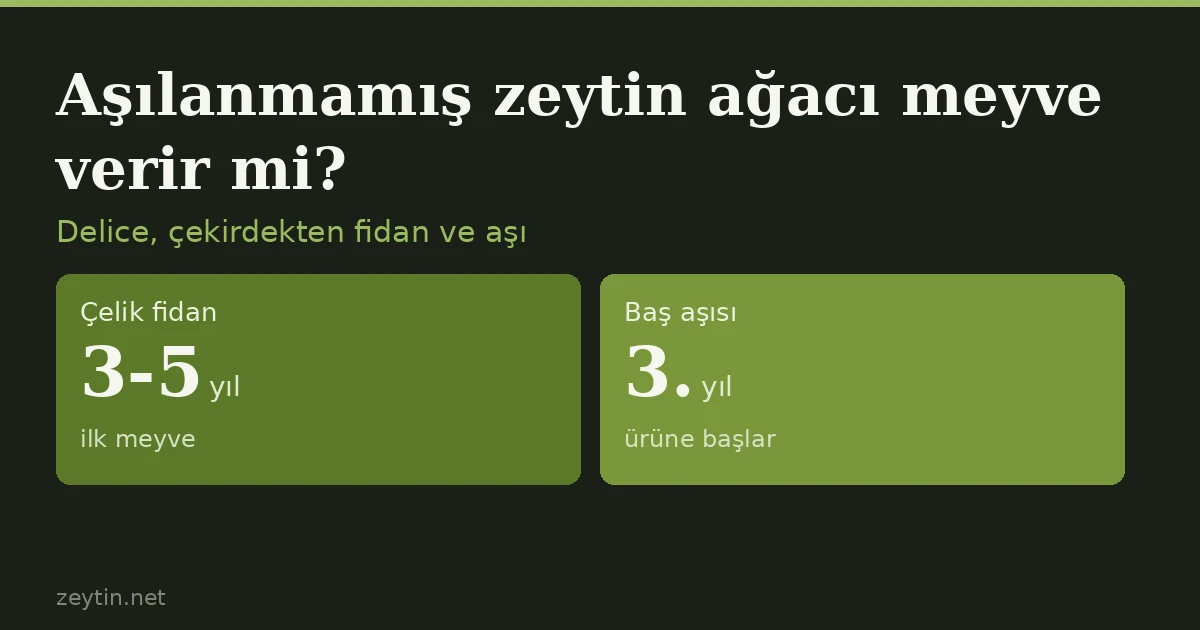
An ungrafted olive tree does bear fruit, but usually small, thin-fleshed and low in oil. Neither the wild trees known in Turkey as delice nor seedlings grown from a stone carry the variety of the parent tree. How to tell, what grafting gains, and why wild olives are still valuable.
Article
Does an ungrafted olive tree bear fruit? Wild olives, seedlings and grafting
An ungrafted olive tree does bear fruit, but usually small, thin-fleshed and low in oil. Neither the wild trees known in Turkey as delice nor seedlings grown from a stone carry the variety of the parent tree. How to tell, what grafting gains, and why wild olives are still valuable.