What temperatures can the olive withstand?
Ideal 15–20 °C, an upper limit of 40 °C (with irrigation), a lower limit of −7 °C. Temperature thresholds, chilling requirement, and the climate risk of production narrowed to four varieties.
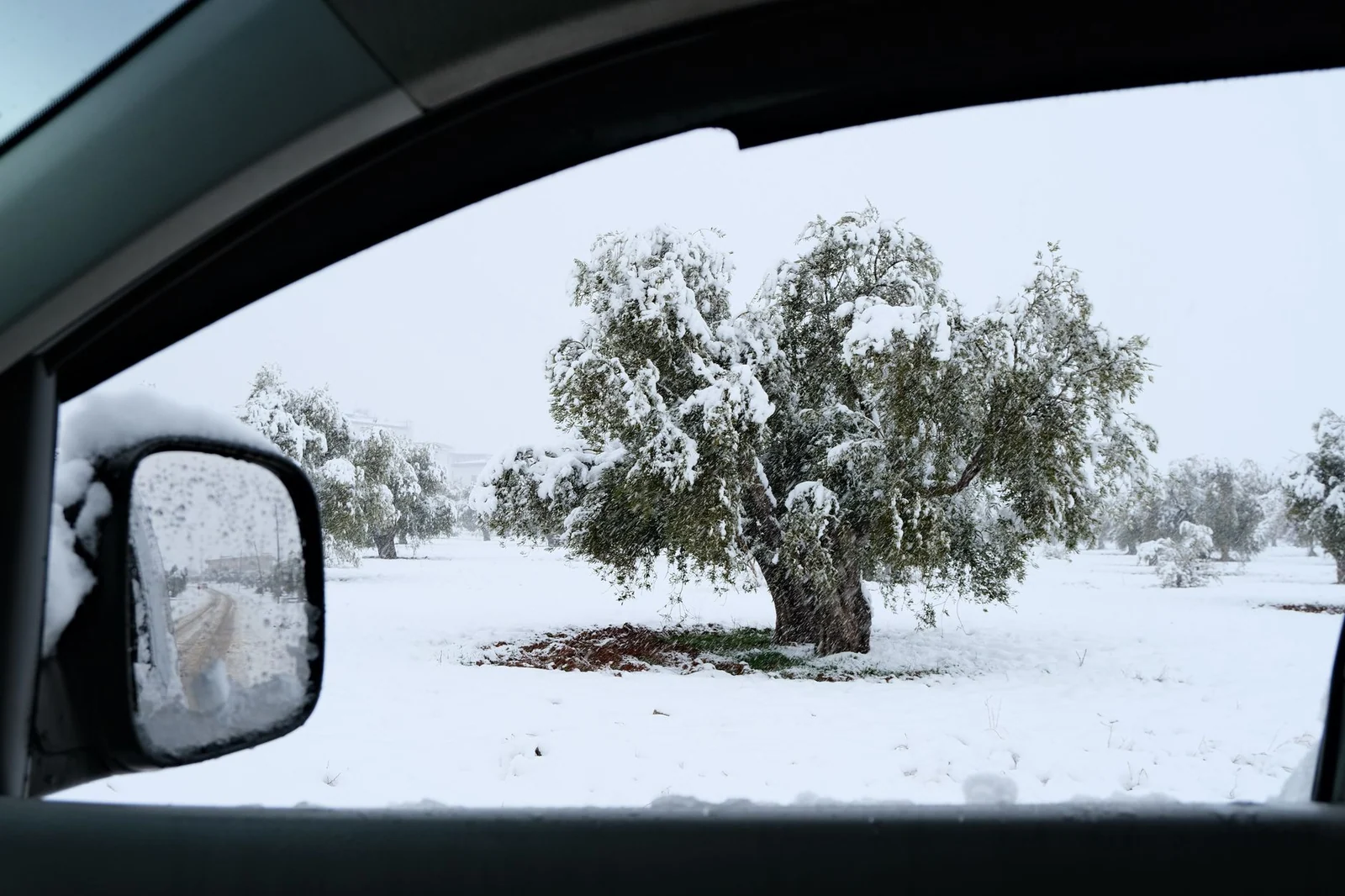
The olive is known as a heat-loving tree. True, but incomplete: it also has an upper limit, a lower limit, and a narrow band between them where it actually works well.
A review from the İzmir Olive Research Institute sets out those thresholds — and which one comes into play as the climate warms.
The olive's temperature thresholds
| Threshold | Temperature | What happens |
|---|---|---|
| Ideal annual average | 15–20 °C | the typical range of olive-growing regions |
| Upper tolerance | 40 °C | withstood provided there is irrigation |
| Spring heat spike | above seasonal norms | fertilisation affected, fruit set drops |
| Lower limit | −7 °C | damage can begin, from buds down to the roots |
The critical part of that table is the condition beside 40 °C: "provided there is irrigation". The olive's heat tolerance is not absolute; it depends on water. In an unirrigated grove the same temperature does not give the same result — and most of Turkey's olive land is unirrigated.
What the heat breaks
Rising temperature does not act at one point but along four links of the chain:
1. The growing season lengthens. It sounds like a benefit but isn't: the tree's phenological calendar shifts and flowering timing changes.
2. Flowering falters. When May and June run above seasonal norms, transpiration in the leaves rises and shrivelling can appear. Spring heat spikes affect fertilisation directly, reducing fruit set.
3. Ripening accelerates. High temperature and increased evaporation ripen the fruit quickly. The result is a perverse necessity: the grower has to harvest early even at a lower ripeness level.
4. Quality falls. Adverse effects are reported on yield, on table olive quality and on olive oil quality.
The fourth link is the sum of the first three. What early harvest means as a deliberate choice is a separate question: is early harvest expensive or valuable.
The cold side: −7 °C
Warming dominates the conversation, but the lower bound still holds. Below −7 °C damage can begin, and it does not take one form; depending on the severity and duration of the cold, and on the tree's stage of growth and age, it appears at levels ranging from the buds down to the roots.
Here is the insidious part of climate change: as averages rise, extreme events also grow more frequent. An early warm spell in winter wakes the trees, and a cold snap that follows strikes a tree already awake. Frost damage can increase even though the mean temperature has gone up.
The chilling requirement: the forgotten side
Talk of temperature brings upper and lower limits to mind. But the olive has a need that comes before
the lower limit: spending a certain number of winter hours below 7.2 °C. Without enough cold the buds do
not break properly, flowering falters and yield falls — while the tree looks entirely undamaged.
Varieties differ widely here — roughly four weeks separate the earliest and latest variety in breaking dormancy.
The measured variety table and detail: Chilling requirements in olive
Turkey's real risk: a narrow base
Turkey has 100 registered varieties. But production is concentrated in only four of them: apart from Gemlik, Ayvalık, Memecik and Domat, the output of the rest is very limited.
In climate terms that means: national production hangs on the climatic behaviour of four varieties. If those four struggle under similar conditions, the problem spreads nationwide in the same year.
Yet among the 96 remaining varieties in the inventory there are types that behave differently — needing less cold, flowering later, standing drought better. Most of them have not even been measured pomologically. The full distribution: olive varieties.
What the study proposes: the selection criteria must change
The review lists the criteria to be weighed when choosing new varieties:
1. Resistance to pests and disease
2. Tolerance of high temperature
3. Tolerance of drought
4. Strong table and oil quality characteristics
5. High antioxidant properties
The order is telling: resilience comes before quality. It marks a change of outlook — the variety sought is no longer the one that yields most, but the one that goes on yielding under changed conditions.
The study also stresses the urgent need for forward planning in the face of climate change, and for projects focused on how varieties behave under these conditions.
What can be done today
Breeding is long-term work; but there are decisions available at grove scale now:
- Irrigation. Tolerance of 40 °C depends on water; irrigation is no longer a luxury but insurance.
- Variety diversification. A grove planted with a single variety carries that variety's risk in full.
- Chilling suited to the locality. Planting a high-chilling variety where winters are growing mild is buying the problem in advance.
- Harvest timing. If ripening is accelerating, the harvest calendar has to move with it; a late harvest raises acidity.
One rating per visitor; you can change yours at any time. Ratings are real reader votes — no seeded or default scores.
Related
 Article
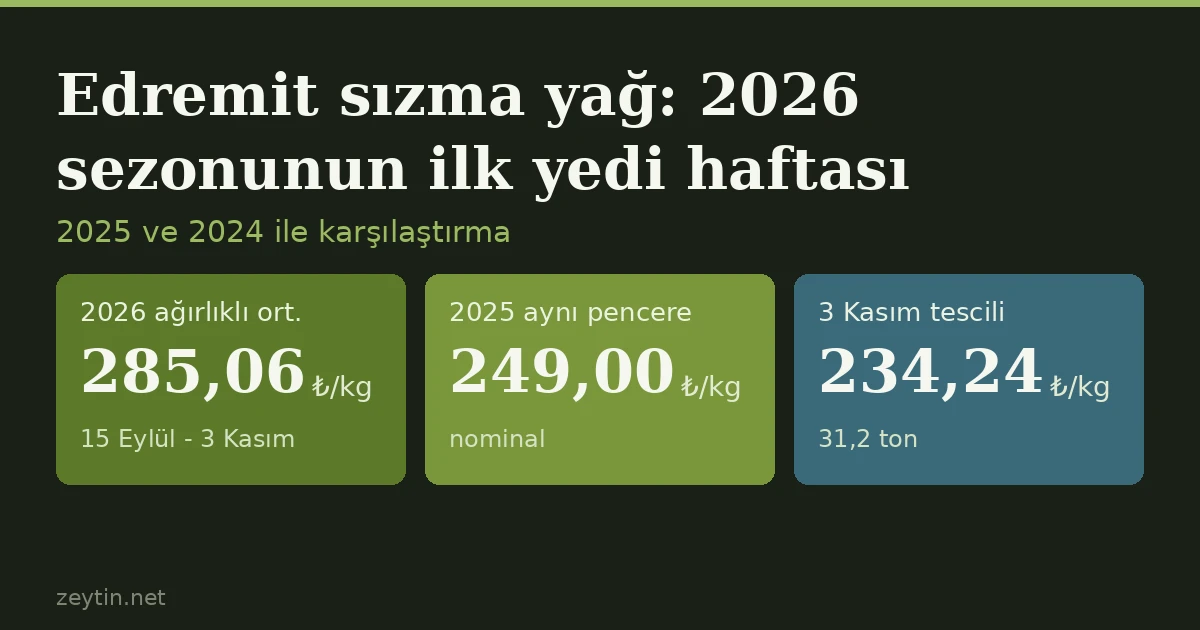
Edremit extra-virgin oil: the first seven weeks of the 2026 season compared with 2025 and 2024
The volume-weighted average of Edremit extra-virgin registrations, 15 September-3 November, is 285.06 TRY/kg in 2026, 14.5% above 2025 and 9.5% above 2024. But on 3 November 31 tonnes were registered at 234.24 TRY/kg. The figures and the limits of one record.
 Article
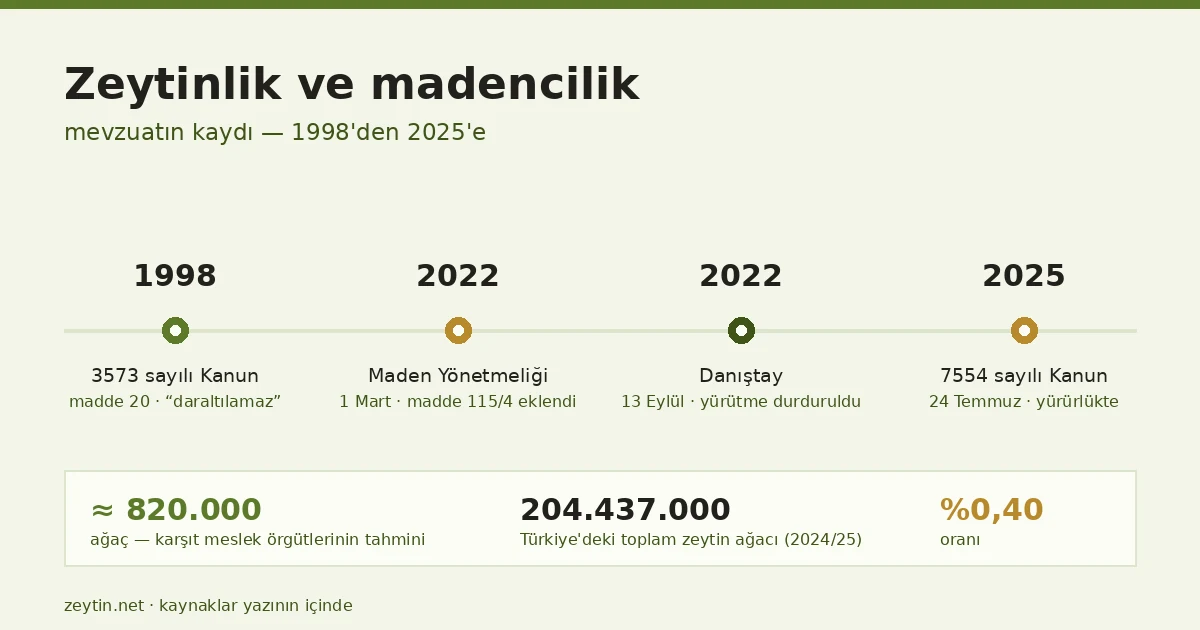
Olive groves and mining: the legislative record from Law 3573 to Law 7554
A dated record of the rules opening olive groves to mining: Article 20 of Law 3573, the March 2022 regulation and its annulment by the Council of State, and Law 7554 in force since 24 July 2025. Impact estimates are set against the national total and one circulating figure is fact-checked.
 Article
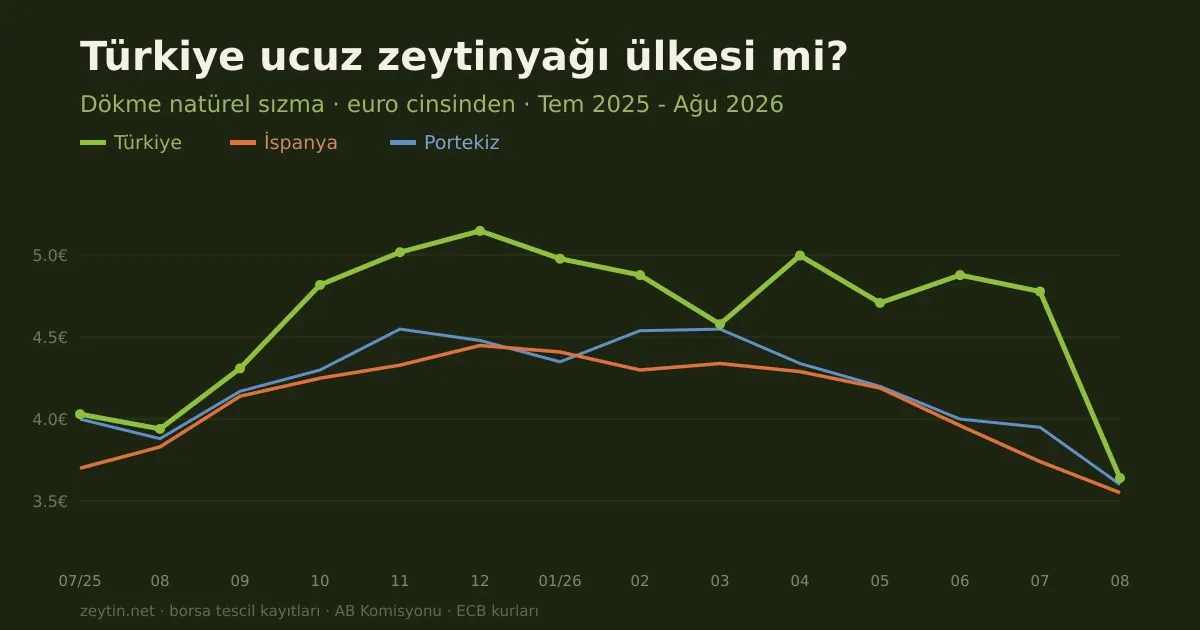
Is Turkish olive oil cheap? Fourteen months against Europe
Turkish and European olive oil prices compared in one currency. How wide is the gap, and is it currency or market?
 Article
Olive oil trade in the Ottoman Empire: Britain the buyer, the crop the price
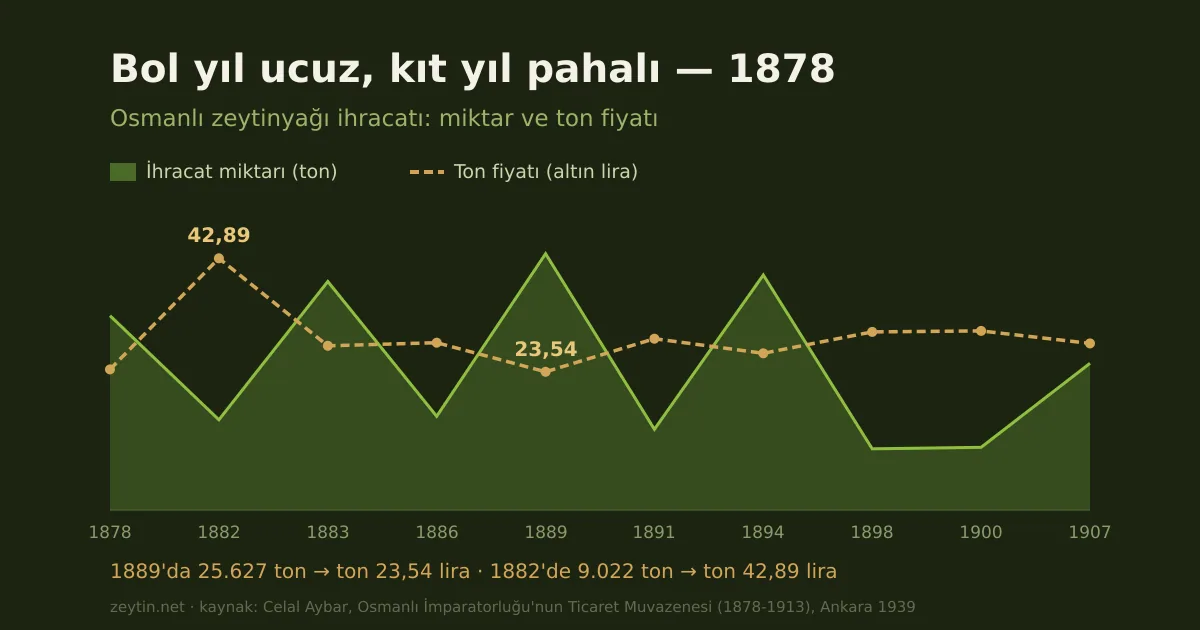
25,627 tonnes exported in 1889 at 23.54 lira a tonne; 9,022 tonnes in 1882 at 42.89. The crop-price inverse held a century ago too.