Vegetation water and pomace: olive oil's waste problem
Processing 1.5–2 million tonnes of olives yields 1 million tonnes of vegetation water and 1 million tonnes of pomace. Waste, or resource?
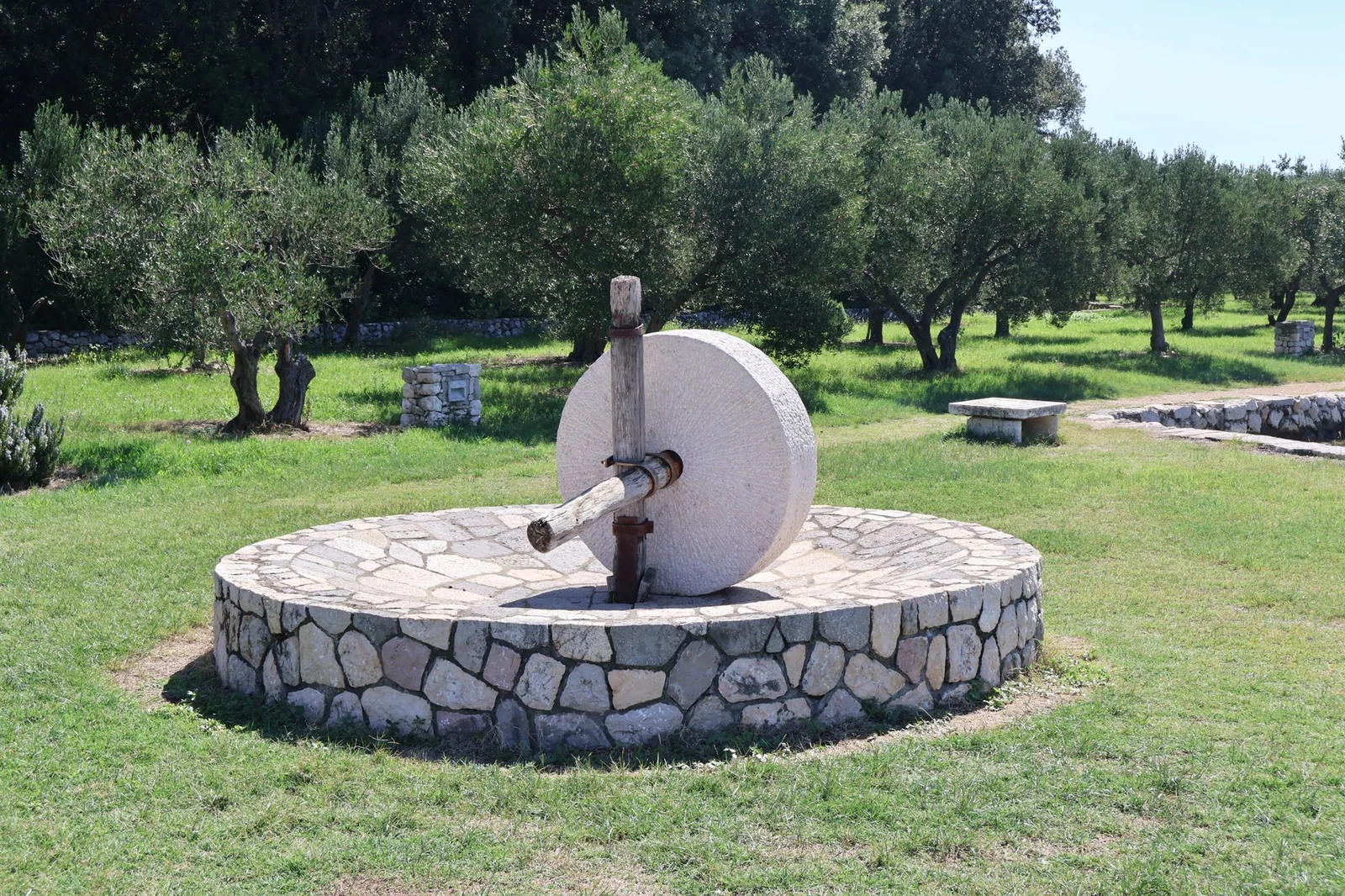
Here is the side of olive oil production nobody discusses: more waste comes out than oil.
When 1.5–2 million tonnes of olives are processed in Turkey, roughly 1 million tonnes of vegetation water and 1 million tonnes of wet pomace are produced. That is many times the volume of the oil itself, all of it needing disposal.
What vegetation water is
When the fruit's own water combines with the water used in processing, the result is a dark, acidic liquid with a very high organic load: olive mill waste water, known in Turkish as karasu.
Why it is a problem:
- Very high organic load. It carries many times the pollutant content of an equal volume of domestic waste water.
- Phenolic compounds. The polyphenols that make olives bitter dissolve into the water, and once released into the environment they can be toxic to plants and microorganisms.
- Seasonal concentration. Because the harvest is squeezed into a few months, so is the waste; treatment infrastructure struggles with that peak load.
Left uncontrolled it finds its way into streams, soil or irrigation channels.
What pomace is
The solid fraction left after the oil is extracted — a mixture of skin, flesh and stone — is called pomace. It leaves the mill wet, which makes it awkward to move and store.
But pomace sits in a different place from vegetation water: not a waste, but a usable by-product.
Waste or resource?
Both by-products can be put to use:
| By-product | Use | Note |
|---|---|---|
| Pomace | Pomace oil (after refining) | a separate grade from table oil |
| Fuel (pellets, briquettes) | high calorific value once dried | |
| Animal feed additive, compost | after processing | |
| Vegetation water | Biogas | by anaerobic digestion |
| Polyphenol recovery | high value-added; interest is growing |
The polyphenols in vegetation water hold a neat contradiction: a pollutant when released into nature, and a high-value ingredient sought by the food and cosmetics industries once separated out.
Why the scale matters
The sector's target is 700,000 tonnes of olive oil. As that target is approached the quantity of fruit processed rises too — and with it the volume of vegetation water and pomace.
So waste management is not a side issue of growth but a precondition for it. If treatment and recovery capacity does not grow alongside milling capacity, higher output simply converts into an environmental cost.
Putting the figure in perspective
A comparison helps: the oil produced from every tonne of olives is small next to the waste.
| Output | Quantity | Status |
|---|---|---|
| Olive oil | ~150,000 t | main product (average output) |
| Vegetation water | ~1 million t | waste requiring treatment |
| Wet pomace | ~1 million t | usable by-product |
The sector produces more than ten times its main product in by-products, and their management is not planned to the same degree as production.
Why it all arrives at once
The olive harvest is compressed into a few months, between late autumn and early winter. Mills run day and night through that window.
On the waste side that means a peak load: not a flow spread across the year but a volume discharged in two or three months. A treatment plant designed to run continuously sits idle for most of the year and above capacity during harvest.
The answer therefore cannot be a single plant but shared infrastructure sized for a seasonal load.
The small mill's dilemma
A significant share of Turkey's olive oil is produced in small and medium mills. For them a treatment investment is usually out of reach:
- Plant costs bear no relation to the business's annual turnover
- The investment would run only three months a year
- It requires technical staff
So the waste is often disposed of by the cheapest route available. The cause is not bad faith but scale.
This is exactly where the idea of a shared regional facility earns its place: ten mills doing together what none can do alone.
Pomace's second life
Pomace can move off the waste list and onto the input list:
- Energy. Dried pomace has a high calorific value and enters the fuel chain as pellets and briquettes.
- Pomace oil. The remaining oil is extracted with solvent and refined. ⚠ This product is not the same thing as extra virgin olive oil and must be declared as a separate grade on the label. The grades: extra virgin, virgin and riviera explained.
- Soil and feed. Suitably processed, it can be used as compost and as a feed additive.
The contradiction in vegetation water
What makes vegetation water a pollutant and what makes it valuable are the same thing: polyphenols.
Released into the environment they can be toxic to plants and microorganisms. Separated out, they become the antioxidant compounds sought by the food, supplement and cosmetics industries — the same family of compounds behind olive oil's EFSA-authorised health claim.
This is the most promising route for turning waste from a cost into a revenue; but applying it at economic scale requires the collection and processing chain to exist first.
What can be done
- Regional treatment and processing plants shared by mills
- Biogas and polyphenol recovery from vegetation water
- Drying pomace into the energy and feed chains
- A collective collection system for small mills that cannot invest alone
Related
Structural problems of Turkish olive growing · alternate bearing · how cold pressed olive oil is made
Sources
- EGİAD Yarın — Turkey's olive sector: problems and proposed solutions
- Zeytin Dostu Association — olive growing in Turkey
One rating per visitor; you can change yours at any time. Ratings are real reader votes — no seeded or default scores.
Related
 Article
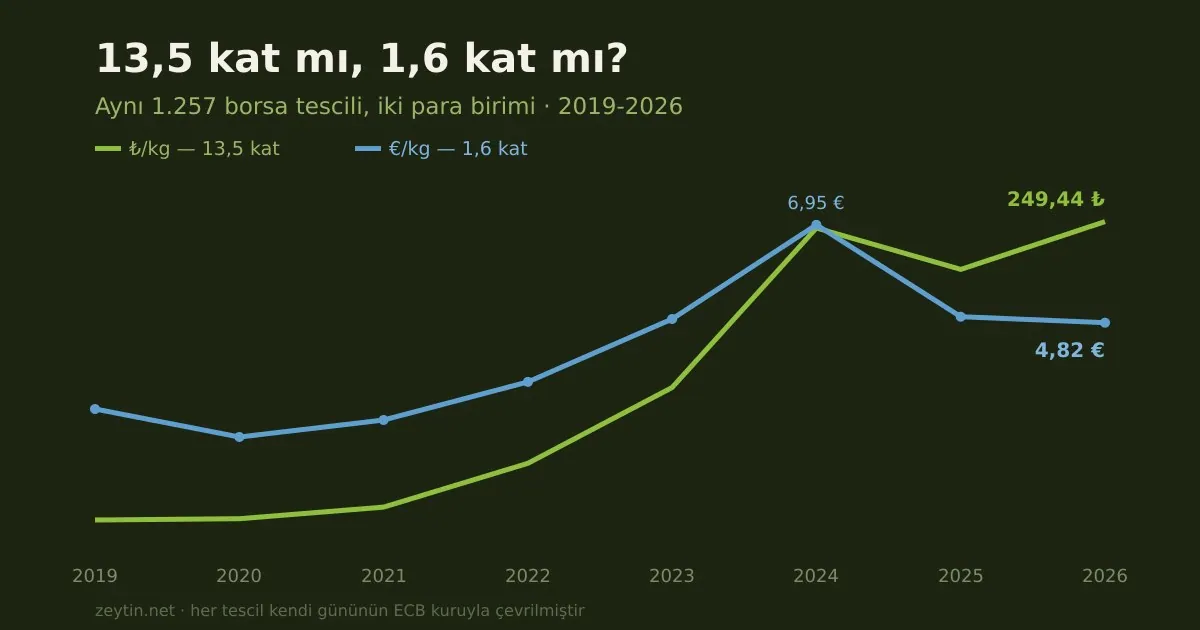
Did olive oil go up 13.5 times, or 1.6 times?
Up 13.5 times in lira, 1.6 times in euros. The same 1,257 registrations, each converted at its own day's ECB rate.
Article
Did olive oil go up 13.5 times, or 1.6 times?
Up 13.5 times in lira, 1.6 times in euros. The same 1,257 registrations, each converted at its own day's ECB rate.
 Article
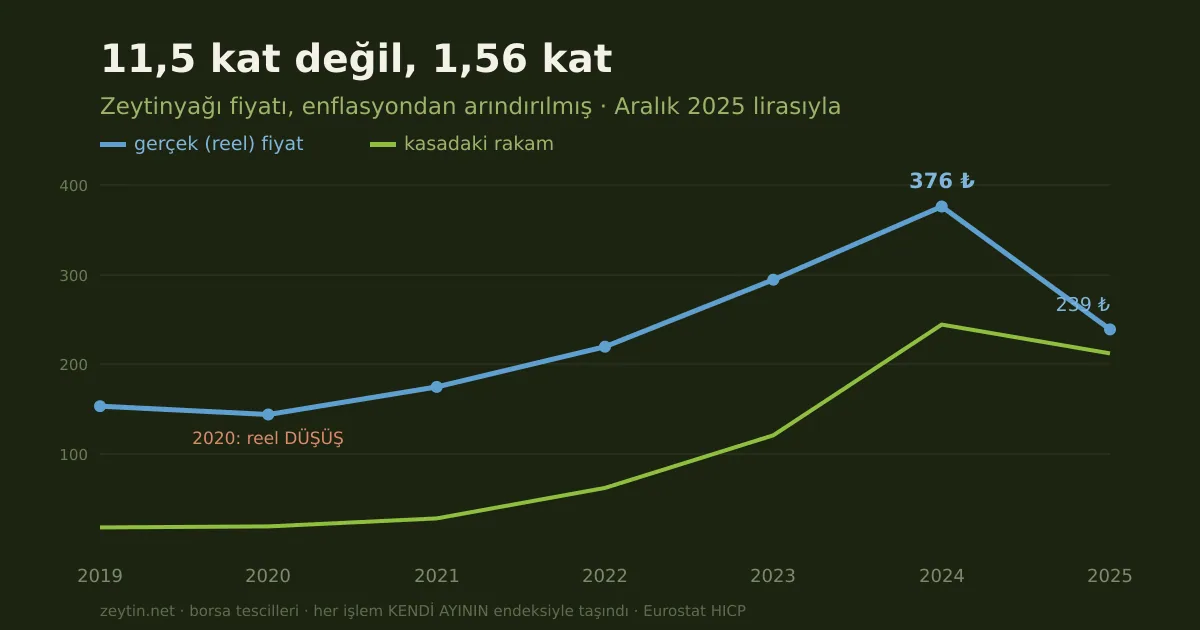
The real price of olive oil: the inflation-adjusted calculation
The lira price rose 11.5-fold, inflation 7.6-fold. The real increase is 1.56-fold — and it matches the euro-based calculation.
Article
The real price of olive oil: the inflation-adjusted calculation
The lira price rose 11.5-fold, inflation 7.6-fold. The real increase is 1.56-fold — and it matches the euro-based calculation.
 Article
Solar panels above the grove: energy without cutting trees?
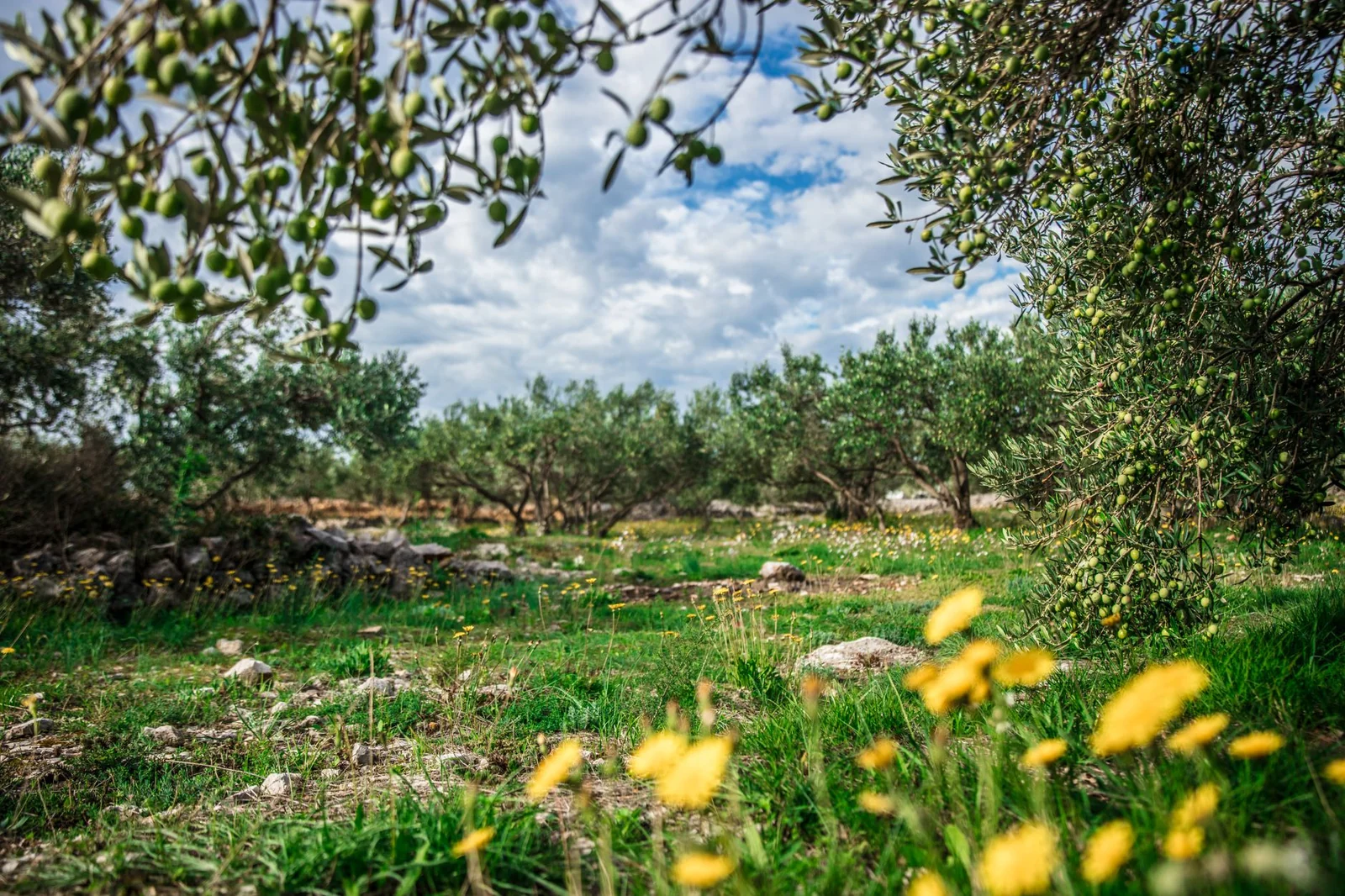
In Spain, 5,150 solar modules were raised four metres above a working olive grove without removing a single tree. The height is set not by the trees but by a harvester that opens to 3.5 metres. A University of Córdoba model puts joint output at 789 kg of oil and 891 MWh per hectare.
Article
Solar panels above the grove: energy without cutting trees?
In Spain, 5,150 solar modules were raised four metres above a working olive grove without removing a single tree. The height is set not by the trees but by a harvester that opens to 3.5 metres. A University of Córdoba model puts joint output at 789 kg of oil and 891 MWh per hectare.
 Article
Who protects the olive tree? Three layers, from the IOC to Law 3573
We have cited the International Olive Council in 23 articles without ever saying what it is. The three orders that protect the olive: trade standards, landscape conventions, and Türkiye's 1939 Law No. 3573.
Article
Who protects the olive tree? Three layers, from the IOC to Law 3573
We have cited the International Olive Council in 23 articles without ever saying what it is. The three orders that protect the olive: trade standards, landscape conventions, and Türkiye's 1939 Law No. 3573.