Kilis Olive Oil: a cultivar reaching 33% oil
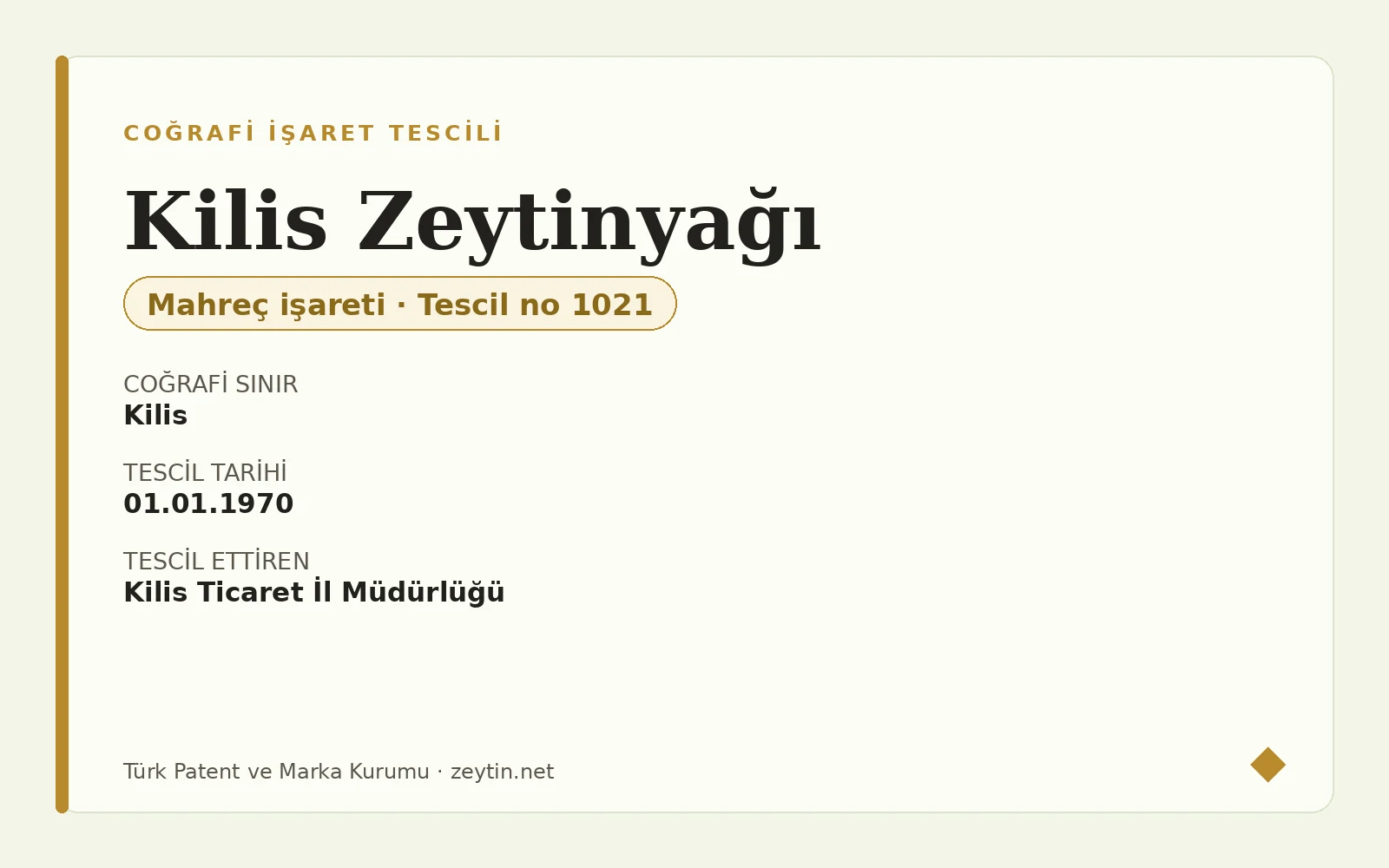
Registered in 2020. The Kilis Yağlık cultivar runs about 33% oil, far above the Turkish average. Small round fruit, thin skin, small stone.
Oil content in most olive cultivars runs 18-26%. The Kilis Yağlık cultivar reaches about 33% — few cultivars in Türkiye go that high.
The record
| Registration no | 1021 |
| Protection from | 01.11.2019 |
| Type | Geographical indication |
| Registered by | Kilis Provincial Directorate of Trade |
| Area | The province of Kilis |
| Cultivar | Kilis Yağlık |
Why so oily
The certificate describes the cultivar: the fruit is generally small and round, with thin skin, a small stone, and an oil content of about 33%.
The four properties are connected. A small stone and thin skin mean a greater share of the fruit's weight is flesh — and flesh is what carries the oil. Small fruit is generally the mark of an oil cultivar: table use wants size, oil use wants oil.
⚠ There is a cost: the cultivar shows strong alternate bearing — heavy one year, light the next. We covered this in the life cycle of an olive tree.
The tree is of medium vigour, forming a medium-sized, spreading and drooping crown. It is not sensitive to cold — which matters for the hard winters of the south-east.
Composition of the oil
| Fatty acid | % |
|---|---|
| Oleic acid | 67.96 |
| Palmitic acid | 15.13 |
| Linoleic acid | 10.44 |
| Stearic acid | 3.68 |
| Palmitoleic acid | 0.91 |
| Linolenic acid | 0.69 |
| Other | Value |
|---|---|
| Free acidity | 0.57 ± 0.03 |
| Peroxide | 5.62 ± 0.70 |
| Chlorophyll | 7.36 ± 0.94 |
| Carotenoid | 8.37 ± 0.46 |
| Beta-tocopherol | 6.58 ± 0.38 |
| Luteolin | 1.75 ± 0.50 |
| Cinnamic acid | 1.25 ± 0.05 |
A peroxide value of 5.62 is very low against the legal ceiling of 20 for extra virgin. The certificate gives the reason: care is taken not to damage the fruit at harvest, and it goes to the mill without delay.
In short
Kilis Olive Oil is the registration of a native cultivar with exceptionally high oil content. Small fruit, thin skin and a small stone push the yield up; the cost is strong alternate bearing.
Its place in Kilis's olive production
| Item | Value |
|---|---|
| Fruit production | 64,113 t |
| — for oil | 62,902 t |
| — for the table | 1,211 t |
| Olive oil production | 12,570 t |
| Trees | 4,692 thousand |
| Yield per tree | 13.7 kg |
98% of the province's fruit goes to oil. An oil-based registration matches how the province actually produces.
The price of high oil content: a pollination problem
At the top of this page we noted the cultivar's strong alternate bearing. Beneath it lies a more basic problem, and it has been measured in the field.
Mete and Çetin (2017) investigated fertilisation in Kilis Yağlık. Their findings:
- The cultivar has very low self-compatibility; selfing produced a very low fruit set.
- Among the pollinators tested, no single pollinator cultivar delivered an adequate fruit set.
- Their recommendation: an orchard should carry at least two pollinator cultivars.
- Even in orchards containing many cultivars, shot berries appeared.
- At flowering, petals frequently failed to open fully and seed abortion was common.
The last two points matter: the problem is not only a shortage of pollen but the flower itself. Petals that do not open block pollen from reaching the stigma; seed abortion stops fruit that has set from developing.
The practical consequence: Kilis Yağlık is not planted as a single-cultivar orchard. However high the oil content, a Kilis Yağlık planting without pollinators yields poorly. We covered the subject generally in pollination and pollinator cultivars in olives.
When should it be harvested? A measured answer
Büyükgök and Saygın Gümüşkesen (2017) compared Kilis Yağlık and Memecik oils across two harvest years at different ripeness levels.
| Finding | Kilis Yağlık | Memecik |
|---|---|---|
| Oil content | higher | lower |
| December ripeness index | 3.96 (both years) | 4.09 – 3.87 |
| Sensory descriptor | spice | flower, bitter almond |
Three conclusions follow:
1. The registration's oil-content claim is independently confirmed. In the cultivar comparison, Kilis Yağlık's oil content was significantly higher than Memecik's.
2. The ripeness index held at 3.96 in both years. While Memecik moved year to year (4.09 → 3.87), Kilis Yağlık reached the same ripeness on the same date — a predictable cultivar for harvest planning.
3. Its aroma signature is spice. Against Memecik's floral and bitter-almond notes, spice was recorded for Kilis Yağlık. This is the sensory counterpart of south-eastern oils being found "different".
The study's recommendation is the same for both cultivars: the best time for extra virgin production is a December harvest at medium maturity. We explained how that measure is calculated in deciding harvest by ripeness index.
One rating per visitor; you can change yours at any time. Ratings are real reader votes — no seeded or default scores.
Related
 Article
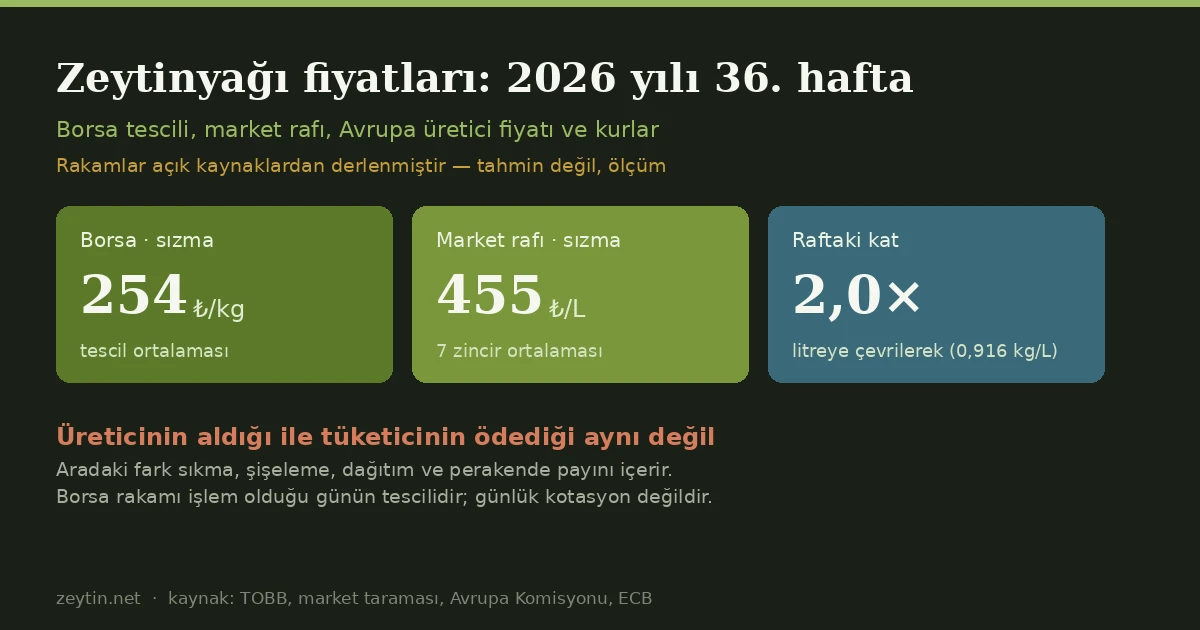
Olive Oil Prices: Week 36 of 2026
Week 36 of 2026: Turkish exchange prices, European producer prices and exchange rates side by side.
 Article
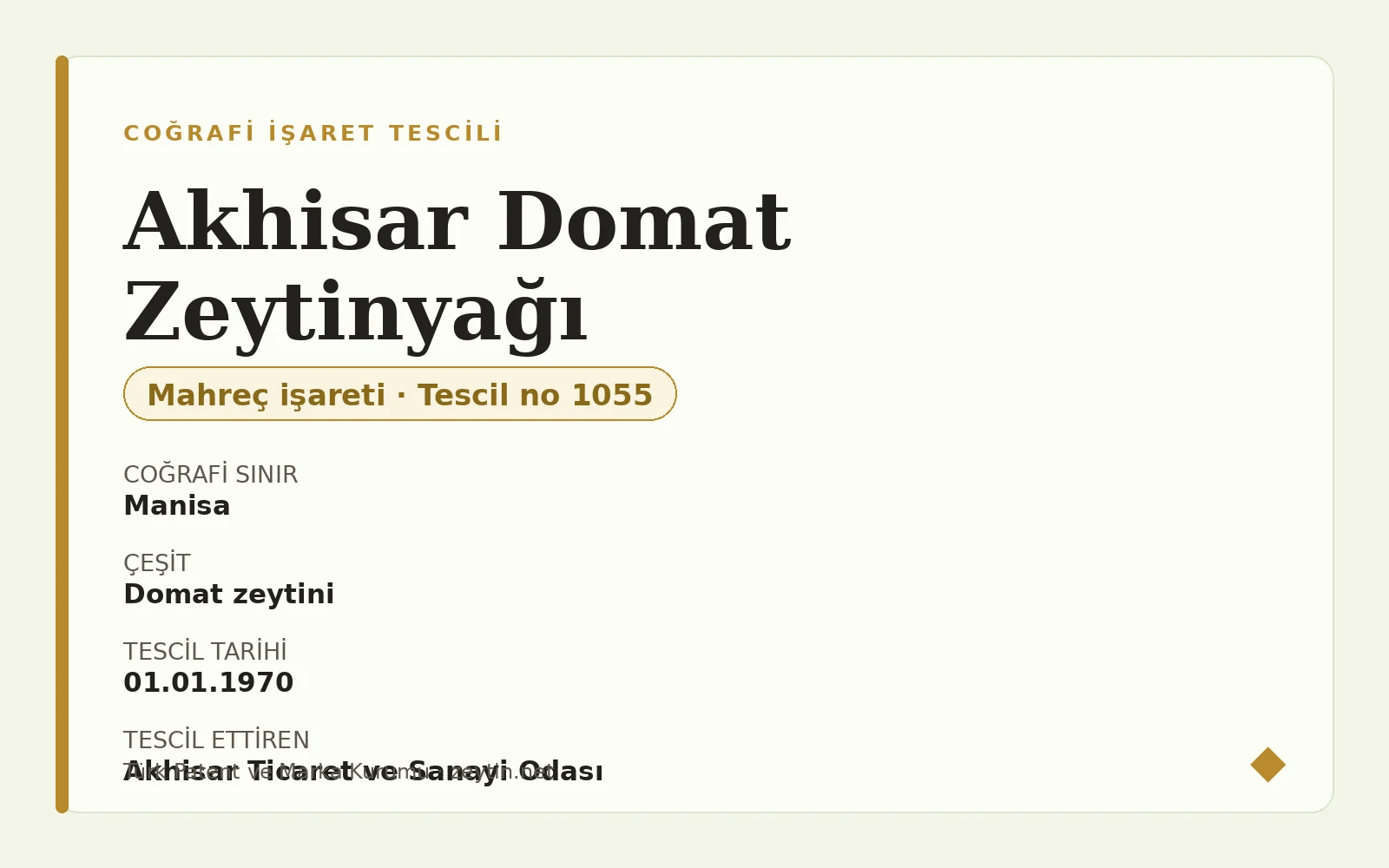
Akhisar Domat Olive Oil: stricter limits than its twin
Registered in 2017. Set against the Uslu oil registered the same day the difference is clear: peroxide ≤17 and acidity ≤0.65, both narrower.
 Article
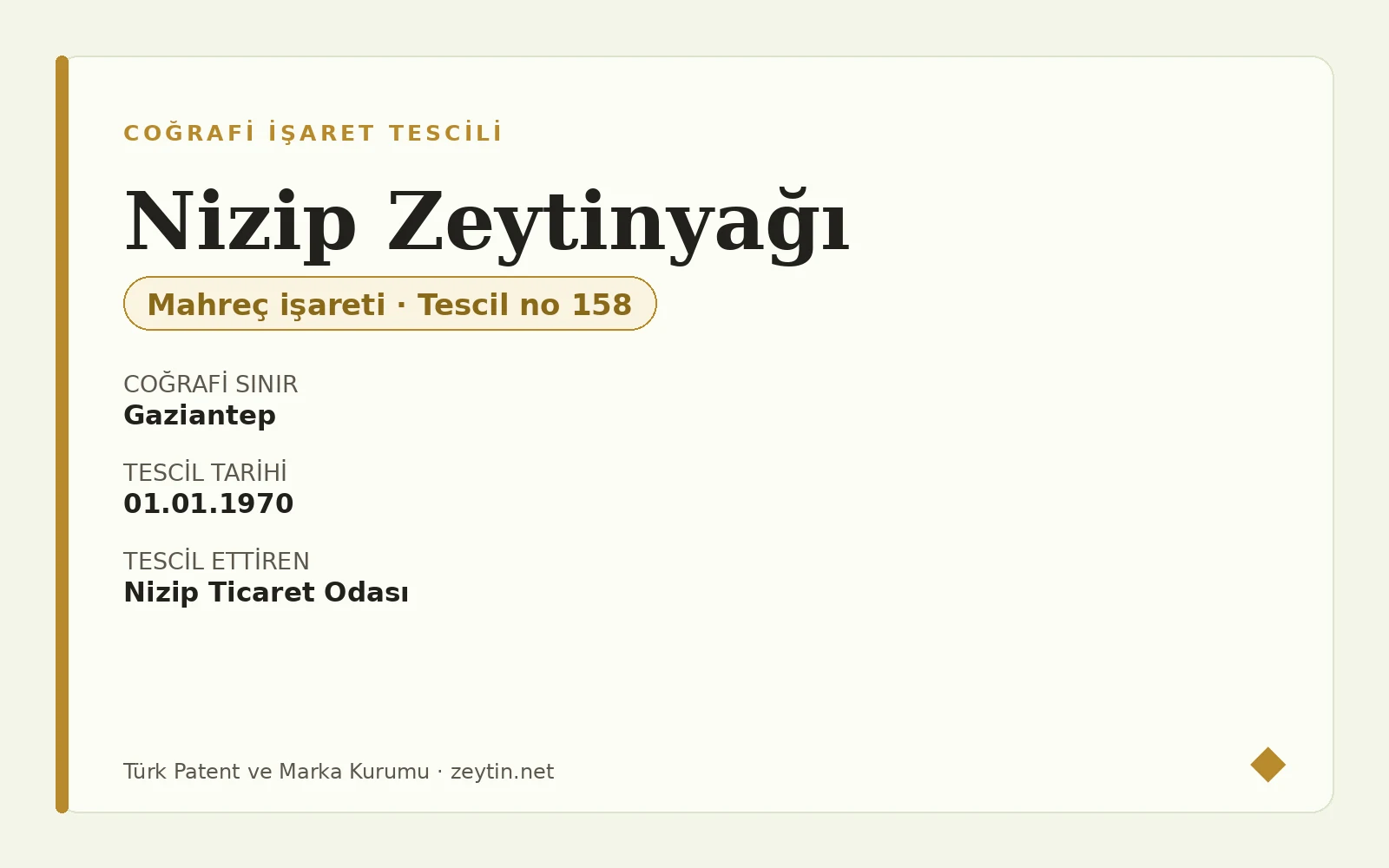
Nizip Olive Oil: a registration that sets a floor for its raw material
Registered in 2011. The certificate sets conditions on the fruit, not just the oil: 15-17 mm wide, 19-20 mm long, at least 25% oil. Fruit outside that cannot be used.
 Article
Mut Olive Oil: a landscape that needs no pesticide
The certificate's real claim rests on altitude and humidity: 10-40% relative humidity keeps out both the olive fly and peacock spot. That is why organic production is straightforward here.