Kan Çelebi olive
Kan Çelebi is a recorded variety of south-eastern Anatolia. Described in the source.
Kan Çelebi is one of the recorded olive varieties of south-eastern Anatolia.
Characteristics
Originating in Nizip, this variety also shows periodicity. Yield is high and the fruit large and round; on ripening it turns pink-red.

Where it grows
Kan Çelebi is recorded in south-eastern Anatolia. The provinces where olive production concentrates in this region: Gaziantep, Kilis, Şanlıurfa, Adıyaman, Mardin.
Regional conditions, varietal spread and output: olive growing in south-eastern Anatolia
Measured values
Pomological measurements for Kan Çelebi were published in a study of southeastern Anatolian cultivars.
| Property | Value |
|---|---|
| Oil content | 17% |
| Flesh ratio | 89% |
| Fruit length × width | 25 × 21 mm |
| Fruits per kilogram | 165 |
At 17% the oil content sits well below the region's oil varieties — Kilis Yağlık reaches 31%, Nizip Yağlık 27%. The flesh ratio, by contrast, is 89%: the stone accounts for less than a tenth of the fruit.
Together the two point to what the variety is for: Kan Çelebi is a table olive rather than an oil one. At 165 fruits to the kilogram it is also confirmed as large-fruited.
⚠ No published measurement was found for chilling requirement or self-fertility; those rows have not been filled in by estimation.
Other varieties of the region
Belluti · Eğriburun · Hursuki · Kalem Bezi · Kilis Yağlık · Nizip Yağlık
Locally
Kan Çelebi originates in the Nizip district of Gaziantep — the same district that gives its name to Nizip Yağlık. Nizip lies at the centre of Southeastern olive growing.
The variety shows periodicity (alternate bearing): a heavy crop one year, a light one the next. This bears directly on irrigation and husbandry decisions in the region.
More: olive growing in Gaziantep
Source
- Efe, R., Soykan, A., Cürebal, İ. & Sönmez, S. (2016) — Characteristics and Geographical Distribution of Olive Varieties Grown in Turkey, Zeytin Kitabı, pp. 37-80
- Olive map of Turkey
Where it stands among measured varieties
çeşit sayfası
çeşit sayfası
çeşit sayfası
Zeytin Kitabı — Efe, Soykan, Cürebal, Sönmez (2016), Kitabevi Yay. s.37-80
çeşit sayfası
Values are those published on each variety's own page; the comparison covers only varieties with a measured figure, so it is a comparison of what is known — not of every Turkish variety. See the full ranking and how it is built →
One rating per visitor; you can change yours at any time. Ratings are real reader votes — no seeded or default scores.
Related
 Article
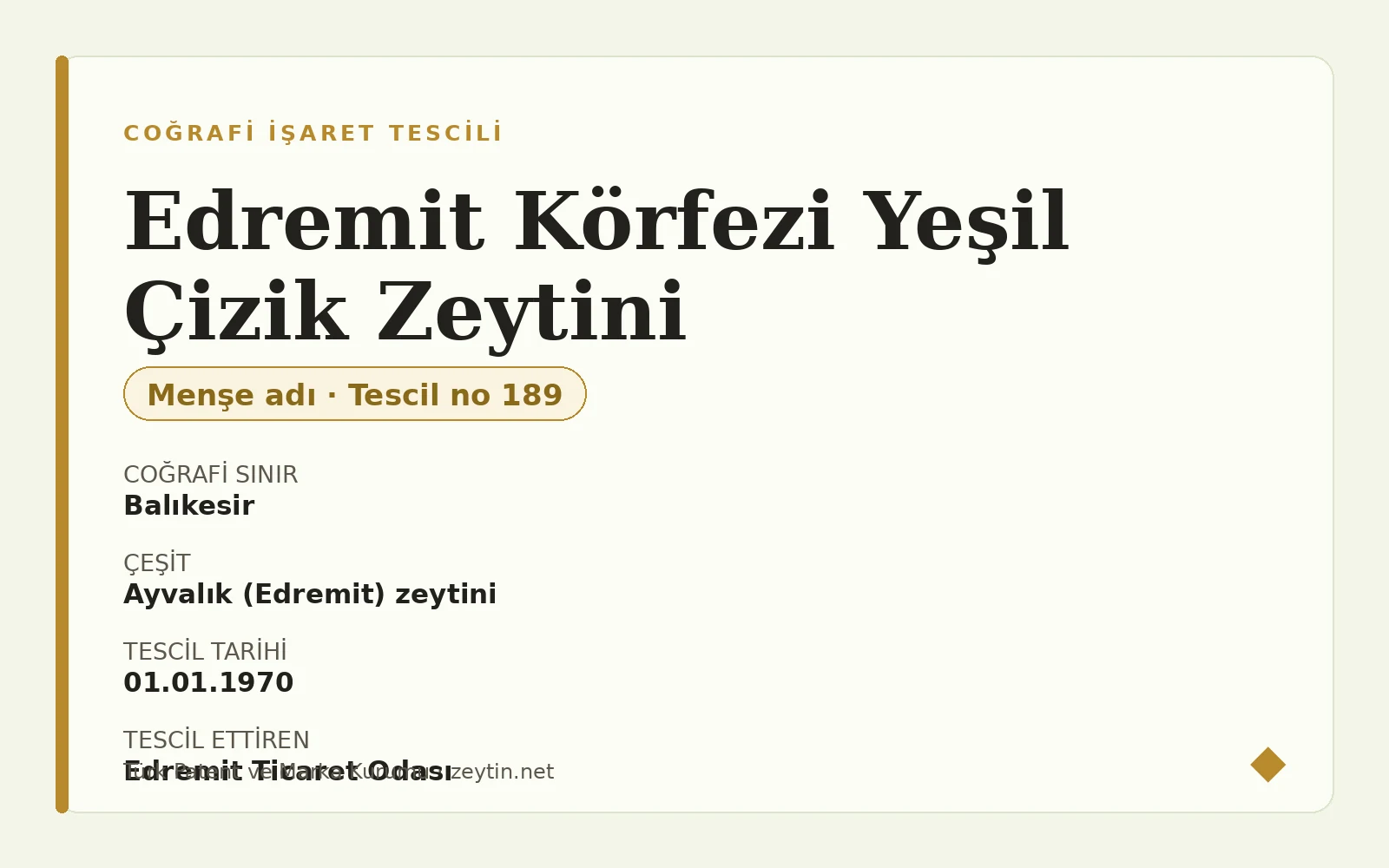
Edremit Gulf Green Scored Olive: a registration that defines altitude and slope
Registered in 2014. The certificate draws the boundary topographically as well as administratively: 50-250 m altitude, 5-6% slope. Debittering is entirely natural.
Article
Edremit Gulf Green Scored Olive: a registration that defines altitude and slope
Registered in 2014. The certificate draws the boundary topographically as well as administratively: 50-250 m altitude, 5-6% slope. Debittering is entirely natural.
 Article
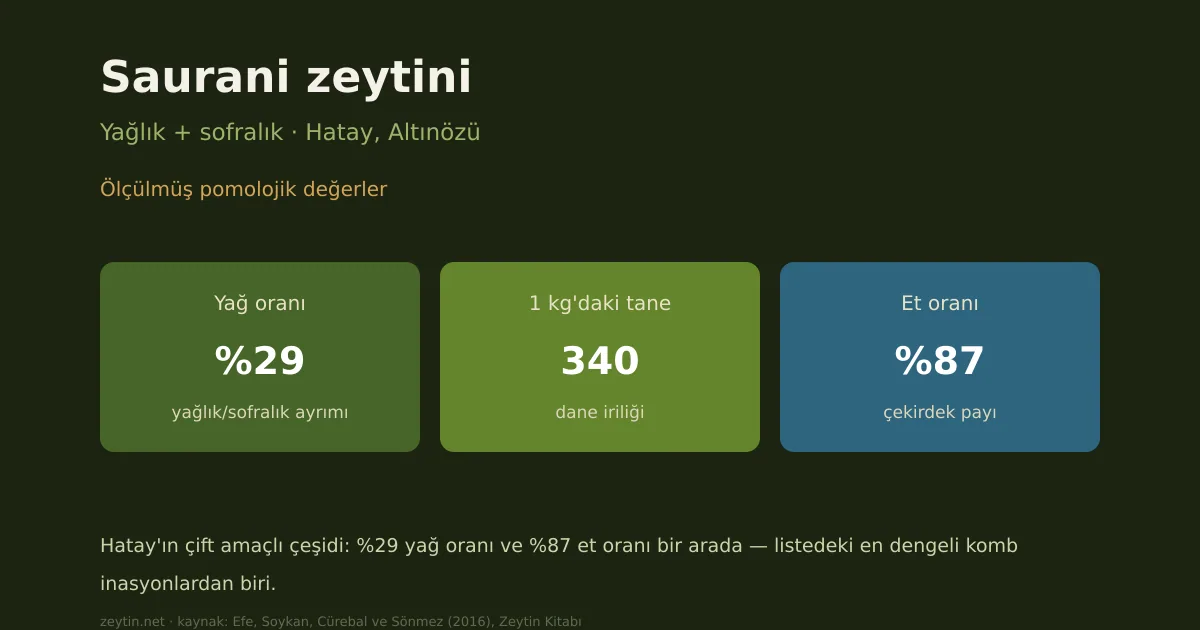
Saurani olive: characteristics, oil content and growing areas
Hatay's dual-purpose variety: 29% oil with 87% flesh — one of the most balanced combinations on the list.
Article
Saurani olive: characteristics, oil content and growing areas
Hatay's dual-purpose variety: 29% oil with 87% flesh — one of the most balanced combinations on the list.
 Article
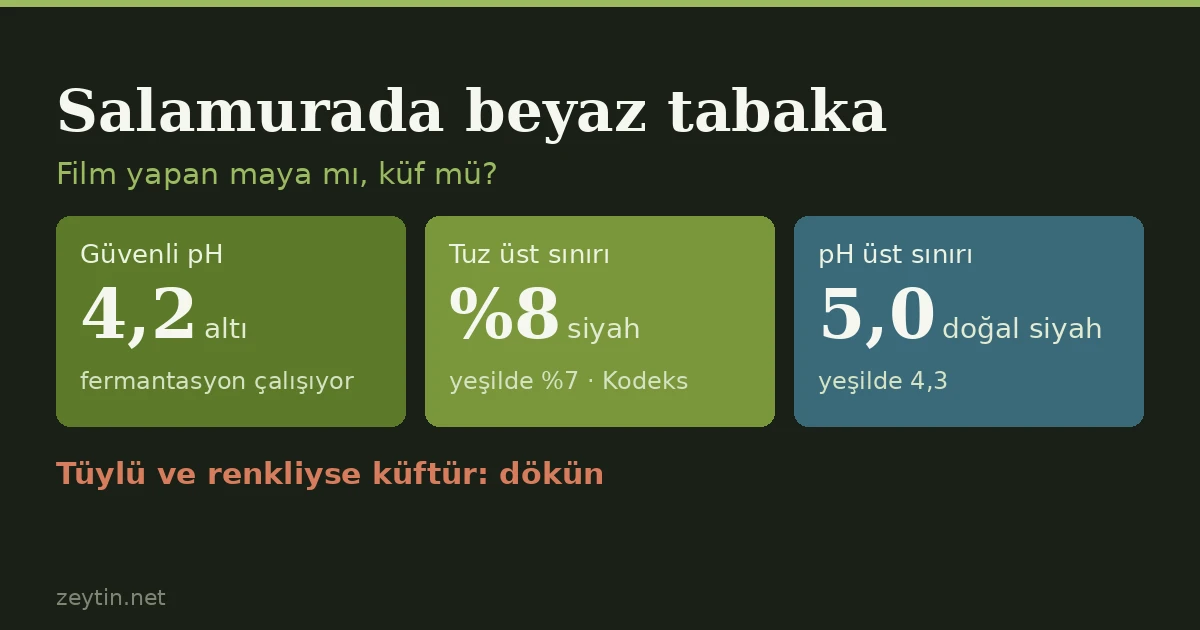
That white film on your olive brine: mould or yeast?
The white layer that forms on home-brined olives is usually not mould but a film-forming yeast — though that does not make it harmless. There are visible criteria for telling them apart. Together with the pH and salt ceilings the Turkish Food Codex sets for brine, here is what can be saved and what has to be thrown out.
Article
That white film on your olive brine: mould or yeast?
The white layer that forms on home-brined olives is usually not mould but a film-forming yeast — though that does not make it harmless. There are visible criteria for telling them apart. Together with the pH and salt ceilings the Turkish Food Codex sets for brine, here is what can be saved and what has to be thrown out.
 Article
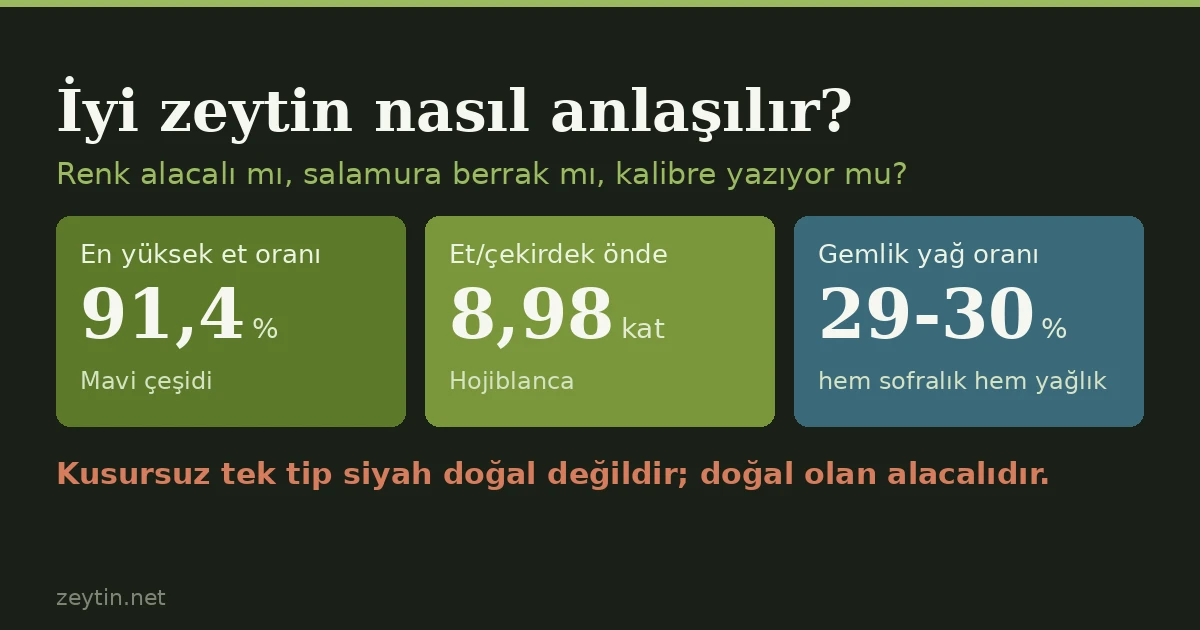
How to recognise a good table olive — and what to check when buying
Is the colour mottled, the brine clear, the calibre stated? Concrete checks for buying table olives, whether Gemlik is an oil or table variety, and how to store them at home.
Article
How to recognise a good table olive — and what to check when buying
Is the colour mottled, the brine clear, the calibre stated? Concrete checks for buying table olives, whether Gemlik is an oil or table variety, and how to store them at home.