Adana's 282-doctor cooperative opens its own olive oil mill: 60 tonnes a day, 9.5 million lira, 50 per cent grant
Adana's Tabipler Tarım Kooperatifi, a cooperative of 282 doctors, has built an olive oil mill in Sarıçam with a 50 per cent grant from the IPARD programme run by TKDK. The plant is worth 9.5 million lira and can press 60 tonnes a day. Its chair says the mill will also take other farmers' olives.
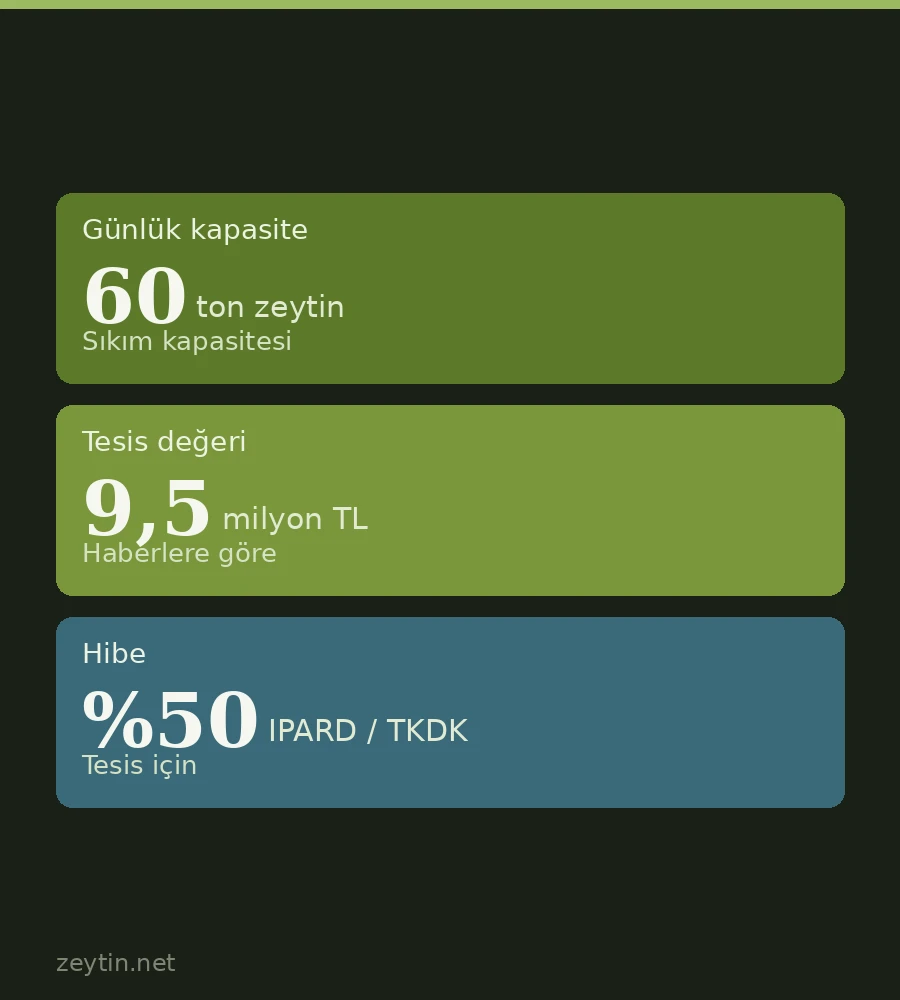
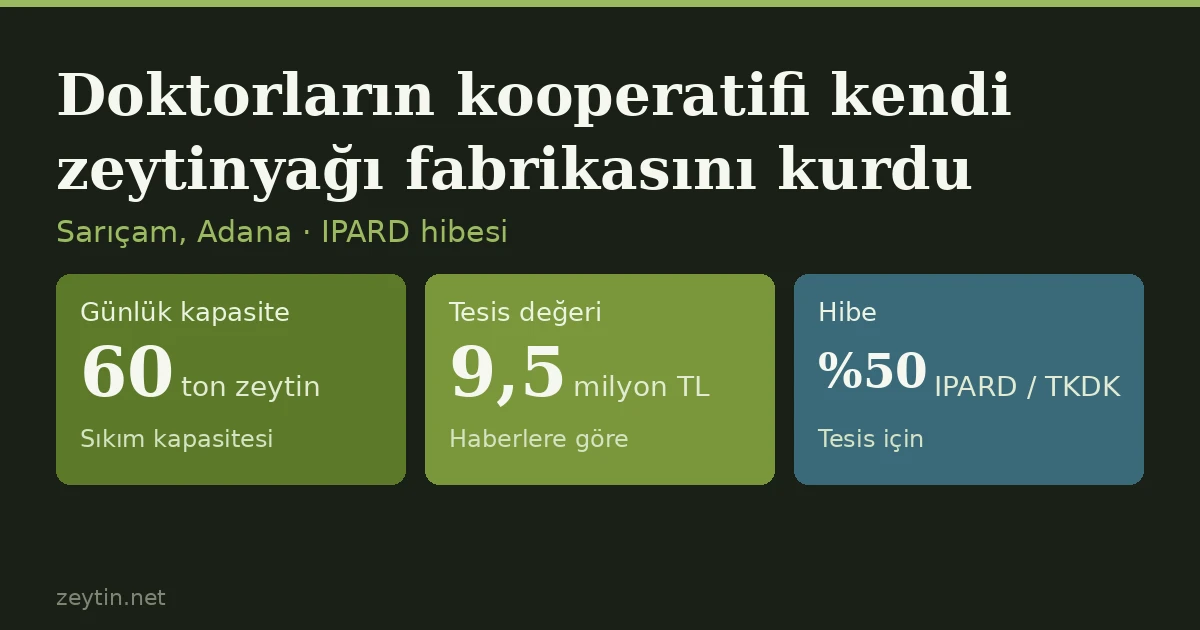
Tabipler Tarım Kooperatifi, a cooperative founded by doctors in Adana, has put its own olive oil mill into operation. According to the reports, the plant is in the Sarıçam district, is worth 9.5 million lira, can press 60 tonnes of olives a day and started work this year. It was financed with a 50 per cent grant from the IPARD programme run by the Agriculture and Rural Development Support Institution (TKDK). The reports appeared on 14 November 2026.
The figures at a glance
| Item | Value |
|---|---|
| Doctors who are members | 282 |
| Location | Sarıçam, Adana |
| Value of the plant | 9.5 million TRY |
| Grant rate (IPARD / TKDK) | 50% |
| Daily pressing capacity | 60 tonnes of olives |
| Land of the cooperative and its members | 2,500 decares |
The reports do not give the grant amount separately. If half of the plant's value is taken as the basis, it comes to about 4.75 million lira; that is our own calculation, not an official figure. Converted at the ECB reference rate of 13 November (1 euro = 55.67 lira), the 9.5 million lira is roughly 170,000 euros. Divided by the daily capacity, the investment works out at about 158,000 lira per tonne of daily capacity.
How the cooperative got here
The chair is Assoc. Prof. Ahmet Rıza Şahin, an infectious diseases specialist at Adana City Hospital. According to the reports the cooperative was founded about three years ago and grew to 282 doctor members. It grows olives, sesame, almonds, wheat, tomatoes, aubergines and peppers; olives and olive oil are its largest line. The reports say it applied to IPARD last year and was accepted after review.
We covered the cooperative earlier in our report on sensors in the olive grove. That report cited an area of 500 decares in İmamoğlu; today's reports mention 2,500 decares belonging to the cooperative and its members in total. The reports do not explain how the two figures relate, so we give both side by side rather than treating one as the other.
Why its own mill
By Şahin's account the reason is quality. He said an olive starts to deteriorate biochemically and microbiologically the moment it leaves the branch, so after harvest it has to be pressed very quickly, before it warms up and spoils. Until now the cooperative had its olives processed at other plants, where conditions were not always what they wanted. How much the wait after harvest matters is explained in our piece on how soon harvested olives must be pressed.
Şahin also said the plant lets them store their product better and has lowered their costs, which in turn showed in their prices. The reports give no figure for how much costs fell.
Open to farmers in the area
The chair's most notable remark is that the mill will not process only the cooperative's own olives. Şahin said farmers still pick olives by hand and pile them in the orchard before taking them to a plant, and that the cooperative would, if needed, send transport to collect olives from the orchard: "Nobody's olives should be left on the tree." He argued that farmers who get better oil earn more.
What the reports leave out
The reports do not say which pressing technology the plant uses, whether outside olives will be charged a fee or an oil share, how much was processed in the first season, or how the cooperative's oil will be sold. Without a service price there is no way to judge the advantage for nearby growers; we compiled how fees are formed in our pressing fee article.
The application process is a separate matter for anyone interested: Şahin said rural development grants bring life to the countryside when used properly and recommended that people look into them. We covered the permit and support side of building a mill in what permits you need to build an olive oil mill, and the route to joining a cooperative in how to join an olive cooperative.
One rating per visitor; you can change yours at any time. Ratings are real reader votes — no seeded or default scores.
Related
 Article
Sieve and scale inspections at Mut's olive buying centres: the instruments that set the price will be monitored all season
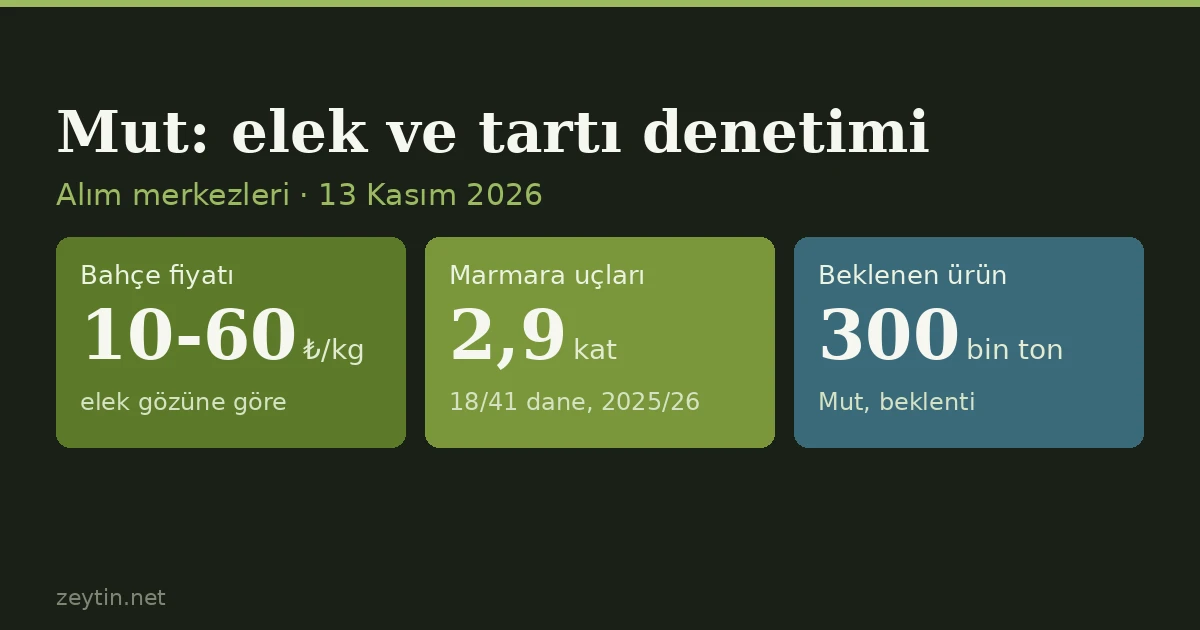
In Mut, Mersin, teams from the provincial agriculture and trade directorates and the district agriculture office inspected olive buying centres and sieving plants, checking sieve conformity, scale accuracy and price labels; inspections will continue through the season.
 Article
Italy to track olive oil with an electronic document: first positive response from the regions on the DAO, imported oil left out
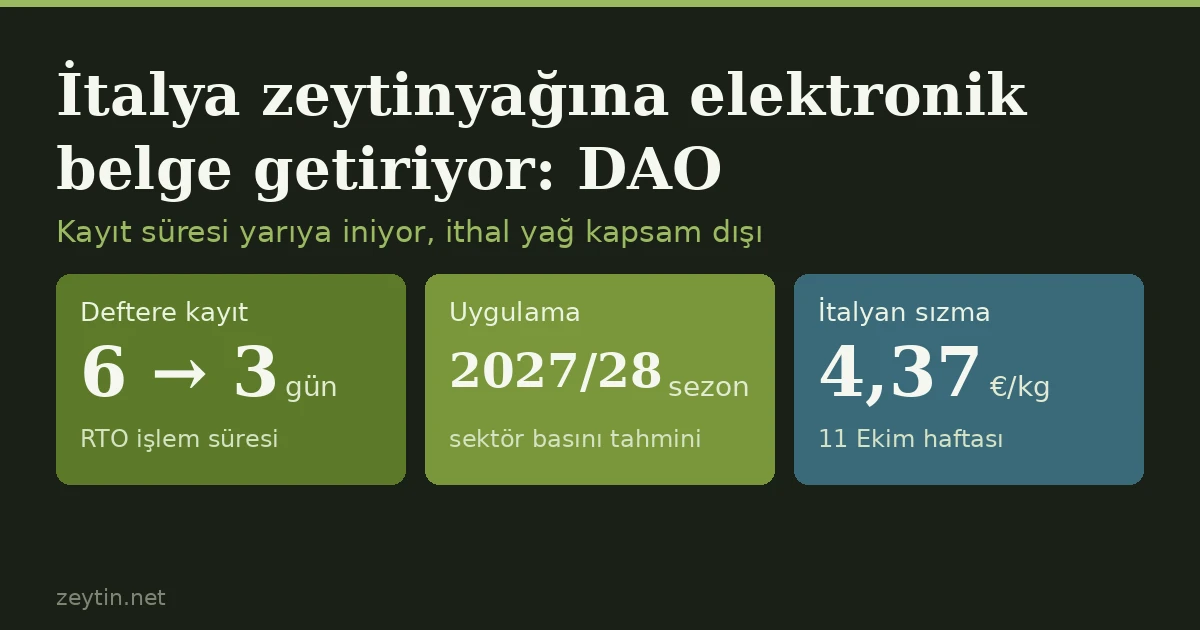
A draft decree announced on 9 October by Italian agriculture minister Lollobrigida introduces the DAO, an electronic accompanying document that links olive and olive oil movements to the SIAN and RTO systems and cuts the register deadline from six days to three. According to the growers' committee, the state-regions conference gave a first positive response on 15 October. But the document only tracks domestic oil leaving a facility; oil from other EU states and third countries will keep entering with conventional paperwork. The trade press expects it to apply from the 2027/28 season.
 Article
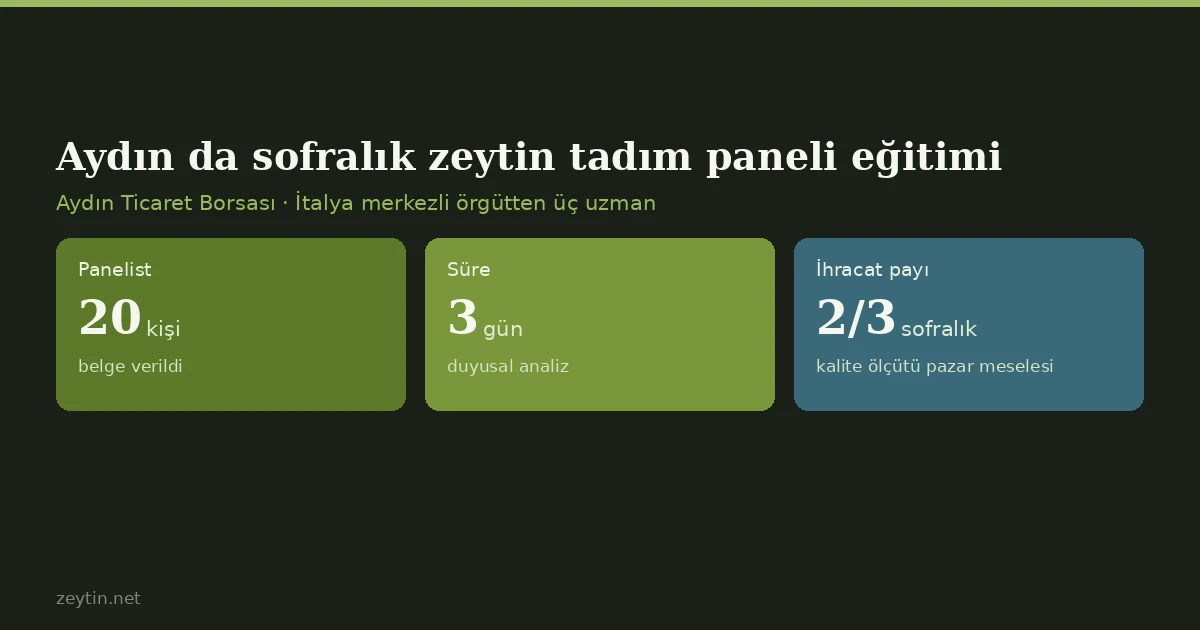
Table olive tasting panel training in Aydın
Aydın Commodity Exchange is extending its sensory analysis experience from olive oil to table olives, with 20 panellists trained over three days.
 Article
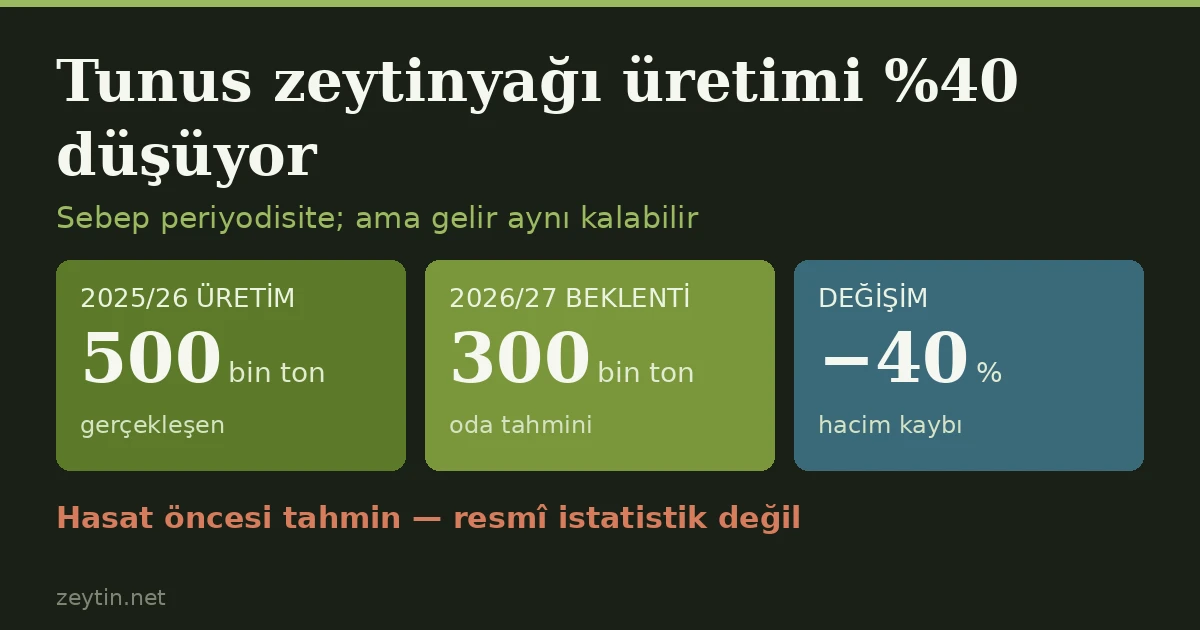
Tunisia's output falls from 500,000 to 300,000 tonnes — revenue may hold
Tunisia's National Chamber of Olive Producers expects olive oil output to fall from 500,000 to 300,000 tonnes in 2026/27, citing alternate bearing. Revenue is still expected to match last season because prices are higher. Türkiye's most direct bulk competitor is shrinking.