What are green olives, and how do they differ from black?
Green olives are not a separate variety but the same fruit picked early. What sets the colour, why pick green, and where the difference from black begins.
Green olives do not come from a different tree. They are the same fruit picked early. As an olive ripens it turns from green to straw yellow, then pink-purple and finally black. Where on that line the harvest falls decides what the product is called.
What sets the colour?
The change comes from chlorophyll declining and purple-black pigments called anthocyanins accumulating. In fruit that blackens on the tree the colour moves inward from the skin, but the pit stays pale — the strongest way to separate natural black from artificial blackening. We cover the methods separately.
The real differences
| Green | Black | |
|---|---|---|
| Harvest | Before colour turns | After ripening on the tree |
| Oil content | Low | High |
| Texture | Firmer | Softer |
| Bitterness | Pronounced | Rounder |
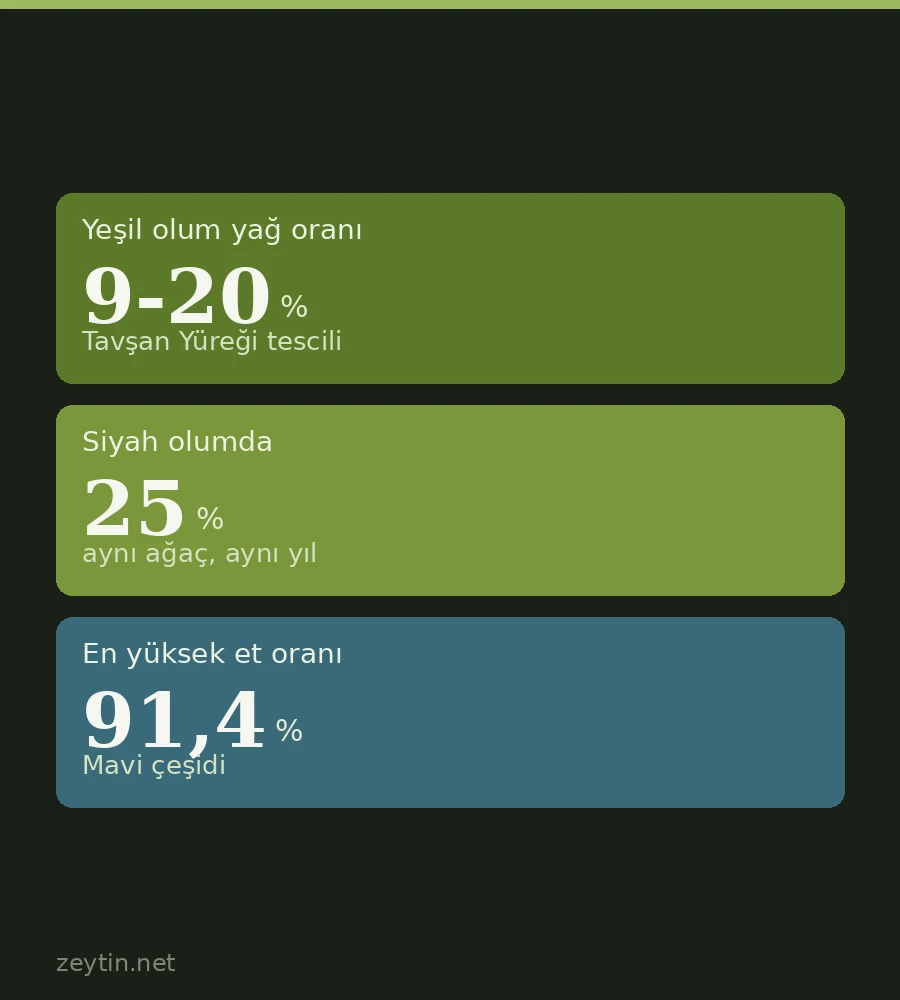
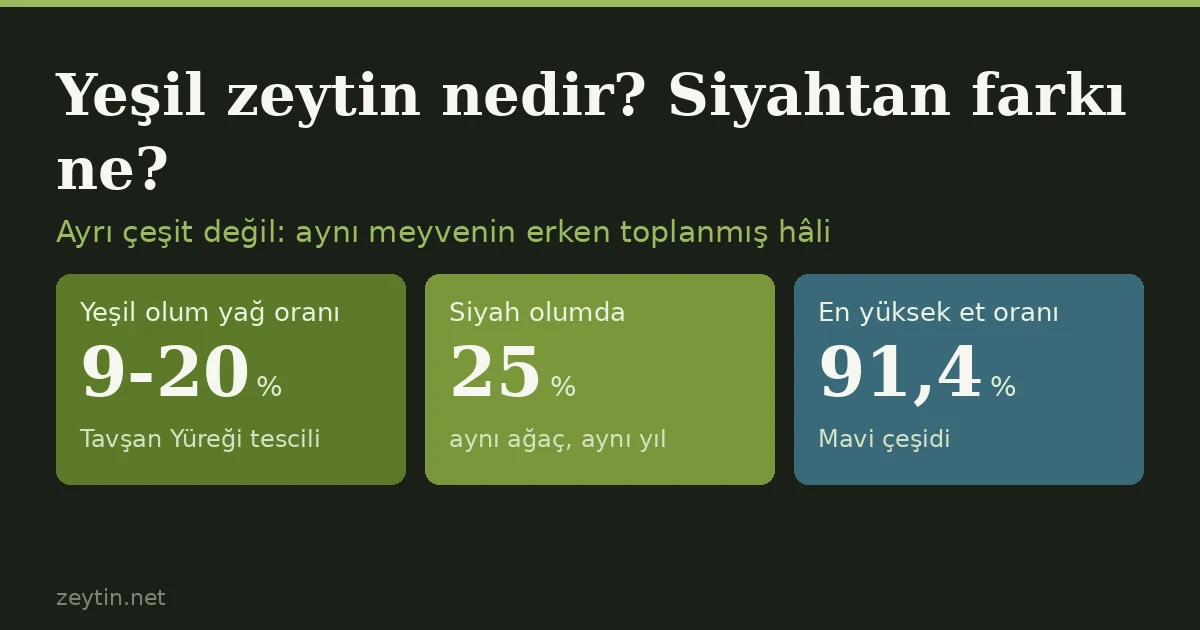
The oil gap is concrete: the registration document for Antalya Tavşan Yüreği gives 9-20.2 percent at the green stage and 25 percent at black maturity.
Why pick green?
In table production a low oil share is wanted, because oily fruit softens faster in brine. Green fruit is firmer and stands transport and processing better; stuffed olives are only possible with that firmness. Picking earlier also tires the tree less for the following year's crop.
Which varieties suit green table use?
The deciding measures are flesh ratio and size. In our records Mavi leads at 91.4 percent, Hojiblanca 90 and Kalamata 89.4; on flesh-to-pit Hojiblanca is first at 8.98. On size, Karamürsel Su reaches 9.44 grams.
It cannot be eaten off the tree
Fresh green olives are bitter because of oleuropein. Three methods remove it: Spanish-style alkali treatment (weeks), natural brine (6-12 months) and scoring (days). Details in how green table olives are made.
Calories
The gap between green and black is small; size and brining decide more. One medium olive is about 4-5 calories and 100 grams of brined olives 115-145.
How to store green olives
Keep an opened jar refrigerated with the fruit always below the brine. Any that rise meet air and mould. Top up with salted water that has been boiled and cooled; a finger of olive oil on top is the simplest way to cut off air.
Use glass or food-grade plastic. Never use metal — acidic brine reacts with it and the result carries into taste and colour.
Forms on the shelf
The same green olive reaches the shelf in several forms: whole with pit, scored or cracked, pitted, and stuffed with pepper, almond or lemon peel. Stuffing needs large, firm fruit, so not every variety suits it.
Calibre — count per kilogram — sets the price directly. A lower count means larger fruit.
Which is healthier, green or black?
They are the same fruit and their nutrient profiles largely overlap. Black tends to carry more iron and copper; green typically holds more polyphenols, some of which give the bitterness. In both, salt matters more: brining method and time change sodium far more than any varietal difference.
One rating per visitor; you can change yours at any time. Ratings are real reader votes — no seeded or default scores.
Related
 Article
Kiraz olive: characteristics, oil content and growing areas
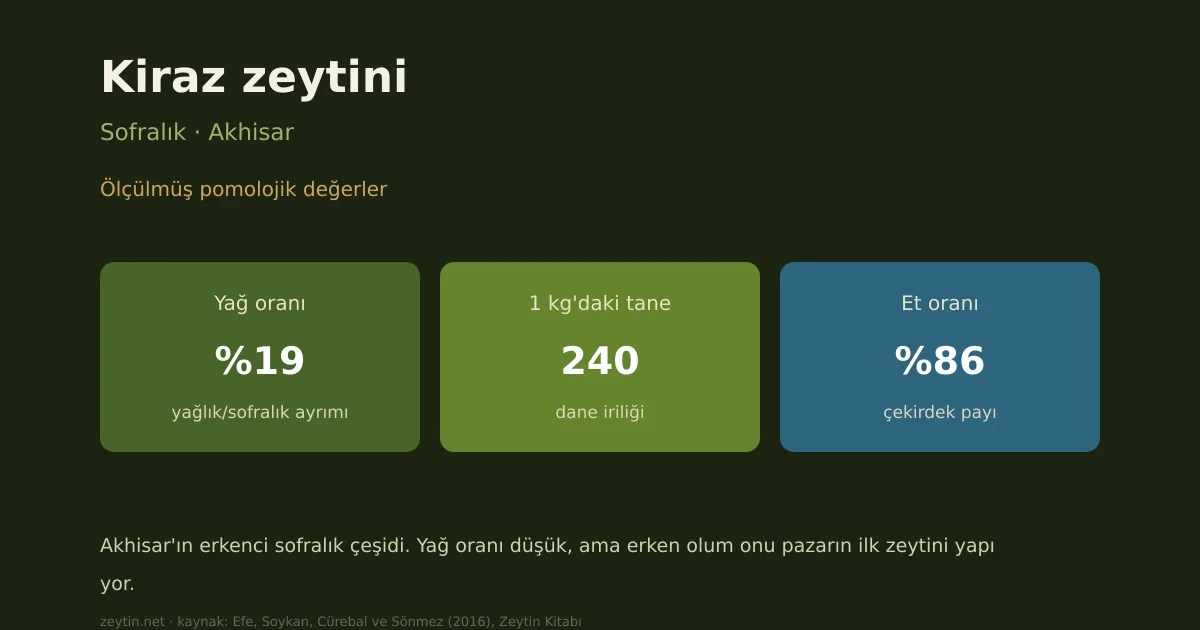
Akhisar's early table variety. Low in oil, but early maturity makes it the season's first olive to market.
Article
Kiraz olive: characteristics, oil content and growing areas
Akhisar's early table variety. Low in oil, but early maturity makes it the season's first olive to market.
 Article
İzmir Sofralık olive
İzmir Sofralık is a recorded variety of the Aegean. Described in the source.
Article
İzmir Sofralık olive
İzmir Sofralık is a recorded variety of the Aegean. Described in the source.
 Article
Melkebazi olive
Melkebazi is a recorded variety of south-eastern Anatolia. No measured pomological data published.
Article
Melkebazi olive
Melkebazi is a recorded variety of south-eastern Anatolia. No measured pomological data published.
 Article
Karamürsel Su olive: characteristics, oil content and growing areas
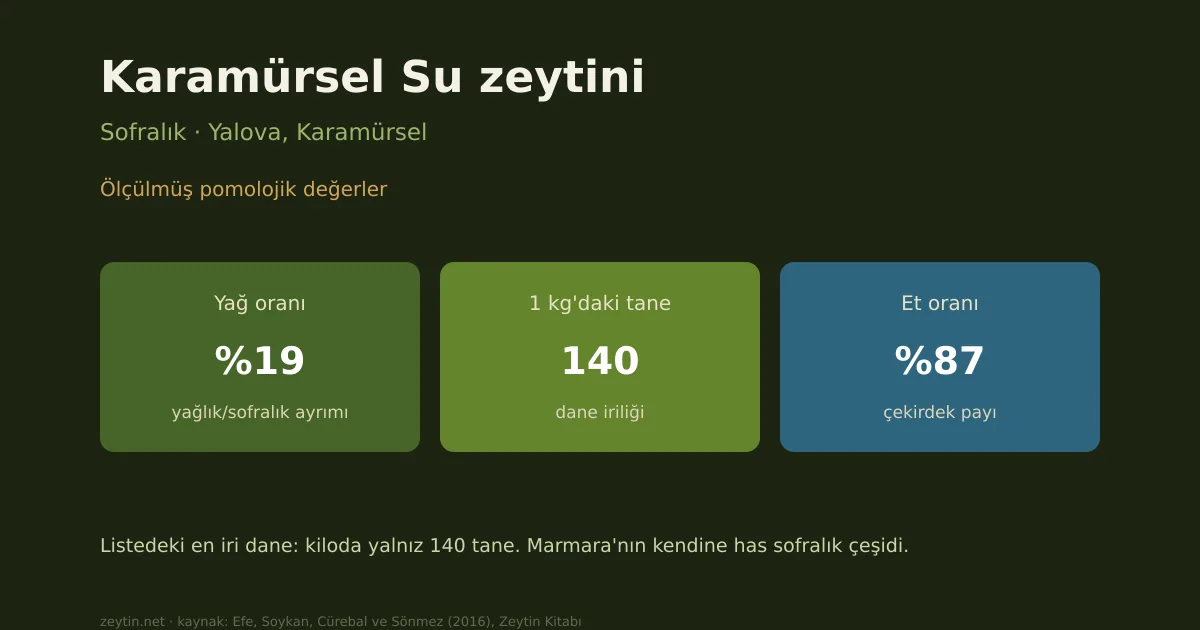
The largest fruit on the list: only 140 per kilo. Marmara's own distinctive table variety.
Article
Karamürsel Su olive: characteristics, oil content and growing areas
The largest fruit on the list: only 140 per kilo. Marmara's own distinctive table variety.