Palestinian olive oil: output down from 33,000 to 7,000 tonnes — the cause is access, not the crop
In a productive season Palestine yields 33,000 tonnes of olive oil; last season it produced 7,000. Seventy per cent of the groves sit in the northern West Bank, reached through 62 agricultural gates, and shipping times have gone from ten days to two months.
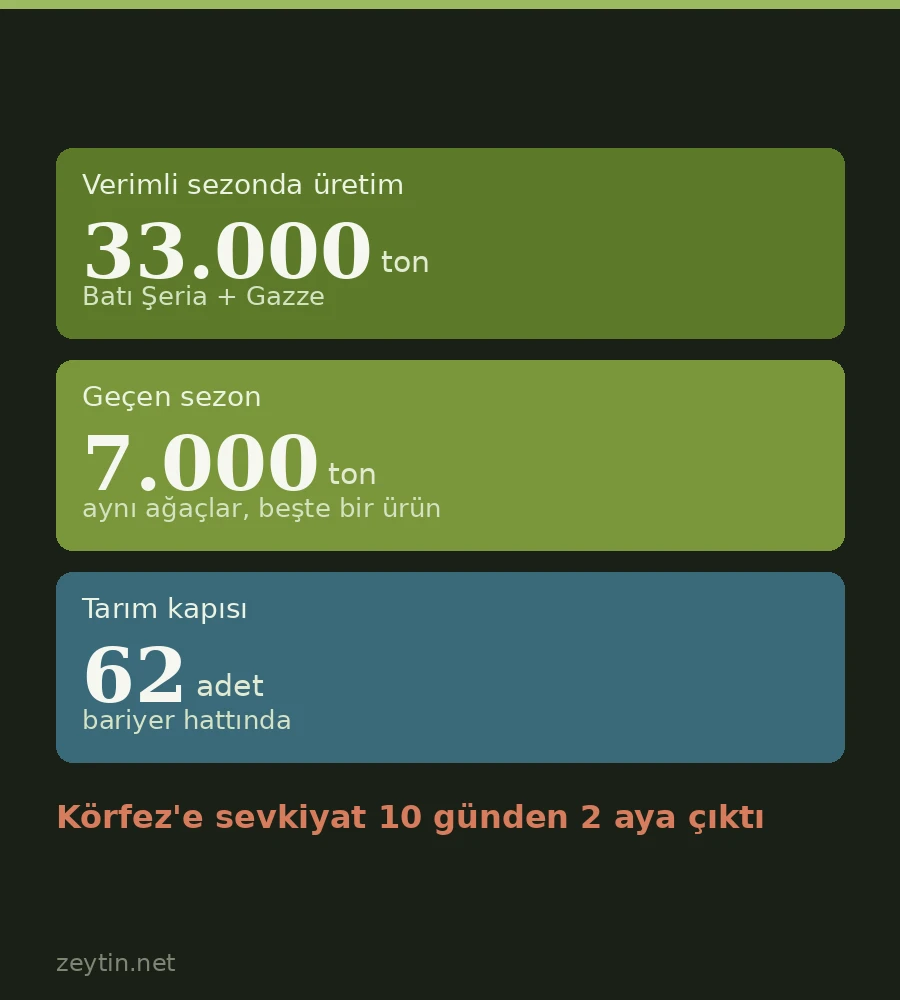
For Palestinian olive oil, the problem is not the tree. It is the distance between the tree and the market. In a productive season the West Bank and Gaza yield around 33,000 tonnes of olive oil, of which up to 15,000 tonnes can be exported. In recent years output has fallen below 10,000 tonnes; last season produced just 7,000 tonnes.
The cause is neither drought nor ageing groves. Growers cannot reach their land — and those who do cannot get the oil onto a ship in time.
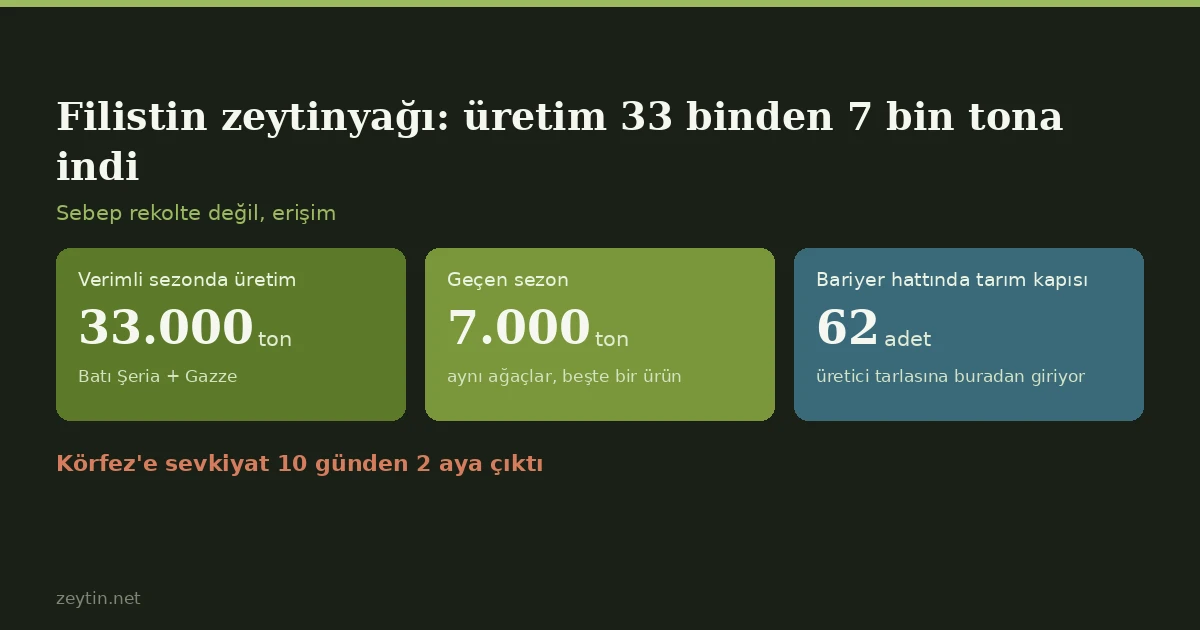
The numbers
| Item | Value |
|---|---|
| Output in a productive season | ~33,000 t |
| Exports in a productive season | up to 15,000 t |
| Output last season | 7,000 t |
| Share of groves in the northern West Bank | ~70% |
| Agricultural gates along the barrier | 62 |
| Gates opened during the 2025 harvest | 74% |
| Families living from the olive oil trade | ~100,000 |
| Olive oil's share of agricultural revenue | ~15% |
Reaching the grove: 62 gates, uncertain hours
Close to 70% of the groves lie in the northern West Bank, and a significant share of them sit between the barrier and the Green Line. To reach his own field a grower must pass through an agricultural gate. There are 62 such gates along the line.
During the 2025 harvest 74% of them were opened — but only on a limited number of days. In practice: road access is granted one day and withdrawn a few hours later; when a gate closes, growers already inside are stranded on their land. What is hit is not the crop but the calendar. The olive harvest begins in mid-October and runs for about a month, stretching into January in some areas. A day lost inside that window does not come back.
On top of restricted access comes direct damage. In June alone at least 100 olive trees and saplings were destroyed, and more than 170 dunums (16.9 hectares) of cultivated wheat and seasonal crops were wiped out. According to figures from the UN Office for Humanitarian Affairs, settler attacks account for 55% of Palestinian injuries in the West Bank this year and are the leading cause of those injuries.
We have examined before how war destroys an olive grove: the damage usually comes less from bombs than from the denial of access.
Reaching the market: ten days or two months?
Once the production hurdle is cleared, the second begins: shipping. Before 7 October, Palestinian olive oil reached the United Arab Emirates in ten days. Today the wait can stretch to two months. On the same route, an Israeli producer completes an export in one week.
The gap has nothing to do with product quality and everything to do with the layers of inspection in between. For olive oil this delay is not an ordinary logistics problem: oil sells at its highest polyphenol content and freshest aroma in the first months after harvest. A consignment held for two months starts a season behind its competitor on the shelf.
That is why the scale of the trade matters. Roughly 100,000 families depend on the olive oil trade, and olive oil makes up about 15% of the agricultural sector's revenue. As the shipping window narrows, that income evaporates directly.
Holding on to the market
Those speaking from the field converge on the same point. Ali Ghanim, a farmer and engineer, describes a problem that lies not in the tree but in getting to it. Fuad Abu Saif, a researcher working on rural development, agroecology and food sovereignty, notes that the last three years have been especially hard.
On the export side, the effort is to stay on the shelf at all. Wajeda Khalidi, founder and manager of the UAE-based Levant Foods, is among those keeping regular shipments to the Gulf alive. The UK-based social enterprise Zaytoun distributes Palestinian olive oil in Europe through fair trade channels, with part of the range carrying Fairtrade certification.
Why this matters beyond Palestine
The Mediterranean supply map has been redrawn over the past few seasons: on one side Algeria's record expectations, on the other, countries whose output is falling. A drop from 33,000 to 7,000 tonnes is not by itself large enough to move world prices — but the reason for the loss is striking: not the crop, but access.
It shows that security of supply in olive oil cannot be measured by tree counts and rainfall alone. Being unable to gather the harvest ends up in the same place as having no harvest at all.
One rating per visitor; you can change yours at any time. Ratings are real reader votes — no seeded or default scores.
Related
 Article
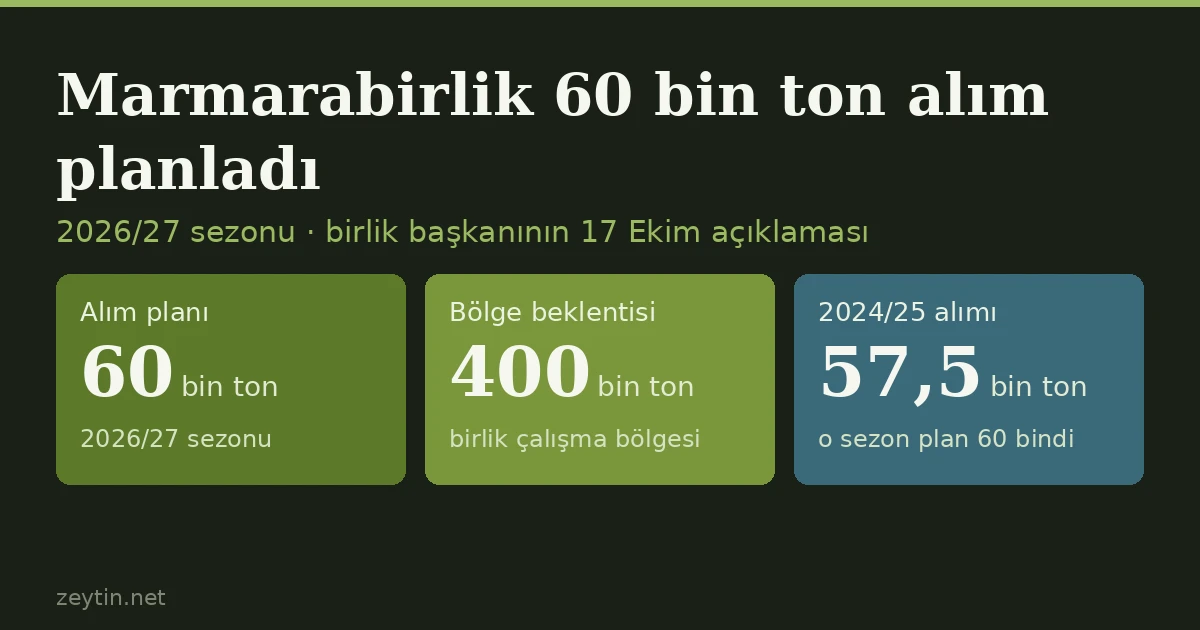
Marmarabirlik plans to buy 60,000 tonnes of olives: 15 per cent of the 400,000 tonnes expected in its region
According to a statement by chairman Ali Yıldız on 17 October, Marmarabirlik plans to buy about 60,000 tonnes of olives from growers this season, while its region expects 400,000 tonnes. The union set the same target in 2024/25 and closed that campaign at 57,500 tonnes. Crop declarations close on 23 October; the purchase price has not been announced.
Article
Marmarabirlik plans to buy 60,000 tonnes of olives: 15 per cent of the 400,000 tonnes expected in its region
According to a statement by chairman Ali Yıldız on 17 October, Marmarabirlik plans to buy about 60,000 tonnes of olives from growers this season, while its region expects 400,000 tonnes. The union set the same target in 2024/25 and closed that campaign at 57,500 tonnes. Crop declarations close on 23 October; the purchase price has not been announced.
 Article
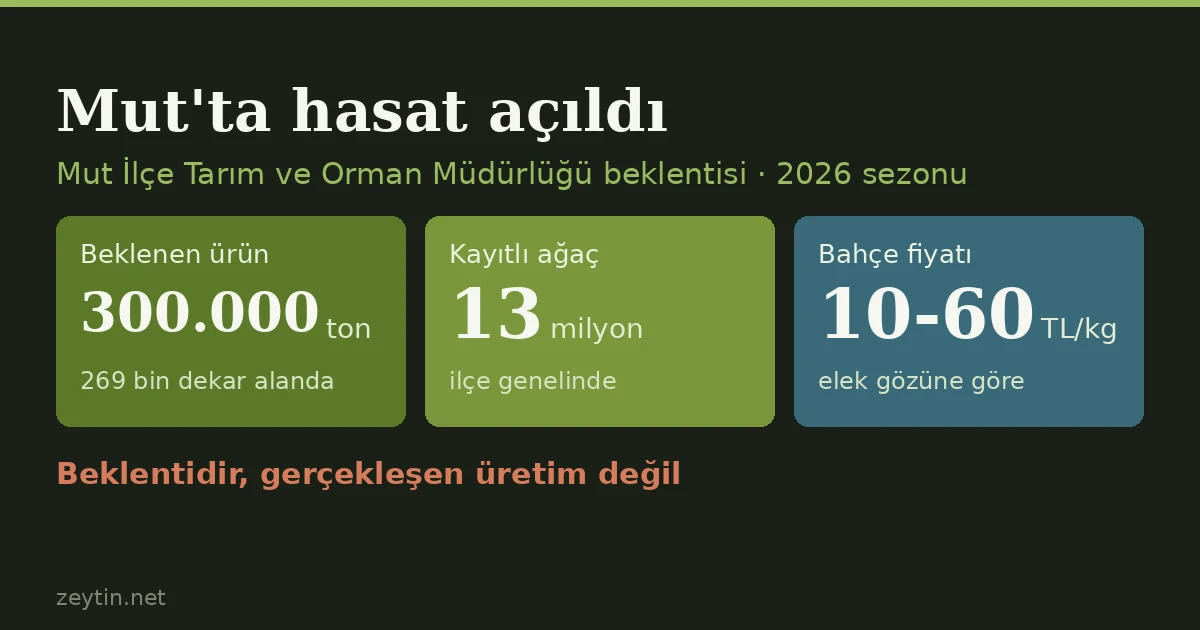
Harvest opens in Mut: 300,000 tonnes expected, orchard prices start at 10 lira
Mut's district agriculture directorate reports 300,000 tonnes expected from 269,000 decares, with orchard prices ranging from 10 to 60 lira by sieve size. Yield is high but growers are unhappy with prices. Set against our own Mersin figures the tonnage leaves an unresolved measurement gap, and we report it as such.
Article
Harvest opens in Mut: 300,000 tonnes expected, orchard prices start at 10 lira
Mut's district agriculture directorate reports 300,000 tonnes expected from 269,000 decares, with orchard prices ranging from 10 to 60 lira by sieve size. Yield is high but growers are unhappy with prices. Set against our own Mersin figures the tonnage leaves an unresolved measurement gap, and we report it as such.
 Article
The world's largest bottler is for sale: a €500 million race for Deoleo
Deoleo, owner of Bertolli and Carbonell, holds 22% of global bottled olive oil sales. Italy's Coricelli leads at €500 million, Spain's Dcoop cooperative at €470 million. The Spanish government regards the company as nationally strategic. Because Deoleo is a major bulk buyer, the outcome matters to Turkish exporters too.
Article
The world's largest bottler is for sale: a €500 million race for Deoleo
Deoleo, owner of Bertolli and Carbonell, holds 22% of global bottled olive oil sales. Italy's Coricelli leads at €500 million, Spain's Dcoop cooperative at €470 million. The Spanish government regards the company as nationally strategic. Because Deoleo is a major bulk buyer, the outcome matters to Turkish exporters too.
 Article
Crop forecast climbs as the minimum-price debate returns: what the exchange numbers say
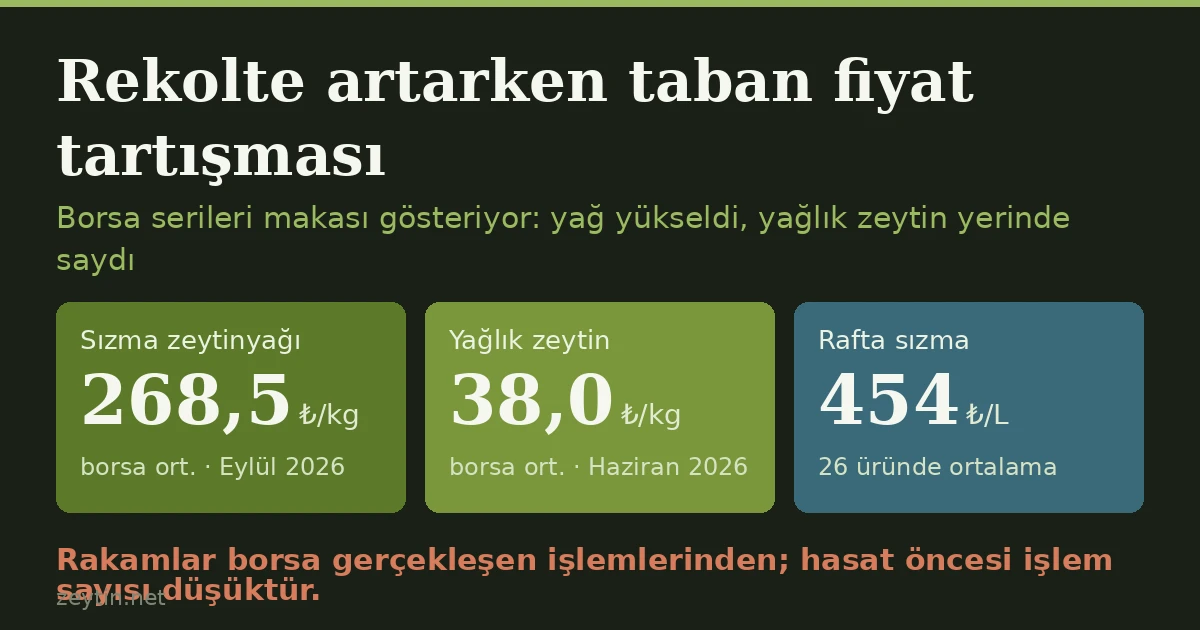
With the 2026 harvest approaching, crop forecasts are up 40 percent in some provinces and growers want a floor price. Our exchange series shows why the dispute is really about olives, not oil.
Article
Crop forecast climbs as the minimum-price debate returns: what the exchange numbers say
With the 2026 harvest approaching, crop forecasts are up 40 percent in some provinces and growers want a floor price. Our exchange series shows why the dispute is really about olives, not oil.