How many olives should you eat a day? Portions, salt and common questions
Calories, fat and salt in olives: what is a sensible daily amount? Based on nutrition data, without unauthorised health claims.
It is the most asked question about olives, and most answers online are copies of each other: "five to seven a day". The number is not wrong, but on its own it is incomplete. How many you should eat depends on the salt in them, their size, what else you eat that day, and whether you are managing something like blood pressure.
Below is both the number and where it comes from.
The short answer
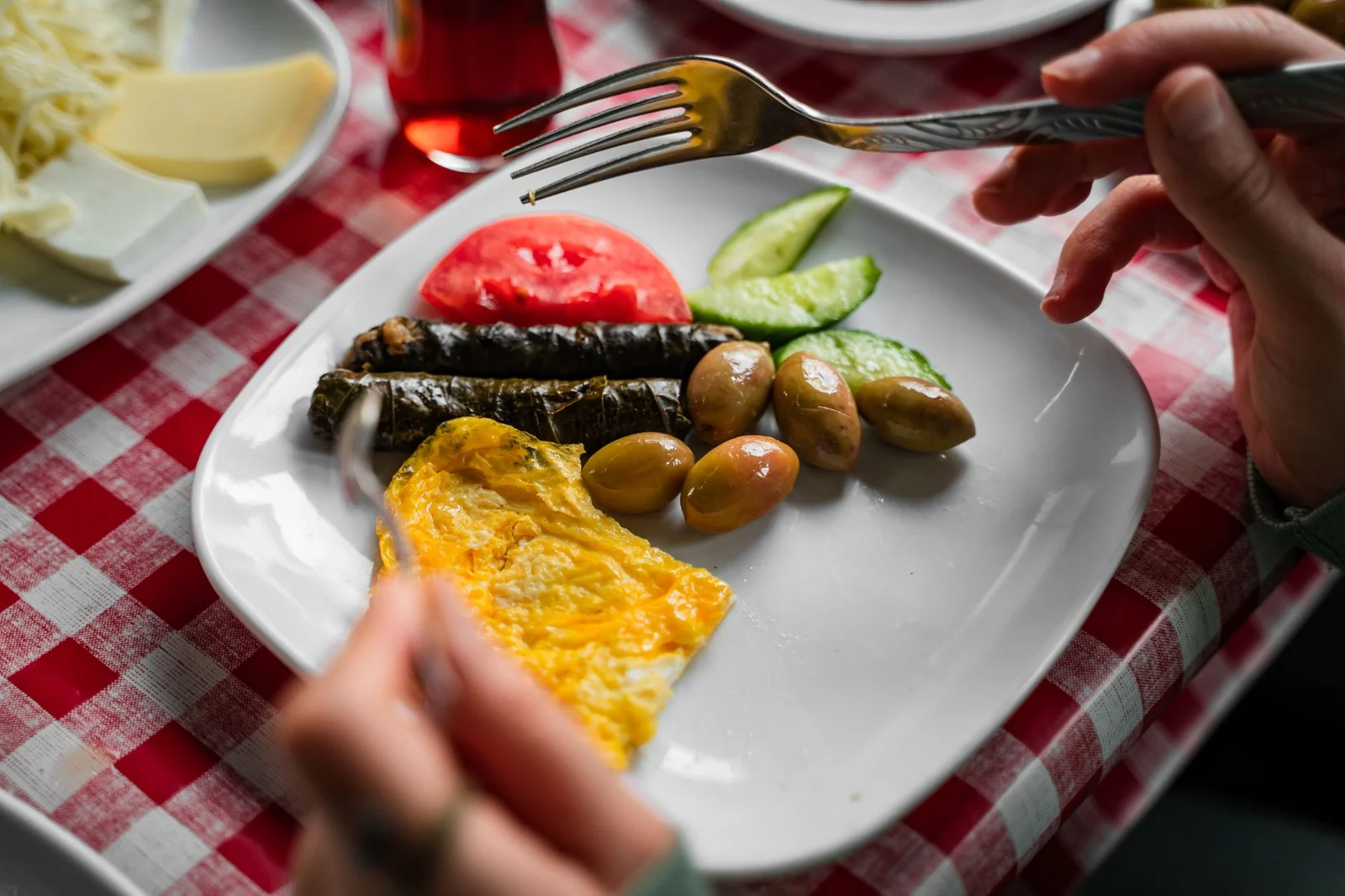
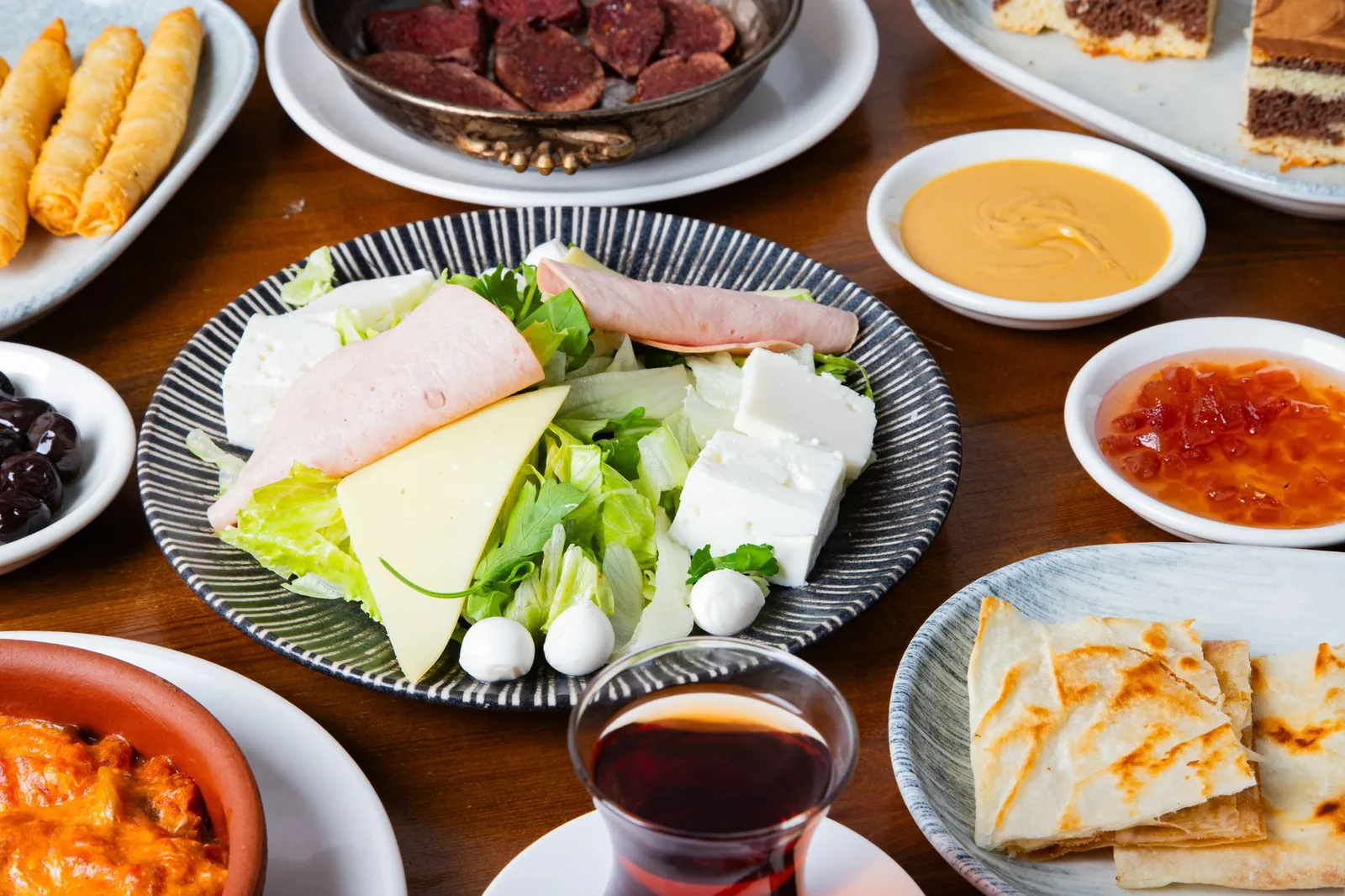
For a healthy adult, five to ten olives a day (roughly 15-30 grams, a small handful) is a sensible range. The classic Mediterranean breakfast plate is about that much.
It is a balance point rather than an upper limit. What constrains olives is not their fat but their salt.
Why that number? The figures
A medium table olive carries about 4-5 calories. So:
| Amount | Weight | Energy | Fat | Sodium* |
|---|---|---|---|---|
| 1 olive | ~3 g | 4-5 kcal | 0.4 g | ~30 mg |
| 5 olives | ~15 g | 20-25 kcal | 2 g | ~150 mg |
| 10 olives | ~30 g | 40-50 kcal | 4 g | ~300 mg |
| 100 g | 100 g | 115-145 kcal | 10-15 g | ~1,000 mg |
* Sodium varies enormously with the curing method and the brand; some products exceed 1,500 mg per 100 g, while soaked ones fall below 500 mg. Check the nutrition panel on the packaging for the actual figure.
Calories are not the issue: ten olives give less energy than a slice of bread. The problem is the last column.
The World Health Organization's recommended daily salt limit for adults is 5 grams — roughly 2,000 mg of sodium. Ten moderately salted olives use about 15% of that on their own. Add cheese to the same breakfast and a third of the day's salt budget may be gone at the first meal.
That is where five to ten comes from. Not from the fat, from the salt.
A practical way to cut the salt
Olives are not eaten raw; oleuropein makes them intensely bitter. The traditional way to remove that bitterness is brine, and the sodium comes from there.
Two simple methods cut it noticeably:
- Soaking. Leaving olives in fresh water for a few hours (or overnight) and changing the water removes much of the salt at the surface and in the flesh. The taste softens, the texture holds.
- Rinsing. If there is no time, even rinsing under running water in a colander makes a difference.
There are also brine-free methods — dry salt curing, slit olives — where the salt content is generally better controlled.
Who should be more careful
- Anyone managing blood pressure. Sodium directly affects it. Olives do not have to go, but the count matters and soaking helps.
- Anyone with kidney disease. If salt is restricted, the portion is a question for your doctor.
- Anyone prone to oedema. Salt increases water retention.
- Anyone watching weight. Olives are a fatty food; twenty of them pass 100 calories and usually arrive with bread.
The information here is general nutrition information; for a personal plan consult a doctor or dietitian. It is not medical advice.
What are the benefits of eating olives?
What distinguishes olives is the kind of fat they carry. Almost all their energy comes from fat, and most of that fat is monounsaturated oleic acid — the same fatty acid that makes olive oil valuable.
Alongside that:
- Polyphenols. Oleuropein, hydroxytyrosol and tyrosol. The compounds responsible for the bitterness are also known for their antioxidant properties. The European Food Safety Authority recognises an approved health claim for olive oil polyphenols contributing to the protection of blood lipids from oxidative damage — but that claim is set at an intake on the scale of 20 grams of olive oil a day, not a few olives.
- Vitamin E. Contributes to the protection of cells from oxidative damage.
- Fibre. About 3 grams per 100 g; contributes to satiety.
- Iron and copper. Especially in black olives. Absorption of plant iron improves in the presence of vitamin C — which is what the tomatoes and peppers on the breakfast plate are doing.
The honest framing is this: olives are a good food, not a medicine. They do not prevent or cure anything on their own. Their value comes from being part of a Mediterranean pattern of eating.
Is seven olives equal to one egg?
No. The comparison circulates widely but is nutritionally wrong, and knowing why is useful.
| 7 olives (~21 g) | 1 medium egg (~50 g) | |
|---|---|---|
| Energy | 30-35 kcal | 70-78 kcal |
| Protein | 0.2 g | 6-7 g |
| Fat | 3 g | 5 g |
| Vitamin B12 | none | present |
| Sodium | ~200 mg | ~70 mg |
The real difference is protein. Eggs are one of the few foods with complete protein; their amino acid profile matches human requirements almost exactly. Olives contain practically none.
So olives do not replace eggs. Olives are a source of fat, eggs a source of protein. They sit side by side at breakfast because they complement each other, not because one substitutes for the other.
What is the "seven olives and one fig miracle"?
A practice that spread on social media in recent years: seven olives and one dried fig on an empty stomach in the morning. It is usually grounded in the Qur'anic oath by the fig and the olive, and effects from cell renewal to faster metabolism are claimed for it.
The claims need separating into two.
The religious part is real: Sūrat al-Tīn opens with an oath by the fig and the olive. But the verse contains no recipe, no number and no health instruction. The "seven olives and one fig" formula has no counterpart in the Qur'an or in the reliable hadith collections; it is a modern account. For the detail, see our article on the olive in scripture and folk belief.
The nutritional part is modest: seven olives and one dried fig come to roughly 55-60 calories, 3 grams of fat, 2-3 grams of fibre and around 200 mg of sodium. That is a good snack — the fibre and monounsaturated fat together are filling and do not spike blood sugar. But there is no evidence supporting claims of "cell renewal" or "speeding up metabolism"; none of these is an approved health claim.
In short: not harmful, a pleasant habit even. Not a miracle.
Which olive is the best quality?
There is no single "best" variety; it depends on what you want it for. Türkiye's principal table varieties and where they stand out:
- Gemlik — Türkiye's best-known black table olive. Fleshy, small-stoned, thin-skinned. This is the breakfast olive. Grown in the Marmara region; it carries a geographical indication.
- Domat — large, pale, faintly sweet. Usually stuffed as a green table olive (with pepper, with almond).
- Ayvalık (Edremit) — used for both oil and table. Gives high-quality oil when picked early, and is prized on the table too.
- Memecik — the Aegean's most widespread variety, along the Aydın-Muğla line. Predominantly for oil, with some table use.
- Uslu, Çelebi, Erkence — regional varieties, strong in their own kitchens.
Quality is determined less by variety than by how it is processed. What to look for: a short ingredients list (olives, water, salt), the sodium figure, firm unwrinkled fruit, and no musty or sour smell or taste.
One warning: some cheap black olives are in fact green olives darkened with ferrous gluconate. Declaring that additive on the label is compulsory; checking the ingredients list is enough. For detail see olive varieties and the difference between black and green olives.
Black or green?
The basic difference is ripeness: green olives are picked early, black ones at full ripeness.
Nutritionally the two are close. Black olives tend to be slightly higher in fat, green ones slightly higher in polyphenols. The gap is not large enough to make it a daily decision.
What matters is the salt content and the processing, not the colour.
Can you eat olives on an empty stomach?
Yes. Olives are not heavy on the stomach, and their fat content slows digestion and provides satiety.
The only thing to watch is, again, the salt: a high-salt product first thing in the morning can leave you thirsty. Soaked olives remove that problem.
Anyone with reflux or gastritis should observe their own tolerance here, as with any fatty, salty food.
How many olives can a child eat?
Salt is again the deciding factor, and children's daily sodium limits are lower than adults'. Two to three for young children and three to five at school age are commonly considered reasonable.
Stones are also a choking hazard; olives given to small children should be pitted and, if necessary, chopped.
For a precise amount, ask your paediatrician.
Summary
- Five to ten a day is a sensible range for a healthy adult.
- The limit is set by sodium, not calories.
- Soaking in water noticeably reduces salt and eases the portion.
- Olives do not replace eggs; they are not a protein source.
- "Seven olives and one fig" is a good snack, not a miracle.
- Processing matters more than variety; the ingredients list is the fastest check.
Related reading: The nutritional profile of olives · Olive benefits · Olive varieties · How are olives cured
One rating per visitor; you can change yours at any time. Ratings are real reader votes — no seeded or default scores.
Related
 Article
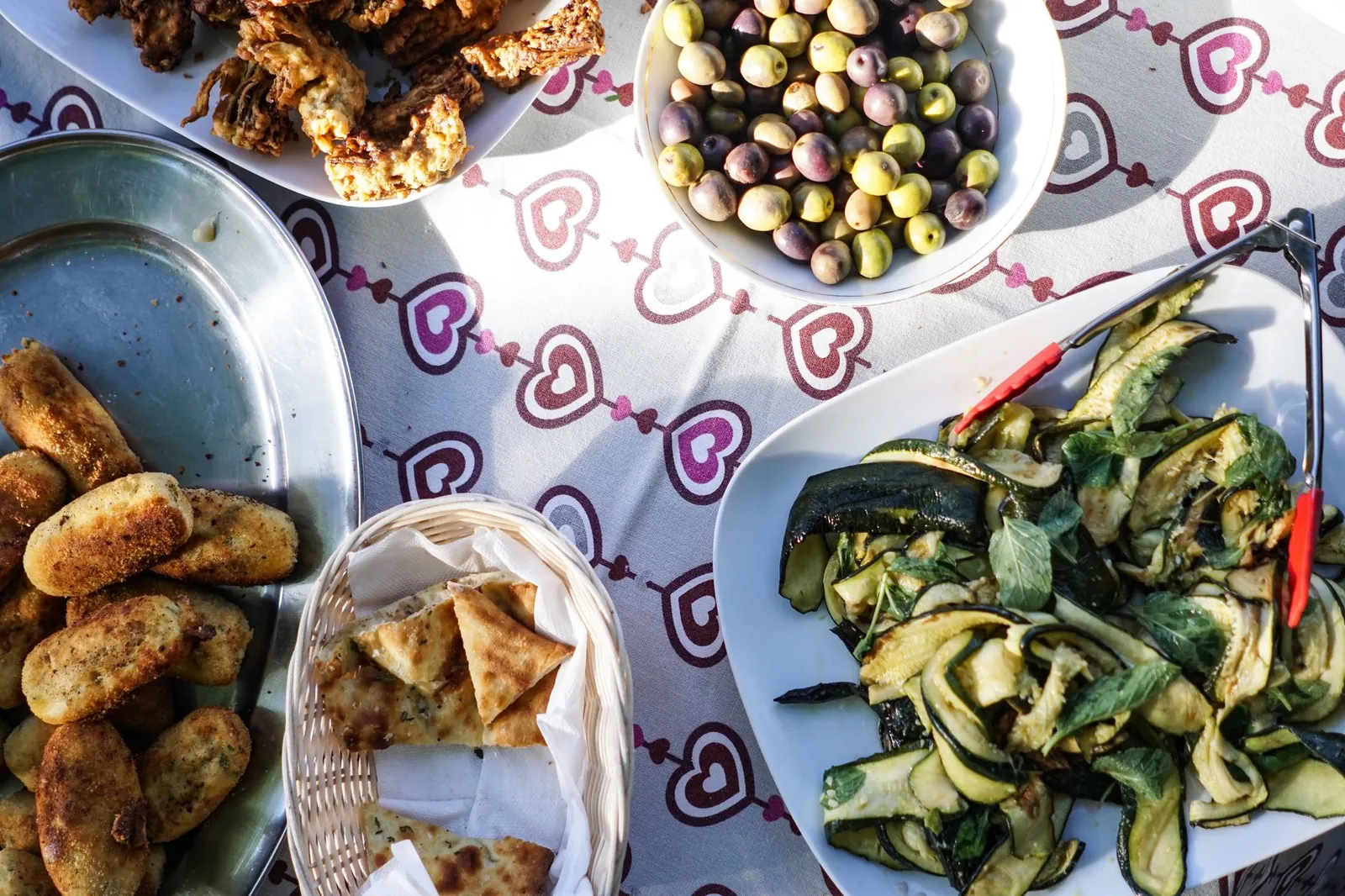
Olive Oil and Heart Health
Why is Mediterranean cooking so often linked with cardiovascular health? Unsaturated fats, polyphenols, and replacing saturated fat.
Article
Olive Oil and Heart Health
Why is Mediterranean cooking so often linked with cardiovascular health? Unsaturated fats, polyphenols, and replacing saturated fat.
 Article
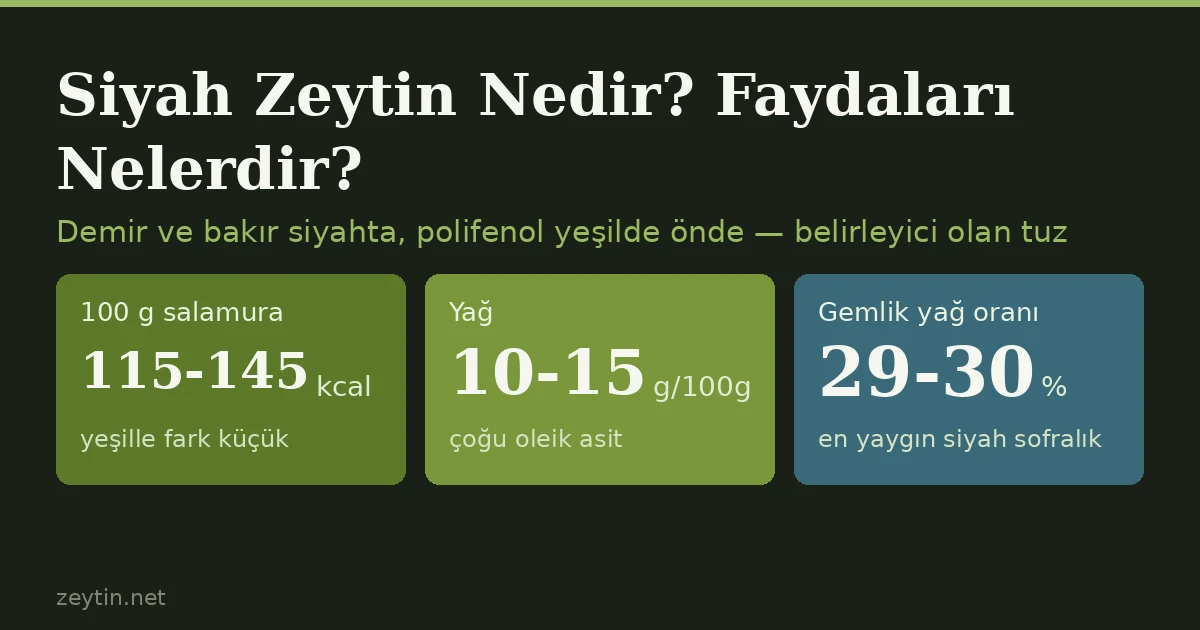
What Are Black Olives? What Are Their Benefits?
What black olives are, how they differ from green, and how many calories. Iron and copper, the polyphenol difference, and the two different black olives on the shelf.
Article
What Are Black Olives? What Are Their Benefits?
What black olives are, how they differ from green, and how many calories. Iron and copper, the polyphenol difference, and the two different black olives on the shelf.
 Article
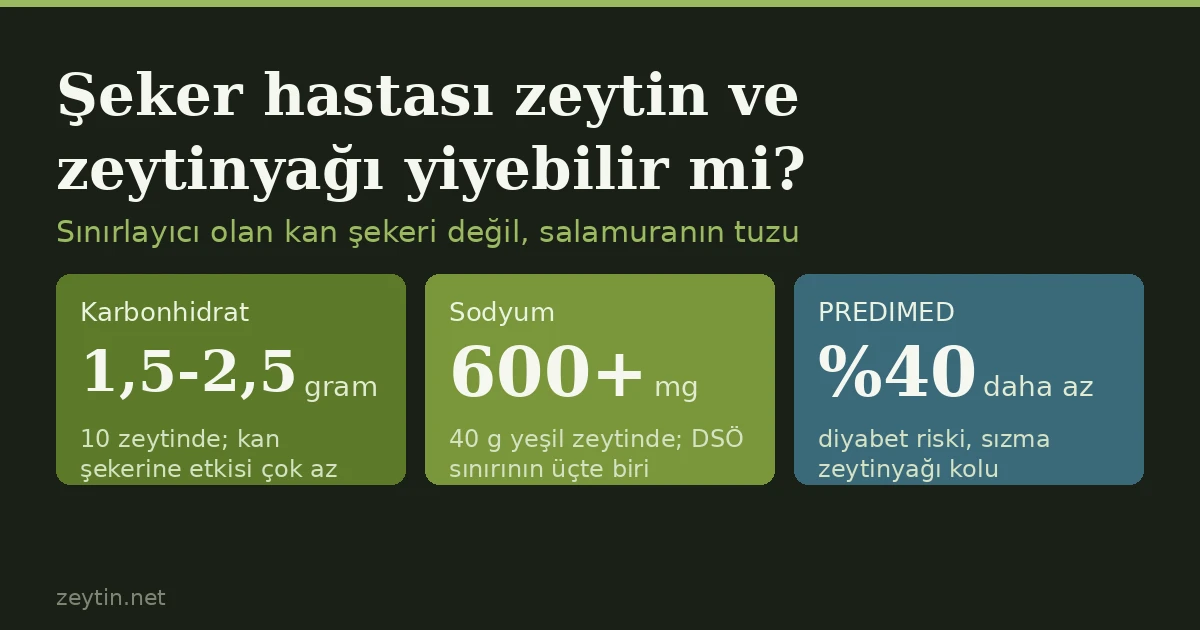
Can people with diabetes eat olives and olive oil?
It looks like one question but contains two: table olives and olive oil. Neither is off limits in type 2 diabetes; olives carry too little carbohydrate to measure a glycaemic index for, and oil carries none. The real limiting factor is not blood sugar but the salt in the brine.
Article
Can people with diabetes eat olives and olive oil?
It looks like one question but contains two: table olives and olive oil. Neither is off limits in type 2 diabetes; olives carry too little carbohydrate to measure a glycaemic index for, and oil carries none. The real limiting factor is not blood sugar but the salt in the brine.
 Article
What Is the Mediterranean Diet?
Not a weight-loss plan but a pattern of eating. The basics of the Mediterranean way of eating, recognised by UNESCO, and where olive oil sits within it.
Article
What Is the Mediterranean Diet?
Not a weight-loss plan but a pattern of eating. The basics of the Mediterranean way of eating, recognised by UNESCO, and where olive oil sits within it.