Hatay Halhalı Olive: what long sunshine hours do to phenol content
Registered in 2023. The certificate ties the high phenol content (322-525 mg/kg) directly to long sunshine hours, and defines two separate debittering methods.
Geographical indication certificates usually say “the local climate shows in the product” and leave it there. The certificate for Hatay Halhalı Olive attaches a number to it: long sunshine hours → high phenol content.
The record
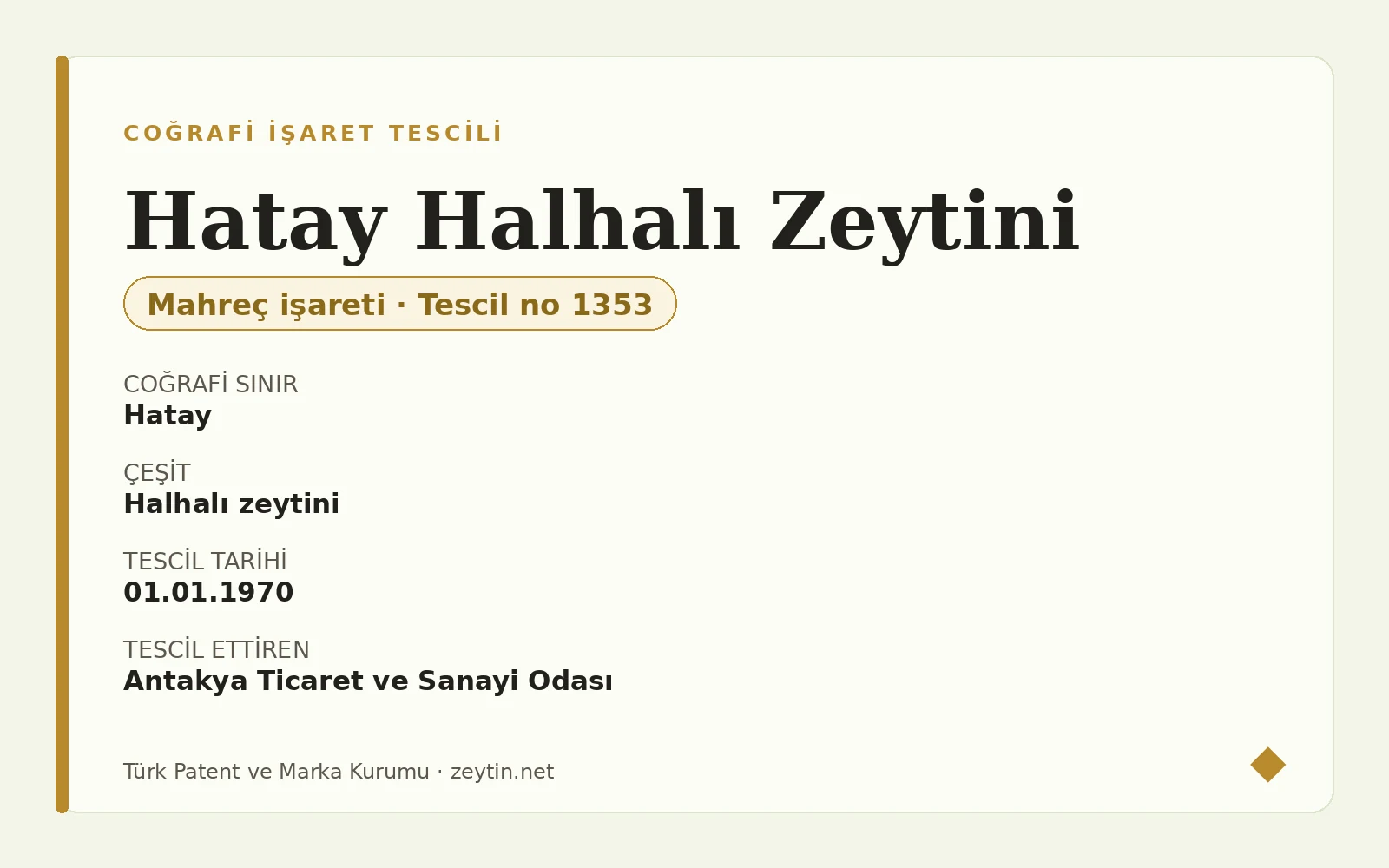
| Registration no | 1353 |
| Registration date | 08.05.2023 |
| Application | C2020/464 · 31.12.2020 |
| Type | Geographical indication |
| Registered by | Antakya Chamber of Commerce and Industry |
| Area | The province of Hatay |
| Cultivar | Halhalı |
Two separate methods
The product reaches the market in two forms, each debittered differently:
| Form | Debittering |
|---|---|
| Cracked green olive | with drinking-quality water |
| Brined green olive | with caustic |
The distinction matters. In cracked olives the fruit is split and the bitterness washed out with water — no chemicals, but it takes longer. The caustic (sodium hydroxide) method is fast and common in green table processing. Protecting both under one registration means the traditional and the industrial line are preserved together.
Measured characteristics
| Criterion | Value |
|---|---|
| Harvest | green maturity |
| Fruit weight | 2.5 – 3 g |
| Shape | rounded, close to oval |
| Moisture | < 47% |
| Oil content | > 21% |
| Total phenols | 322 – 525 mg/kg of oil |
Phenols and sunshine
The link the certificate draws is explicit: Hatay's climate, particularly its long sunshine hours, is responsible for the product's high total phenolic content.
Phenolic compounds carry the olive's bitterness and pungency and raise its oxidative stability. We described what this family does in oleocanthal and polyphenols.
The certificate treats three things together as distinguishing: the stone separating very easily from the flesh, high total phenolic content, and a low proportion of palmitic acid.
That last point concerns oil quality: palmitic acid is a saturated fatty acid, and a low proportion indicates an oil richer in oleic acid.
The tree
| Crown shape | spherical |
| Tree size | medium |
| Leaf size | broad (> 1.5 cm) |
Halhalı is one of Hatay's own cultivars. We looked at the province's figures in olive growing in Hatay; the same cultivar is separately registered in Mardin as Derik Halhalı Olive Oil.
In short
Hatay Halhalı Olive is a geographical indication that protects two different debittering methods under one registration and rests its distinctiveness on phenolic content. The instructive part is that it converts a climate fact — sunshine hours — into a measurable outcome: 322-525 mg/kg.
The criteria the document binds
The registration does not only protect a name; it defines the product numerically:
| Criterion | Value in the document |
|---|---|
| Peroxide value | 7.1 meq O₂/kg (max) |
| Total phenolic content | 322 mg/kg |
That the document sets a floor for total phenolic content is notable — most registrations never define phenol levels, although bitterness, pungency and shelf-life behaviour largely depend on them.
Inspection. Members: Antakya Ticaret ve Sanayi Odası, Hatay İl Tarım ve Orman Müdürlüğü, Hatay Mustafa Kemal Üniversitesi. Results are reported under Industrial Property Law no. 6769 and submitted to the Turkish Patent and Trademark Office.
The production steps in the document
The registration describes production step by step. The document's own sequence:
1. Bahçe Kurulması — Hatay Halhalı Zeytini yetiştirilmesinde zeytin gelişiminin iyi olabilmesi için; toprak tesviye edilip sürüldükten sonra fidan dikilmesi gerekir.
2. Sulama — Yıllık yağış ortalamasının 600-800 mm olması, zeytin yetiştiriciliği için uygundur.
3. Gübreleme — Toprak analizi yapılarak gübre ihtiyacı belirlenir ve gübre, genellikle dikim çukuruna uygulanır.
4. Hasat — Hatay Halhalı Zeytini yeşil olgunluk dönemi olan eylül-ekim aylarında hasat edilir.
5. Budama — Zeytinde budama hasat sonrasında yapılır.
6. Zeytinin İşlenmesi — Hatay Halhalı Zeytininin işlenmesi, geleneksel ve endüstriyel olarak iki şekilde yapılır.
7. Salamura Hatay Halhalı Zeytini salamurasının bileşimi — Tablo 4’te hazır Hatay Halhalı Zeytininin meyve salamurasına ait pH, titre edilebilir asit (% laktik asit) ve tuz (%) oranı aşağıda verilmektedir.
That this sequence is binding is what separates a geographical indication from a trade mark: a mark says who produced something, a geographical indication also sets down how it must be produced.
The cultivar behind it, measured
The registration is granted to a place, but the cultivar the definition rests on has measurable values:
| Property | Value |
|---|---|
| Meyve ağırlığı | 2,5-3 g |
| 1 kg’daki tane sayısı | 260 |
| Et oranı | %83 |
| Yağ oranı | %21 |
| Kendine verimlilik | yok |
| Ana kullanım | yağlık |
| Meyve boyu | 20 mm |
| Meyve eni | 16 mm |
| Türkiye ağaç varlığındaki payı | %2,2 |
At 21% the oil content sits mid-range; yield alone is not the argument here, aroma is. The cultivar is not self-fertile — a pollinator is required in the grove. The planting the registration describes is therefore never single-cultivar in practice.
Its place in Hatay's olive production
| Item | Value |
|---|---|
| Fruit production | 213,297 t |
| — for oil | 203,089 t |
| — for the table | 10,208 t |
| Olive oil production | 31,244 t |
| Trees | 14,225 thousand |
| Yield per tree | 15.0 kg |
95% of the province's fruit goes to oil — so this table-olive registration defines a niche outside the main flow.
One rating per visitor; you can change yours at any time. Ratings are real reader votes — no seeded or default scores.
Related
 Article
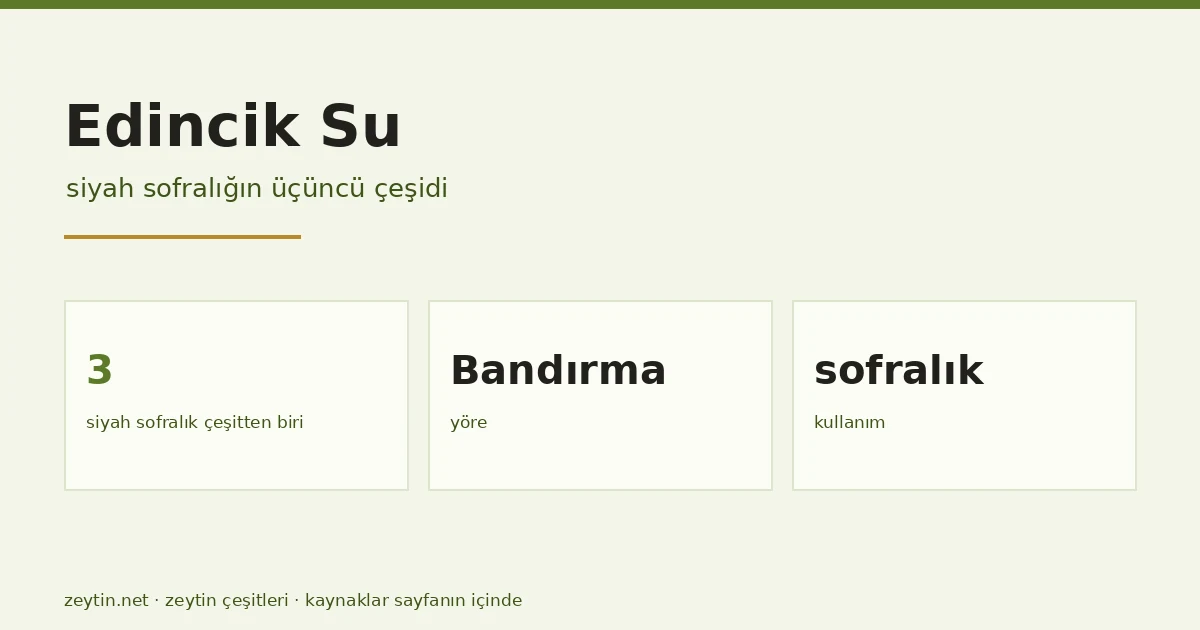
The Edincik Su olive: the third black-table cultivar
One of the three cultivars widely processed as black table olives in Turkey, alongside Gemlik and Uslu. The cultivar of the Bandırma area.
Article
The Edincik Su olive: the third black-table cultivar
One of the three cultivars widely processed as black table olives in Turkey, alongside Gemlik and Uslu. The cultivar of the Bandırma area.
 Article
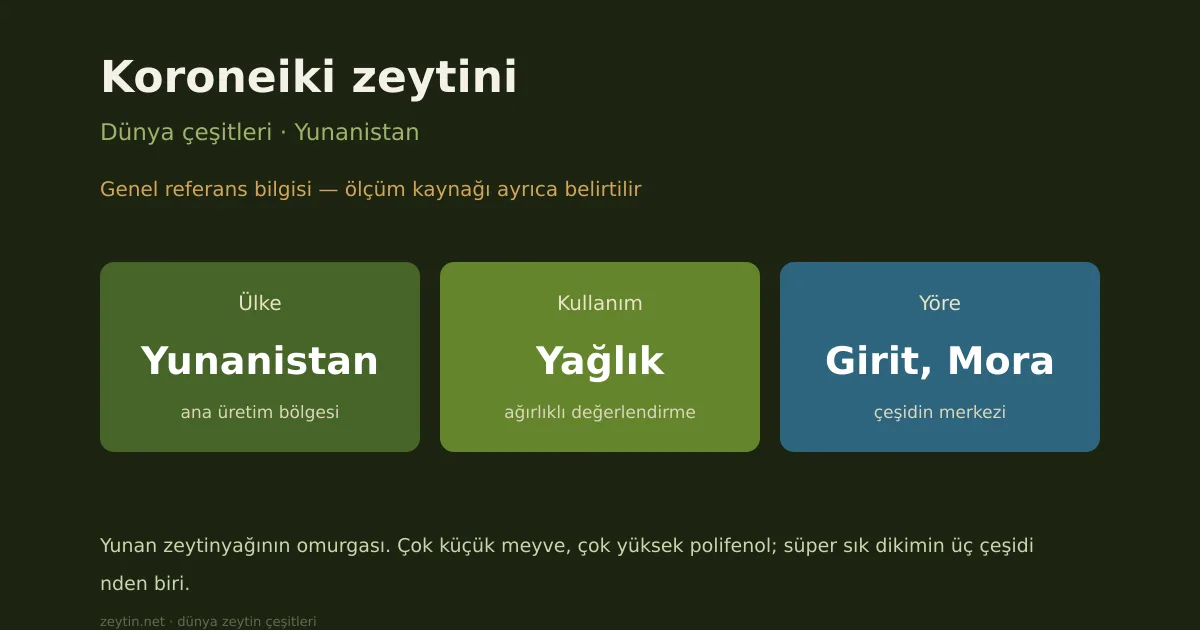
Koroneiki olive: Greece's oil variety
The backbone of Greek olive oil. Very small fruit, very high polyphenol content, and one of the three super-high-density varieties.
Article
Koroneiki olive: Greece's oil variety
The backbone of Greek olive oil. Very small fruit, very high polyphenol content, and one of the three super-high-density varieties.
 Article
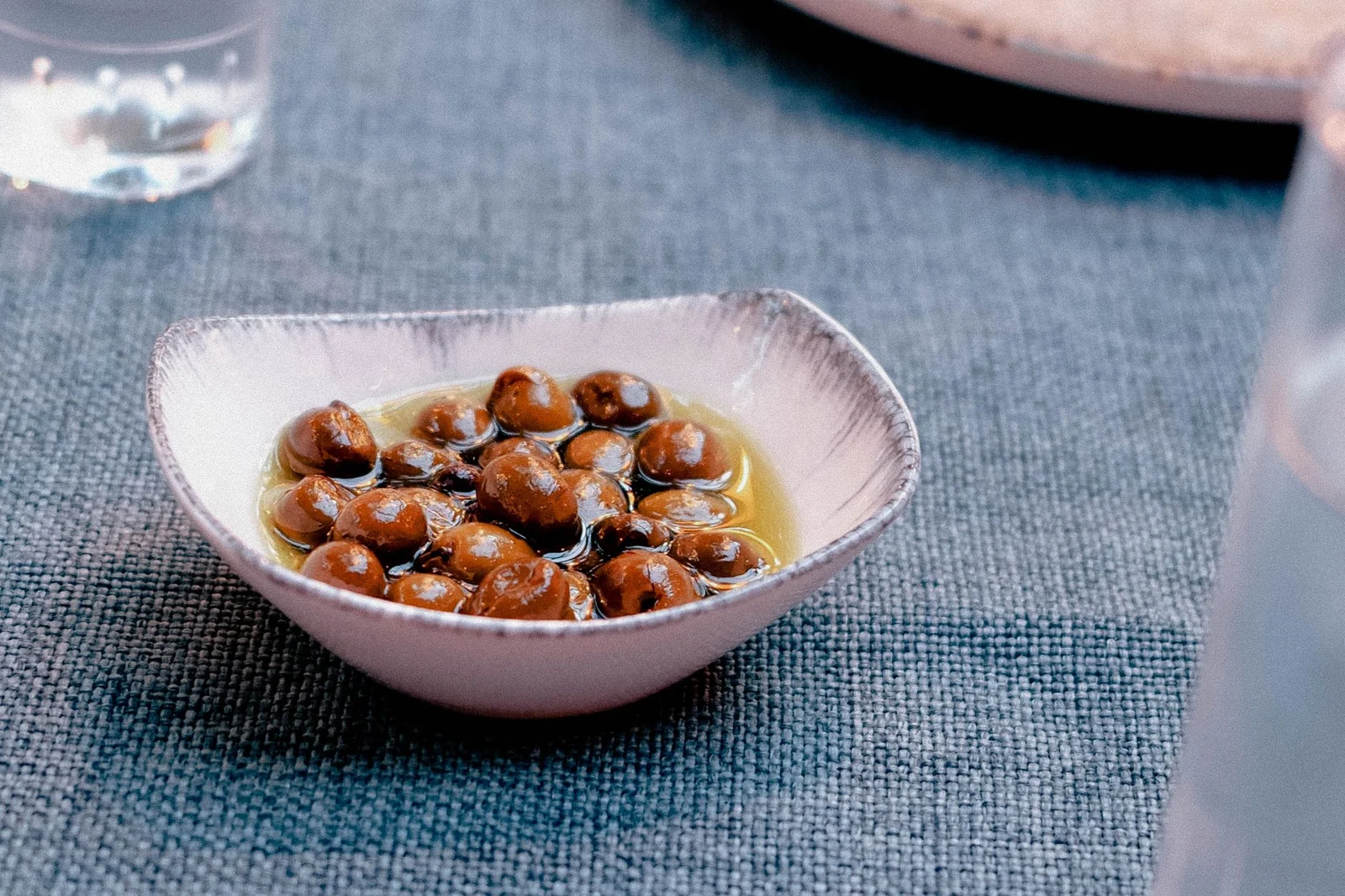
Which table olive variety is best?
The leading varieties for black and green table olives, measured fruit weights, and how curing affects quality.
Article
Which table olive variety is best?
The leading varieties for black and green table olives, measured fruit weights, and how curing affects quality.
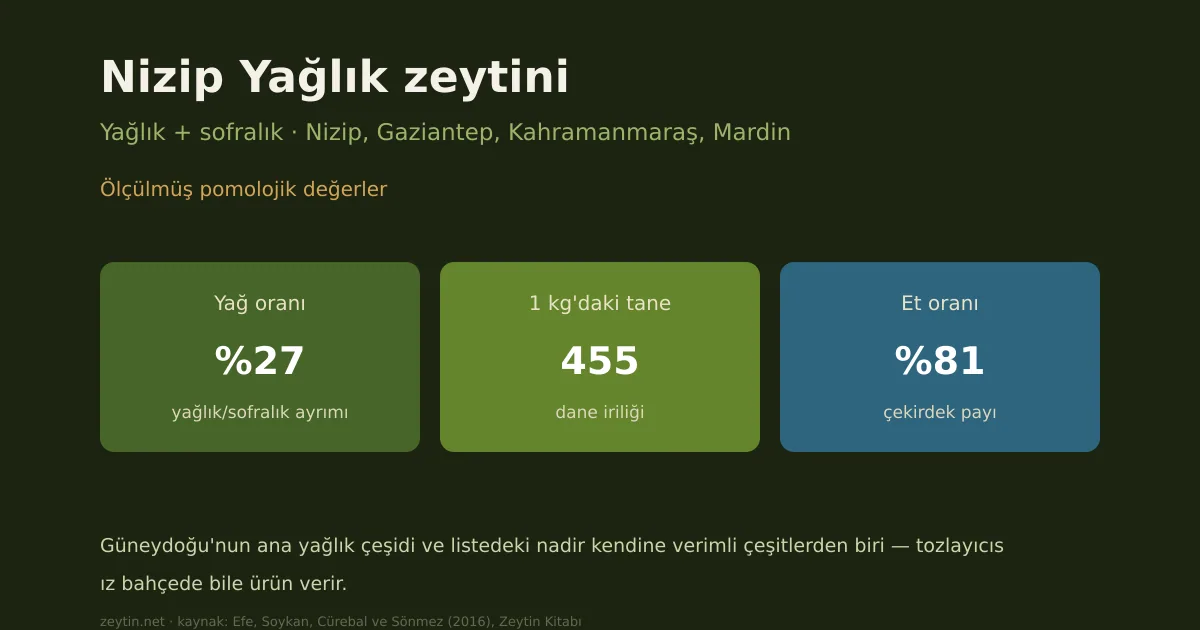 Article
Nizip Yağlık olive: characteristics, oil content and growing areas
The southeast's main oil variety and one of the rare self-fertile cultivars on the list — it crops even without a pollinator.
Article
Nizip Yağlık olive: characteristics, oil content and growing areas
The southeast's main oil variety and one of the rare self-fertile cultivars on the list — it crops even without a pollinator.