Akhisar Uslu Olive Oil: oil from a black table cultivar
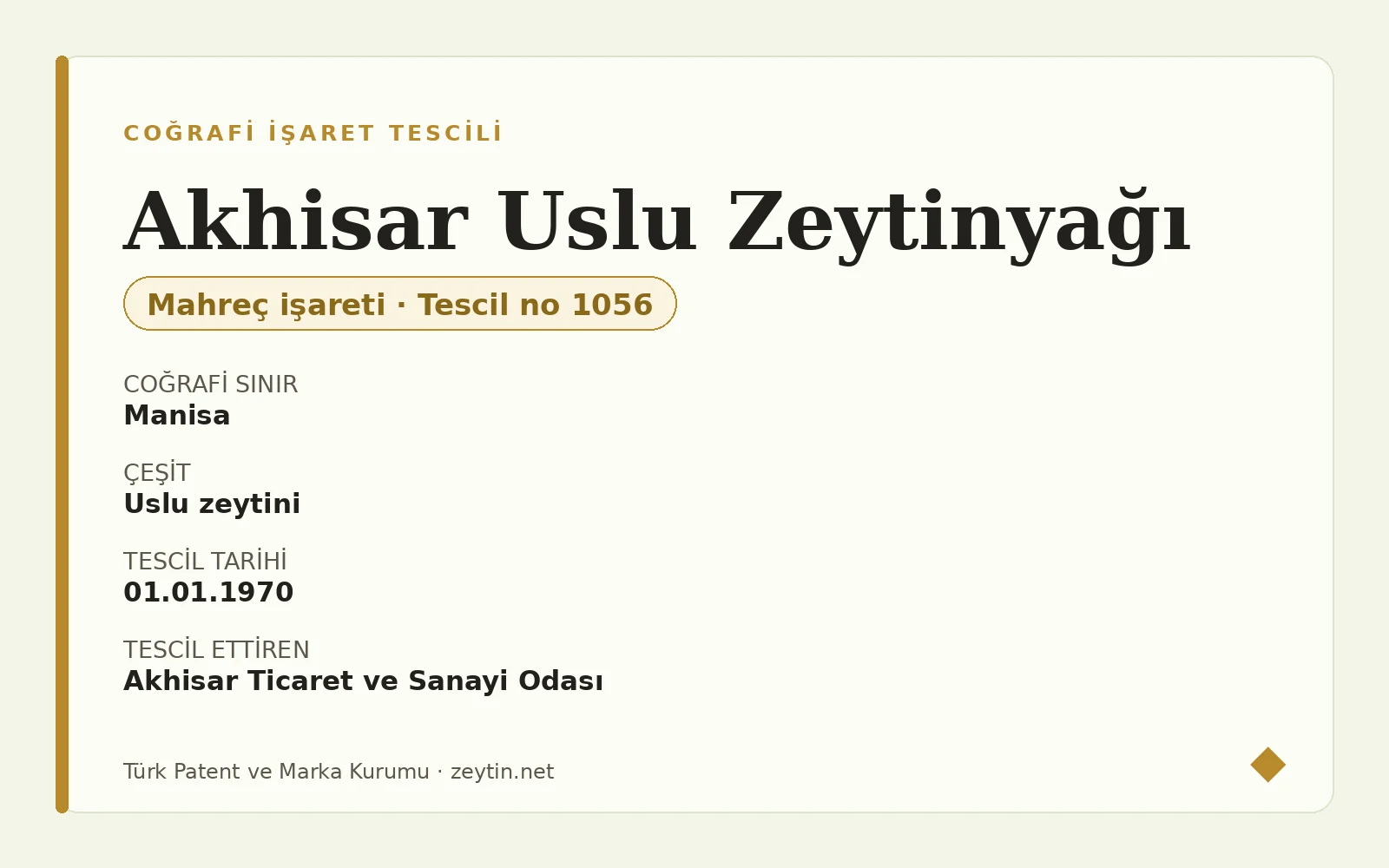
Registered in 2017. Uslu is principally a table cultivar; the certificate protects its oil separately. β-sitosterol sits in a very narrow 87.36-87.39% band.
Uslu is one of Türkiye's best-known black table cultivars. Its oil is secondary. This registration protects it as a product in its own right.
The record
| Registration no | 1056 |
| Protection from | 10.11.2017 |
| Type | Geographical indication |
| Registered by | Akhisar Chamber of Commerce and Industry |
| Area | Akhisar, Gölmarmara, Salihli, Turgutlu, Saruhanlı and Kırkağaç in Manisa |
| Raw material | Akhisar Uslu Olive (registration no 165) |
Its raw material is registered: the measured oil content of the Uslu olive is 21.50%.
Sterol profile
| Sterol | Value |
|---|---|
| β-sitosterol | 87.36 – 87.39% |
| Delta-5-avenasterol | 4.93 – 5.16% |
| Clerosterol | 0.94 – 0.97% |
| Sitostanol | 0.87 – 0.90% |
| Delta-5,24-stigmastadienol | 0.53 – 0.62% |
| Delta-7-avenasterol | 0.60 – 0.61% |
| 24-methylene cholesterol | 0.13 – 0.16% |
| Campestanol | 0.12 – 0.16% |
| Cholesterol | ≤ 0.5 |
| Brassicasterol | ≤ 0.1 |
| Total β | ≥ 93 |
| Total sterols | ≥ 1000 mg/kg |
| Erythrodiol + uvaol | ≤ 3.0 |
The β-sitosterol range spanning only 0.03 of a point — 87.36-87.39% — is striking, and shows how consistent the measurement proved.
Quality limits
| Criterion | Value |
|---|---|
| Peroxide value | ≤ 20 |
| Free acidity | ≤ 0.8 |
Its twin, Akhisar Domat Olive Oil, sets narrower limits on both (≤17 and ≤0.65). The difference follows from the oil character of the two cultivars.
Four registrations, one chamber
The Akhisar Chamber of Commerce and Industry holds four olive registrations: Uslu Olive (165), Domat Olive (166), Domat Olive Oil (1055) and Uslu Olive Oil (1056). The table and oil lines of two cultivars, each protected separately — few registration sets in Türkiye are this systematic.
The area as the document defines it
The short line in the record does not give the registration's full boundary. The document's own definition reads:
t; Manisa ili Akhisar, Gölmarmara, Salihli, Turgutlu, Saruhanlı ve Kırkağaç ilçeleri
The cultivar behind it, measured
The registration is granted to a place, but the cultivar the definition rests on has measurable values:
| Property | Value |
|---|---|
| Meyve ağırlığı | 3,53 g |
| 1 kg’daki tane sayısı | 283 |
| Et oranı | %85,17 |
| Et/çekirdek oranı | 5,74 |
| Yağ oranı | %21,50 |
| Toplam fenol | 182-494 mg CAE/kg |
| α-tokoferol | 380-486 mg/kg |
| Kendine verimlilik | Var |
| Kullanım | Yağlık ve siyah sofralık |
| Ana kullanım | siyah sofralık |
| Duyusal profil | Orta meyvemsilik, orta acılık, orta yakıcılık |
| Kökeni | Akhisar (Manisa) |
At 21.5% the oil content sits mid-range; yield alone is not the argument here, aroma is. A flesh-to-stone ratio of 5.74 is the basic measure of how much of a table olive is actually eaten.
Its place in Manisa's olive production
| Item | Value |
|---|---|
| Fruit production | 623,493 t |
| — for oil | 411,412 t |
| — for the table | 212,081 t |
| Olive oil production | 64,292 t |
| Trees | 24,982 thousand |
| Yield per tree | 25.0 kg |
Oil and table production are close in this province (66% for oil); the production base is not locked to one direction.
Why are the thresholds looser than its twin's?
Same chamber, same day, same geographical area — but the two registrations set different quality limits:
| Criterion | Uslu (1056) | Domat (1055) | Codex |
|---|---|---|---|
| Free acidity | ≤ 0.8 | ≤ 0.65 | 0.8 |
| Peroxide value | ≤ 20 | ≤ 17 | 20 |
Uslu sits at the codex ceiling on both counts; Domat pulls both down. That could be read as a quality gap — but the likelier explanation is harvest ripeness.
The two cultivars are picked at different stages:
- Domat is a green table cultivar, harvested early while the fruit is still green.
- Uslu is a black table cultivar, waiting for the fruit to blacken — that is, for advanced ripeness.
As ripening advances two things happen together. By the measurements of Yemişçioğlu and colleagues (2016), total polyphenol falls logarithmically; and phenols are the oil's natural defence against oxidation. At the same time, enzyme activity and softening tissue make it easier for free acidity to rise.
In oil from a cultivar picked at advanced ripeness, holding both acidity and peroxide low is therefore structurally harder. Leaving the thresholds at the codex ceiling is consistent with that reality.
⚠ This is an interpretation; the document gives no reasoning for the thresholds. But two registrations issued by the same body on the same day carrying different limits suggests the difference is deliberate.
The cultivar's measured values support the reading: Uslu's α-tocopherol content, at 380-486 mg/kg, is markedly above Gemlik's (207-261) and Memecik's (219-324). α-tocopherol is also an antioxidant — while phenols decline, a high tocopherol level is the second line carrying the oil's shelf life.
The Akhisar context
Like Domat oil, Uslu oil sits outside the region's main flow: 65% of Akhisar's output goes to the table, and the district is a processing rather than a growing centre — 87% of the fruit it processes comes from elsewhere. We set out how that structure determines the type of registration on the Akhisar Domat Zeytinyağı page.
For Uslu this matters especially: oil from a black table cultivar is by definition a secondary product. The registration defines that secondary product with an identity of its own — declaring that fruit unsuited to the table is not a residue but a defined product.
Further sources
- Yemişçioğlu, F., Özdikicierler, O., Çapar, S. & Gümüşkesen, A.S. (2016). The effect of ripeness degree on total polyphenol content and bitterness index of virgin olive oil in Memecik and Erkence olive cultivars. Gıda, 41(6), 381-386.
- Çümen, K. & Tunalıoğlu, R. (2023). Examination of quality and branding in table olive processing and export. Tarım Ekonomisi Dergisi, 28(2), 213-226.
One rating per visitor; you can change yours at any time. Ratings are real reader votes — no seeded or default scores.
Related
 Article
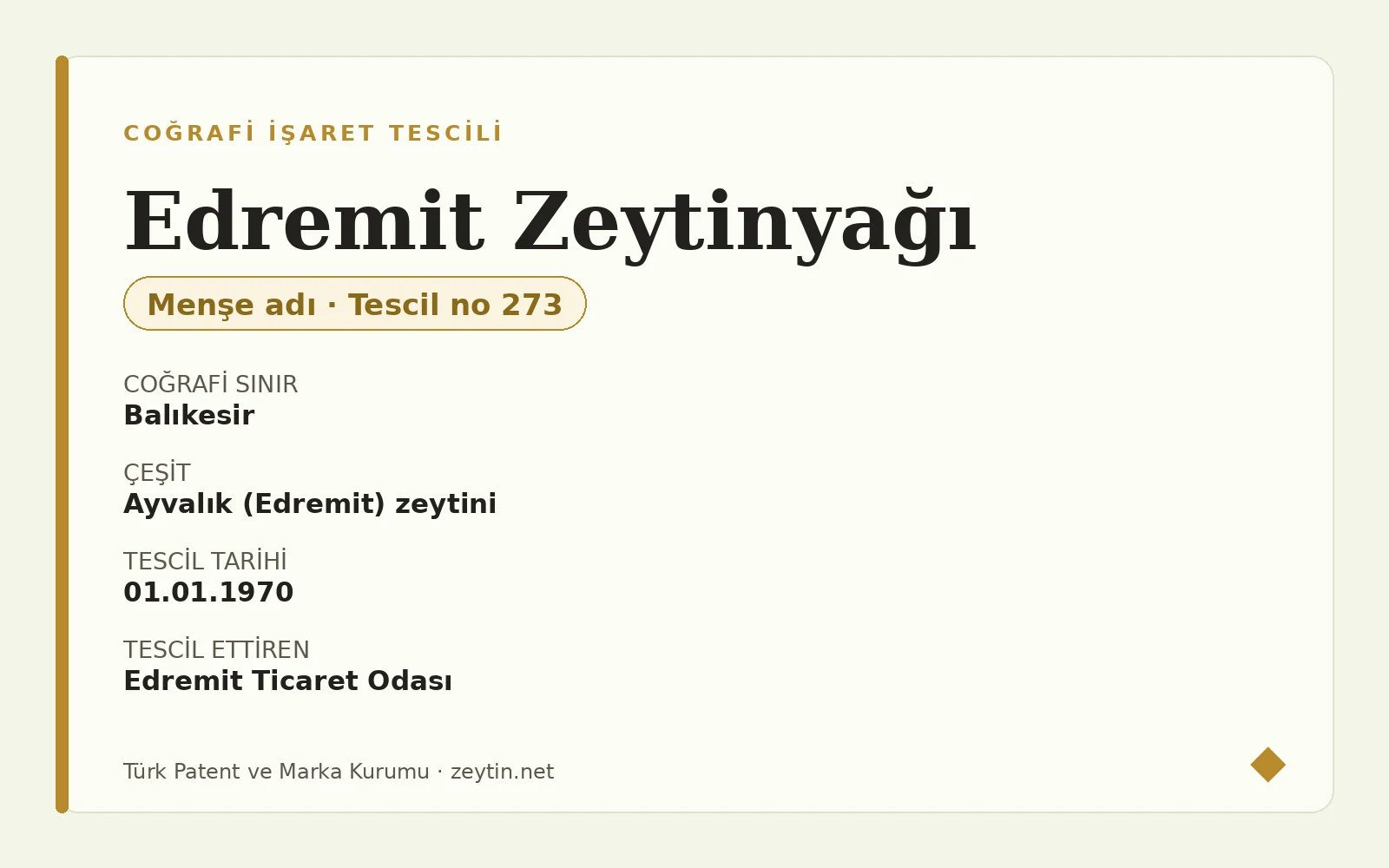
Edremit Olive Oil: thirteen separate fruity perceptions listed
Registered in 2017. The certificate lists thirteen fruity perceptions, from green almond to banana skin. At least one must be present at low or medium intensity.
 Article
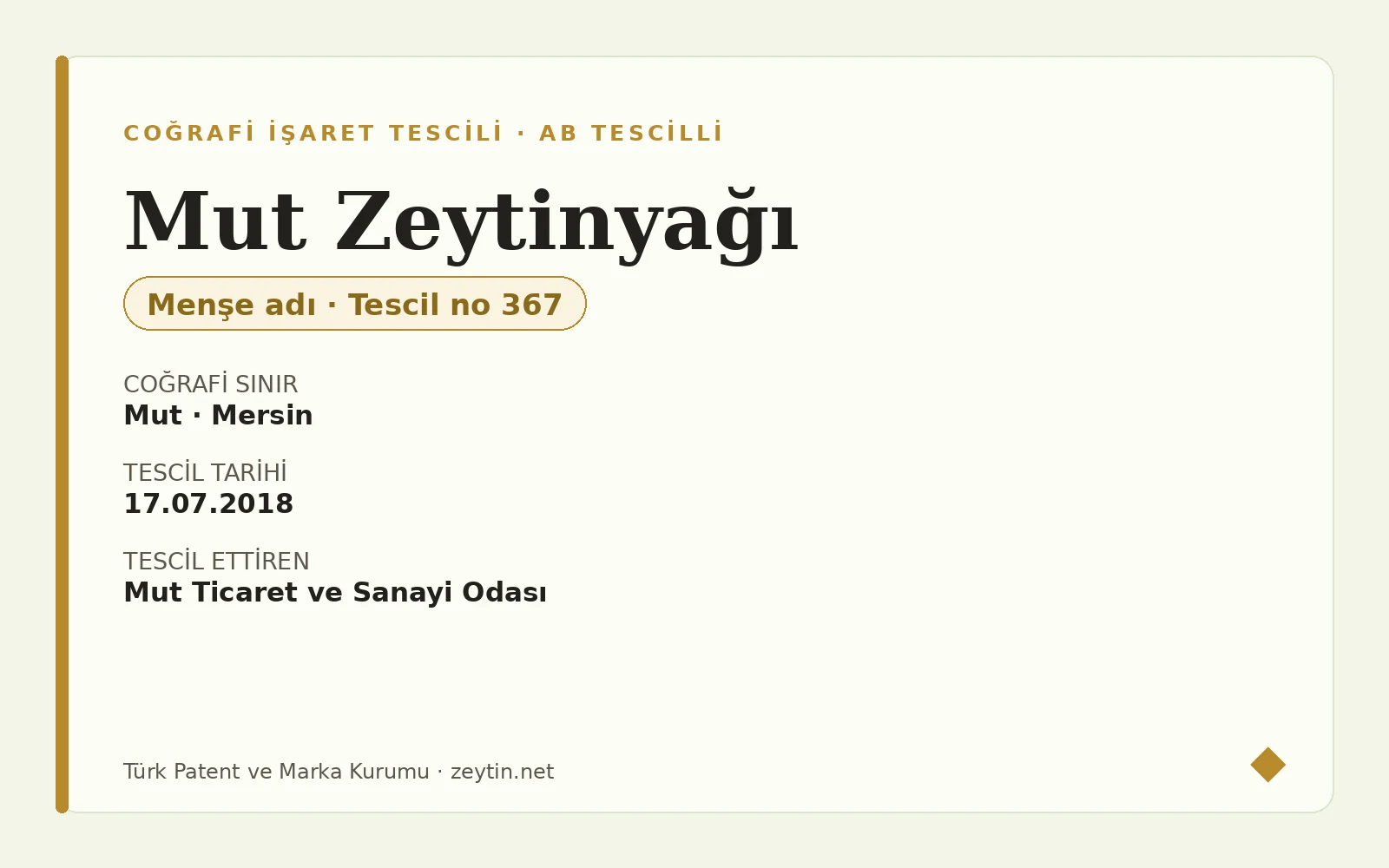
Mut Olive Oil: a landscape that needs no pesticide
The certificate's real claim rests on altitude and humidity: 10-40% relative humidity keeps out both the olive fly and peacock spot. That is why organic production is straightforward here.
 Article
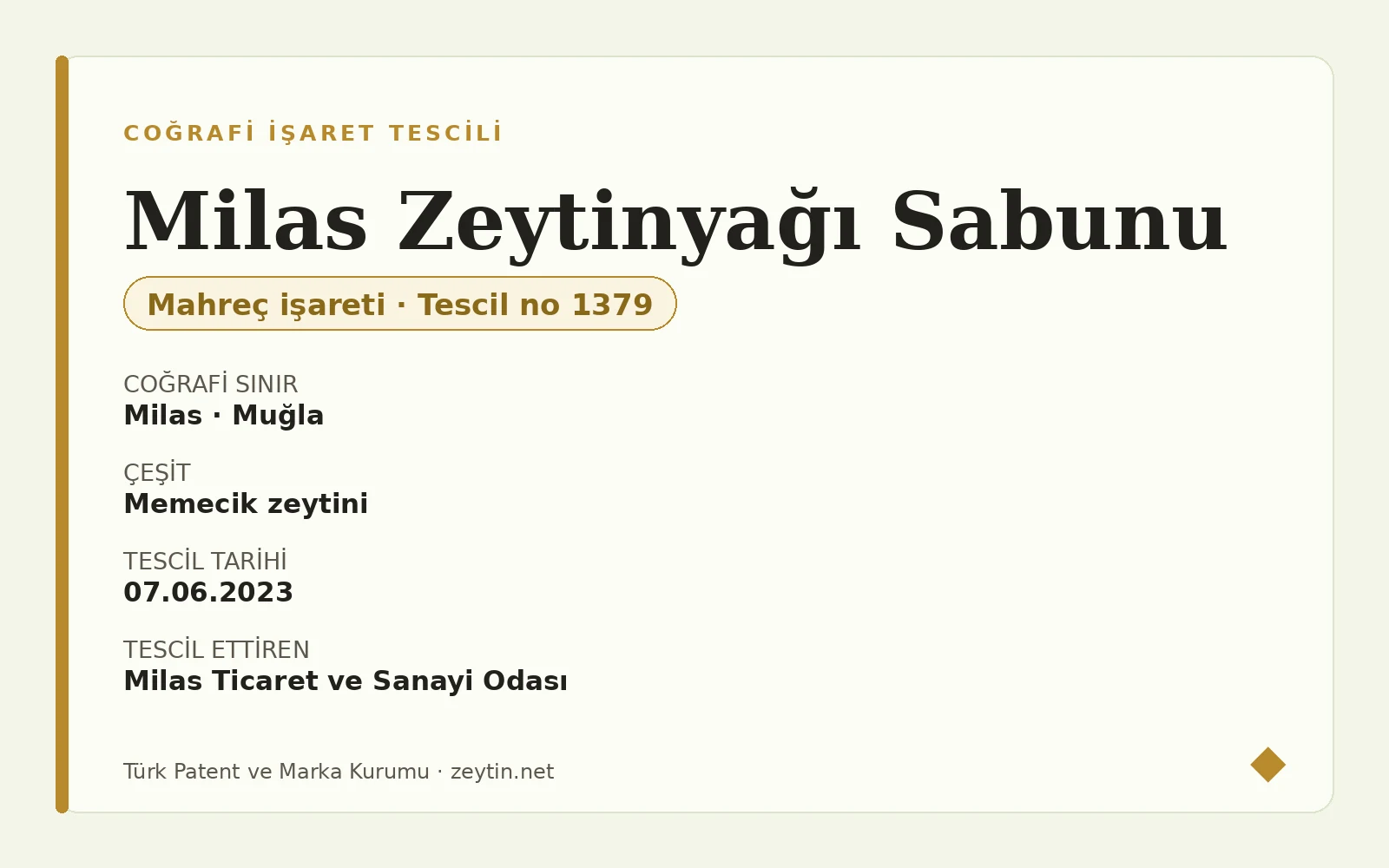
Milas Olive Oil Soap: a registered second life for oil unfit for the table
Registered in 2023. The document ties the soap to oil unfit for cooking: Memecik oil of acidity 6 or more and the sludge left at the bottom of oil jars.
 Article
Ödemiş Çekişte Olive Oil: a separate harvest window called “çakır”
Registered in 2020. The certificate names two harvest windows: early (green, November-December) and “çakır” (green turning pink, mid-December to mid-January).