Will a burned olive tree grow back? What to do in an olive grove after a fire
Thanks to the lignotuber at the base of its trunk, an olive usually resprouts after a fire. What matters is whether the root zone survived. Damage classes, why to wait, the graft union, watering before feeding, the law on cutting olive trees and insurance.
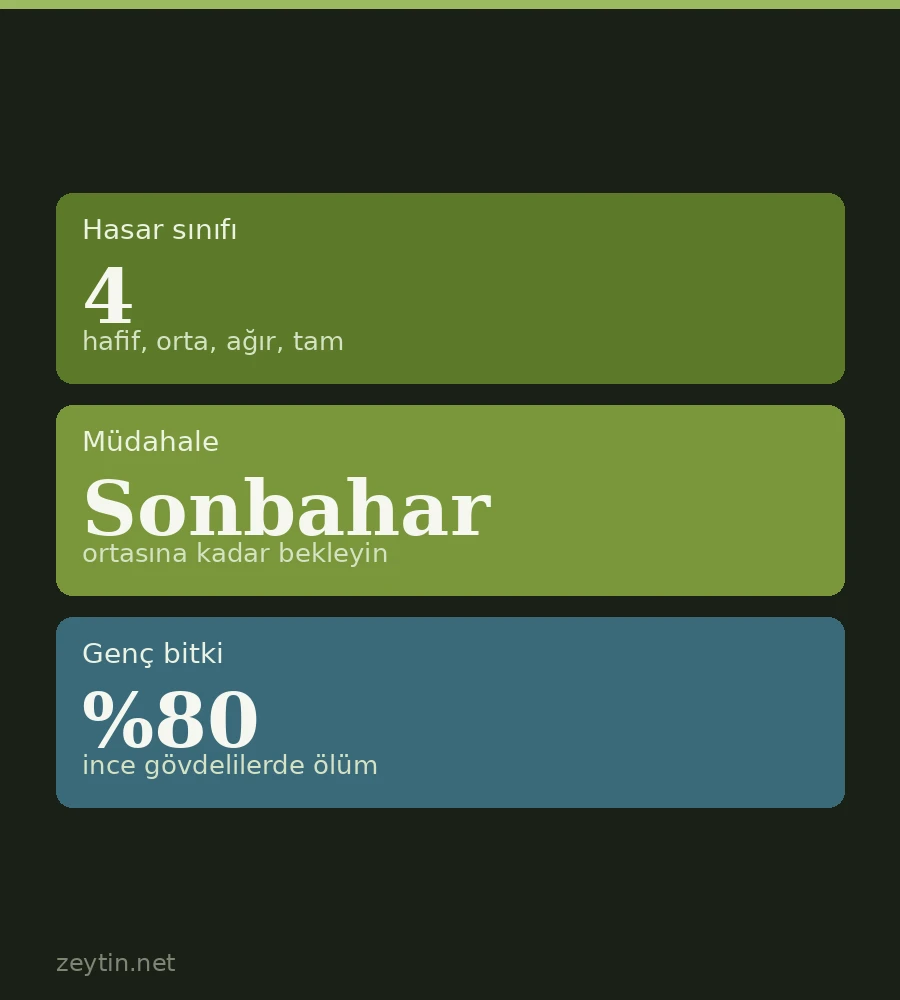
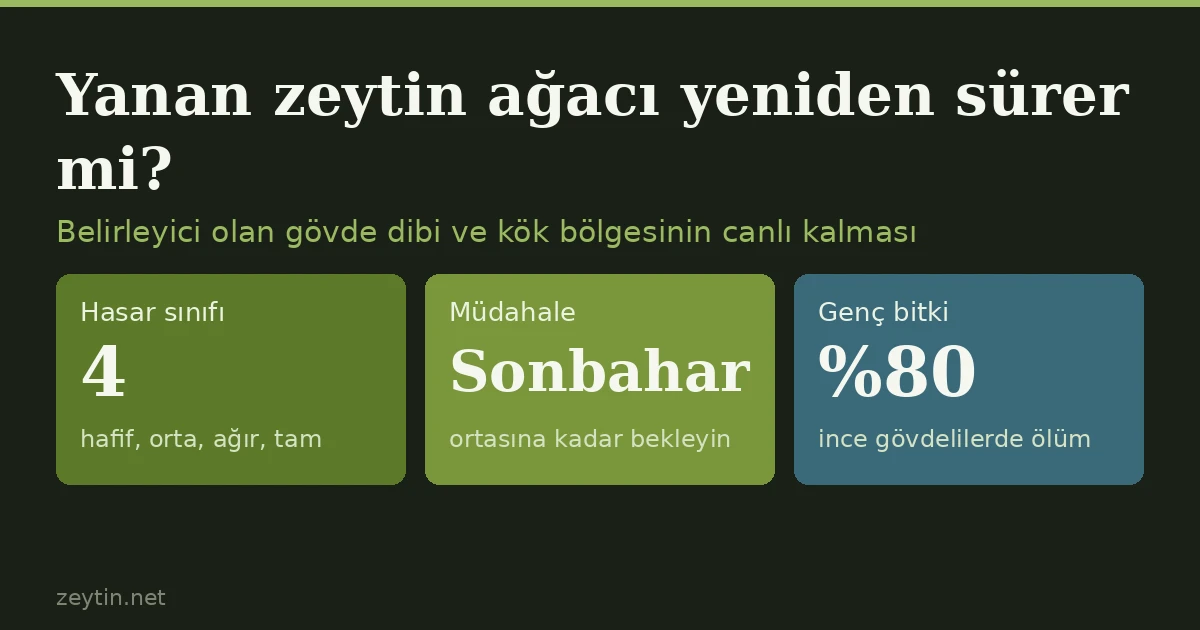
Short answer: in most cases, yes. The olive is one of the trees that can resprout after a fire from the base of the trunk and the root crown. What decides the fate of a burned grove is not whether the canopy survived but whether the base of the trunk and the root zone are still alive. That is why, in the first months after a fire, the right thing to do is usually to wait.
Why can an olive resprout?
At the base of the olive trunk, close to the ground, there is a woody swelling. Known in botany as a lignotuber, it carries a large number of dormant buds and a store of starch. A study published in Plant Ecology in 2016, whose authors include the Spanish ecologist Juli G. Pausas, confirmed lignotubers in 14 species of the Mediterranean basin by excavation; in the olive (Olea europaea subsp. europaea), adult trees were dug up and the structure was found. The paper says it is the first study to report the presence of a lignotuber in the olive.
Growers know this structure under other names: in Spanish it is "zueca", in Italian "ovolo", in English sometimes "sphaeroblast", and Turkish growers call it the tree's "turp" (radish). Dr Özgür Dursun of Turkey's Olive Research Institute explained at a training session after the fires in İzmir that this storage organ in the root zone is why an olive tree is hard to kill from the outside.
The trees Pausas followed in the village of Montán in Castellón, Spain, are a living example. A fire in 1994 killed the main trunks; the trees sent up many shoots from the base and became multi-stemmed. In July 2015 a second fire killed those 21-year-old shoots, and the trees resprouted from the base again. In Sardinia, a thousand-year-old wild olive near Cuglieri burned in the Montiferru fire of July 2021. According to the botanical garden of the University of Cagliari, a soil temperature of 90 °C was measured and the fire smouldered underground for two days. The tree was given shade, mulch and irrigation; in April 2022 sensors recorded photosynthesis, and in early June the first shoots appeared. Only the base is resprouting; the old canopy will not come back.
How do you judge the damage?
After a fire burned the Amfissa-Itea olive grove in Greece in August 2013, the agricultural directorate of Fokida published instructions that divide damage into four classes:
| Class | Signs |
|---|---|
| Light | Part of the foliage burned, main branches intact, part of the canopy still green |
| Moderate | Whole canopy damaged; trunk and main branches burned by no more than 25% |
| Severe | Trunk and main branches burned by more than 25% |
| Total | Trunk burned down to ground level or even below |
According to the instructions, recovery depends entirely on the tree resprouting, and shoots appear from the undamaged parts only after a considerable time. On the burned parts, the bark cracks and lifts. Only then does the true extent of the burn become clear.
According to a 2022 assessment by France Olive, the French olive interprofession, burned olive trees that fail to regenerate are in the minority. The factors that decide the outcome are the intensity of the heat and the burn, the size and age of the tree, water stress before and especially after the fire, and the condition of the trunk and main branches. Young trees are more fragile: in an Australian study on the African olive, a low-intensity fire did not kill trees whose trunks were thicker than 20 millimetres, but 80% of young plants with thinner trunks died.
Dr Dursun's summary from the field points the same way: if the tree was only exposed to heat from the outside, it can recover with pruning. If the root zone was seriously damaged, there is no chance of saving it. If even a small living part remains in the root zone, the tree will sprout again from there.
What should you do after a fire?
1. Do not cut or uproot straight away. The Fokida instructions recommend no intervention on a burned tree until at least mid-autumn. The guide from Agriculture Victoria, the agriculture department of the Australian state of Victoria, likewise says to assess the grove immediately but not to prune before regrowth starts. A blackened trunk does not mean there is no living tissue inside.
2. Leave the first shoots alone. According to the Fokida instructions, no shoots should be removed during the first growth period (April-May); this also helps the root system to rebalance. Shoots coming from the base should be protected from grazing animals.
3. Rebuild the tree from the right shoots. According to the Victoria guide, on a grafted tree the new canopy should be built from shoots that emerge above the graft union. A shoot from below the graft carries the rootstock, not your variety, and will need to be grafted again. On a tree grown from a cutting, on its own roots, even a shoot from ground level or below is the same variety. The guide also notes that shoots often emerge on the side of the tree that stayed cooler during the fire, and that new main branches should be chosen carefully so they will not break once the tree carries fruit again. The usual principles of pruning apply when choosing them.
4. Water first, then fertiliser. The Fokida instructions recommend light, frequent irrigation without disturbing the soil in groves that can be irrigated. The Victoria guide says irrigation will speed the return to full yield, but that the smaller canopy will need less water. On fertiliser, the sources differ on timing: Fokida and Dr Dursun recommend a balanced nitrogen feed, while the Victoria guide stresses not to apply fertiliser until there is enough new growth to use it, warning that too much can cause excessive vegetative growth and delay the return to fruiting.
5. Watch for pests. The Fokida instructions note that new shoots are especially vulnerable to disease and that leaf-eating and wood-boring insects and mites should be watched for. We have covered the olive bark beetle, one of the pests that attack weakened trees, in a separate article.
6. Protect the soil. On sloping groves in particular, the first rains after a fire bring a risk of erosion; the Fokida instructions call for measures to limit it.
7. Do not clear up before the damage is recorded. The Greek instructions advise that burned branches and material be removed only after the insurer has recorded the damage. In insured groves anywhere, talking to the insurer before clearing up preserves the evidence for the damage assessment.
Can a burned olive tree be cut down?
Turkey's Law No. 3573 on the Improvement of Olive Growing has no provision specific to burned olive groves. Its Article 20 does, however, set the general rule: olive-growing areas may not be reduced, and an olive tree may not be cut or uprooted unless there is a definite necessity; uprooting requires the Ministry's permission based on technical grounds. The constitutional provision that "new forest shall be grown in place of burned forests" (Article 169) applies only to forests. Before cutting a burned tree back to the base or uprooting it, the safest course, both legally and technically, is to consult the provincial or district directorate of agriculture.
What has happened in Turkey?
In the fires that began in Manavgat on 28 July 2021 and lasted 15 days, according to a preliminary assessment by Rasim Metin, head of the Manavgat Chamber of Agriculture, 27,000 decares (2,700 hectares) of farmland were damaged; 17,000-18,000 decares of this were olive groves, and the number of burned olive trees was estimated at around 500,000. After the fires of August 2024 in İzmir, the Metropolitan Municipality's technical team found problems in olive groves over much larger areas than expected; together with the Olive Research Institute, it held post-fire care training sessions for growers in Tire, Bayındır, Bayraklı and Karşıyaka.
Does insurance cover fire?
Under the 2026 General Conditions for crop insurance of TARSİM, Turkey's state-supported agricultural insurance pool, the basic package for the crop covers fire, and olives fall within this cover. The tree itself can also be insured separately against fire, but only for total loss, meaning the complete loss of three years of yield. A fire claim requires a final decision from the public prosecutor; this condition is waived for fires affecting wide areas, such as a whole province or district. More details are in our article on crop insurance for olives.
How long olive trees can live is covered in our article on how long an olive tree lives.
Related reading: Can olive prunings be burned? · Grafting olive trees
One rating per visitor; you can change yours at any time. Ratings are real reader votes — no seeded or default scores.
Related
 Article
Should harvested olives be carried in crates or in sacks?
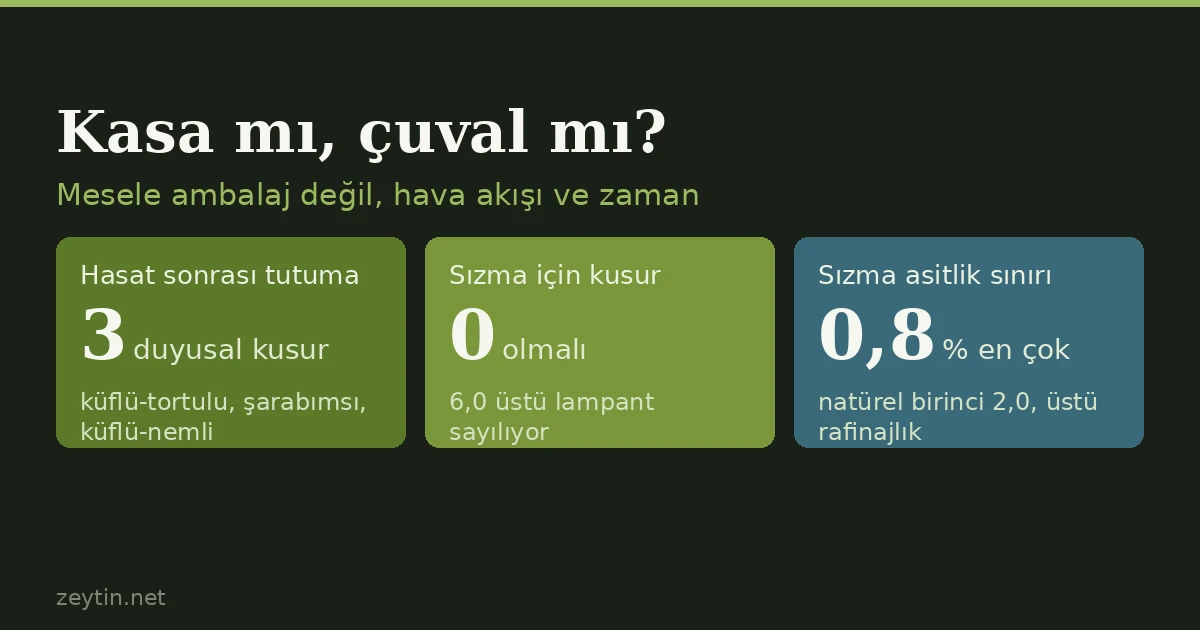
The cheapest decision of the harvest season is also one of the decisions that sets the grade of the oil. Three separate defects in the International Olive Council's vocabulary are defined directly by how the fruit was held after picking — and all three describe what a sack does.
 Article
Can an olive cutting root in water? How to root olive cuttings at home
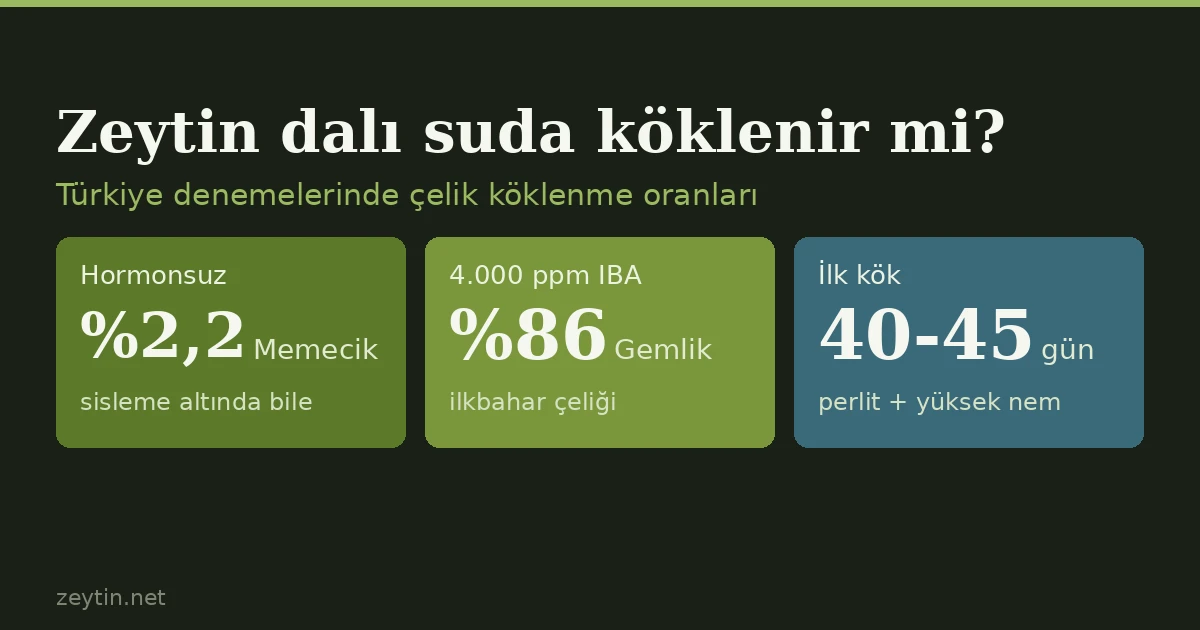
Standing an olive twig in water is not a tested method for olives. Nurseries root cuttings in perlite under high humidity with hormone; in Turkish trials rooting ranged from 2% to 86% depending on variety and hormone.
 Article
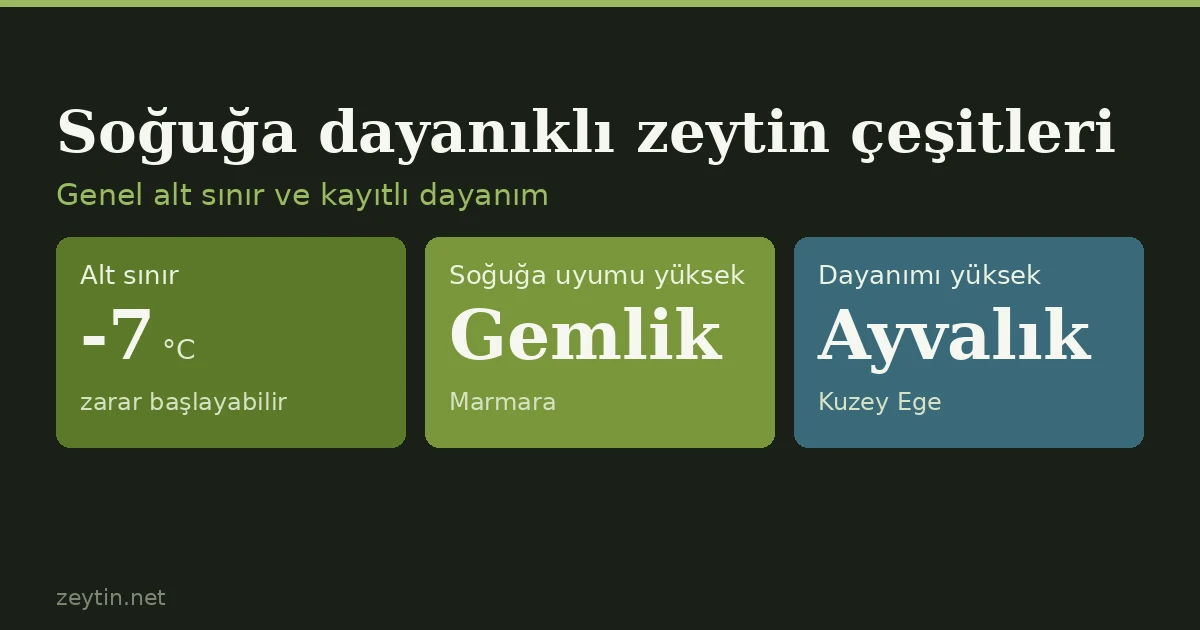
Cold-hardy olive varieties: Gemlik, Ayvalık and the other candidates in the data
In our variety data, Gemlik, Ayvalık, Coratina, Picual and Hojiblanca are recorded with high cold adaptation or hardiness; Kalamata, Leccino, Memecik and Domat are medium, Frantoio moderately sensitive and Saurani low. But variety alone is not enough: tree age, the duration of the cold and the site of the grove also decide.
 Article
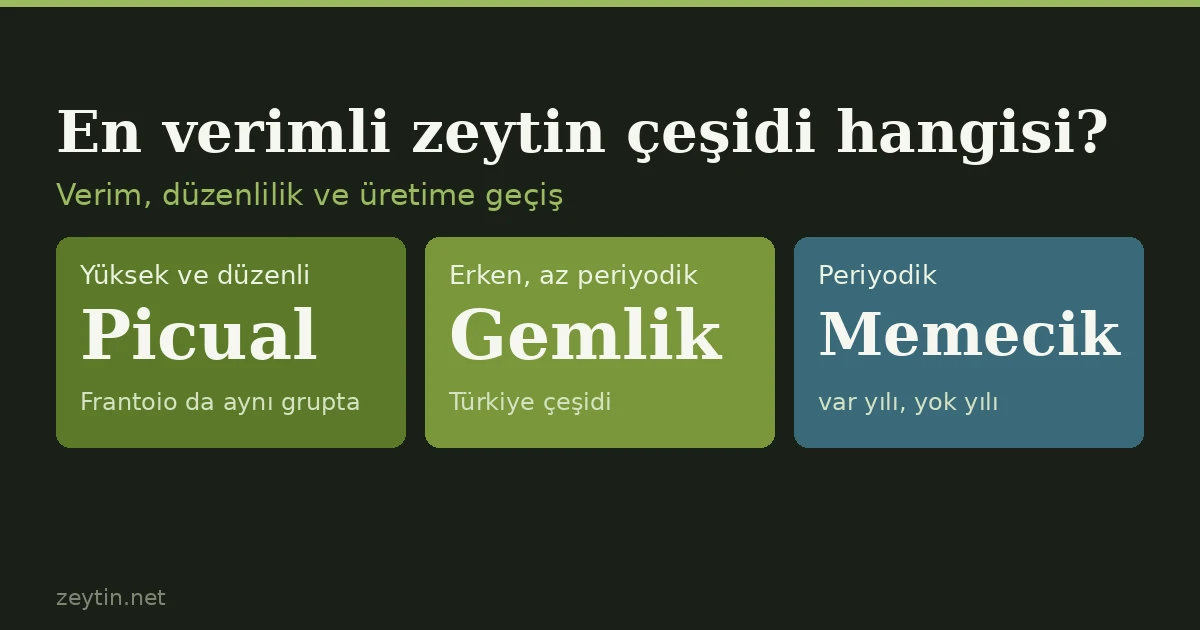
Which olive variety is the most productive? Regular crops, early bearing and alternate bearing
There is no single "most productive olive". Productivity depends on whether a tree bears regularly every year, how early it starts cropping and pollination. In our variety data, Picual and Frantoio are high and regular, Gemlik is early with low alternate bearing, while Kalamata, Hojiblanca and Memecik swing between on and off years.