What happens if hail hits an olive tree? Flower and fruit drop, olive knot through wounds, and what to do afterwards
Hail causes flower and fruit drop and leaf and branch wounds in olives; the longer-term danger is olive knot bacteria entering through those wounds, with galls possibly appearing months later. The article rests on the ministry instruction, research-institute publications and University of California sources, and states plainly that no reliable figure exists for how soon after hail to spray.
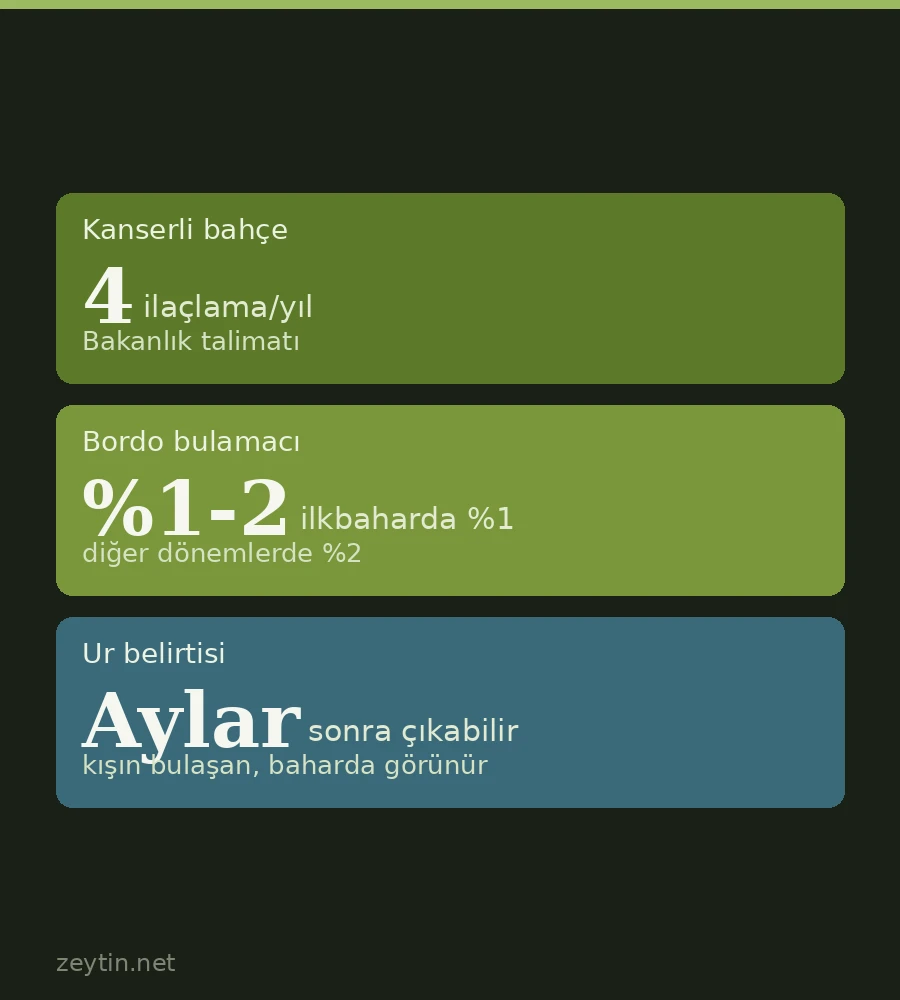
Hail damage to olives falls under three headings: dropped flowers and fruit, wounded leaves and branches, and the longer-term harm, which is bacteria entering through those wounds. The question a grower asks after a hailstorm is usually the same: does the orchard need spraying, when, and what should I expect? This article rests on the Turkish Ministry of Agriculture and Forestry's plant protection technical instructions, a ministry research-institute leaflet, a 2015 review by researchers at the Olive Research Institute in Bornova, İzmir, and University of California pest management publications (a 2011 bulletin and the olive knot page). One thing up front: we found no reliable figure for how many hours or days after hail a copper spray should be applied, so we give none.
Hail does two kinds of damage to olives
The review by Ayaz and Varol in the journal Zeytin Bilimi, from the Olive Research Institute, sorts the effect of hail into two groups. The first is mechanical damage: flower and fruit drop, and injury to leaves and branches. The second is disease: bacteria and fungi entering through hail wounds. According to the review, Pseudomonas savastanoi, the agent of olive knot, causes serious damage by entering through hail wounds in particular.
How heavy the mechanical damage is depends on when the hail falls: in bloom it is flowers and young fruit that drop, near ripening it is the fruit that is bruised. The review does not break this down by timing, and we give no figures. For table olives the money side is heavier still: as we explain in our crop insurance article, hail can scar the fruit and push the crop out of its size and quality class.
The long-term danger: olive knot
According to the ministry's instruction, olive knot appears as galls and warts of different sizes on the trunk, branches and shoots. The instruction says the size of the galls varies with the shape of the wound caused by pole-beating at harvest, hail wounds and pruning errors. A leaflet from a ministry research institute repeats the point: the pathogen enters through wounds left by harvest, frost, hail and excessive wind. We cover the disease itself in our olive knot article.
The bacteria live inside live galls. In damp, rainy weather they reach the gall surface and spread by rain, wind and insects (ministry instruction). The California bulletin likewise says the bacterium is carried by splashing rain and by contaminated pruning tools. A rainy spell after hail therefore raises the risk.
The bulletin gives an important detail about timing: galls form only while the tree is growing, so an infection that starts in winter shows symptoms in spring. An orchard can look clean after hail and galls can appear months later. The same bulletin says one-year-old plants are more susceptible than three-year-olds, that all cultivars are susceptible, and that trunk infection can girdle and kill a young tree. It adds that the disease cuts yield in older trees and that even trees with few galls can give fruit with an off-flavour.
The bulletin's periods of wound susceptibility (at least 14 days for pruning wounds, up to 7 days after leaf drop for leaf scars) refer to pruning wounds and leaf scars. We found no source stating how long a hail wound stays open to infection, so we do not transfer those figures to hail.
Spraying after hail: what the ministry says
The spray calendar in the ministry's instruction is meant for orchards already infected with olive knot: no pruning for two years, during which the orchard is sprayed four times a year with Bordeaux mixture, and pruning is done in July-August at the end of the two years. A 1% Bordeaux mixture is used for the spring spray and 2% for the others. The four sprays fall in these periods:
| No. | Period |
|---|---|
| 1 | End of December, straight after harvest |
| 2 | End of February, after hail and frost damage |
| 3 | Before the spring rains begin |
| 4 | Before the autumn rains begin |
The instruction adds a note for the Black Sea region: the February spray is not applied there, but if there has been hail or frost damage, the February spray is applied. For products and doses the instruction points to the ministry's plant protection products register; we give no doses. The University of California's olive knot page warns along the same lines: copper bactericides reduce the amount of bacteria on the surface and must be applied before infection, and in low-rainfall areas copper can harm the tree.
What we can safely take from this, and no more: hail and frost damage is a situation that brings an extra copper spray into the ministry calendar. Which orchard to spray, when, and with which product depends on the orchard's disease history and the region, and the decision should be made with a technician at the provincial or district directorate of agriculture and forestry.
What to do in the orchard after hail
- Record the damage. Date, photographs and parcel; useful for both insurance and the spray decision. If you are insured, notification terms depend on the policy, so check yours. In its 2026 purchase campaign Marmarabirlik also announced a loan deferral and a price-difference payment for members hit by hail in Erdek.
- Cut broken and crushed branches on a dry day. The ministry instruction says pruning of knotted trees should not be done on damp, rainy days, that tools should be disinfected with 3% lysol or 10% sodium hypochlorite, and that pruning cuts should be painted first with a 5% lime-sulphur solution and, once dry, with grafting paste. These recommendations are for pruning wounds; there is no separate instruction for hail wounds, but the wound logic is the same. Review the general rules in our pruning article as well.
- Do not overdo nitrogen. The instruction says trees should not get more nitrogen than needed, and that compound fertiliser should be used instead.
- Keep expectations for potassium modest. Ayaz and Varol write that in regions with frequent hail, potassium fertilisation helps partly to limit bacterial damage. It is support, not a rescue.
- Walk the trees in spring and summer. Look for spongy green galls on branches and shoots. If you find any, pruning in the dry summer months rather than in the rainy season is the shared recommendation of the ministry instruction and the California bulletin.
What we could not find in the sources
The sources we read have no answer to three questions, so the article has none either: within how many hours or days after hail a copper spray is needed; at what percentage of damage spraying should be done; and the effect of hail on oil quantity and quality. For these, the technician at your local agriculture directorate is the right address.
Summary
Hail leaves two kinds of damage in olives: the immediately visible flower and fruit drop and leaf and branch injury, and olive knot that may appear months later. The ministry calendar ties the period after hail and frost damage to a February Bordeaux spray, but that calendar was written for orchards already infected with olive knot. Not pruning on damp days, disinfecting tools and checking for galls in spring apply to every orchard. The wound logic in our frost damage article overlaps largely with hail.
One rating per visitor; you can change yours at any time. Ratings are real reader votes — no seeded or default scores.
Related
 Article
Where does an olive sapling come from? From cutting to laboratory
Most table olive varieties will not root, and those that do are clones of one another — defenceless against disease. Tissue culture reports up to 85% success in vitro, but zeatin is expensive.
 Article
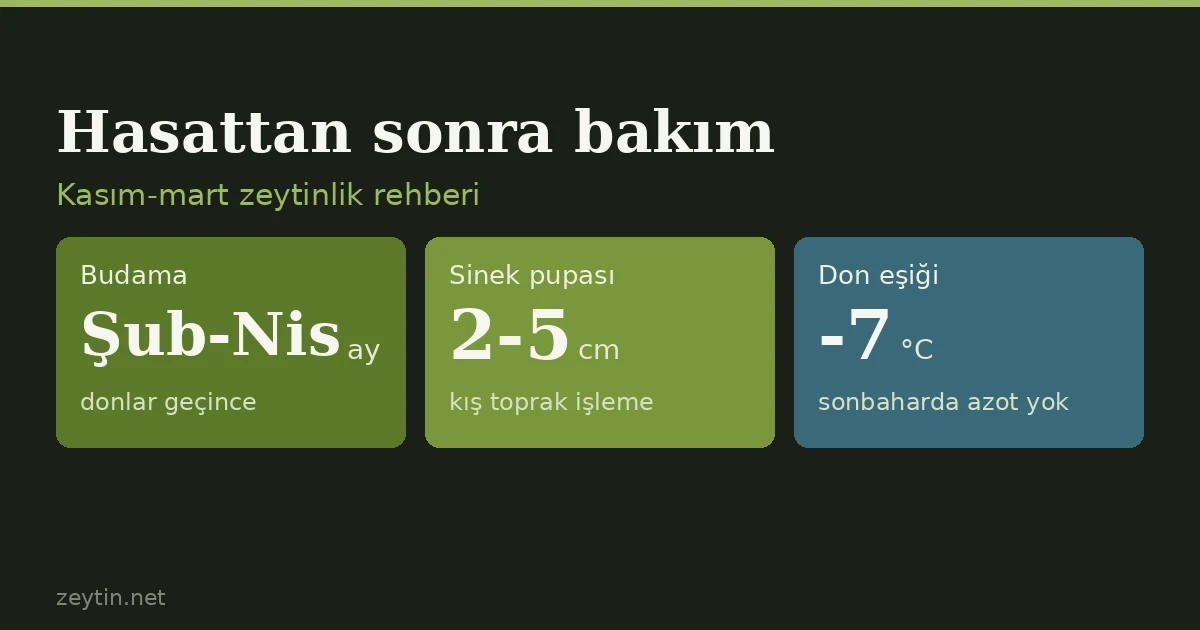
What to do for olive trees after harvest: a November-to-March care guide
The work in the grove does not end with the olive harvest; next year's crop is prepared in exactly these months. From collecting fallen fruit and protecting harvest wounds to region-specific peacock spot sprays, the right pruning time, autumn feeding and winter soil work, here is what needs doing after harvest.
 Article
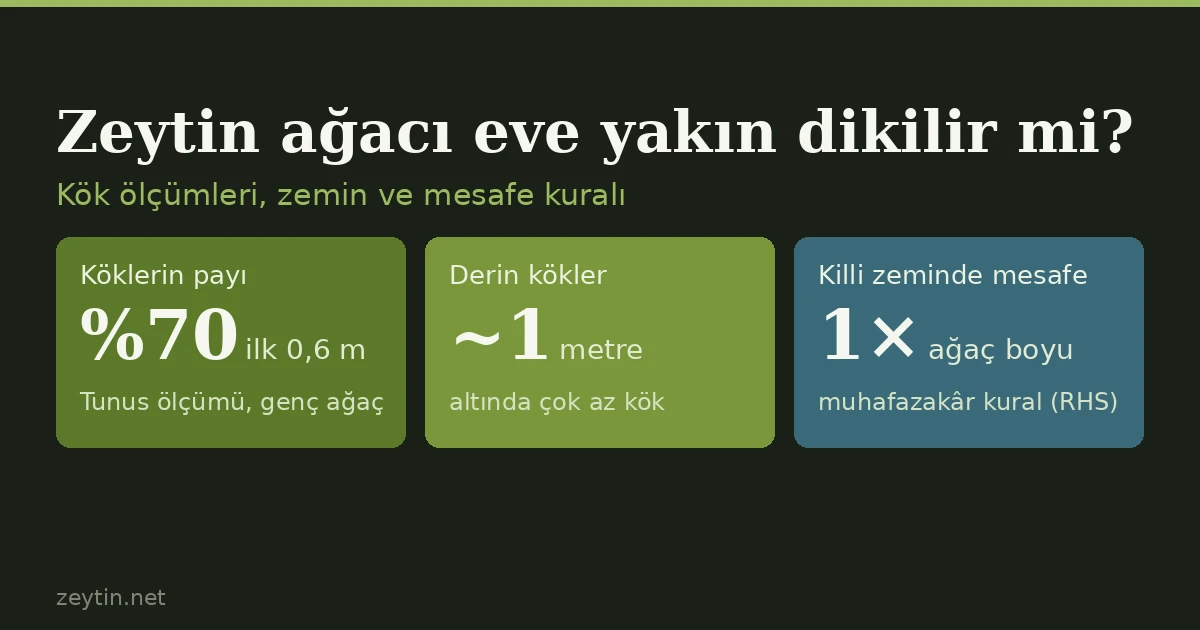
Can you plant an olive tree near a house? Do its roots damage foundations?
Olive roots are concentrated mostly in the top 60 centimetres of soil and do not penetrate a sound foundation directly. The real risk is soil shrinkage on clay, which can make a building settle. What root measurements show, a distance rule based on tree height, pipes, and what Turkish law says about the neighbour's boundary.
 Article
Fertilising Olives: From Soil Analysis to an Annual Programme
How to read a soil test, which nutrients olives need and when, fertigation and organic matter management.