The 12.5% US tariff: the competitor is exempt, the Turkish exporter is not
Mustafa Kürlek notes the 12.5% additional US tariff on Turkish olive products is not applied to competitors such as Tunisia, and calls for DFİF and Eximbank measures.
Mustafa Kürlek, chairman of Köklü Zeytincilik, says the 12.5% additional tariff the United States applies to Turkish olive and olive oil products is not applied to competitors such as Tunisia, leaving Turkish exporters at a disadvantage.
Why the gap matters
Paying 12.5% more while selling to the same buyer, on the same shelf, is a direct price disadvantage. One figure makes the comparison concrete: Tunisia exported 368,000 tonnes of olive oil in the first nine months of 2025/26, a significant share of it to North America.
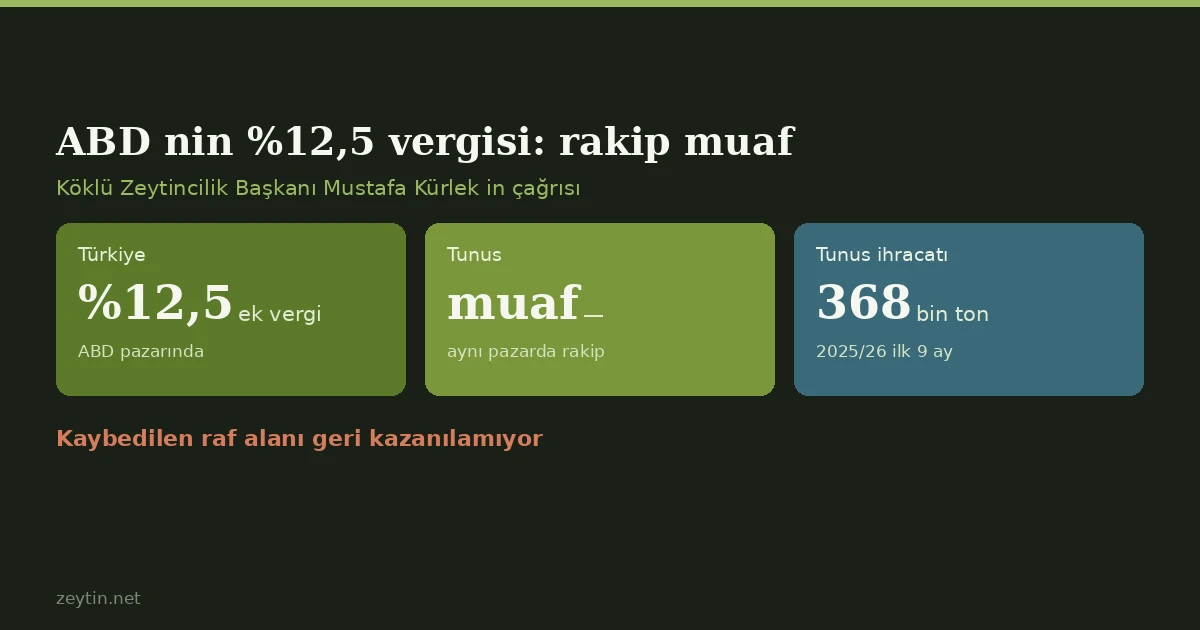
Kürlek's emphasis is on the permanence of the market: "We must not allow a temporary rise in costs to turn into the permanent loss of a US market won through years of effort." Shelf space once lost, he says, is hard to win back.
The measures sought
Kürlek lists three:
- DFİF: reactivating the Support and Price Stabilisation Fund through a WTO-compatible model, with temporary support equal to the tariff gap until diplomacy produces a result.
- Credit terms: spreading existing Eximbank and rediscount debts over longer terms in return for production and export commitments.
- VAT refunds: accelerating refunds to ease companies' cash flow.
Background
The call comes during a run of concordat filings in the sector; we covered the most recent case in Akhisar separately. We examined the effect of tariff gaps on exporter margins in profitability in olive oil exports.
One rating per visitor; you can change yours at any time. Ratings are real reader votes — no seeded or default scores.
Related
 Article
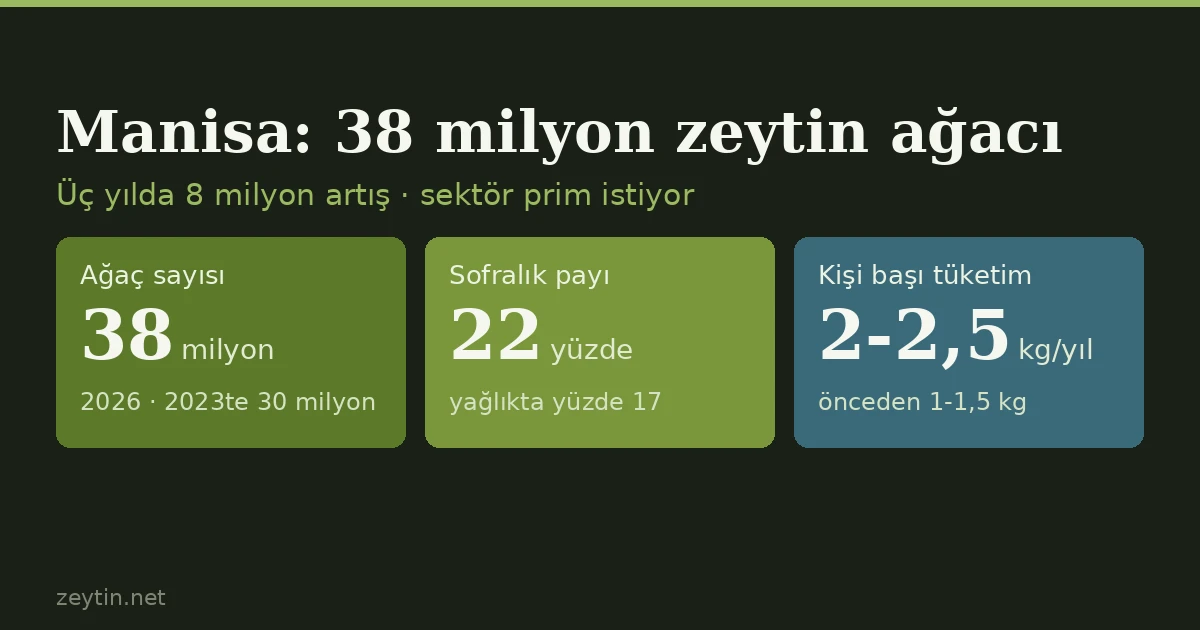
Manisa's olive trees reach 38 million: 8 million added in three years, sector asks for premium support
Manisa's olive tree count rose from 30 million in 2023 to 38 million in 2026. Data shared at a sector meeting hosted by the Manisa Commodity Exchange shows the province alone accounts for 17 percent of Turkey's oil-olive output and 22 percent of its table-olive output. The meeting also reported that annual per-capita olive oil consumption in Turkey has climbed from 1-1.5 kg to 2-2.5 kg. Exchange chairman Sadık Özkasap called for higher state support and premium incentives against the lower processing costs of Spain, Tunisia and Morocco.
 Article
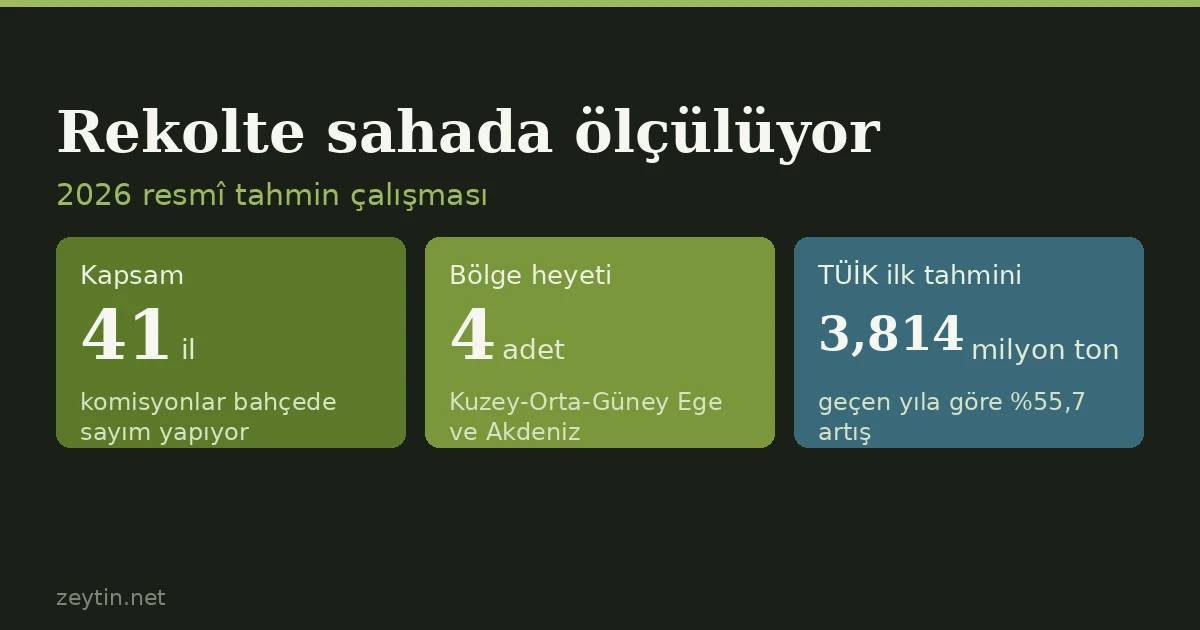
The official olive figure is measured in the grove: Türkiye's 2026 crop survey is under way
Türkiye's official olive crop figure is not produced at a desk. It comes from agricultural engineers counting fruit load tree by tree. A provincial crop estimation commission met in Denizli this week while field inspections continue in the districts. The national figure is assembled by an official delegation coordinated by the National Olive and Olive Oil Council across 41 provinces, and last season it was announced on 24 October.
 Article
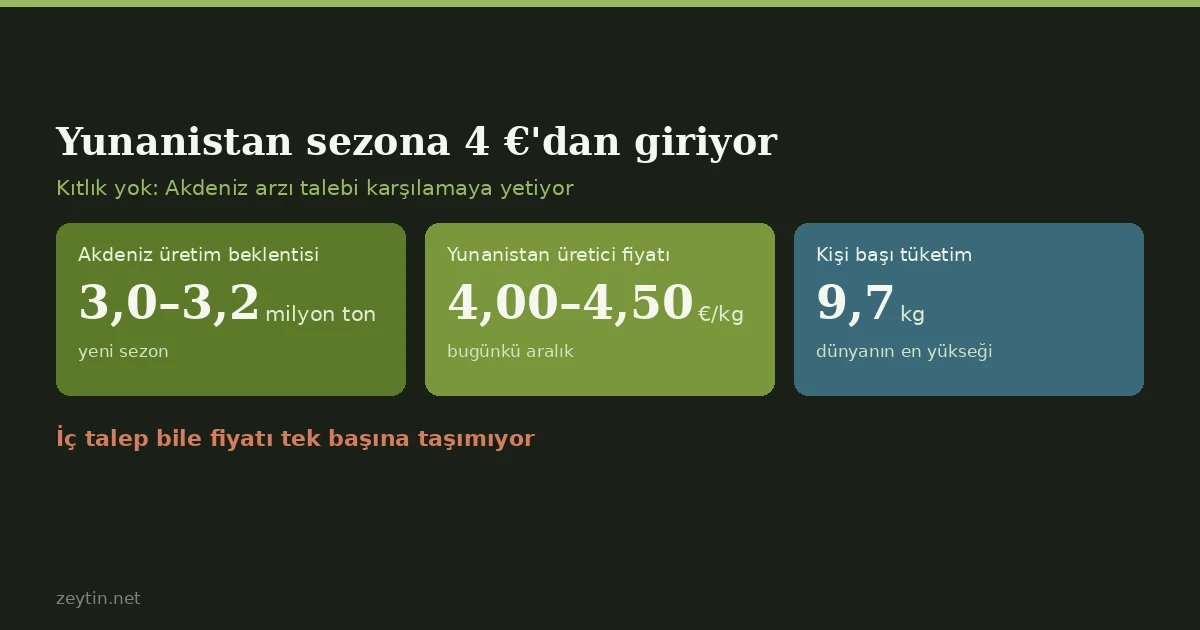
Greece opens the season at €4: no scarcity in the Mediterranean, but pressure on price
Manolis Giannoulis, president of the National Interprofessional Olive Oil Organization, expects the season to open at around €4 per kilogram. Mediterranean output is forecast at 3–3.2 million tonnes: no record, but enough to meet demand. The market is quiet, buyers are few, and costs plus North African imports keep the pressure on.
 Article
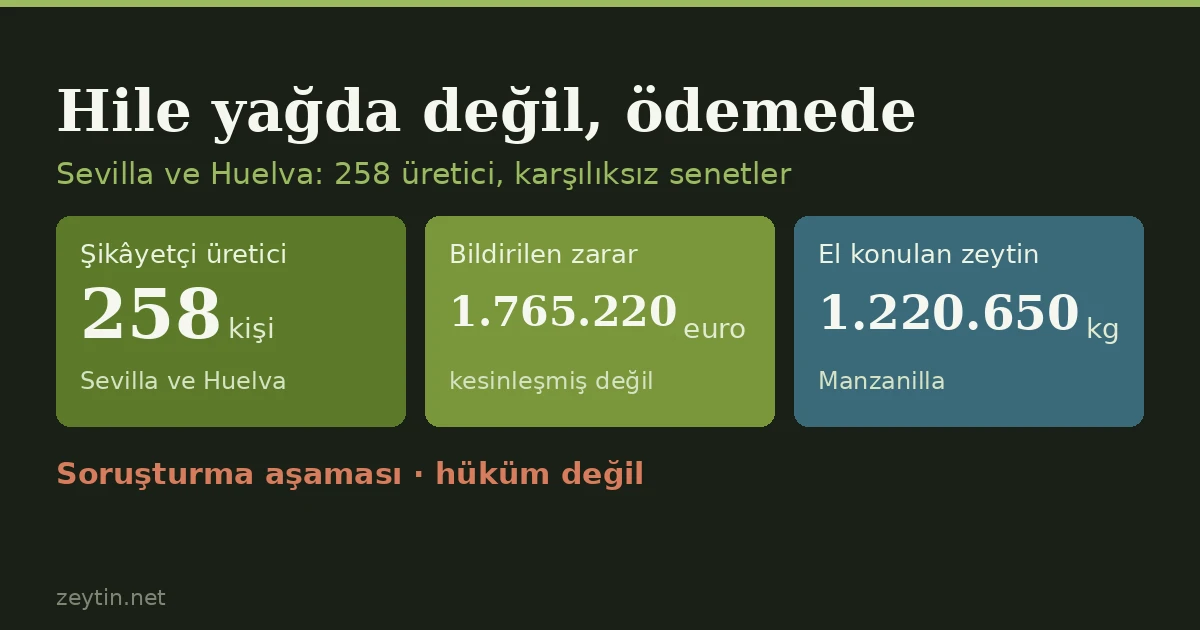
258 growers, €1.77 million: in Spain the fraud was not in the oil, it was in the payment
Spain's Guardia Civil has detained a table olive trader accused of defrauding 258 growers in Seville and Huelva of €1,765,220. The olives were real and the sales were real; the money never reached the producers. Investigators seized 1,220,650 kilos of Manzanilla olives.