Olive oil and brain health: what a 92,000-person study and the randomised evidence say
The headlines about olive oil and the brain are bold; the evidence is more measured. In a 92,383-person cohort followed for 28 years, more than 7 g a day was associated with a 28% lower risk of dementia-related death. The randomised PREDIMED trial points the same way.
The headlines going round in early September were bold: "strengthens the brain like steel", "the question is finally settled". Those sentences are not the finding of a study; they are a study turned into a headline. What follows is the evidence itself: what it shows, what it cannot show, and what it means in the kitchen.
We covered olive oil and overall mortality separately. The question here is narrower: cognitive ageing and dementia.
The largest observational evidence
| Title | Consumption of Olive Oil and Diet Quality and Risk of Dementia-Related Death |
|---|---|
| First author | Anne-Julie Tessier — Harvard T.H. Chan School of Public Health |
| Published | JAMA Network Open · 6 May 2024 |
| Participants | 92,383 adults |
| Cohorts | Nurses' Health Study II · Health Professionals Follow-Up Study |
| Follow-up | 28 years, diet assessed every 4 years |
| Events | 4,571 dementia-related deaths |
The main finding: people consuming more than 7 grams of olive oil a day had a 28% lower risk of dementia-related death than those who never or rarely consumed it. The notable detail is that the association held independently of overall diet quality — it is not explained away by "people who eat well anyway".
The second finding is more practical: replacing 5 grams a day of margarine or mayonnaise with the same amount of olive oil was associated with an 8-14% lower risk of dementia-related death. Five grams is roughly a teaspoon.
What this study cannot say
The numbers are strong, but the limits are clear:
- Cause of death was measured, not disease. The outcome is "dementia-related death", not the rate of developing dementia. These are not the same thing.
- It is observational. Participants were not randomly assigned; olive oil consumers may differ in other ways. The study adjusted for diet quality, but not every factor can be adjusted away.
- The cohort is US health professionals. Intake levels sit far below Mediterranean norms; the "7 gram" threshold is not high, it is simply the upper band in that dataset.
So the correct sentence is not "olive oil prevents dementia" but "regular olive oil consumption was associated with a lower risk of dementia-related death".
What the randomised evidence says
The one design that addresses the weakness of observational work is the randomised trial. The reference here is the Barcelona arm of PREDIMED:
| Title | Mediterranean Diet and Age-Related Cognitive Decline: A Randomized Clinical Trial |
|---|---|
| Author | Cinta Valls-Pedret et al. |
| Published | JAMA Internal Medicine · 2015;175(7):1094-1103 |
| Participants | 447 cognitively healthy volunteers |
| Arms | Mediterranean diet + extra virgin olive oil · + mixed nuts · control (low fat) |
| Duration | 4 years |
After four years, cognitive composite scores in the arms supplemented with extra virgin olive oil or nuts fared better than in the low-fat control arm. Because assignment was random, this is stronger evidence on causation than observational data — but the sample is small and single-centre.
Read together, the picture is this: the effect size is modest, the direction consistent.
On mechanism: where we stand
The phenolic compounds of extra virgin olive oil — chiefly oleocanthal and oleuropein — suppress inflammatory pathways in the laboratory and act on processes linked to amyloid accumulation. But the overwhelming majority of this work is in cell and animal models. There is no human dose-response data allowing anyone to say "this much of this compound produces that effect in the brain".
We covered the compounds themselves in detail in our oleocanthal and polyphenols article.
The Turkish side: phenols are not equal across oils
"Olive oil" is not one product; phenol content varies several-fold by cultivar, harvest timing and processing. From our own measurements:
| Cultivar | Total phenols (mg CAE/kg) | α-tocopherol (mg/kg) |
|---|---|---|
| Uslu | 182-494 | 380-486 |
| Gemlik | 244-491 | 207-261 |
| Memecik | 296-407 | 219-324 |
Note how wide the ranges are: within a single cultivar the low and high values differ two- to threefold. "Which cultivar" is therefore not the whole question; early harvest and cold extraction can matter more than cultivar. On the shelf the only signals of this are the harvest date and the word extra virgin — refined oil loses most of its phenols.
What it means in practice
- The threshold in the study is 7 grams a day, roughly 1.5 teaspoons. Not an unreachable amount.
- The clearest gain comes from substitution: olive oil in place of margarine, mayonnaise or butter — not on top of the fat already used.
- To preserve phenols, use extra virgin; the longer and hotter the heating, the fewer phenols remain. We set out the distinction on frying here.
- For the daily-amount question, see our separate article.
What must not be claimed
Olive oil is not a treatment, and certainly not a preventive drug for dementia. The evidence shows regular consumption is associated with lower risk; it offers no individual guarantee. For someone with cognitive symptoms, the right address is a physician, not the kitchen.
"Strengthens the brain like steel" is nobody's finding. The sentence the evidence permits is far more measured, and still meaningful: making olive oil the principal fat of a Mediterranean-style diet is a favourable choice for cognitive ageing.
One rating per visitor; you can change yours at any time. Ratings are real reader votes — no seeded or default scores.
Related
 Article
Olive pollen allergy: the quiet cause of May to July
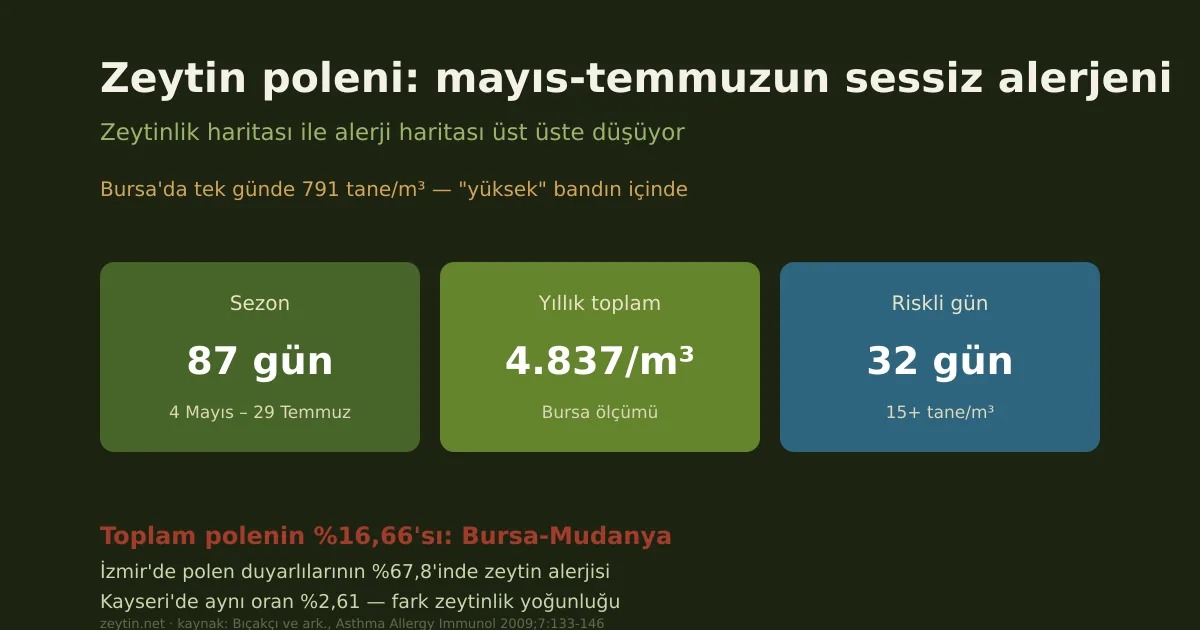
Olive pollen fills the air across western Türkiye from May to July. Bursa recorded 791 grains/m³ in one day over an 87-day season; 67.8% of pollen-sensitised patients in İzmir react to it.
Article
Olive pollen allergy: the quiet cause of May to July
Olive pollen fills the air across western Türkiye from May to July. Bursa recorded 791 grains/m³ in one day over an 87-day season; 67.8% of pollen-sensitised patients in İzmir react to it.
 Article
How many calories are in olives? Nutrition and portion table
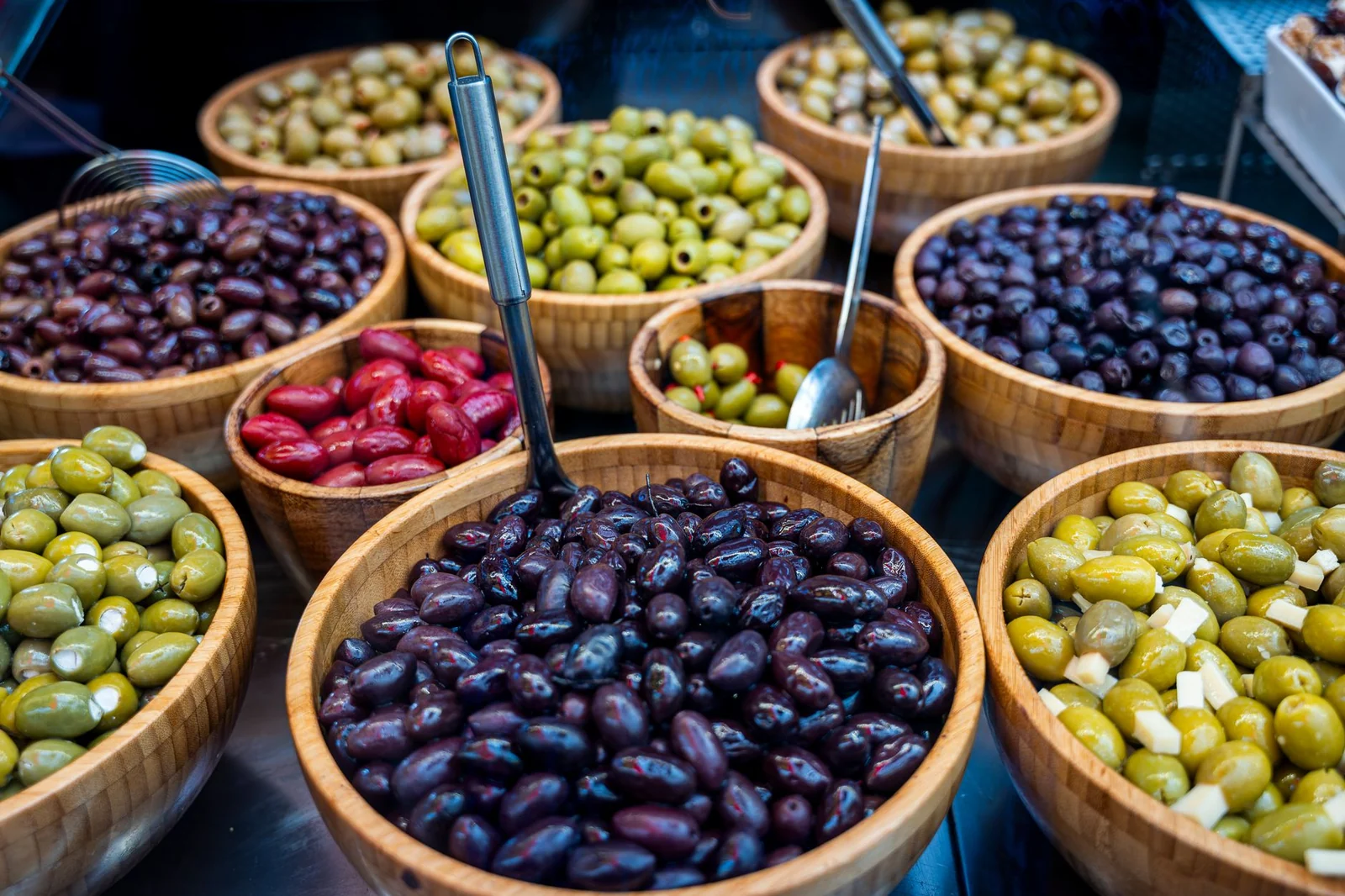
What is actually in an olive? Fat, fibre, iron, vitamin E — and the salt you should not ignore.
Article
How many calories are in olives? Nutrition and portion table
What is actually in an olive? Fat, fibre, iron, vitamin E — and the salt you should not ignore.
 Article
Does olive oil have downsides? Calories, the gallbladder, old oil and fraud
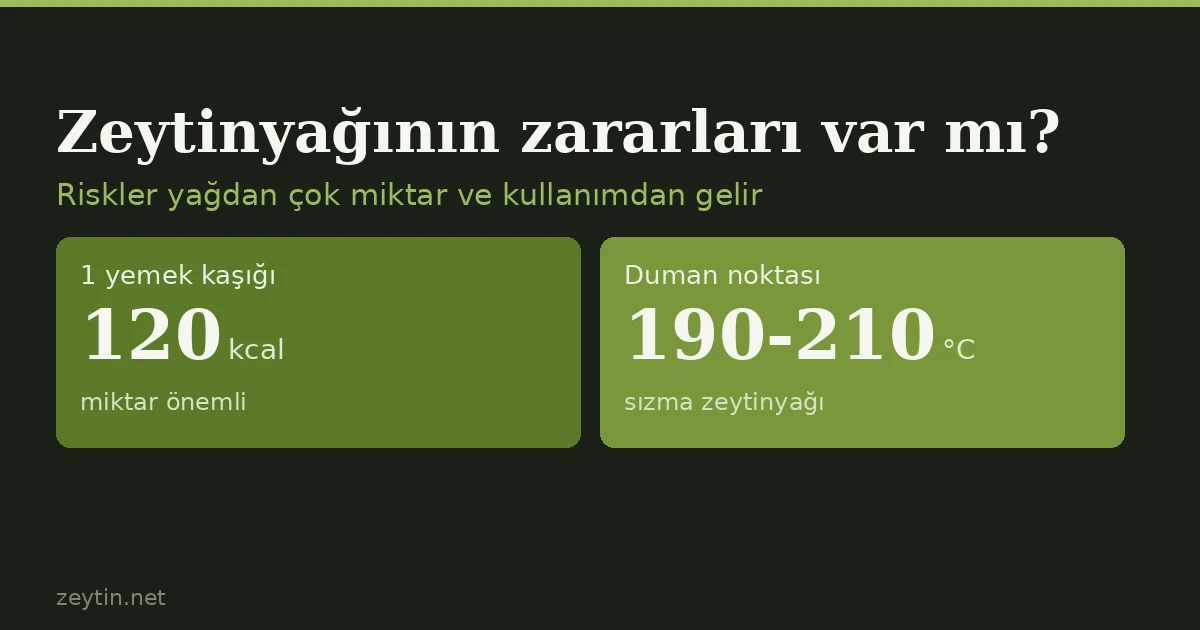
In normal kitchen amounts olive oil is a safe food; its downsides mostly come not from the oil itself but from quantity, misuse and poor products. High calories, discomfort after fatty meals in people with gallstones, the habit of drinking it on an empty stomach as a "cure", repeatedly reused frying oil and adulterated products are the main risks.
Article
Does olive oil have downsides? Calories, the gallbladder, old oil and fraud
In normal kitchen amounts olive oil is a safe food; its downsides mostly come not from the oil itself but from quantity, misuse and poor products. High calories, discomfort after fatty meals in people with gallstones, the habit of drinking it on an empty stomach as a "cure", repeatedly reused frying oil and adulterated products are the main risks.
 Article
How many calories are in an olive? By piece, portion and variety
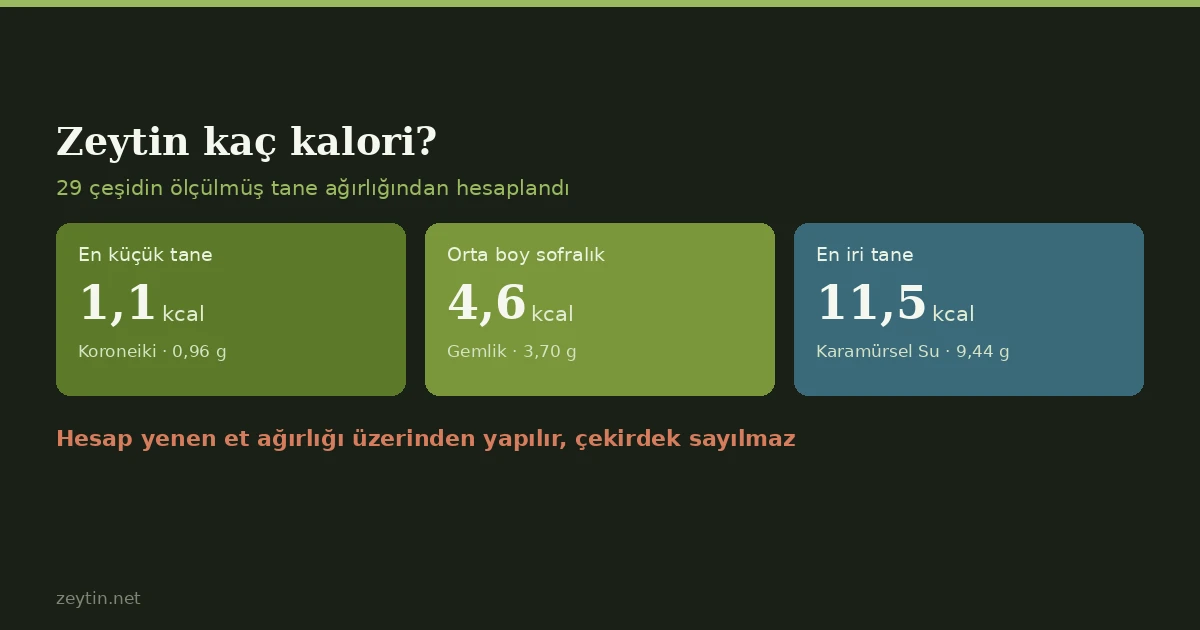
A single olive contains between 1 and 12 calories depending on variety. A table calculated from the measured fruit weight and flesh ratio of 29 varieties, portion equivalents and the calories in olive oil.
Article
How many calories are in an olive? By piece, portion and variety
A single olive contains between 1 and 12 calories depending on variety. A table calculated from the measured fruit weight and flesh ratio of 29 varieties, portion equivalents and the calories in olive oil.