Recall in Germany: MOSH/MOAH in pomace oil — not olive oil
Germany's official food safety portal has recalled a 4-litre pomace oil sold in Turkish shops. The product is not olive oil but olive pomace oil; we explain the difference and what MOSH/MOAH are.
According to a notice on Germany's official food safety portal, high levels of MOSH and MOAH were found in an oil sold in shops serving Turkish consumers, and the product has been recalled.
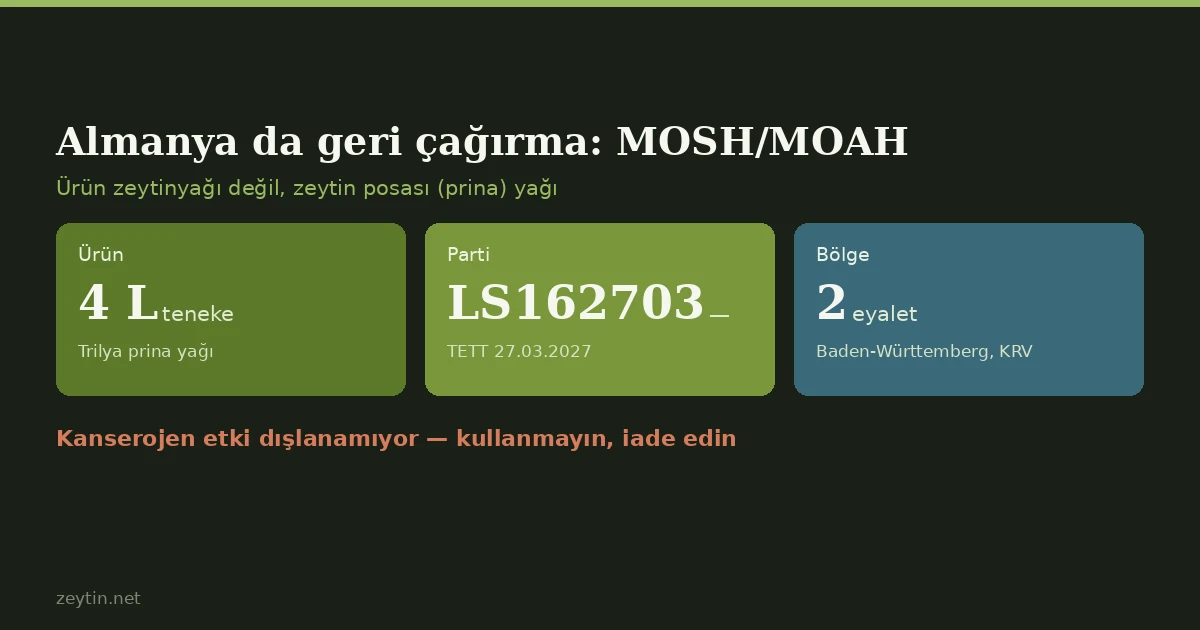
The recalled product
| Product | Trilya olive pomace oil |
|---|---|
| Packaging | 4-litre tin |
| Batch | LS162703 |
| Best before | 27 March 2027 |
| Distributor | Altay GmbH |
| Regions | Baden-Württemberg, North Rhine-Westphalia |
| Notice | 27 August 2026 |
The German authorities said a carcinogenic effect could not be excluded at the levels measured, and asked consumers not to use the product and to return it to the point of purchase.
⚠ This product is not olive oil
Headlines often call it "olive oil", but the recalled product is olive pomace oil. The two are separate categories: olive oil is extracted mechanically from the fruit, while pomace oil is obtained from the residue left after pressing, using solvents, and is then refined.
We set out the distinction in how to read an olive oil label. If the label says "pomace", the product is not extra virgin olive oil.
What MOSH and MOAH are
Both are mineral oil hydrocarbons — groups of compounds of crude-oil origin.
- MOSH (saturated): can accumulate in the body, particularly in liver and lymph tissue.
- MOAH (aromatic): may contain compounds capable of damaging genetic material and causing cancer, so their presence in food is treated as a health risk.
Contamination can come from lubricants in production machinery, packaging materials, transport and storage, or the environment. The notice gave no detail on the source in this case.
⚠ MOSH/MOAH risk arises particularly in oils that pass through solvent extraction and refining — which is why this recall concerns a pomace oil.
One rating per visitor; you can change yours at any time. Ratings are real reader votes — no seeded or default scores.
Related
 Article
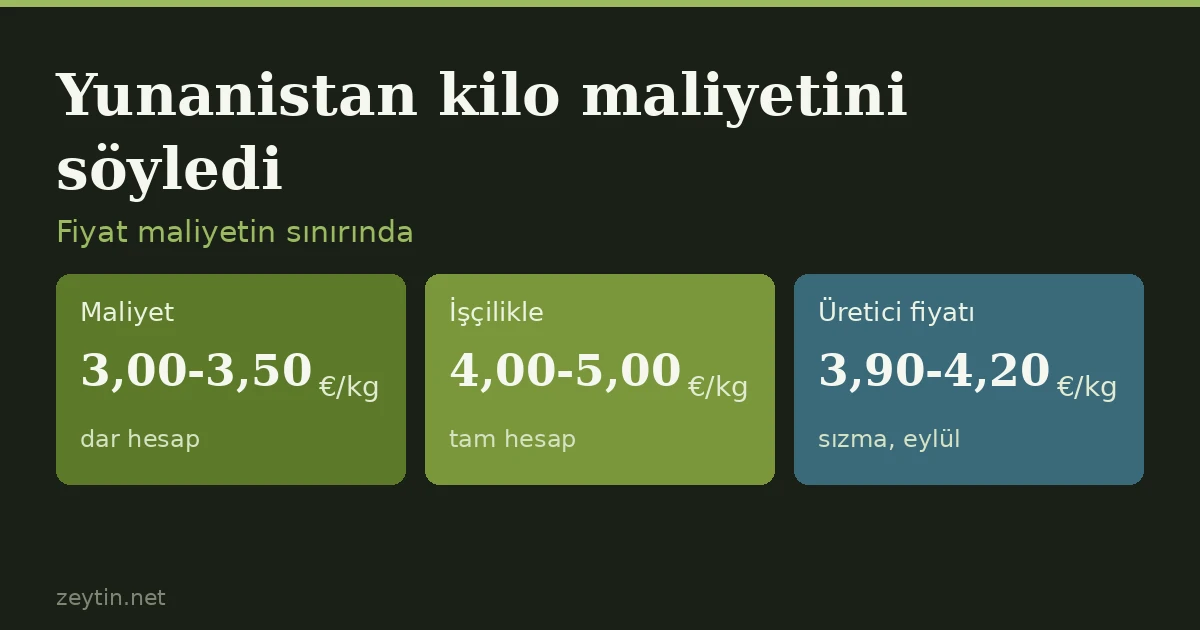
Greece finally puts a number on its cost: €3-3.5 a kilo, up to €5 with labour
For the first time Greece has put a per-kilo figure on its olive oil production cost: €3.00-3.50, rising to €4.00-5.00 once labour is fully counted. The producer price stands at €3.90-4.20, at or below that cost. Spain's €1.70-2.00 for the same item shows where the competitive gap actually sits. Greek output for 2026/27 is estimated at 280,000-330,000 tonnes.
 Article
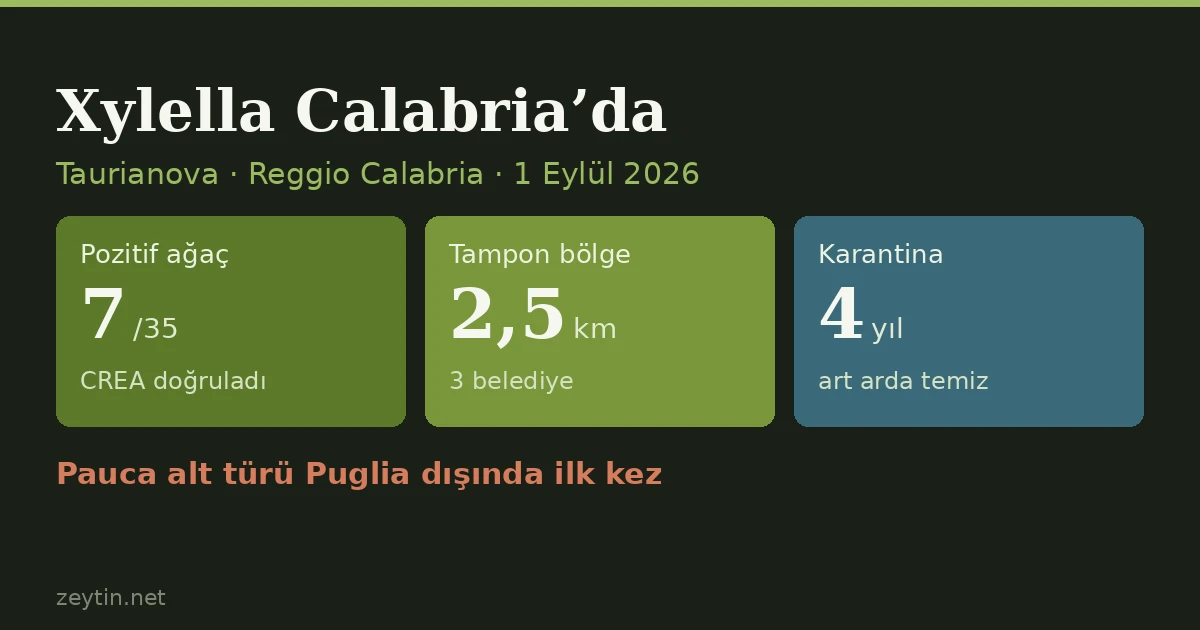
Xylella has left Puglia: seven olive trees test positive in Calabria
The pauca subspecies of Xylella fastidiosa, which dries out olive trees, had been confined to Puglia since 2013. In Taurianova, Calabria, 7 of 35 samples tested positive; the region issued a quarantine decree on 1 September with a 2.5 km buffer zone.
 Article
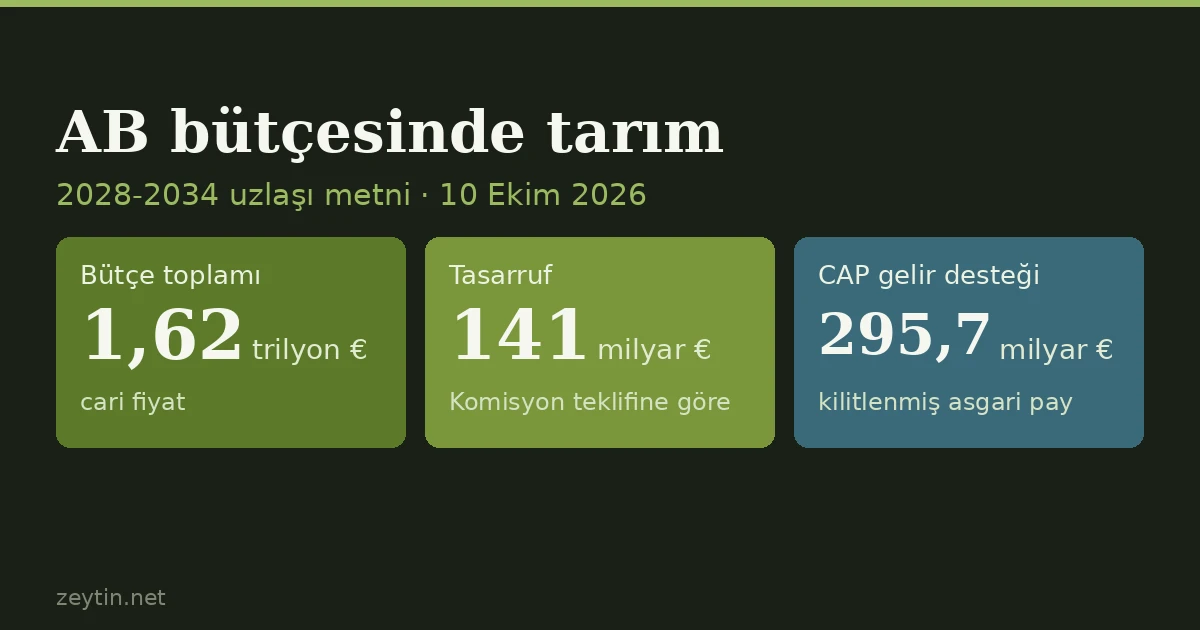
Agriculture in the EU budget bargain: allocations kept, the four big olive oil producers still object
Ireland, holding the Council presidency, circulated a revised compromise text for the 2028-2034 budget on 10 October: 1.62 trillion euros in current prices, savings of 141 billion euros (8%) against the Commission proposal, with agricultural and cohesion allocations retained. The objections have not stopped, because under the Commission proposal the income support of the Common Agricultural Policy is ring-fenced at 295.7 billion euros inside a single 865 billion euro fund, against 387.8 billion euros allocated to that policy for 2021-2027. All four of the Union's big olive oil producers sit in the group of 17 states resisting the cut.
 Article
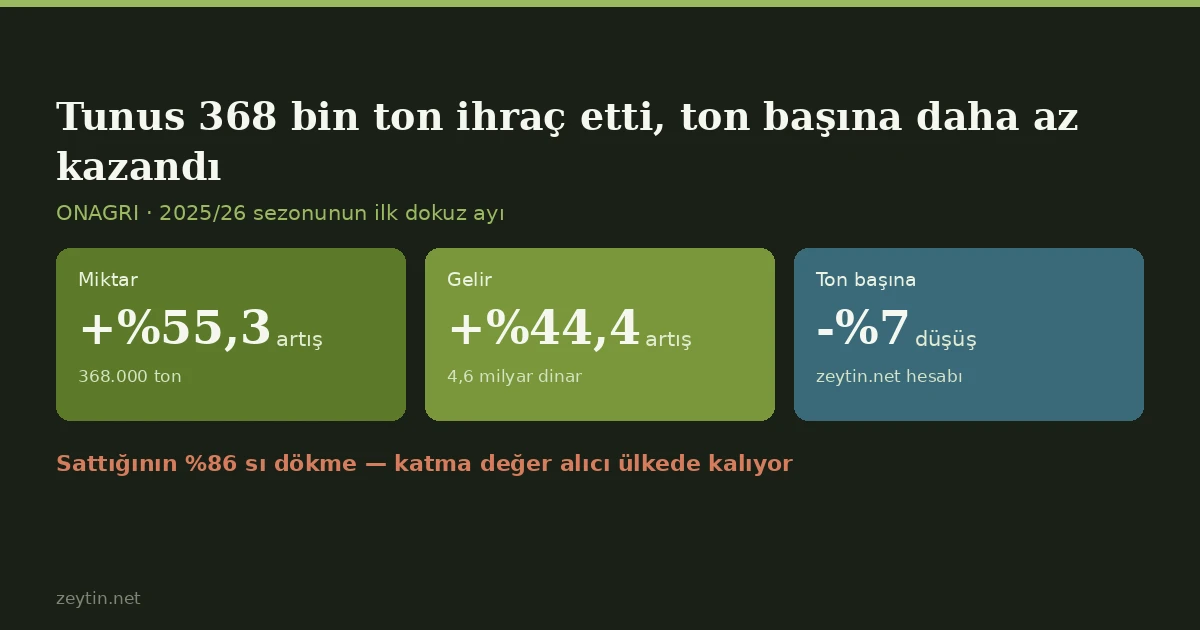
Tunisia exported 368,000 tonnes of olive oil — but earned less per tonne
Tunisia's agriculture observatory ONAGRI reports olive oil exports up 55.3% by volume and 44.4% by value in the first nine months of 2025/26. The gap between the two means about 7% less earned per tonne.