Do olives cause acid reflux? Black and green olives and heartburn
No study shows olives cause reflux; guidelines advise watching your own triggers. Portion size, meal size and timing matter more than olive colour.
The short answer: there is no study showing that olives or olive oil cause acid reflux. Olives do, however, combine several features that people with reflux tend to watch: they are fatty, salty, and cured in an acidic brine. Gastroenterology guidelines do not tell everyone to avoid any of these; their advice is to watch for your own triggers. In practice, what matters is not the colour of the olive but how many you eat, how large the meal is, and how soon you lie down afterwards.
What does the guideline say?
The American College of Gastroenterology (ACG) published its guideline on gastroesophageal reflux disease (GERD) in 2022, and it grades each lifestyle recommendation by strength and quality of evidence. That grading is worth reading closely, because the "foods to avoid with reflux" lists that circulate online rarely make the distinction.
| Recommendation | Strength | Quality of evidence |
|---|---|---|
| Weight loss in overweight and obese patients | Strong | Moderate |
| Avoid meals within 2-3 hours of bedtime | Conditional | Low |
| Raise the head of the bed for night-time symptoms | Conditional | Low |
| Avoid tobacco | Conditional | Low |
| Avoid personal "trigger foods" | Conditional | Low |
The only strong recommendation concerns body weight. The food item appears as "trigger foods", in quotation marks, with low-quality evidence behind it. The guideline names coffee, chocolate, carbonated drinks, spicy food, acidic foods such as citrus and tomatoes, and high-fat foods, but it also notes that most of the supporting data come from small, uncontrolled studies.
An older systematic review reached the same place. Published in Archives of Internal Medicine in 2006, it found that although fatty meals, chocolate, alcohol and tobacco had been shown to lower sphincter pressure, no trial showed that giving them up reduced symptoms. Only two lifestyle measures had evidence of benefit: weight loss and raising the head of the bed.
Does fat make reflux worse?
"Fatty food causes reflux" is a common phrase, but the measurements paint a more complicated picture. Fat is known to slow gastric emptying, and stomach contents that linger have more time to travel upwards. On the other hand, studies that hold calories constant find that fat itself makes little difference:
- In a 1998 experiment published in Gut, 13 healthy volunteers and 14 reflux patients were given two meals with the same energy content, one 52% fat and the other 24% fat. Over three hours, the fattier meal increased neither the number of reflux episodes nor the time the oesophagus was exposed to acid.
- In a 2007 study in Clinical Gastroenterology and Hepatology, 15 patients were monitored over four days. What raised acid exposure was not the share of fat but the calorie load: acid time was 8.6% on 1,000-calorie meals versus 5.2% on 500-calorie meals. Fat content did not change acid exposure, but patients reported more symptoms on the high-fat diet.
Both are small studies and neither settles the question. Their message is still consistent: the overall size of the plate counts for more than the type of fat on it, and fat seems to act mainly by making the burning more noticeable. We found no clinical study looking specifically at olive oil and reflux.
Where do whole olives fit?
Matching olives against each feature the guideline mentions gives this picture:
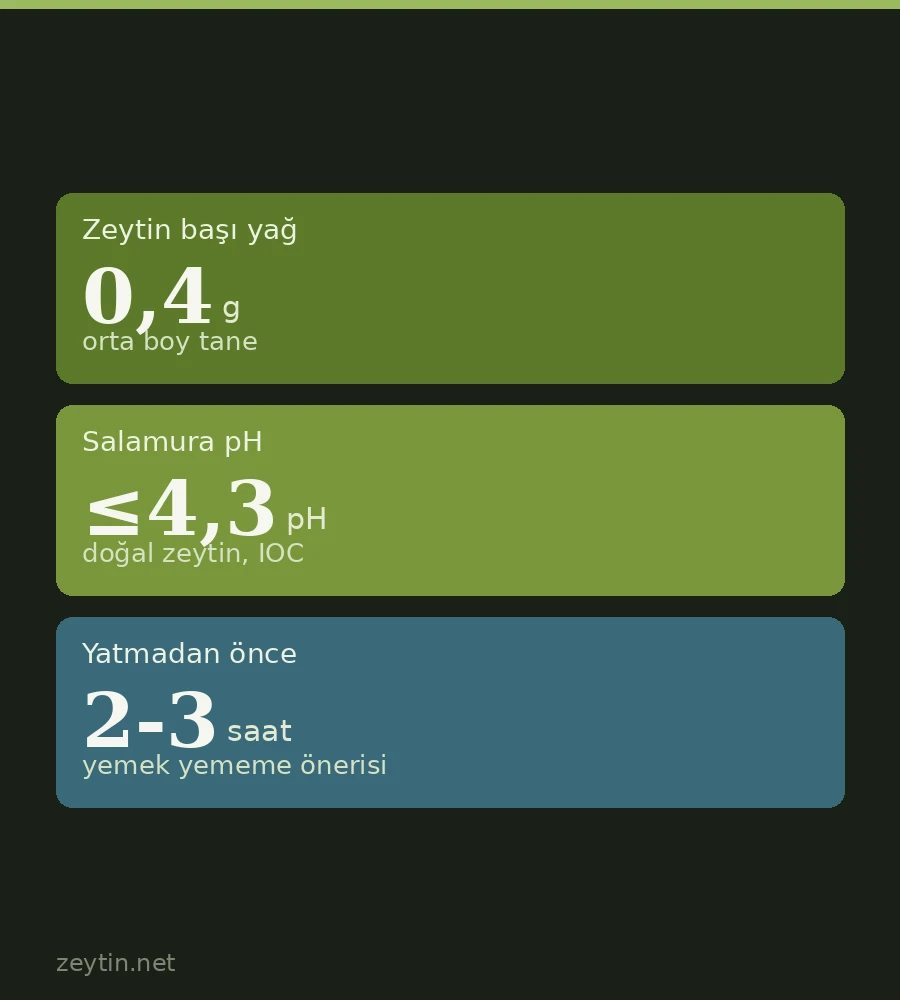
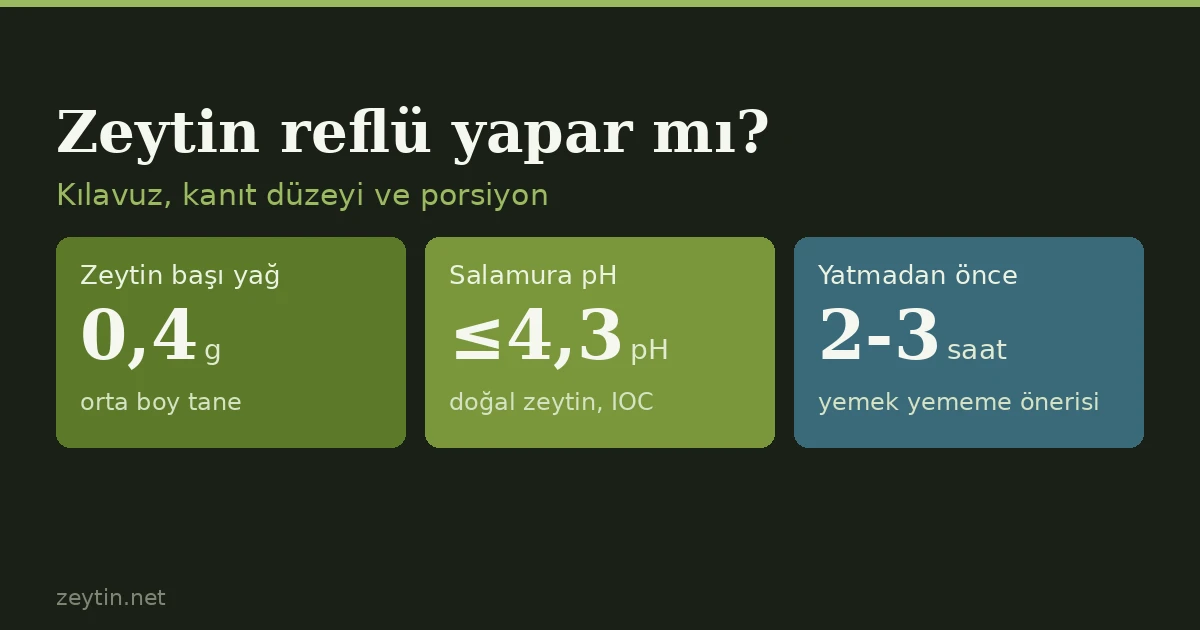
Fat. A medium olive carries about 0.4 g of fat, so five olives add up to roughly 2 g. Next to a tablespoon of olive oil (about 13.5 g) that is a small amount. What turns olives into a "fatty meal" is not a handful of them but dozens, or the fried food served alongside. We worked out the portions in how many olives should you eat a day.
Acid. Table olives are an acidic product. The International Olive Council's trade standard for table olives sets the maximum brine pH at 4.3 for non-pasteurised natural olives and 4.0 for lye-treated olives. That places olives on the edge of what the guideline calls acidic foods. Yet the same guideline rates the evidence for avoiding citrus as weak enough to recommend it only when citrus clearly triggers symptoms in that person.
Salt. A Norwegian population survey of more than 43,000 people, published in Gut in 2004, found that those who always added extra salt to their food were 1.7 times as likely to report severe reflux symptoms as those who never did. This is an observational association. It does not prove that salt causes reflux; salty eating may simply travel with other habits. For olives, at around 30 mg of sodium each, the practical lesson is that salt is worth watching for blood pressure anyway. The soaking method in how to reduce the salt in olives helps on both counts.
Black olives or green olives?
No study has measured a difference in reflux by olive colour. What makes the difference is how the olive is processed:
- Brine-cured black olives and cracked or slit green olives sit in a similar acidity range under the standard. There is no basis for singling out one as harder on the stomach than the other.
- Dry-salt-cured olives are less juicy but saltier: the standard requires at least 10% salt for shrivelled olives, against 6% for natural olives in brine. Because fat and salt are concentrated in the fruit, the same number of olives can feel heavier.
- Olive spread is the olive itself, but it is eaten by the spoonful, which makes portions harder to control, and depending on the recipe it may carry added oil, garlic or chilli. The spicy ingredients the guideline lists may matter more here than the olives.
If a reader finds that black olives bother them and green ones do not, that observation is meaningful for them. It is exactly the kind of personal observation the guideline asks for, but it cannot be turned into a general rule. The production differences are covered in the difference between black and green olives.
Olive oil within a meal
Drinking olive oil on its own on an empty stomach can cause a burning feeling in some people; we discussed this in what drinking olive oil on an empty stomach does. The throat sting of an early-harvest oil is a local sensation produced by oleocanthal, not damage to the digestive tract; see why olive oil is bitter and pungent.
Within a meal, the studies above still apply: total calories and plate size are what count. One or two tablespoons poured over a salad or vegetables are not the same digestive load as a large plate fried in the same oil.
What can you do in practice?
None of this is treatment. These are steps consistent with the guideline that help you find your own tolerance:
- Fix the portion. Start with 5-7 olives at breakfast and see whether symptoms change, then adjust the number to find your limit.
- Avoid eating late. The guideline suggests not eating in the 2-3 hours before bed, and a late-night plate of olives and cheese counts.
- Keep meals moderate. Calorie load raises acid exposure; if olives are part of a very large breakfast, the olives may not be the problem.
- Reduce the salt. Soaking lowers sodium and softens the flavour.
- Keep a note. Writing down for a week which olives you ate, how many, at what time and with what will tell you more than any list of "trigger foods".
Burning that comes on several times a week or does not settle with medication, difficulty or pain when swallowing, and unintended weight loss are not problems to solve by choosing foods; see a doctor if you have these symptoms.
One rating per visitor; you can change yours at any time. Ratings are real reader votes — no seeded or default scores.
Related
 Article
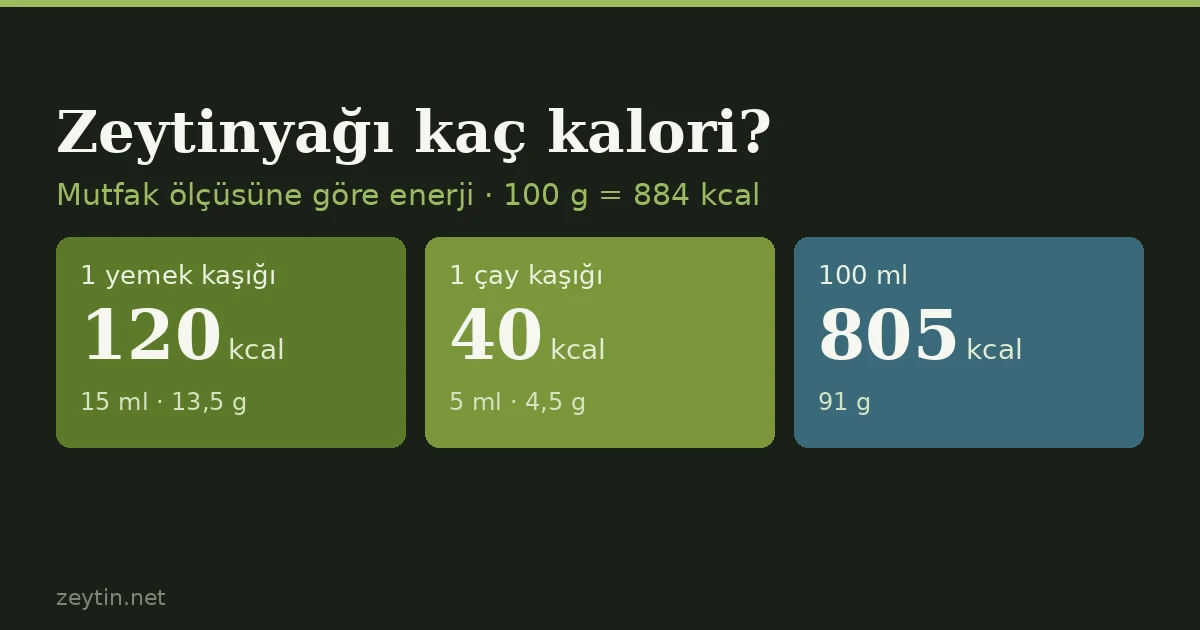
How many calories are in olive oil? Tablespoon, teaspoon and 100 ml
One tablespoon of olive oil has about 120 calories and one teaspoon about 40. Extra virgin, refined blends and sunflower oil carry almost the same energy. A measure table, plus how to count it in salads and cooked dishes.
 Article
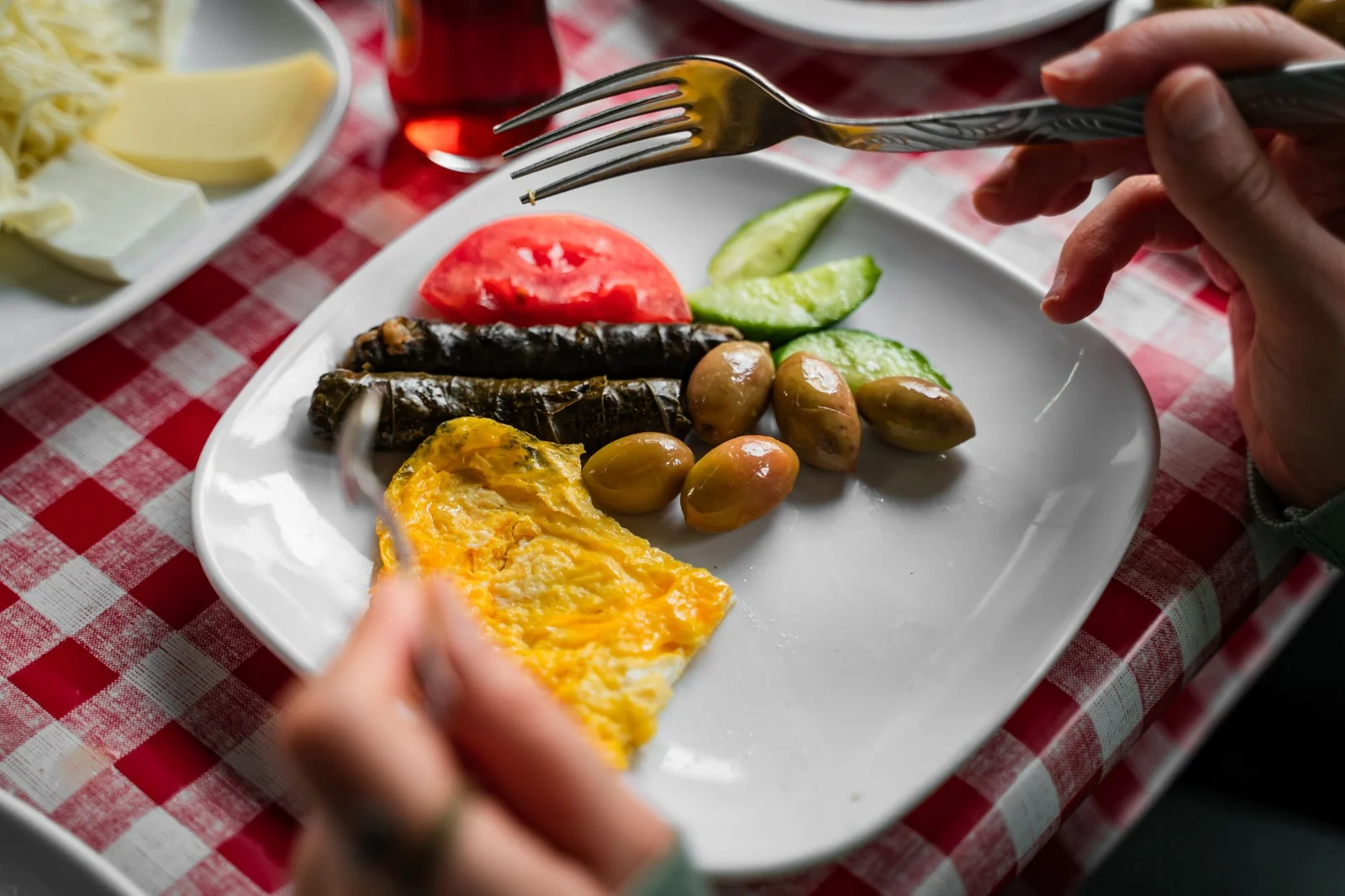
How many olives should you eat a day? Portions, salt and common questions
Calories, fat and salt in olives: what is a sensible daily amount? Based on nutrition data, without unauthorised health claims.
 Article
How Much Olive Oil a Day?
Olive oil being healthy does not make it unlimited. A practical look at portions, calories and the logic of replacement.
 Article
Does olive oil have downsides? Calories, the gallbladder, old oil and fraud
In normal kitchen amounts olive oil is a safe food; its downsides mostly come not from the oil itself but from quantity, misuse and poor products. High calories, discomfort after fatty meals in people with gallstones, the habit of drinking it on an empty stomach as a "cure", repeatedly reused frying oil and adulterated products are the main risks.