Caring for an olive tree in a pot: container, soil, watering, light and winter
Olive trees can live in pots, but they do not forgive two things: too much water and too little light. A wide pot with drainage holes, a free-draining mix, watering once the top layer dries and at least six hours of direct sun are the basic rules. Expecting fruit indoors is usually pointless without a cool winter.
In recent years olive trees have become one of the favourite plants for balconies, terraces and living rooms. With silvery leaves, slow growth and a long life, they look made for a pot. Under the right conditions they really are. But an olive in a pot tolerates far fewer mistakes than its relative in the ground. Its roots live in a limited volume of soil and feel both drought and wetness more sharply. We covered how to grow an olive tree in the ground separately; this page deals only with containers.
The pot: large, with holes, heavy
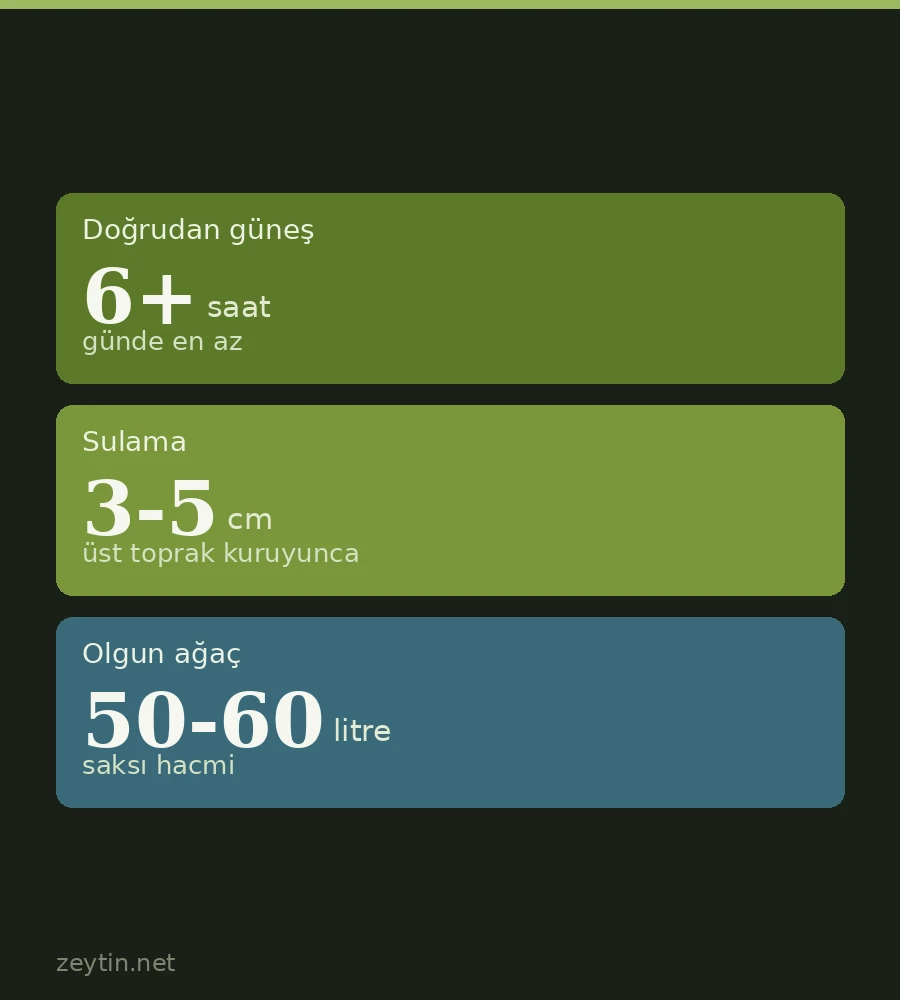
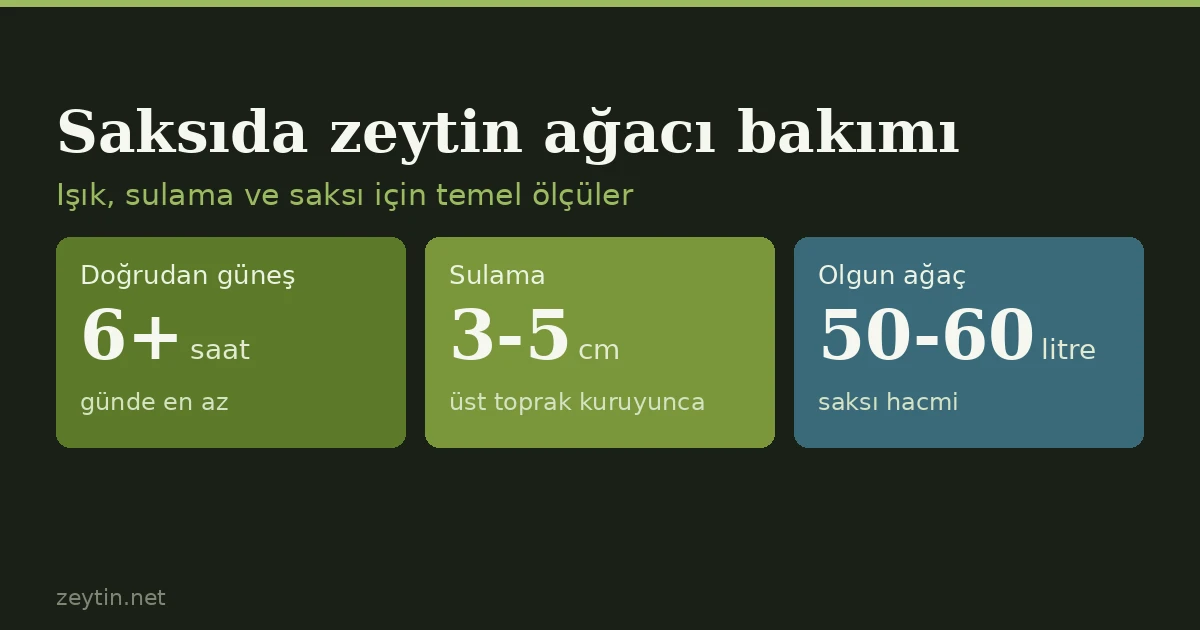
- Size. Start with a pot one or two sizes larger than the one the sapling came in. Move up a size every two or three years as the tree grows. A volume of 50-60 litres or more is common for a mature container tree.
- Drainage holes are essential. A pot without holes is the quickest way to kill an olive. Standing water at the bottom starves the roots of air.
- Material. Terracotta breathes and lets excess moisture out. Plastic is lighter but holds water longer, so it needs more careful watering.
- Weight. As the canopy grows, the risk of wind tipping the pot over rises. A wide, heavy pot also matters for safety on a balcony.
If you use a saucer under the pot, always empty the water that collects in it half an hour after watering.
Soil: make it free-draining
Olives want an airy root zone that lets water through quickly. Ready-made potting compost on its own is usually too rich in organic matter and holds too much water. A practical mix can be made like this:
- Half garden soil or general-purpose potting soil
- A quarter perlite or pumice
- A quarter coarse river sand or fine gravel
Olives are comfortable in slightly chalky, near-neutral soils and dislike very acidic conditions. A layer of gravel at the bottom of the pot does less than people think. The real drainage comes from the mix itself.
Watering: the most common mistake
Most potted olives die not from thirst but from too much water. The rule is simple: push a finger into the soil and water when the top 3-5 cm are dry. When you do water, water thoroughly until it runs out of the holes, not a little at a time. That way the whole root zone is wetted and accumulated salts are flushed out.
On a hot balcony in summer this may mean watering every few days. In a cool spot in winter, every two or three weeks may be enough. Water by looking at the soil, not by the calendar.
Signs of overwatering are yellowing lower leaves that drop, soil that stays wet and smells bad, and a softening base of the trunk. At that point root rot may have started, and letting the soil dry out completely is the first step.
Light: at least six hours of sun a day
The olive is a tree made for Mediterranean sun. An olive that does not get at least six hours of direct sun a day weakens, produces thin shoots and drops its leaves. A south- or west-facing balcony is ideal.
An olive standing a few metres back from a window in a living room cannot get that light. It is the main reason for leaf drop, the most common complaint about indoor trees. If possible, keep the tree outside from spring to autumn. When moving it outdoors, acclimatise it in partial shade for a few days rather than putting it straight into full sun.
Winter: cold is both enemy and necessity
Roots in a pot lack the insulation of the ground, so they are affected by cold more quickly than those of a tree in a garden. The general threshold of -7 °C is an optimistic limit for containers; in hard frosts, especially with young trees, move the pot against a wall, wrap it in foam or sacking, or bring it into a sheltered spot.
On the other hand, olives need to stay cool for a while in winter in order to flower. If this chilling requirement is not met, the tree will not flower even if it looks healthy. That is usually why an olive that spends winter in a heated living room does not fruit.
Feeding, pruning, repotting
- Fertiliser. From spring to late summer, give a balanced liquid fertiliser once a month at half the dose on the label. Do not feed in winter.
- Pruning. Keep it light. Remove dead branches and those growing inwards or rubbing against each other. Letting light into the canopy is enough for both health and appearance.
- Repotting. When roots start coming out of the holes or circling on the surface, it is time. Spring is the best season.
Pests
In enclosed, dry conditions the most common are scale insects and mealybugs. Check the undersides of leaves and the joints of branches regularly. If there are only a few, wiping them with cotton wool dipped in alcohol is often enough. If they have spread, consult a plant protection specialist.
Will it fruit in a pot?
It can, but do not expect a serious harvest. A mature tree kept outside in enough sun and given a cool winter may produce a few handfuls of olives. Some varieties struggle to set fruit with their own pollen; if you want fruit from a single tree, choosing a self-fertile variety improves your chances. Details are in pollination and pollinator varieties.
Reading notes
The watering intervals and ratios here are general guidance. Climate, pot material and tree size change each of them. Checking the moisture of the soil is more reliable than any calendar.
One rating per visitor; you can change yours at any time. Ratings are real reader votes — no seeded or default scores.
Related
 Article
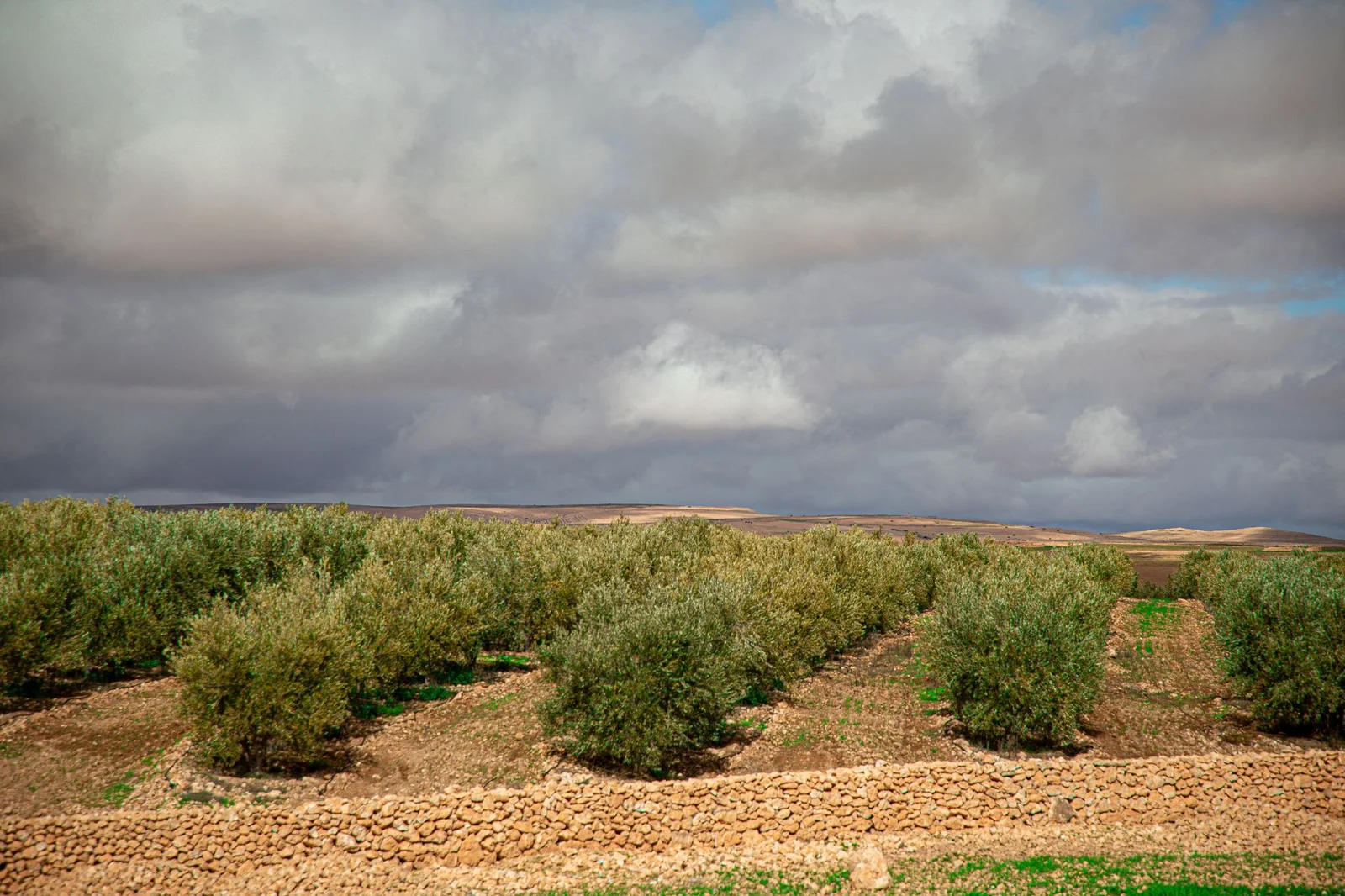
Building a high-density olive grove: five requirements
High-density planting is not a choice of variety but a five-component system — miss one and it performs worse than a traditional grove. Spacing, yields, the overlooked oil-content trade-off, and who it does not suit.
Article
Building a high-density olive grove: five requirements
High-density planting is not a choice of variety but a five-component system — miss one and it performs worse than a traditional grove. Spacing, yields, the overlooked oil-content trade-off, and who it does not suit.
 Article
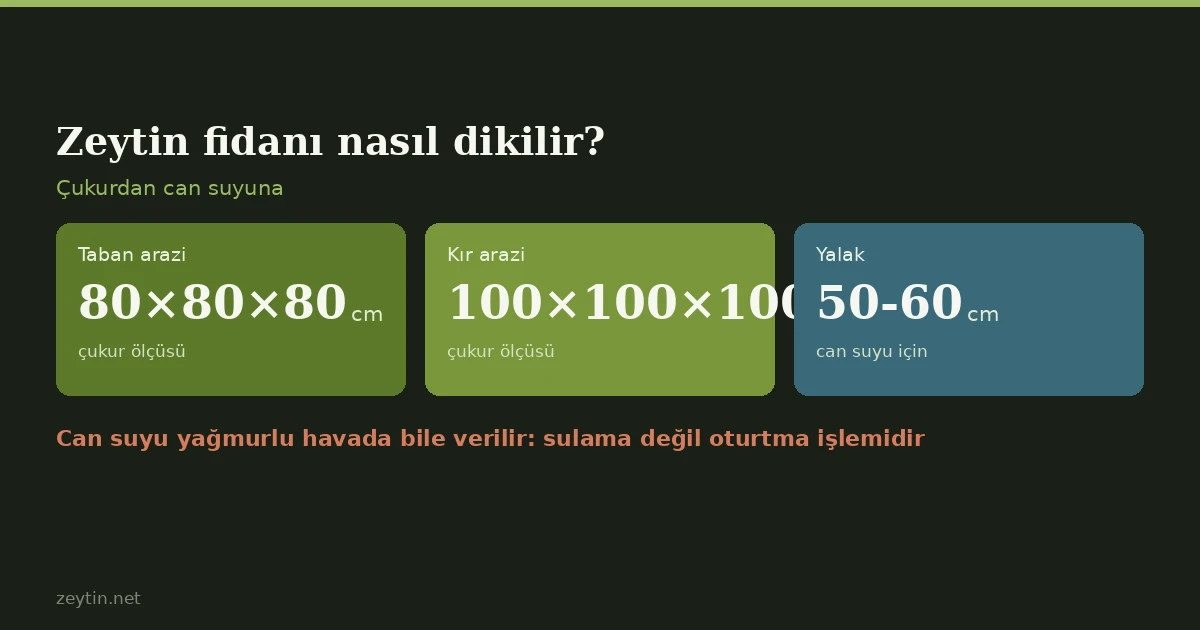
How to plant an olive sapling
Planting season, hole dimensions, removing a potted sapling, planting depth and the graft union, the basin and settling water — why settling water is given even in rain, first-year care and five common mistakes.
Article
How to plant an olive sapling
Planting season, hole dimensions, removing a potted sapling, planting depth and the graft union, the basin and settling water — why settling water is given even in rain, first-year care and five common mistakes.
 Article
Which olive variety is the most productive? Regular crops, early bearing and alternate bearing
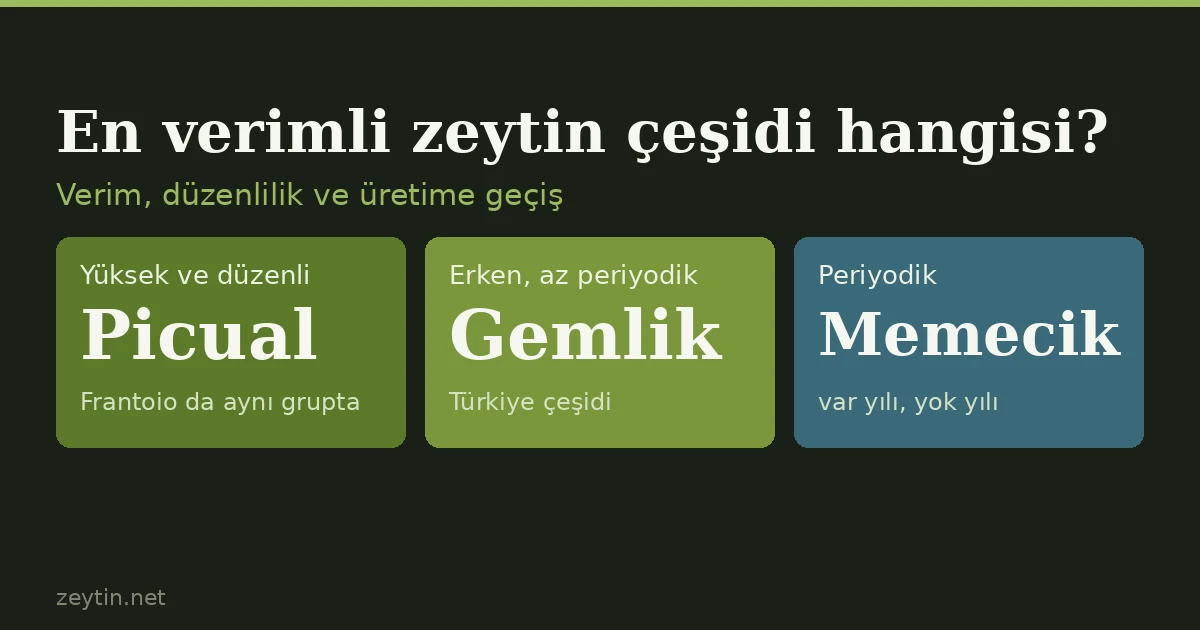
There is no single "most productive olive". Productivity depends on whether a tree bears regularly every year, how early it starts cropping and pollination. In our variety data, Picual and Frantoio are high and regular, Gemlik is early with low alternate bearing, while Kalamata, Hojiblanca and Memecik swing between on and off years.
Article
Which olive variety is the most productive? Regular crops, early bearing and alternate bearing
There is no single "most productive olive". Productivity depends on whether a tree bears regularly every year, how early it starts cropping and pollination. In our variety data, Picual and Frantoio are high and regular, Gemlik is early with low alternate bearing, while Kalamata, Hojiblanca and Memecik swing between on and off years.
 Article
Fertilising Olives: From Soil Analysis to an Annual Programme
How to read a soil test, which nutrients olives need and when, fertigation and organic matter management.
Article
Fertilising Olives: From Soil Analysis to an Annual Programme
How to read a soil test, which nutrients olives need and when, fertigation and organic matter management.