The nutritional profile of olive oil: fatty acids, vitamins E and K, polyphenols
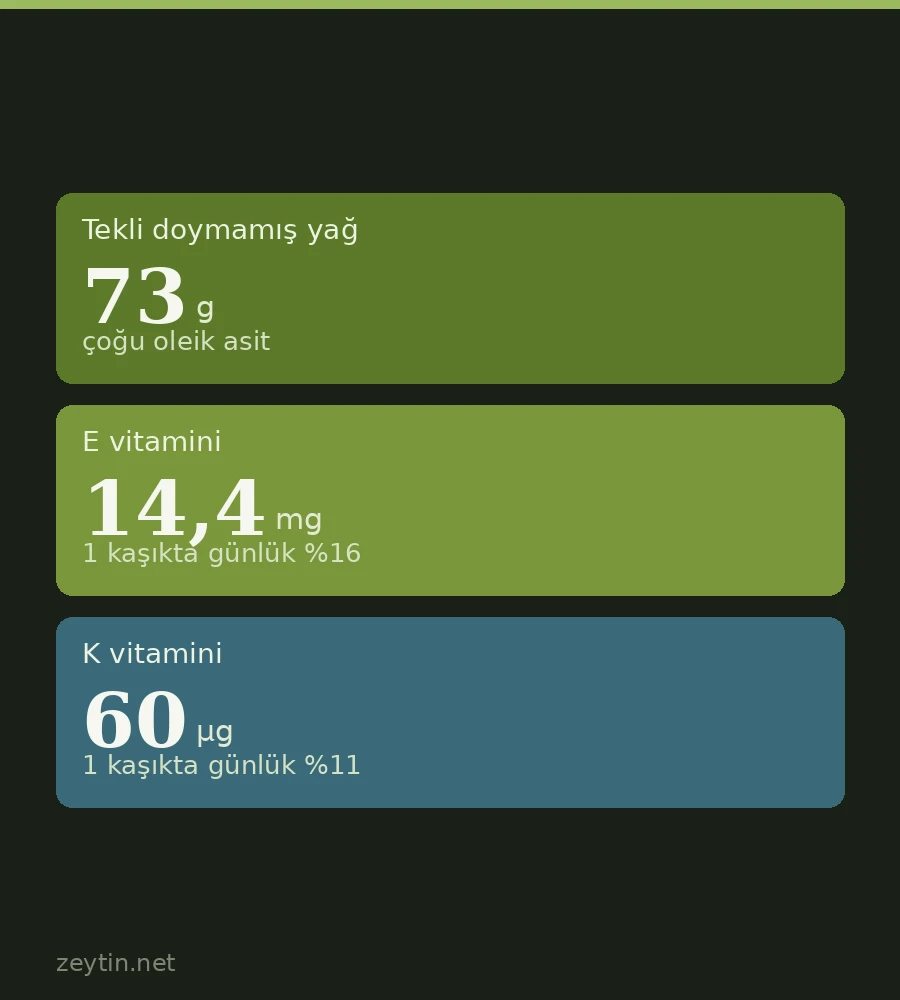
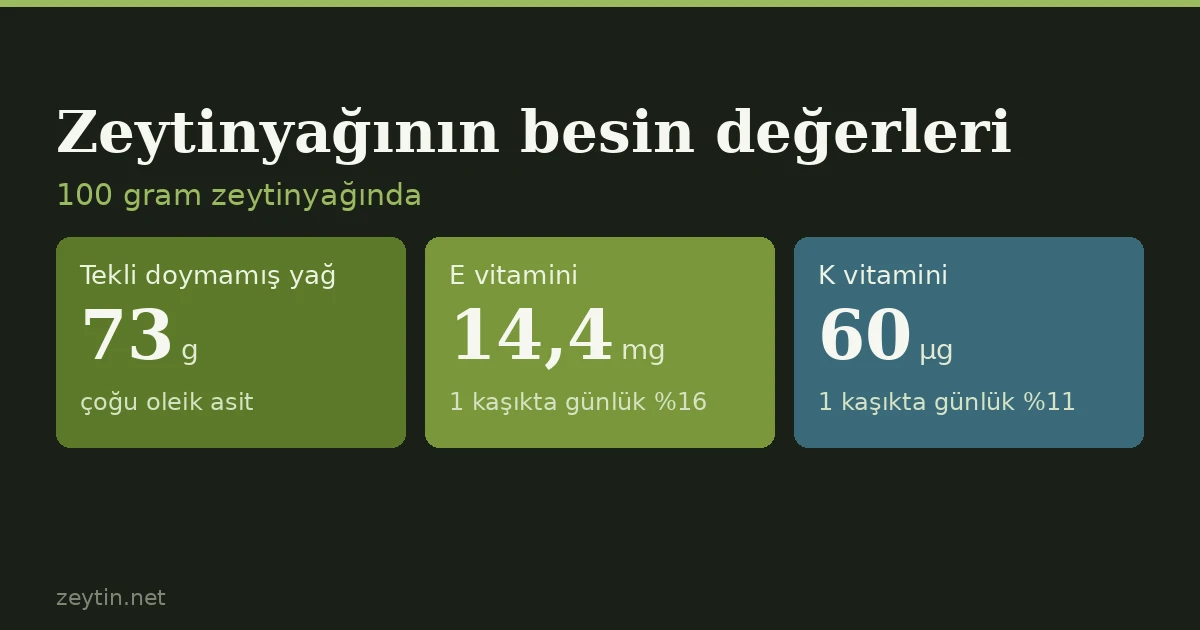
100 grams of olive oil contain 73 grams of monounsaturated fat, 14 mg of vitamin E and 60 micrograms of vitamin K, with no protein, carbohydrate or cholesterol. A per-tablespoon table, and why polyphenols do not appear on the label.
When people talk about the nutritional value of olive oil, most sources give a single line: "884 calories per 100 grams." That is true but incomplete. What sets olive oil apart from other fats is not its energy, but which fatty acids that energy comes from, and the small amounts of other compounds it carries. The nutritional profile of olives is a different calculation because of salt, fibre and water; this page deals only with the oil.
The basic table
The values below are the averages given for olive oil in food composition databases. The tablespoon column is calculated on 13.5 grams.
| Nutrient | 100 g | 1 tablespoon |
|---|---|---|
| Energy | 884 kcal | 119 kcal |
| Total fat | 100 g | 13.5 g |
| Monounsaturated fat | 73.0 g | 9.9 g |
| Saturated fat | 13.8 g | 1.9 g |
| Polyunsaturated fat | 10.5 g | 1.4 g |
| Vitamin E (α-tocopherol) | 14.4 mg | 1.9 mg |
| Vitamin K | 60.2 µg | 8.1 µg |
| Protein, carbohydrate, fibre | 0 | 0 |
| Cholesterol | 0 | 0 |
The calorie side, with spoon and millilitre conversions, is covered in how many calories are in olive oil.
Fatty acids: where the real difference lies
About three quarters of the fat in olive oil is monounsaturated, and almost all of that is oleic acid. International standards accept a wide range for oleic acid in extra virgin olive oil, from 55 to 83 percent. The width of that range is no accident: variety, climate and harvest time change the ratio noticeably. Oleic acid tends to be higher in cooler regions and in certain varieties.
Most of the saturated fat is palmitic acid. The polyunsaturated fat is mainly linoleic acid (omega-6), about 9.8 grams per 100 grams. Alpha-linolenic acid from the omega-3 group is below 1 gram. In other words, olive oil is not a good source of omega-3, which is a common misunderstanding.
The fatty acid profile also explains why olive oil is relatively resistant to heat and oxidation. Oils high in polyunsaturated fat react with oxygen more easily. Because olive oil has a low share of them, it deteriorates more slowly.
Vitamins
Olive oil carries two fat-soluble vitamins.
Vitamin E. One tablespoon provides about 1.9 mg of α-tocopherol. The reference intake used on labels is 12 mg a day, so this is roughly 16 percent of the daily reference. The figure falls as oil ages; tocopherols are lost in oil kept in light and heat for a long time.
Vitamin K. A tablespoon contains about 8 µg, or around 11 percent of the 75 µg daily reference. Because vitamin K plays a role in blood clotting, doctors usually advise people taking anticoagulant medication to avoid sudden, large changes in their diet. Ordinary kitchen use is not a problem in this respect.
Olive oil contains no meaningful amounts of vitamins A, D or the B group.
Polyphenols: the line missing from the label
The most distinctive difference between extra virgin olive oil and other fats is oleocanthal, hydroxytyrosol and the other polyphenols. They do not appear in nutrition tables because their levels vary enormously from one oil to another, from a few tens of milligrams per kilogram to several hundred.
That is why the health claim authorised in the European Union is tied to a threshold: 20 grams of oil must contain at least 5 mg of hydroxytyrosol and its derivatives, which corresponds to 250 mg per kilogram. Only oils above that threshold may use the claim on their label. Early harvest oils with a noticeable bitterness usually contain more polyphenols; in refined oils they are largely lost during processing.
Sterols and squalene
There is one more group the table does not show. Olive oil carries plant sterols, and the international standard requires extra virgin oil to contain at least 1,000 mg of total sterols per kilogram. At least 93 percent of those sterols must be beta-sitosterol. Laboratories use this ratio to detect whether another vegetable oil has been blended in, so it is as much part of fraud control as of nutrition. Olive oil also contains notably more squalene than other common vegetable oils. Squalene, too, is partly lost during refining.
Does the grade change the nutritional value?
In terms of calories and fatty acid profile, there is little difference between extra virgin, virgin and refined oil. The difference lies in polyphenols and tocopherols. Refining removes the compounds that give colour, aroma and flavour, and with them most of these minor components. Blends of refined and virgin oil usually contain only a small share of virgin oil, so their polyphenol content stays low.
Freshness is part of nutrition
Olive oil does not improve with age. Light, heat and air reduce tocopherols and polyphenols over time. For the values on the label to reach the table, the oil needs proper storage: a cool, dark cupboard, a tightly closed bottle, and use within a few months of opening.
Reading notes
The table shows averages. The fatty acid profile and vitamin content of any single bottle vary with variety, harvest time and storage. Daily reference percentages are the adult values used for labelling and do not describe individual needs.
One rating per visitor; you can change yours at any time. Ratings are real reader votes — no seeded or default scores.
Related
 Article
What Are Black Olives? What Are Their Benefits?
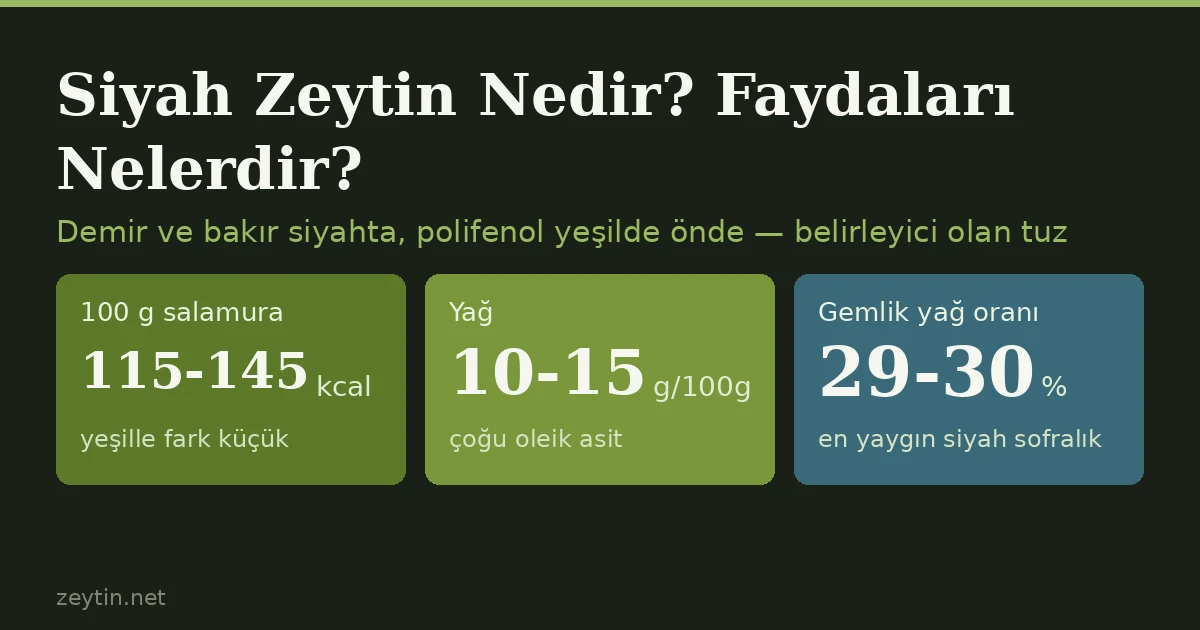
What black olives are, how they differ from green, and how many calories. Iron and copper, the polyphenol difference, and the two different black olives on the shelf.
Article
What Are Black Olives? What Are Their Benefits?
What black olives are, how they differ from green, and how many calories. Iron and copper, the polyphenol difference, and the two different black olives on the shelf.
 Article
Oleocanthal and Polyphenols
Why does a good extra virgin oil sting the throat? That sensation is not a flaw but the mark of a measurable compound.
Article
Oleocanthal and Polyphenols
Why does a good extra virgin oil sting the throat? That sensation is not a flaw but the mark of a measurable compound.
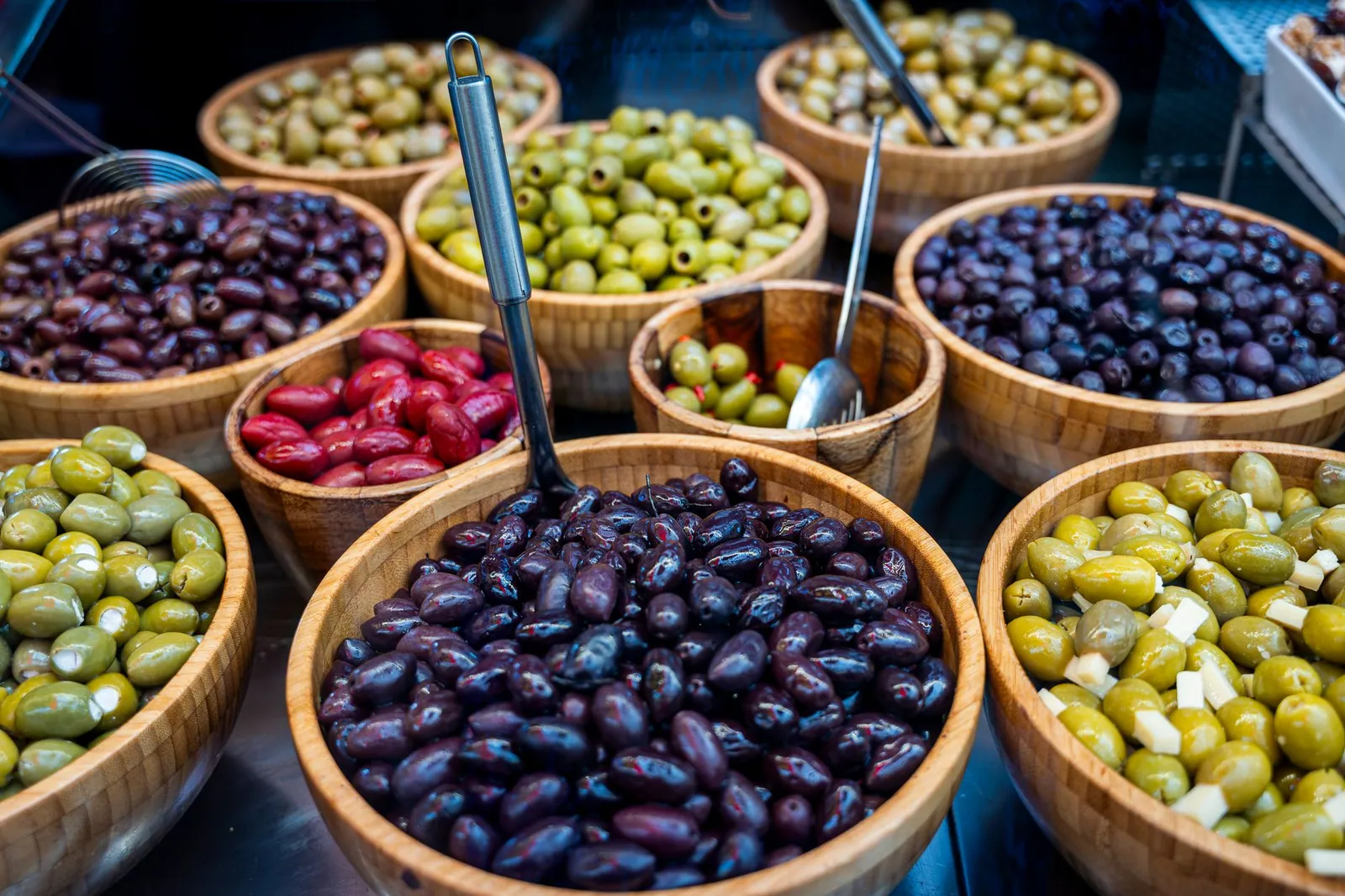 Article
Benefits of Olive
The nutritional profile of olives, polyphenols and salt content. No unauthorised health claims — only verifiable information, with sources.
Article
Benefits of Olive
The nutritional profile of olives, polyphenols and salt content. No unauthorised health claims — only verifiable information, with sources.
 Article
How Much Olive Oil a Day?
Olive oil being healthy does not make it unlimited. A practical look at portions, calories and the logic of replacement.
Article
How Much Olive Oil a Day?
Olive oil being healthy does not make it unlimited. A practical look at portions, calories and the logic of replacement.