Olive pollen allergy: the quiet cause of May to July
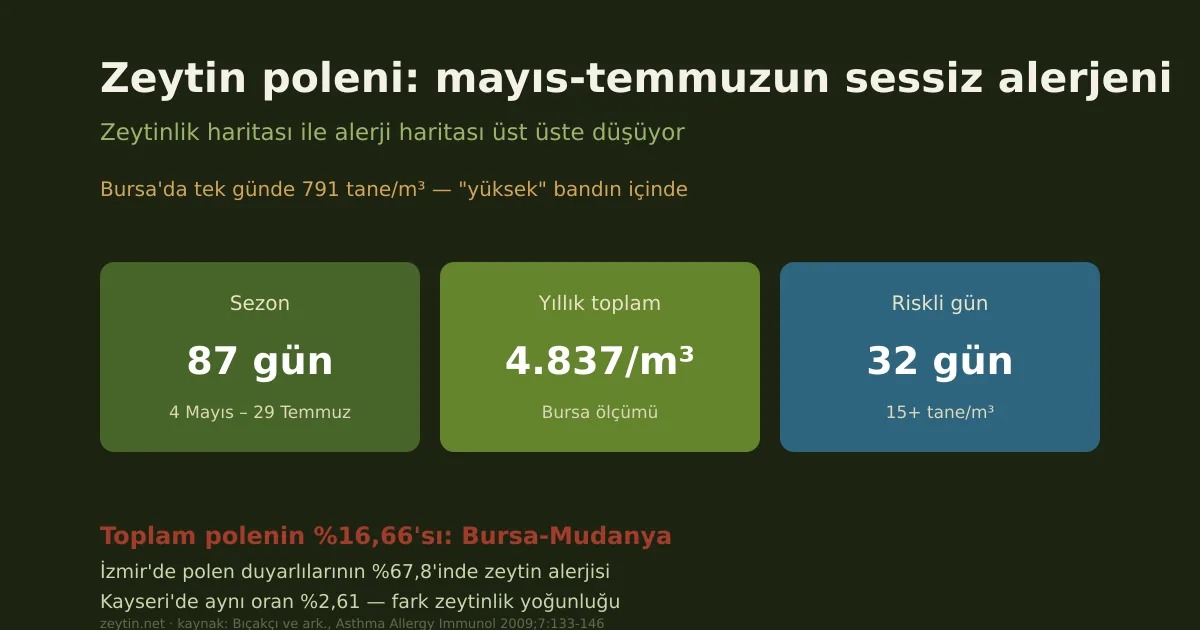
Olive pollen fills the air across western Türkiye from May to July. Bursa recorded 791 grains/m³ in one day over an 87-day season; 67.8% of pollen-sensitised patients in İzmir react to it.
If your nose runs and your eyes itch in late May, and you have already written off "grass pollen season", the culprit is most likely the olive tree. In Türkiye, olive pollen ranks just behind grasses and mugwort as a source of respiratory complaints — yet it is almost never discussed.
This article covers when olive pollen flies, which provinces carry the highest airborne loads, and what a sufferer can actually do, based on atmospheric pollen measurements from 55 sites across Türkiye.
Why olive pollen matters
The olive (Olea europaea) belongs to the Oleaceae family, together with ash (Fraxinus), lilac (Syringa), privet (Ligustrum) and jasmine. Pollen from this family is one of the leading causes of respiratory allergy across the Mediterranean basin.
Olive is wind-pollinated. A single tree releases billions of grains in one season, and they travel for kilometres. Someone who has never set foot in a grove, living in the middle of a city, is still exposed.
The main offender is a protein called Ole e 1. In Turkish testing, 90.7% of olive-pollen-sensitised patients reacted to Ole e 1, 74.6% to Ole e 2 and 55% to Ole e 10. Ten separate allergens (Ole e 1–10) have been described in this pollen so far.
When does it fly? The calendar
Olive pollen is airborne from April to October, with the real peak between May and July — overlapping partly with grass pollen, which makes diagnosis harder.
A full year of counting in the Bursa atmosphere shows the shape of the season:
| Pollen season | 4 May – 29 July |
| Season length | 87 days |
| Highest daily count | 791 grains/m³ (31 May) |
| Annual total | 4,837 grains/m³ |
| Risk days (15+ grains/m³) | 32 days |
For comparison: at the same station in the same year, ash pollen was airborne for 127 days but totalled only 716 grains/m³, with just 15 risk days. Ash flies for longer; olive flies far more densely.
Duration also varies by region: olive pollen stays airborne for one month in Bursa-İnegöl and seven months in Manisa.
How much pollen causes trouble?
The thresholds used by the American Academy of Allergy, Asthma and Immunology for tree pollen:
| Count | Level | Effect |
|---|---|---|
| 1–14 | Low | Symptoms only in highly sensitive individuals |
| 15–89 | Moderate | Symptoms in a significant share of allergic patients |
| 90–1,499 | High | Symptoms in most patients regardless of sensitivity |
| 1,500+ | Very high | Symptoms in all sensitised patients |
The 791 grains/m³ recorded in Bursa on the last day of May sits firmly in the "high" band — a day on which even mildly sensitive people are affected.
Which provinces carry the most airborne olive pollen?
Olive pollen was detected at 19 of the 55 measurement sites, making up between 0.12% and 16.66% of the total pollen count.
| Site | Share (%) |
|---|---|
| Bursa-Mudanya | 16.66 |
| Bursa (centre) | 14.24 |
| Manisa | 12.28 |
| Bursa-İznik | 10.11 |
| Çanakkale-Gökçeada | 9.86 |
| Aydın-Didim | 9.19 |
| Denizli | 7.03 |
| Çanakkale | 5.13 |
| Antalya-Serik | 4.45 |
| Muğla-Köyceğiz | 3.91 |
| Balıkesir | 2.81 |
| İzmir-Karşıyaka | 2.08 |
| İstanbul (European side) | 0.12 |
The table explains why the olive map and the allergy map overlap: the South Marmara and Aegean regions hold both most of the country's groves and the highest airborne olive pollen shares. On the European side of İstanbul the share is barely above one part in a thousand — a May complaint there points to some other pollen.
How many people in Türkiye are sensitised?
The figures vary widely by region and patient group; there is no single national average. Some published findings:
- İzmir: olive pollen allergy in 67.8% of 260 pollen-sensitised patients.
- Bursa (adults): 46.7% among patients with allergic asthma and/or rhinitis.
- Bursa (pollen-sensitised generally): olive 33.3%, ash 8.6%.
- Kayseri: 2.61% — markedly lower in central Anatolia.
- International literature reports O. europaea sensitisation between 5% and 42.8%.
The reason for the gap is simple: sensitisation tracks airborne load. The difference between Kayseri and İzmir is the difference in grove density.
Cross-reactivity: it does not end with one tree
The Ole e 1 protein closely resembles proteins in other members of the same family — similarity with privet has been measured at 87%. So someone sensitised to olive pollen may also react to ash, lilac, privet and jasmine.
In practice this means two things:
1. Symptoms can outlast the olive season, because another family member has taken over.
2. Testing positive to several Oleaceae members on a skin test does not mean you are separately allergic to each; it is usually one shared response to one protein.
What to do
This is not medical advice, but a practical frame for managing the season:
- Know the calendar. In the Aegean and South Marmara, the second half of May through June is the peak. Symptoms starting in the same weeks every year is a strong clue.
- Windy, dry days are the worst; the hours after rain are the best, because rainfall washes pollen out of the air.
- Open windows at night, not in the afternoon. Pollen release peaks during the day, especially late morning.
- Do not self-diagnose. Olive and grass pollen seasons overlap; only skin testing or specific IgE can tell them apart. See an allergist.
- Eating olives has nothing to do with it. Pollen allergy is respiratory and unrelated to consuming olives or olive oil. Food allergy to the fruit is a separate and very rare condition.
In short
For anyone living in western Türkiye, the olive tree is the quiet allergen of May to July. Bursa recorded 791 grains per cubic metre in a single day, a season lasting 87 days, with olive alone making up a sixth of all pollen. If your symptoms start in the same weeks each year and you live in the western provinces, this is the first tree to consider.
One rating per visitor; you can change yours at any time. Ratings are real reader votes — no seeded or default scores.
Related
 Article
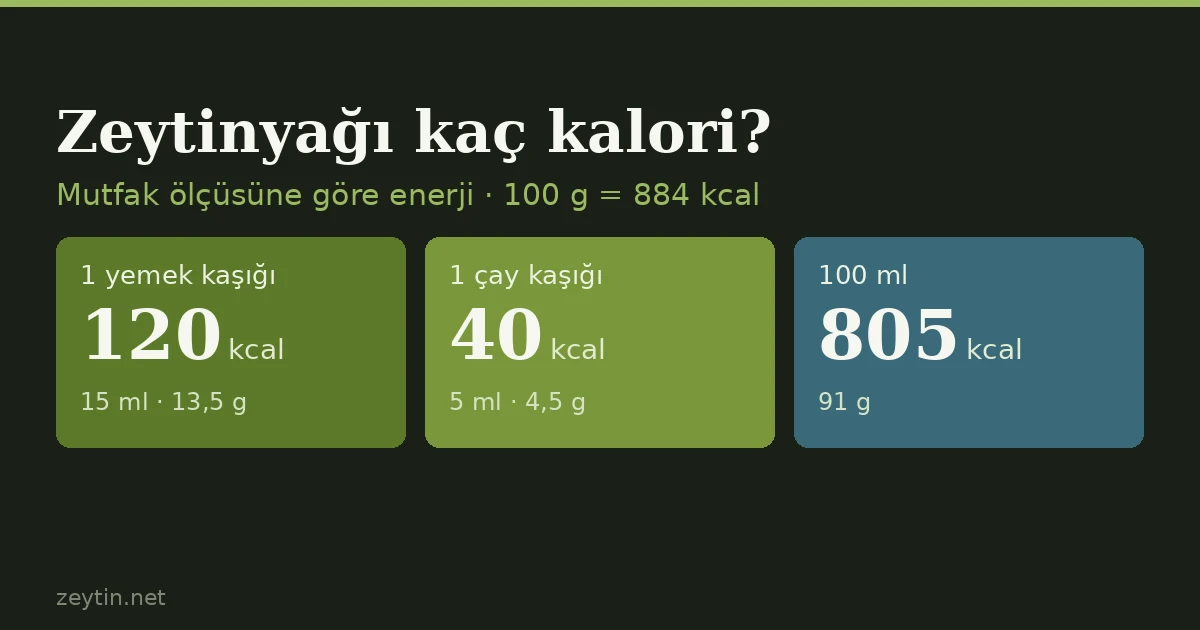
How many calories are in olive oil? Tablespoon, teaspoon and 100 ml
One tablespoon of olive oil has about 120 calories and one teaspoon about 40. Extra virgin, refined blends and sunflower oil carry almost the same energy. A measure table, plus how to count it in salads and cooked dishes.
Article
How many calories are in olive oil? Tablespoon, teaspoon and 100 ml
One tablespoon of olive oil has about 120 calories and one teaspoon about 40. Extra virgin, refined blends and sunflower oil carry almost the same energy. A measure table, plus how to count it in salads and cooked dishes.
 Article
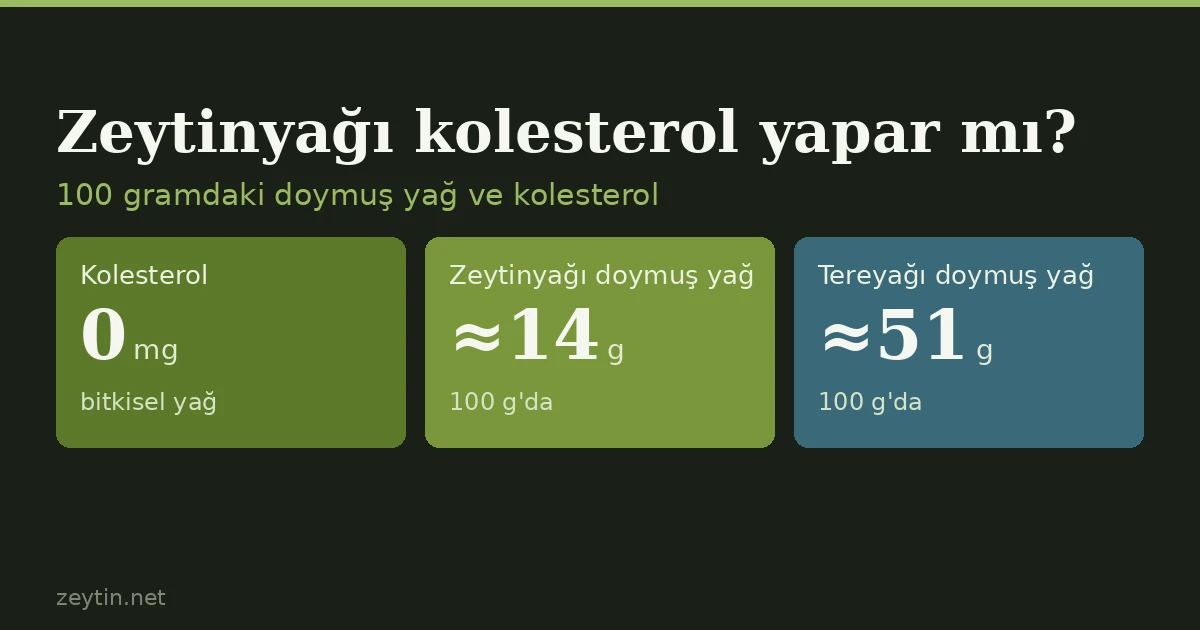
Does olive oil raise cholesterol? Cholesterol content, LDL and the "clears arteries" claim
Olive oil contains no cholesterol, and when it replaces saturated fat it helps maintain normal blood cholesterol levels. But every spoonful added to a diet also brings calories, and there is no evidence that olive oil clears arteries. A saturated fat table and the authorised health claims.
Article
Does olive oil raise cholesterol? Cholesterol content, LDL and the "clears arteries" claim
Olive oil contains no cholesterol, and when it replaces saturated fat it helps maintain normal blood cholesterol levels. But every spoonful added to a diet also brings calories, and there is no evidence that olive oil clears arteries. A saturated fat table and the authorised health claims.
 Article
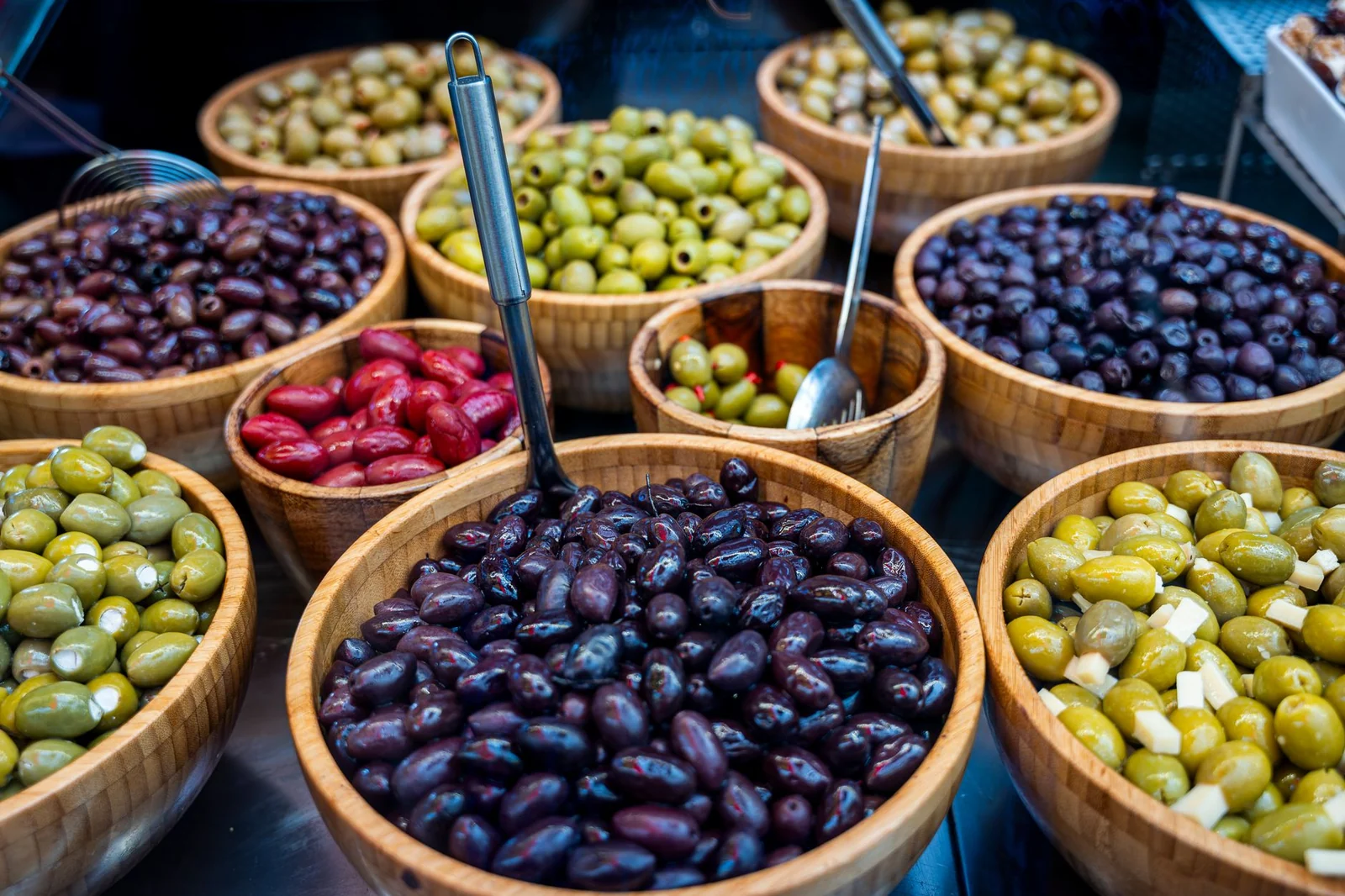
How many calories are in olives? Nutrition and portion table
What is actually in an olive? Fat, fibre, iron, vitamin E — and the salt you should not ignore.
Article
How many calories are in olives? Nutrition and portion table
What is actually in an olive? Fat, fibre, iron, vitamin E — and the salt you should not ignore.
 Article
Does olive oil have downsides? Calories, the gallbladder, old oil and fraud
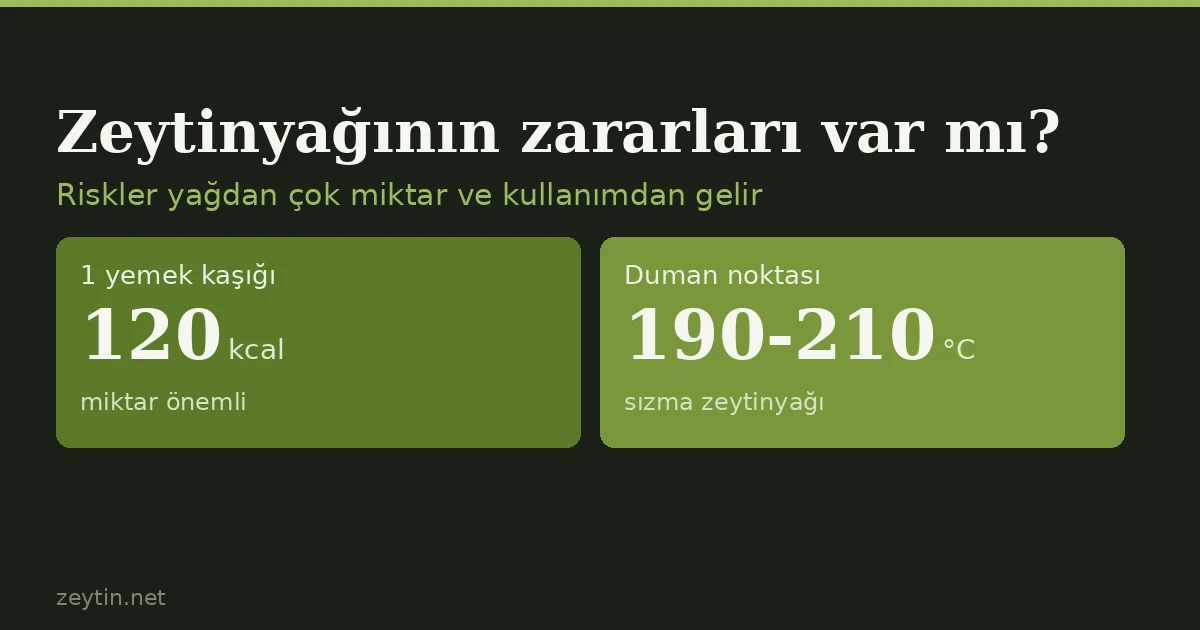
In normal kitchen amounts olive oil is a safe food; its downsides mostly come not from the oil itself but from quantity, misuse and poor products. High calories, discomfort after fatty meals in people with gallstones, the habit of drinking it on an empty stomach as a "cure", repeatedly reused frying oil and adulterated products are the main risks.
Article
Does olive oil have downsides? Calories, the gallbladder, old oil and fraud
In normal kitchen amounts olive oil is a safe food; its downsides mostly come not from the oil itself but from quantity, misuse and poor products. High calories, discomfort after fatty meals in people with gallstones, the habit of drinking it on an empty stomach as a "cure", repeatedly reused frying oil and adulterated products are the main risks.