How many calories are in olive oil? Tablespoon, teaspoon and 100 ml
One tablespoon of olive oil has about 120 calories and one teaspoon about 40. Extra virgin, refined blends and sunflower oil carry almost the same energy. A measure table, plus how to count it in salads and cooked dishes.
Working out the calories in olive oil is much easier than working them out for the olive itself. With olives, fruit size, flesh ratio and brine all matter, which is why the calories in a single olive can vary tenfold between varieties. Olive oil, on the other hand, is almost pure fat. It has no water, no protein and no carbohydrate. All of its energy comes from fat, and every gram of fat carries roughly 9 calories.
The short answer
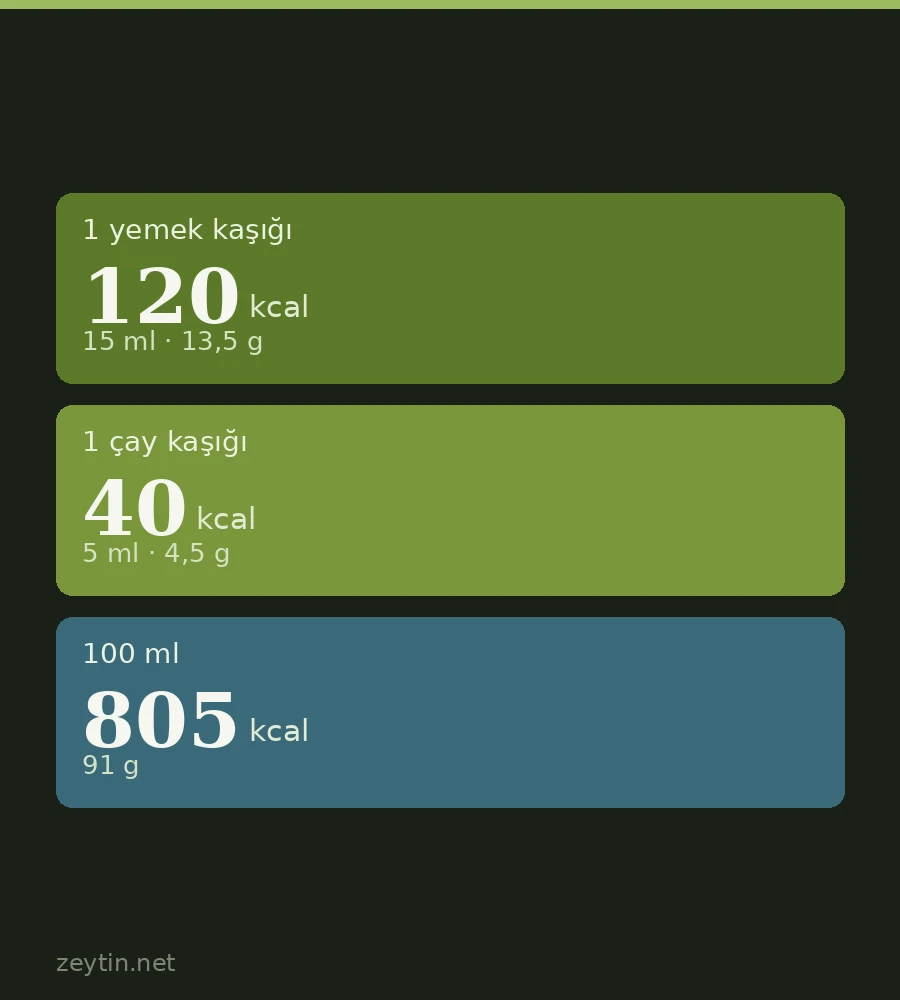
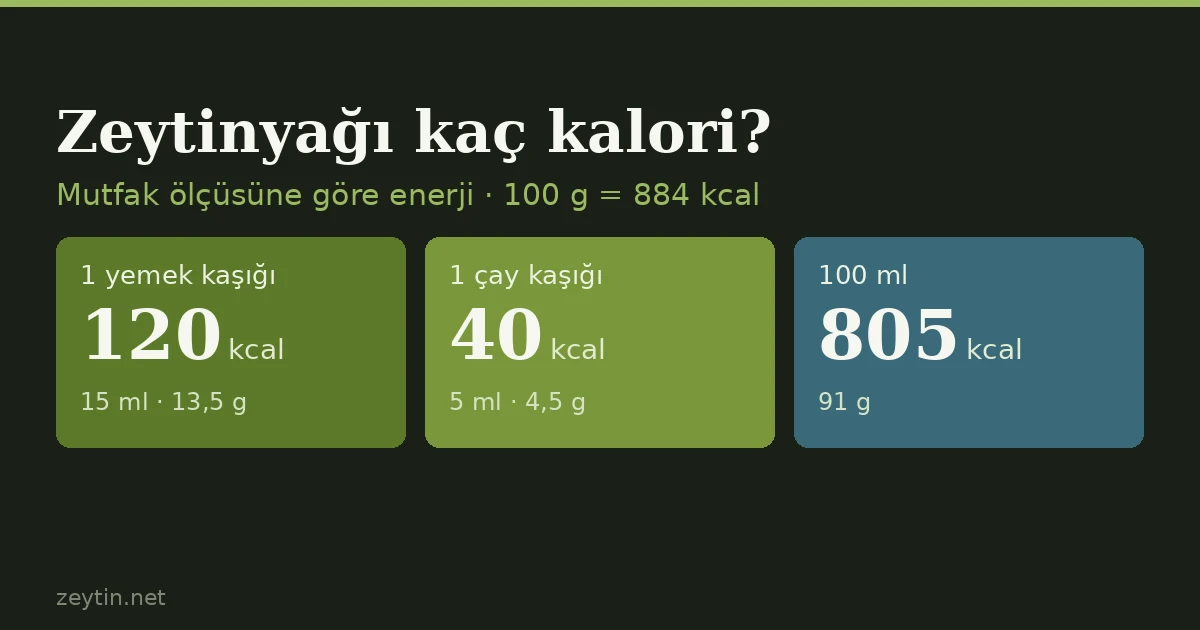
- 1 tablespoon (15 ml): about 120 kcal
- 1 teaspoon (5 ml): about 40 kcal
- 100 grams: 884 kcal
- 100 ml: about 800 kcal
These figures are the same for extra virgin, virgin, refined blends sold in Turkey as "riviera", and pomace oil. The quality grade changes the taste, the aroma and the polyphenol content. It does not change the calories.
Measure table
Olive oil is lighter than water: one millilitre weighs about 0.91 grams. So "100 ml" and "100 grams" are not the same thing, and because kitchens measure by volume, we built the table around millilitres.
| Measure | Volume | Weight | Calories |
|---|---|---|---|
| 1 teaspoon | 5 ml | 4.5 g | ≈40 kcal |
| 1 tablespoon | 15 ml | 13.5 g | ≈120 kcal |
| 2 tablespoons | 30 ml | 27 g | ≈240 kcal |
| Quarter of a water glass | 50 ml | 45.5 g | ≈400 kcal |
| 100 ml | 100 ml | 91 g | ≈805 kcal |
| Half a litre | 500 ml | 455 g | ≈4,020 kcal |
| 1 litre | 1,000 ml | 910 g | ≈8,040 kcal |
The spoons in a kitchen drawer are not measuring spoons. A generously filled tablespoon easily goes past 15 ml, and oil poured until it heaps over the edge gets close to 20 ml. If you are counting calories, the most reliable approach is to pour with a proper measuring spoon once and let that recalibrate your eye.
Extra virgin or refined: which has fewer calories?
Neither. The difference between extra virgin, virgin and refined grades is about production method and quality criteria. Refined oil is paler and milder, and that "light" impression is sometimes used in marketing as "light olive oil". But "light" there describes colour and flavour, not energy.
Why does the label say 900 kcal?
The nutrition panel on the back of a bottle usually shows 900 kcal per 100 g, or around 820 kcal per 100 ml. That does not contradict the 884 kcal above. Labels use a legal conversion factor of 9 kcal for every gram of fat, so 100 g of oil becomes a round 900 kcal. The food database figure measured in the laboratory is 884 kcal. The gap of about 2% is irrelevant for daily counting. What matters when comparing two bottles is whether the label is per "100 g" or per "100 ml". The other lines on an olive oil label say much more about quality.
The same rule applies to other vegetable oils. Sunflower, corn and hazelnut oil also sit in the 880–900 kcal per 100 g range. Butter contains water, so it gives about 717 kcal per 100 g, and a tablespoon of butter is around 100 calories. The real answer to olive oil or butter lies in fatty acid composition, not in calories.
How calories slip into a salad
A bowl of salad on its own is around 50–80 calories. The oil poured over it straight from the bottle, by eye, very often reaches 3–4 tablespoons. That adds 360–480 calories to the plate, six times the salad itself.
A practical example: if a shepherd's salad for two gets 2 tablespoons of olive oil, each plate receives 120 calories. If the same salad is dressed freely from the bottle, that number can easily double. Pouring the oil into a spoon first and then onto the salad cuts both the calories and the waste.
In cooked dishes and frying
In Turkish vegetable dishes cooked in olive oil, the oil goes into the pot once and is then divided between portions. If a green bean dish for four is made with half a tea glass of oil (about 50 ml), each portion gets roughly 100 calories. Mopping up the oil left on the plate with bread pushes that figure higher.
Frying is harder to calculate. How much oil a food absorbs depends on its surface area, moisture, coating and the temperature of the oil. Food dropped into oil that is not hot enough soaks up more. Frying at the right temperature reduces the amount. Whether olive oil is suitable for frying is a separate question, and its smoke point is higher than many people assume.
How much per day?
Knowing the calories does not simply mean "use less". Olive oil makes sense when it replaces other fats in the diet; added on top of an existing diet, it only raises daily energy intake. We looked at commonly accepted daily ranges in detail in how much olive oil a day.
Reading notes
The values in the table are rounded and calculated on the basis of 884 kcal per 100 g. The density of oil changes very slightly with temperature, which makes no practical difference in a kitchen. If you want to work out the calories of whole olives by count, you can use the calorie calculator.
One rating per visitor; you can change yours at any time. Ratings are real reader votes — no seeded or default scores.
Related
 Article
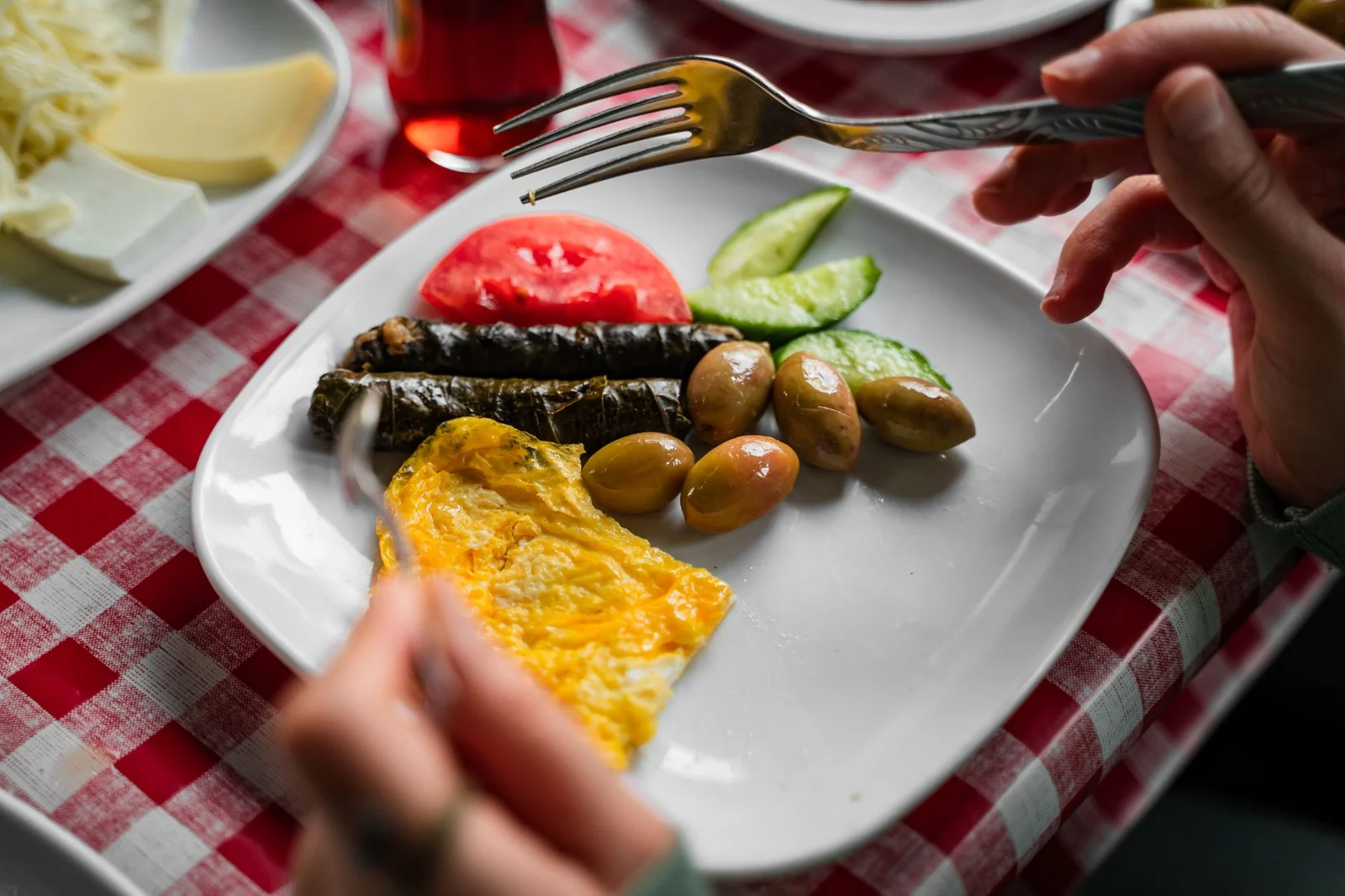
How many olives should you eat a day? Portions, salt and common questions
Calories, fat and salt in olives: what is a sensible daily amount? Based on nutrition data, without unauthorised health claims.
Article
How many olives should you eat a day? Portions, salt and common questions
Calories, fat and salt in olives: what is a sensible daily amount? Based on nutrition data, without unauthorised health claims.
 Article
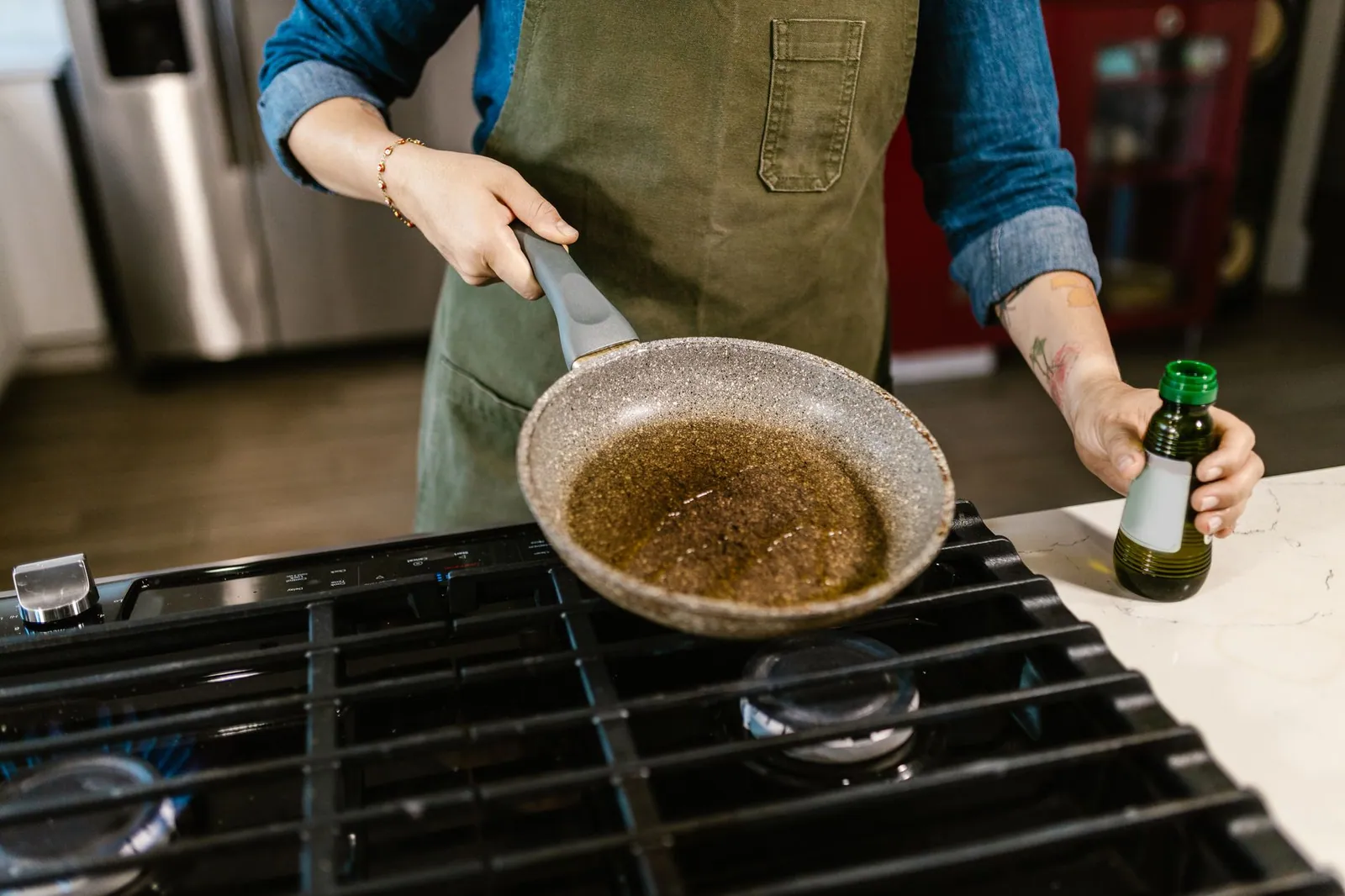
Is Olive Oil Suitable for Frying?
The most argued kitchen question. Smoke point is not the only measure; what really matters is how well the oil resists oxidation.
Article
Is Olive Oil Suitable for Frying?
The most argued kitchen question. Smoke point is not the only measure; what really matters is how well the oil resists oxidation.
 Article
Olive Oil and Heart Health
Why is Mediterranean cooking so often linked with cardiovascular health? Unsaturated fats, polyphenols, and replacing saturated fat.
Article
Olive Oil and Heart Health
Why is Mediterranean cooking so often linked with cardiovascular health? Unsaturated fats, polyphenols, and replacing saturated fat.
 Article
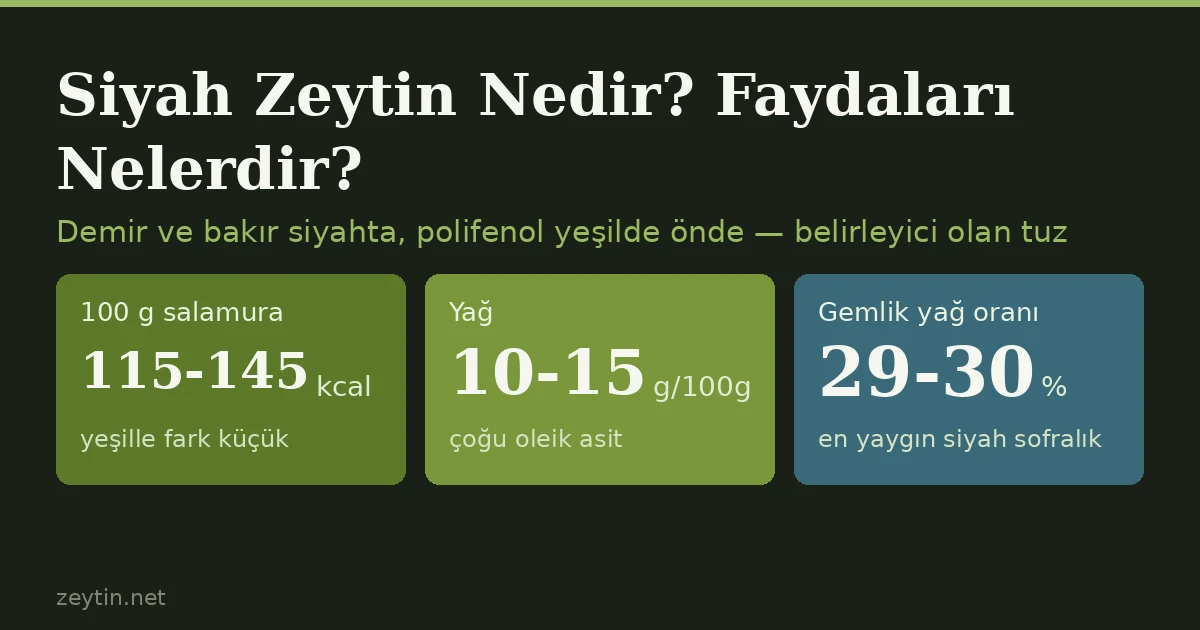
What Are Black Olives? What Are Their Benefits?
What black olives are, how they differ from green, and how many calories. Iron and copper, the polyphenol difference, and the two different black olives on the shelf.
Article
What Are Black Olives? What Are Their Benefits?
What black olives are, how they differ from green, and how many calories. Iron and copper, the polyphenol difference, and the two different black olives on the shelf.