Does olive oil lower the risk of stroke? What the observational studies and meta-analyses show
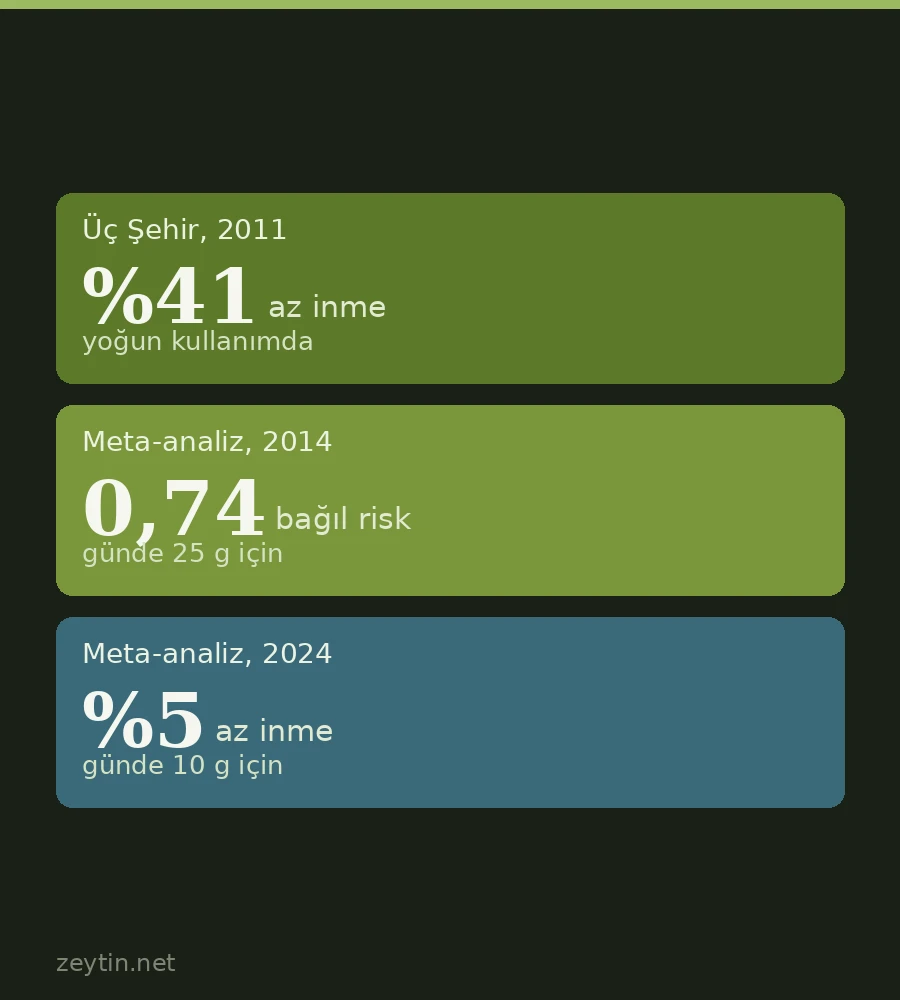
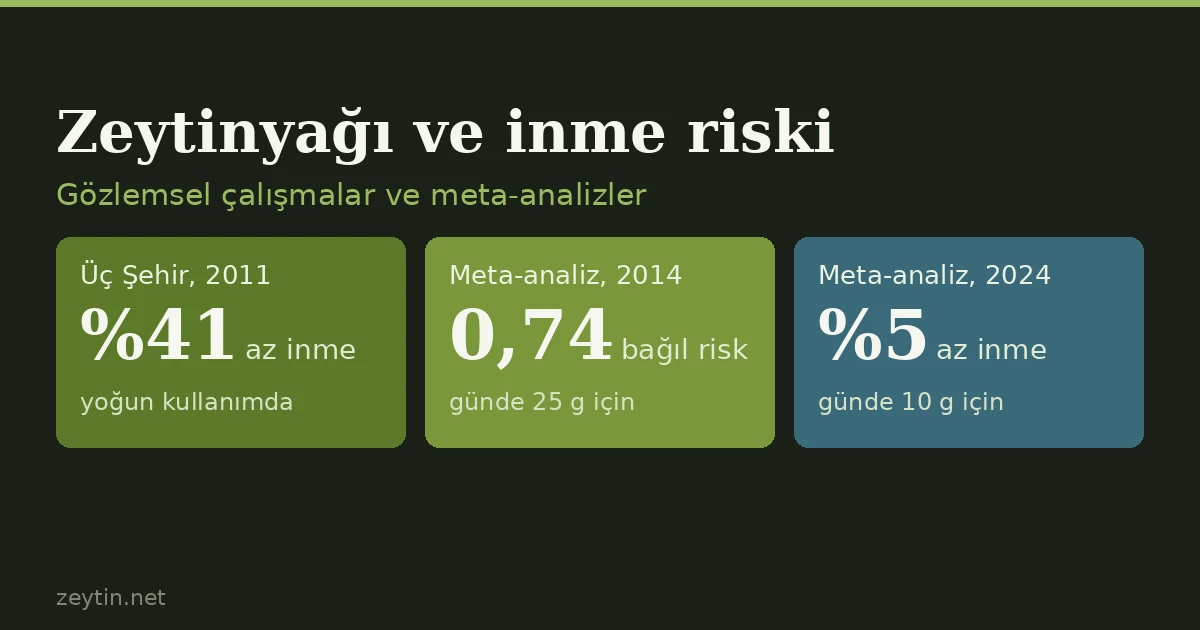
The Three-City Study found 41% lower stroke risk with intensive olive oil use, a 2014 meta-analysis 26% lower per 25 g a day, and a 2024 review 5% lower per 10 g a day. The figures, their limits and what they mean.
Short answer: Observational studies, and the meta-analyses that pool them, show that people who use more olive oil have fewer strokes. But this is an association; it has not been proven that olive oil prevents stroke on its own. It is too early to say it "protects", and there is no reason to say it is irrelevant.
Below we set out what three studies found, how solid the numbers are, and what they mean at the table.
The figures
| Study | Type and size | Finding |
|---|---|---|
| Samieri et al. 2011, Neurology | Three-City Study, 7,625 older participants, median 5.25 years, 148 strokes | 41% lower stroke risk in intensive users than in people who never used olive oil (confidence interval 6-63%) |
| Martínez-González et al. 2014, British Journal of Nutrition | Meta-analysis, 38,673 participants for stroke | In cohort studies RR 0.74 (0.60-0.92) per 25 g a day |
| Ke et al. 2024, Food & Function | Dose-response meta-analysis of prospective cohorts, 30 articles, 2,710,351 people | 5% lower stroke incidence per 10 g a day |
The Three-City Study: 41%
Samieri and colleagues followed 7,625 older participants with no previous stroke for a median of 5.25 years. During that time an expert committee validated 148 strokes. After accounting for sociodemographic characteristics, diet, physical activity, body mass index and stroke risk factors, people who used olive oil "intensively" had a 41% lower risk of stroke than people who never used it (confidence interval 6% to 63%; p = 0.03). Stroke incidence fell as olive oil use rose (p for trend = 0.02).
A second part of the same study looked at plasma oleic acid in 1,245 people. Oleic acid is the main fatty acid of olive oil, and the authors used it as an indirect marker of olive oil intake. That subgroup had only 27 strokes. Risk was 73% lower in the top third than in the bottom third, but the confidence interval is very wide (10% to 92%). Few events mean a wide interval.
The 2014 meta-analysis: clear for stroke, not for heart attack
Martínez-González and colleagues pooled case-control studies, cohort studies and a randomised trial. There were 101,460 participants for coronary heart disease and 38,673 for stroke. For each 25 g a day increase, the relative risk of stroke in cohort studies was 0.74 (0.60-0.92), a statistically significant reduction. For coronary heart disease the cohort figure was 0.96 (0.78-1.18) and the case-control figure 0.73 (0.44-1.21); both intervals include 1. Heart disease and stroke combined gave 0.82 (0.70-0.96).
The authors add two cautions. Results for coronary heart disease varied a lot between studies, while those for stroke did not. At the same time the Egger test (p = 0.06) and the funnel plot pointed to small-study effects. Small studies with favourable results are easier to publish, so a signal like this suggests the overall picture may be somewhat flattering. The authors also note that the findings agree with the PREDIMED trial.
The 2024 meta-analysis: does the benefit keep growing with the amount?
Ke and colleagues searched prospective cohorts up to March 2024: 30 articles and 2,710,351 participants. Higher olive oil intake was associated with these relative risks (with confidence intervals):
- cardiovascular disease incidence 0.85 (0.77-0.93),
- coronary heart disease 0.85 (0.72-0.99),
- cardiovascular death 0.77 (0.67-0.88),
- death from any cause 0.85 (0.81-0.89).
For every 10 g a day, cardiovascular disease incidence fell by 7%, stroke incidence by 5%, cardiovascular mortality by 8% and total mortality by 8%. The relationship was not linear: risk fell across 0-18 g a day for cardiovascular disease and 0-22 g a day for total mortality, and the abstract does not report a further reduction beyond those ranges. The same review found no association between olive oil and cancer; the details are in does olive oil protect against cancer.
A practical translation: 10 g is about three quarters of a tablespoon, and the 25 g of the 2014 review is close to two tablespoons. In our nutritional profile article a tablespoon is calculated as 13.5 g and carries about 119 kilocalories. So the amounts in these studies are a few tablespoons a day; going far beyond that in search of benefit is not what the data suggest.
Why caution is needed
- Observational studies cannot establish cause and effect. People who use a lot of olive oil may also eat more vegetables, legumes and fish; studies try to adjust for this but cannot separate everything.
- The Three-City data are narrow. One older group, 148 events and a short follow-up.
- Small-study effects. The 2014 review contained findings pointing to them.
- The oil class is unclear. The abstracts we reviewed do not separate extra-virgin from refined oil, so which class is more useful cannot be read from these data. We explain the classes in how to read an olive oil label.
- Replacing one fat with another. Part of any benefit may come from olive oil taking the place of butter or other solid fats.
What it means at the table
The available data say there is no reason to avoid olive oil in cooking and salads, and that it may be useful when it replaces solid fats; they do not say it can replace medication or treatment. For amounts see how much olive oil a day, for blood pressure does olive oil lower blood pressure, and for the wider picture olive oil and heart health and what is the Mediterranean diet.
The most important risk factors for stroke are high blood pressure, smoking, diabetes and heart rhythm disorders; controlling them matters far more than any choice of cooking oil. If someone suddenly has a drooping face, weakness in an arm or difficulty speaking, call the emergency number (112 in Turkey) without waiting.
Summary
Observational data and meta-analyses point to fewer strokes among people who consume more olive oil: 41% lower with intensive use in the Three-City Study, 26% lower per 25 g a day in the 2014 review and 5% lower per 10 g a day in the 2024 review. Because of the limits of the methods, this is not enough to say that olive oil prevents stroke; it is enough to say that, as part of Mediterranean-style eating, it is a reasonable and possibly useful choice.
t; This article is general information; consult your doctor for diagnosis and treatment.
One rating per visitor; you can change yours at any time. Ratings are real reader votes — no seeded or default scores.
Related
 Article
Olive pollen allergy: the quiet cause of May to July
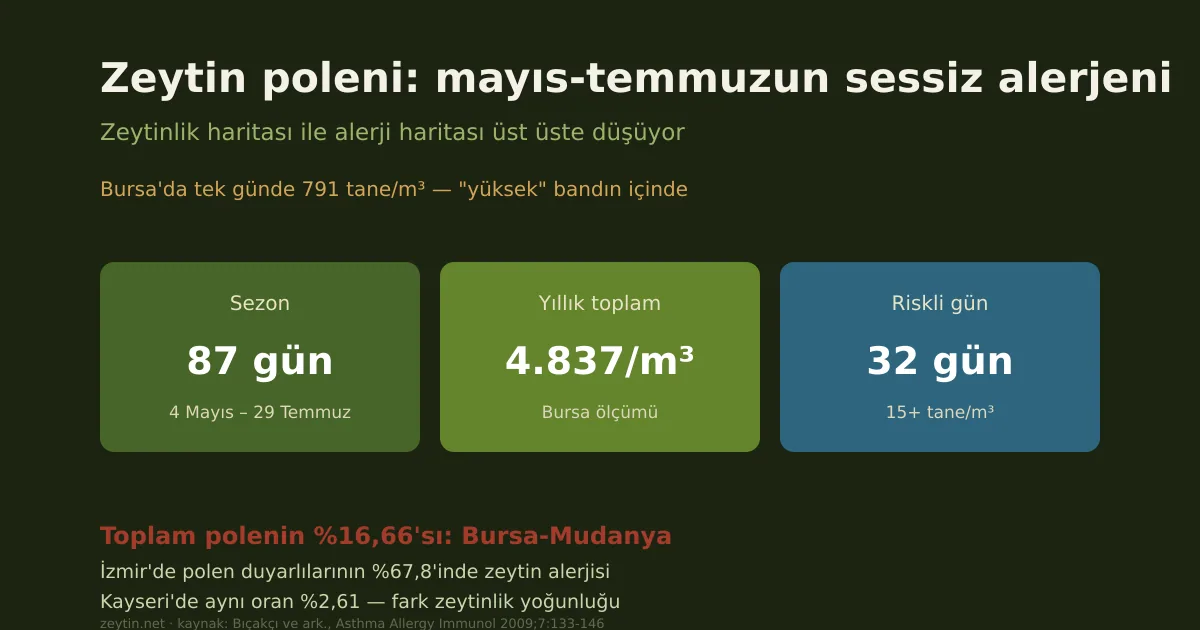
Olive pollen fills the air across western Türkiye from May to July. Bursa recorded 791 grains/m³ in one day over an 87-day season; 67.8% of pollen-sensitised patients in İzmir react to it.
 Article
What Are Black Olives? What Are Their Benefits?
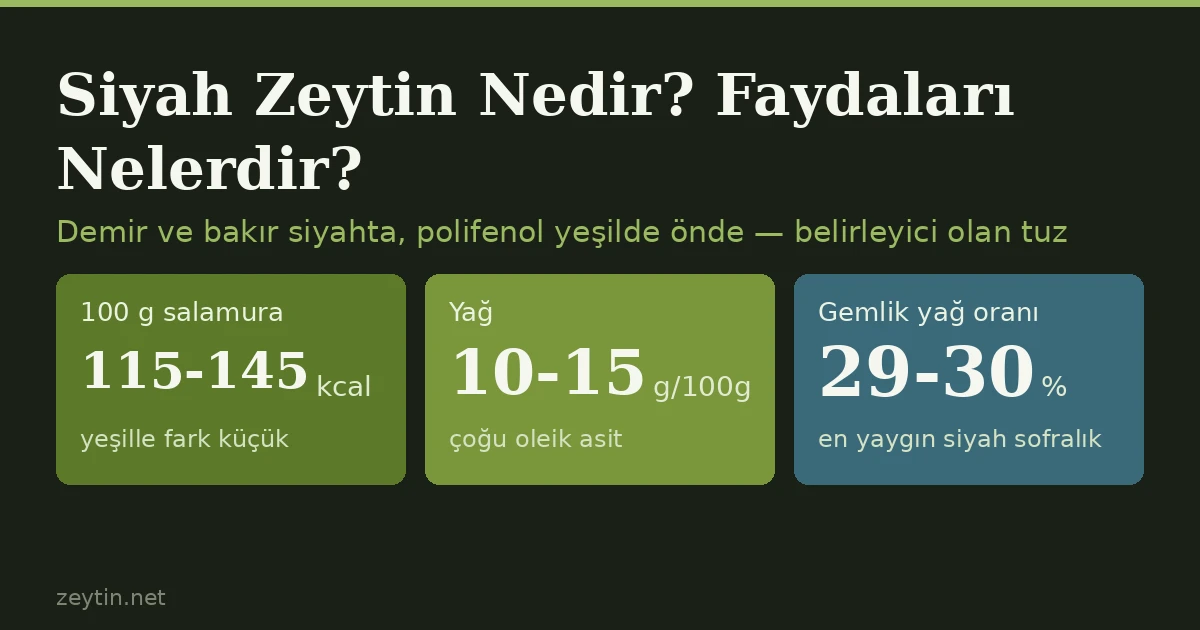
What black olives are, how they differ from green, and how many calories. Iron and copper, the polyphenol difference, and the two different black olives on the shelf.
 Article
What does drinking olive oil on an empty stomach actually do?
A spoonful of olive oil in the morning is a common habit, but there is no proven separate benefit to taking it on an empty stomach. What actually happens in the body, which claims have been measured and which are myth: the gallbladder, constipation, the calorie arithmetic and the truth about "liver flush" stones.
 Article
Oleocanthal and Polyphenols
Why does a good extra virgin oil sting the throat? That sensation is not a flaw but the mark of a measurable compound.