Do olive groves store carbon? The carbon balance of 24 groves in southern Spain: what is put into the soil makes the difference
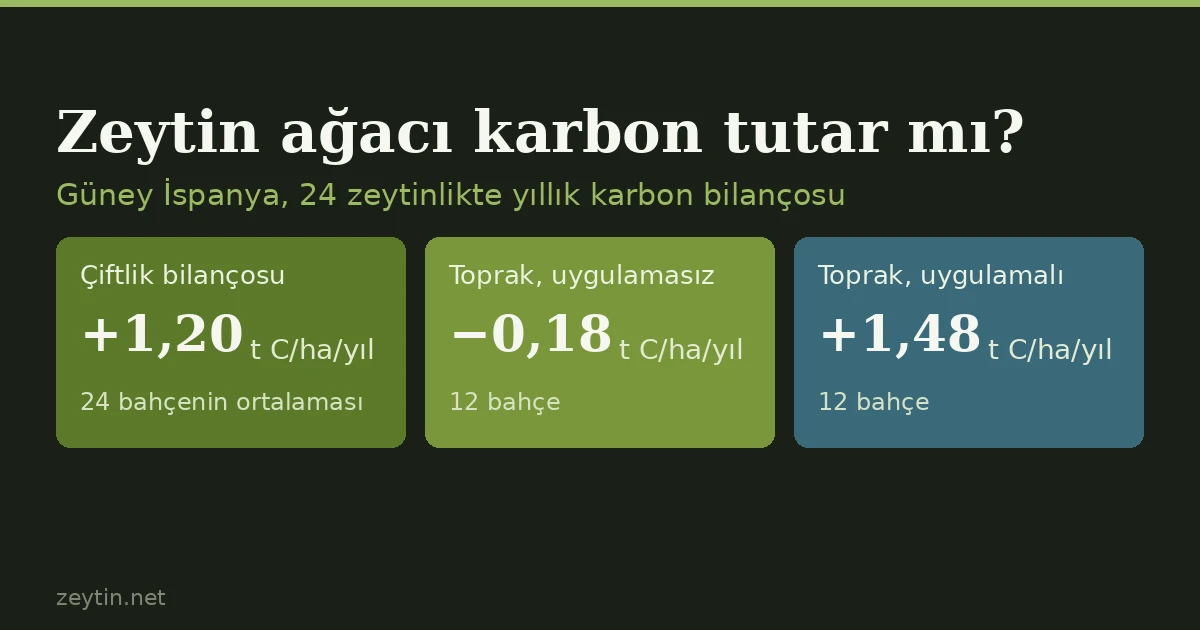
In 24 olive groves in Andalusia the farm-level carbon balance averaged +1.20 tonnes per hectare per year; but in groves that gave the soil no organic matter the soil was losing carbon (−0.18), while in those that did it was gaining (+1.48). The article reads the 2023 study by Torrús-Castillo and colleagues, the tree's share, the role of cover crops and pruning residue, and the study's limits.
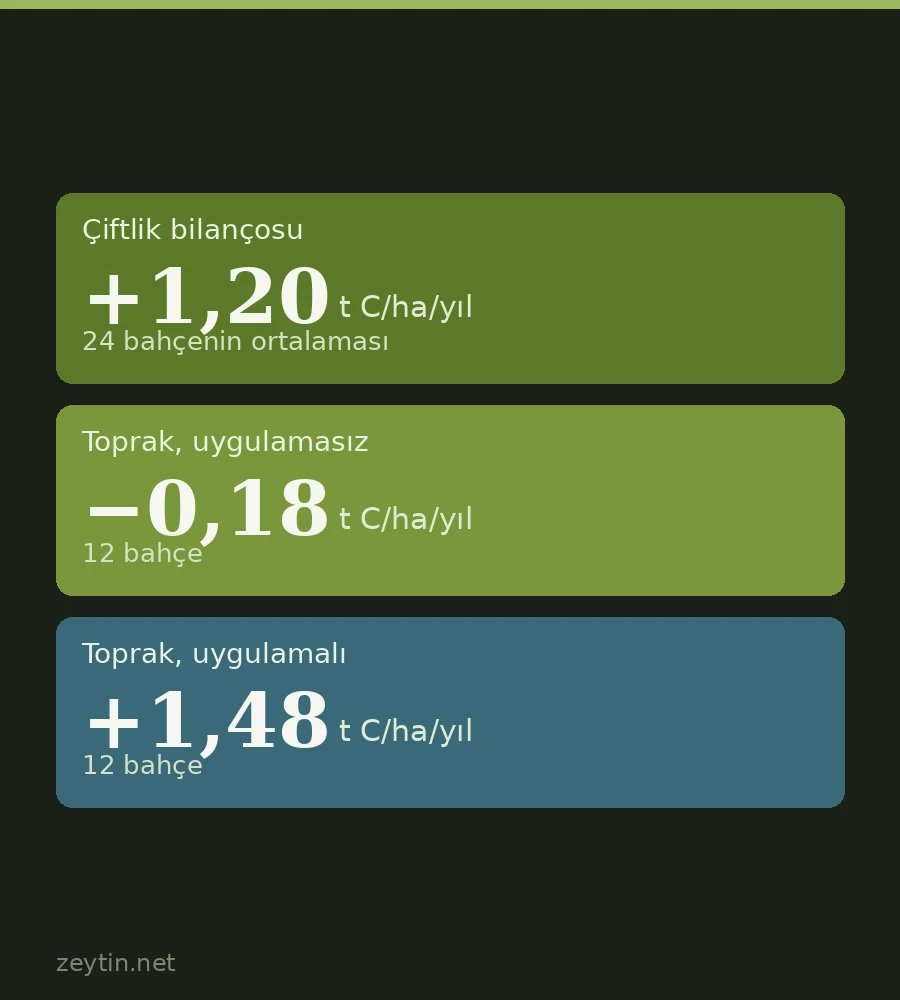
Short answer: yes, an olive grove can pull carbon out of the atmosphere; but whether a given grove does so depends largely on what is put back into its soil. In a study that worked out the carbon balance of 24 olive groves in southern Spain, the farm-level balance was neutral or positive in 21 of the 24 and averaged +1.20 tonnes of carbon per hectare per year. The same study showed a large gap between groves that feed their soil with organic matter and groves that do not: one was storing carbon in the soil while the other was losing it. In this article we read the study by Torrús-Castillo, Calero and García-Ruiz, published in Agriculture, Ecosystems & Environment in 2023 (volume 358, 108707), and the measurements it cites.
How was the study set up?
The researchers chose 12 pairs of olive groves in Andalusia: six pairs in Jaén and Granada (variety Picual) and six pairs in Seville (variety Hojiblanca). Annual rainfall ranged from 408 to 581 mm. The groves covered traditional, semi-intensive, intensive and super-intensive planting systems, irrigated and rainfed conditions, and trees between 25 and 200 years old.
One grove in each pair had, for at least eight years, followed one or more of four practices: leaving spontaneous cover crops (weeds) in the grove, grazing livestock, applying composted olive mill pomace and/or manure, and shredding pruning residues and spreading them on the soil. The authors call these "nature-based climate solutions" (NbCS). The other grove in the pair was similar in variety, age and planting density but did not follow these practices.
The balance is the difference between carbon inputs and outputs. Inputs cover carbon going into the permanent structure of the tree (trunk, branches, roots), the cover crops, pruning residues, firewood, organic matter brought in from outside, leaves and flowers, and fruit; outputs cover carbon lost through soil respiration and erosion. The unit is tonnes of carbon per hectare per year (Mg C ha⁻¹ y⁻¹); multiply by 3.67 to convert to carbon dioxide.
What was found?
| Measure | Value |
|---|---|
| Farm-level balance, mean of 24 groves | +1.20 |
| Soil balance, 12 groves without the practices | −0.18 |
| Soil balance, 12 groves with the practices | +1.48 |
| Accumulation in the permanent structure of the tree, mean | 0.54 |
At farm level the balance averaged +1.20, and the balance of groves following the practices was 5 times higher than that of groves not following them. In groves without the practices the soil was losing carbon (−0.18); in those with them it was gaining +1.48 per year. According to the authors the difference comes from the amount of carbon entering the soil: the more carbon goes in, the higher the soil balance. Soil loss estimates (USLE/RUSLE model) averaged 4.36 Mg/ha/year in groves following the practices and 17.90 in those not following them, and the difference was significant (p = 0.002). The paper finds this consistent with the 9.2 (with weeds) and 14.3 (without weeds) Mg/ha/year that López-Vicente and colleagues measured on 8 × 60 m runoff plots in Seville.
The most practical result of the study is a threshold: according to the authors, about 1.2 tonnes of carbon per hectare per year must enter the soil for its carbon balance to turn from negative to neutral or positive. The soil balance was positive in all 12 groves applying the practices, while this was not the case for groves that did not. The relationship between input and balance was linear and significant (p < 0.05): the more organic carbon is given to the soil, the better the balance. This is less a result about any single practice than about the sum of sources such as shredded pruning residue, a cover of weeds and compost.
The tree's own share
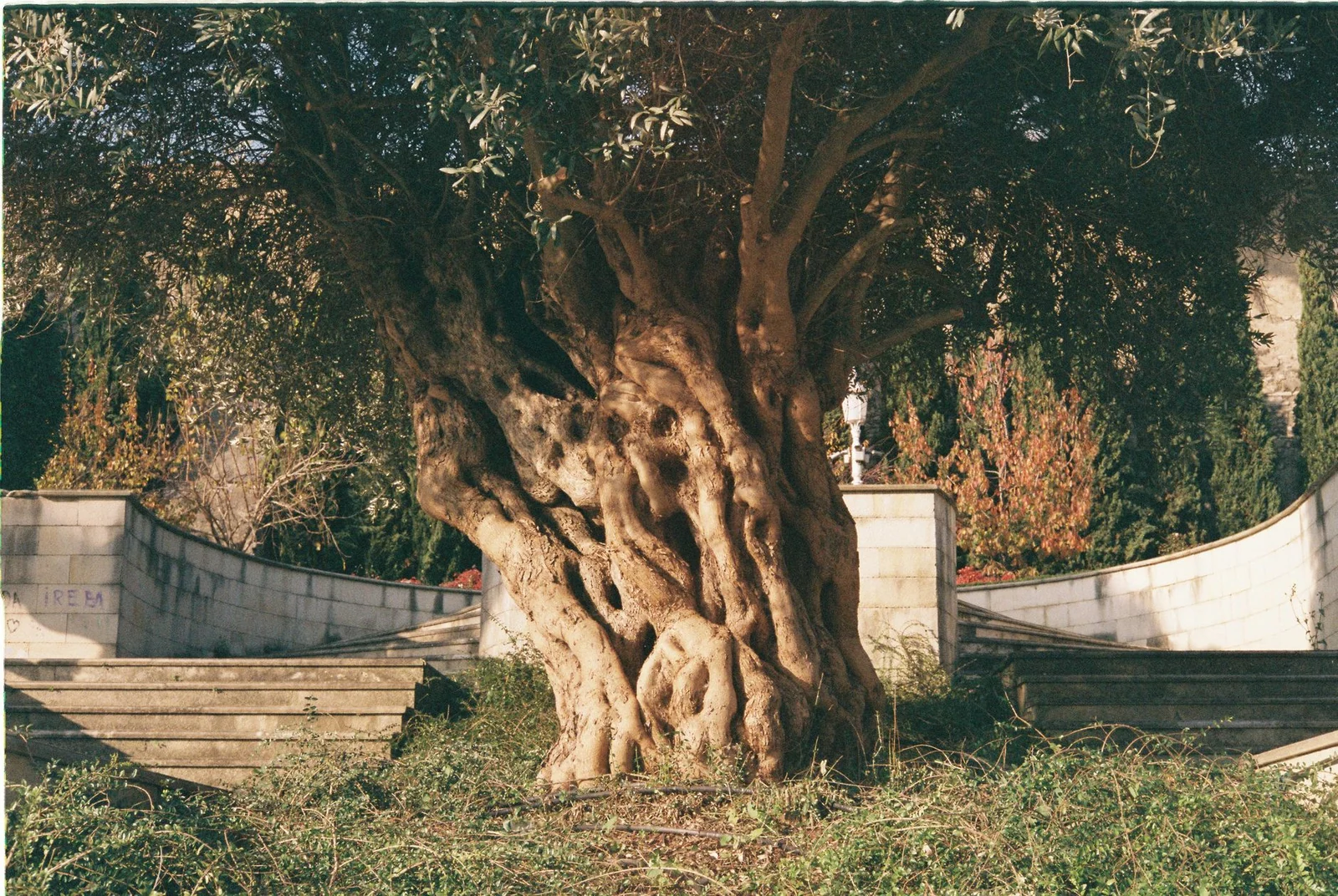
The carbon accumulating in the permanent structures of the tree, such as trunk, branches and roots, averaged 0.54 Mg C/ha/year (from 0.21 to 1.24 between groves), equivalent to 1.98 tonnes of carbon dioxide. This is consistent with the range of 0.25-1.25 measured in 24 olive groves in Andalusia. Accumulation in traditional groves was 25% lower than in intensive ones, but the difference was not statistically significant (p = 0.08). Tree age matters too: in an intensive Italian grove of 330 trees per hectare, an 11-year-old planting averaged 1.47 Mg C/ha/year over 10 years, but only 0.36 in years 9 and 10.
The authors stress that the fall of leaves and flowers has been overlooked in most studies: the carbon collected under the canopy was 0.96-0.97 tonnes per hectare per year, on average 22% of total inputs. Fruit, permanent structure, leaves and flowers, the items that do not depend directly on the farmer's decisions, make up more than half of total inputs.
Why are weeds and pruning residues decisive?
The carbon taken from the air by spontaneous cover crops (above-ground biomass) varied between 0.02 and 1.12 across groves, averaging 0.44. In groves where weeds covered the whole ground it was 0.71, and where they were left only in strips it was 0.17 Mg C/ha/year. The authors write that the minimum strip width of 1 metre in the EU's common agricultural policy requirements may be insufficient, and that a herbaceous cover of at least 40% of the area outside the tree canopy projection could be considered.
A year-long eddy covariance measurement by Chamizo and colleagues in an irrigated olive grove in Jaén (a study announced in 2017) points the same way: annual net CO₂ uptake was 1.40 tonnes of carbon per hectare in the section where weeds were kept and 0.7 where they were cleared with herbicide. In March, when weeds reached their largest size, CO₂ fixation was three times higher in the weedy plot. For the water and yield side of leaving weeds and not tilling, see our article on tilling or leaving weeds in the olive grove.
What happens to pruning residue also makes a difference. In the three groves whose farm balance was negative, the cause was, according to the authors mainly (but not only), that pruning residues were burnt in the field or taken for energy and that weeds were not left. We cover the question of burning separately in should pruning branches be burnt.
Limits to keep in mind
In five groves the soil balance was negative: carbon leaving through soil respiration was not offset by the organic matter entering the soil. The sample is 24 groves, all in Andalusia; carrying these conditions, with 408-581 mm of rain, directly over to groves in Türkiye would not be right, because the study took no measurements in Türkiye.
How long carbon stays in the tree is also debated. The paper notes that more than half of the olive groves in Andalusia are over 50 years old, but that a trend of uprooting old groves and replacing them with super-intensive groves on a 20-year cycle would sharply reduce this potential. How long carbon remains on the farm is also one of the basic problems of carbon removal certification.
The paper calculates that the 1.98 tonnes of carbon dioxide accumulated in the trees would be worth 186.3 euros per hectare per year at the regulated market price of 14 April 2023 (94.11 euros per tonne). That is only the authors' worked example; it is neither a current price nor a promise of income.
What conclusion to draw
The olive tree stores carbon; but what decides the balance of the whole grove is whether organic matter goes into the soil. Our articles on soil analysis and fertilisation and on grove care after harvest cover the farming side of this.
One rating per visitor; you can change yours at any time. Ratings are real reader votes — no seeded or default scores.
Related
 Article
Olive Pruning: Why, When and How
Why olives are pruned, when to do it, formative and production pruning, rejuvenation and high-density systems.
 Article
Can olive prunings be burned? What the law says and what to do with diseased wood
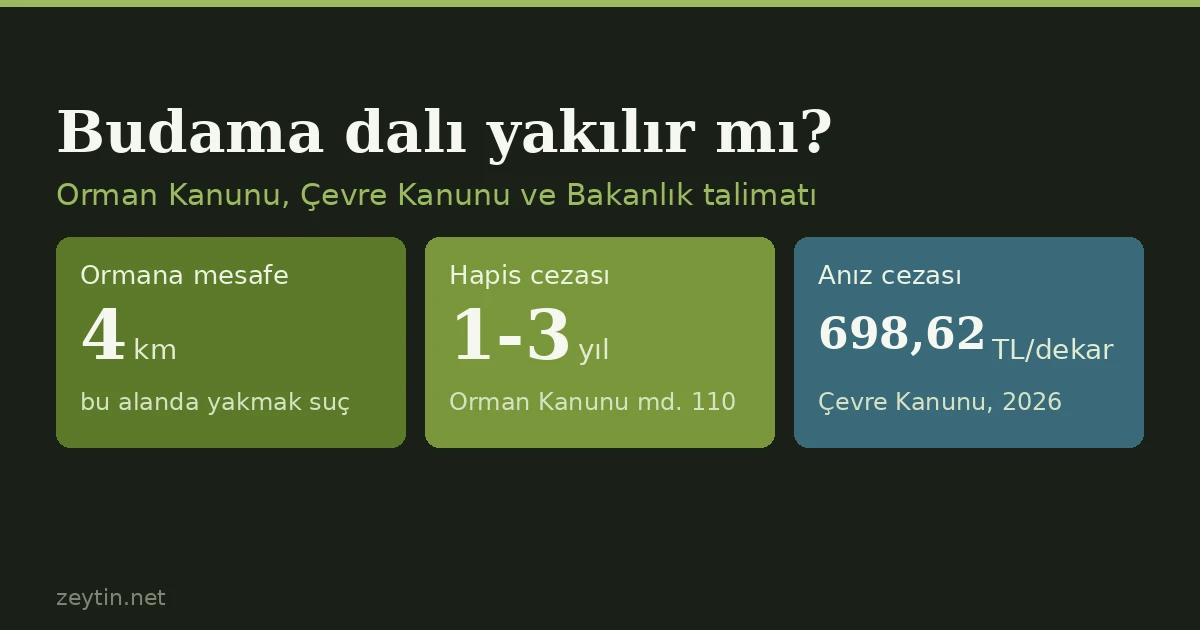
Burning prunings within four kilometres of a forest, or in a village with state forest inside its boundary, is an offence under Türkiye's Forest Law carrying one to three years in prison, and many governors' orders also ban burning to clear olive groves. The ministry's own technical guidance, however, recommends burning diseased residues. The way between: use healthy wood, remove diseased wood from the grove.
 Article
Should you whitewash an olive tree trunk with lime? What it does and when to apply it
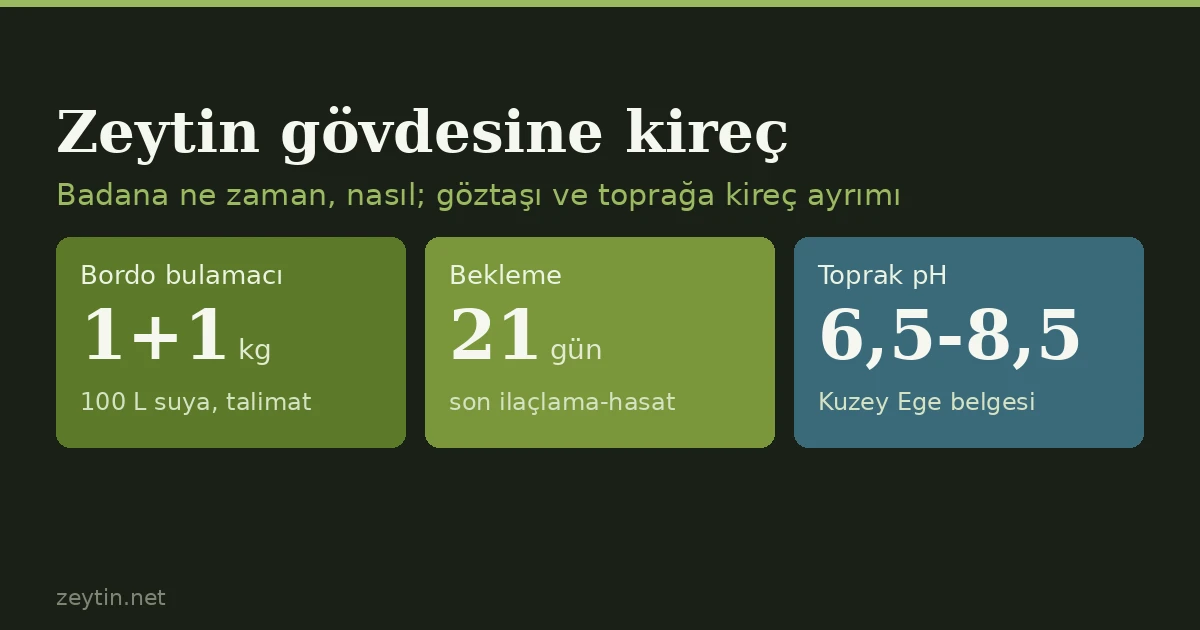
A slaked-lime whitewash protects olive bark exposed to the sun by head grafting, stumping or heavy pruning. Add copper sulphate and it becomes Bordeaux mixture: 1 kg + 1 kg per 100 litres in Turkey's instruction, 21 days before harvest. Never quicklime; lime the soil only after analysis.
 Article
Grafting Olives: Changing Cultivar and Improving Wild Trees
When grafting is needed, taking scion wood, bud and cleft methods, topworking and aftercare.