Two pressures before the harvest: costs and 100,000 tonnes carried over
The chamber of agriculture wants 50 lira per kilo; daily labour has passed 1,500 lira. Exporters report 100,000-120,000 tonnes carried over from previous seasons.
As Turkey enters a new harvest season, two pressures are being raised together: production costs and carried-over stock.
"If costs are high the olives stay on the branch"
Ali Yılmaz Diker, head of the Edremit Chamber of Agriculture, says diesel and fertiliser support is not enough to keep growers going. Asking for 50 lira per kilogram, he expects costs to reach at least 300 lira this year.
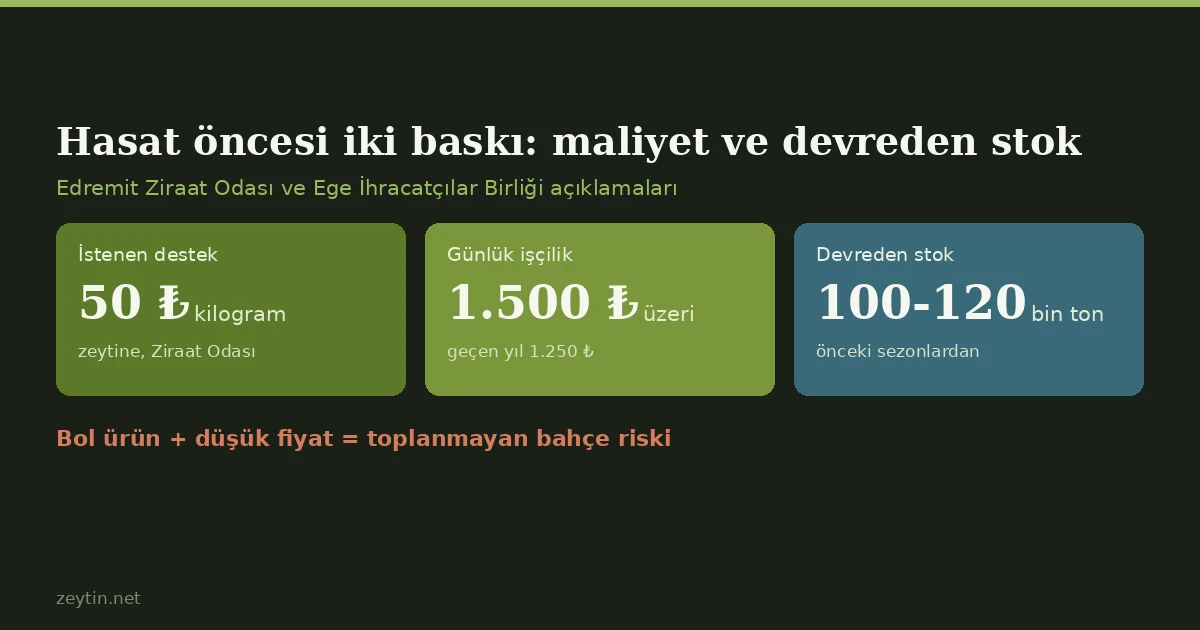
Labour alone is striking: a daily wage of 1,250 lira last year has passed 1,500 lira. Diker says growers struggle to pass that increase on, while consumers have lost purchasing power.
⚠ This is not the same as the Edremit Chamber of Commerce's call for 50 lira per litre: one asks per kilogram of olives, the other per litre of oil.
Carry-over: 100,000-120,000 tonnes
Emre Uygun, chairman of the Aegean Olive and Olive Oil Exporters' Association, reports 100,000 to 120,000 tonnes remaining from previous seasons. Higher yields may bring some cost relief, but he says the real issue is the market: "If a market is going to be lost, we expect a support mechanism."
Carried-over stock amplifies the new crop's effect on price: it is not only this year's oil reaching the market but last year's remainder. With supply arriving from two sources, downward pressure doubles.
The two together
High costs deter growers from harvesting; carried-over stock suppresses the price. When both fall in the same season, the result can be abundant fruit, a low price and groves left unpicked.
We examined the cost items one by one in what does a kilo of olives cost to produce.
One rating per visitor; you can change yours at any time. Ratings are real reader votes — no seeded or default scores.
Related
 Article
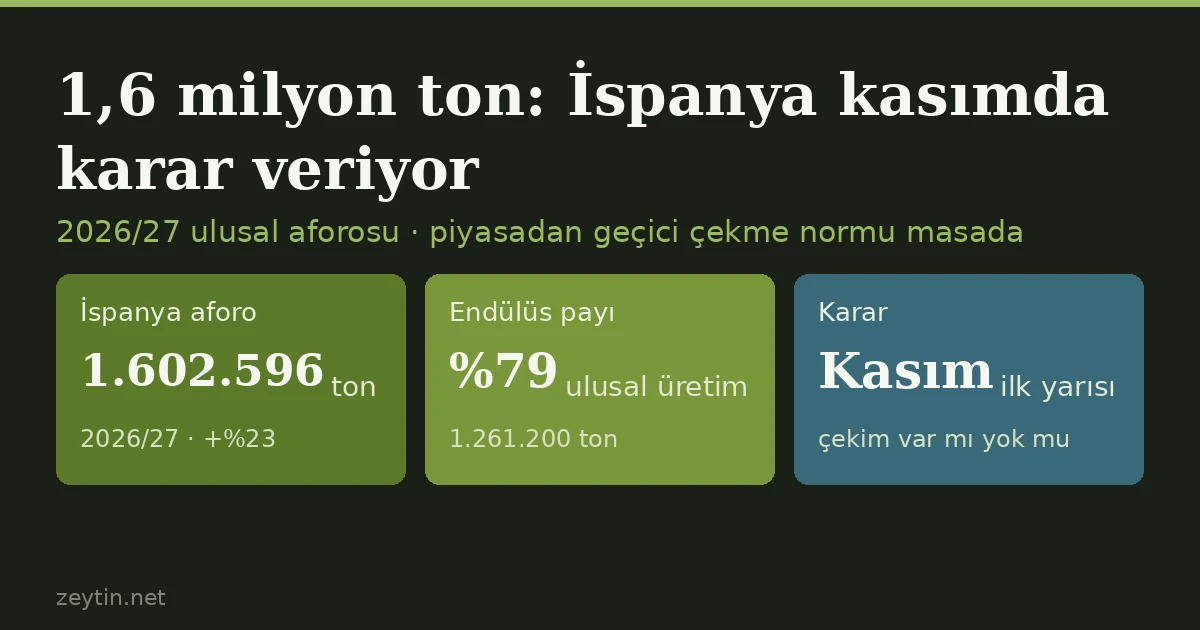
Spain decides in November: will part of a 1.6 million tonne crop be withdrawn from the market?
Spain's first national aforo for 2026/27 was presented in Jaén on 1 October: 1,602,596 tonnes of olive oil, 23% above last harvest. With carry-over stock, total availability approaches two million tonnes, and the Ministry of Agriculture will decide in the first half of November whether to activate a temporary withdrawal mechanism that has never been used. The ceiling on the world price Turkish exporters will face is being set here.
 Article
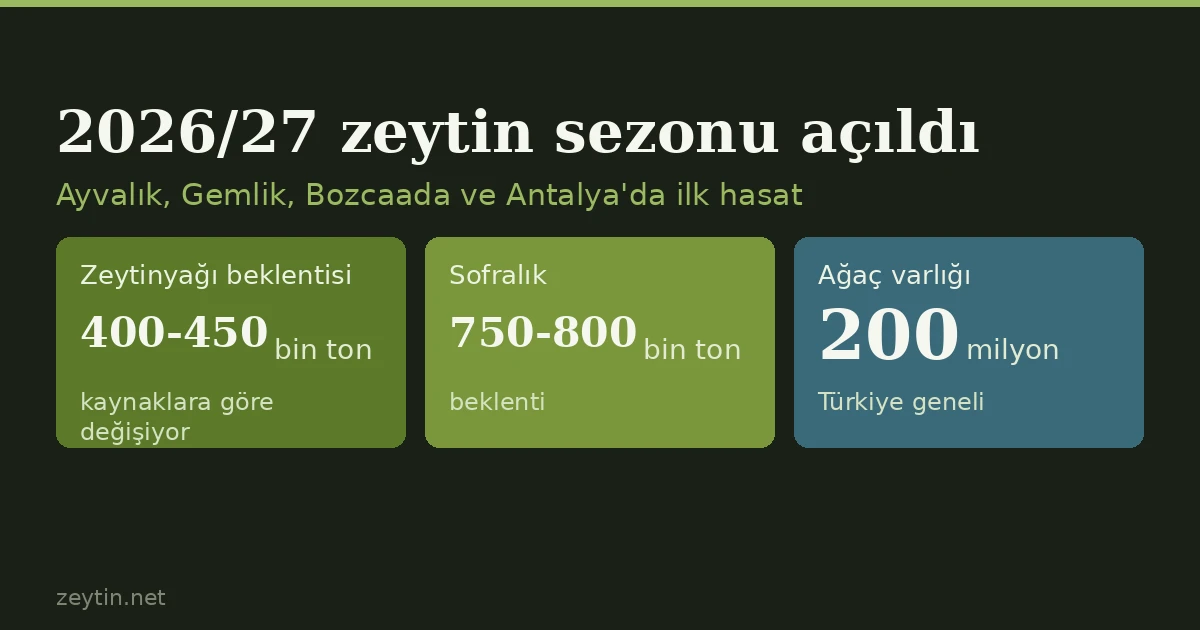
The 2026/27 season opens: first harvests in Ayvalık, Gemlik and Bozcaada
The new olive season opened with three events on 11-13 September. In Ayvalık, an on-year forecast of 400,000-450,000 tonnes of olive oil was voiced; in Gemlik the first olives were picked during the festival; and on Bozcaada the island's first olive oil was pressed with a portable system.
 Article
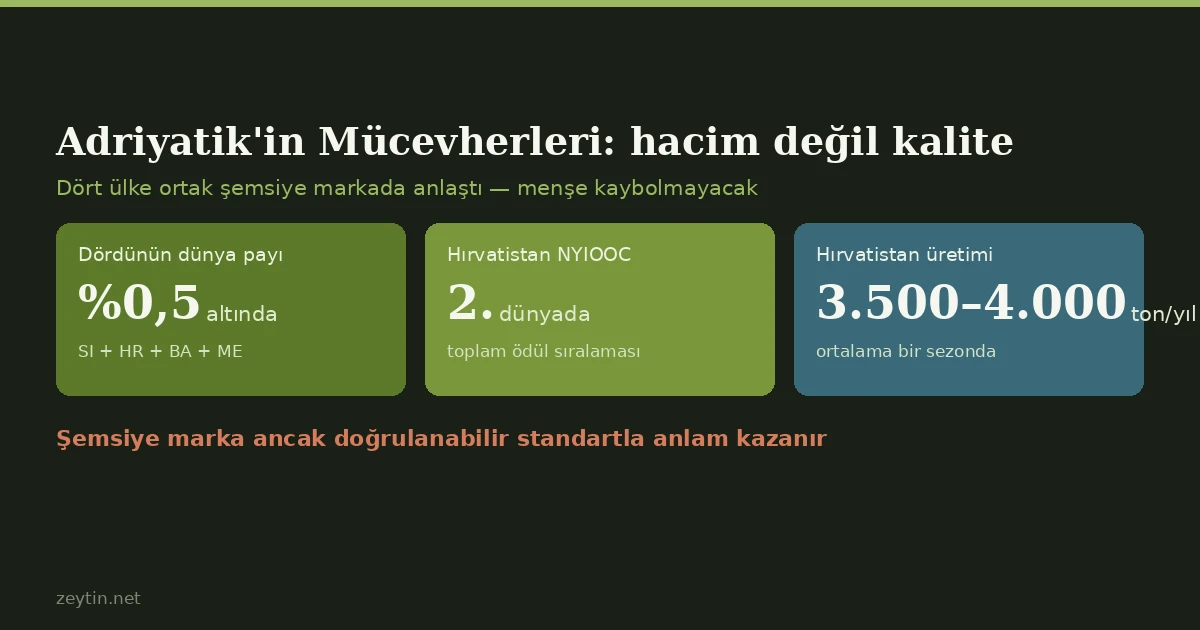
"Jewels of the Adriatic": four countries choose to compete on quality, not volume
Slovenia, Croatia, Bosnia and Herzegovina and Montenegro together produce under 0.5% of the world's olive oil — yet Croatia finished second worldwide at the NYIOOC. A panel in Mostar proposed a shared umbrella brand: origin stays, common rules are the condition.
 Article
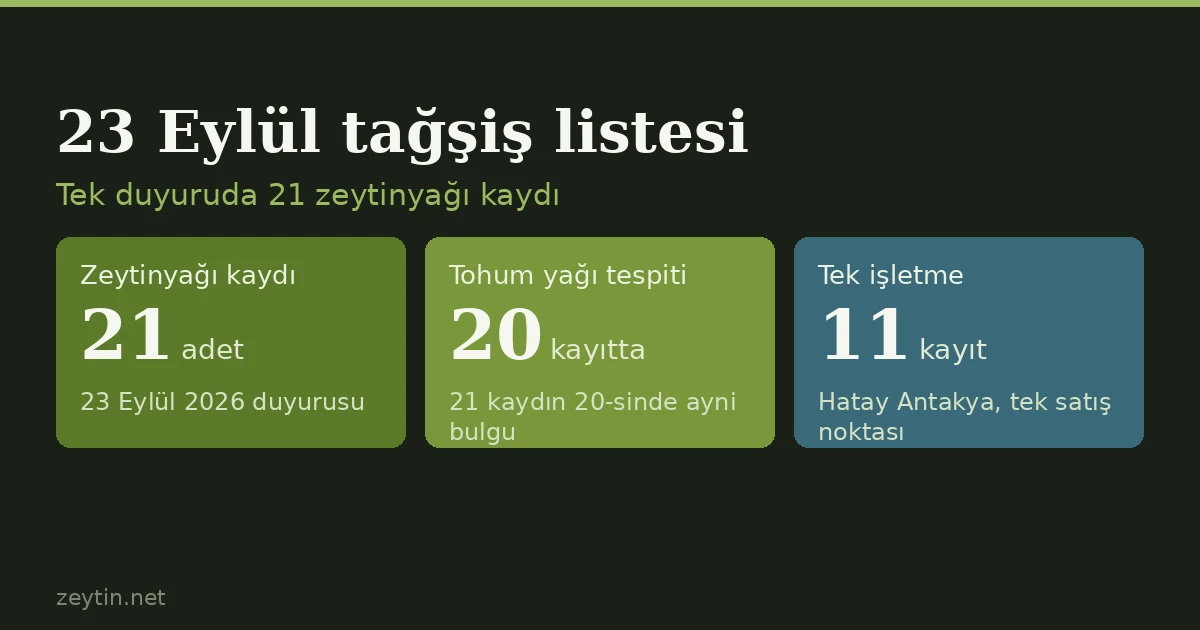
Turkey's 23 September fraud list: 21 olive oils, 11 from a single seller
Twenty-one olive oil entries joined Turkey's public food-fraud register on 23 September 2026 — two-thirds of what the other eleven announcements since April produced combined. In twenty of them the finding is identical: seed oil adulteration.