The Olive Calendar: The Olive Year Month by Month
When to prune, when it flowers, which olives are picked when — the year of the tree and the grower, month by month.
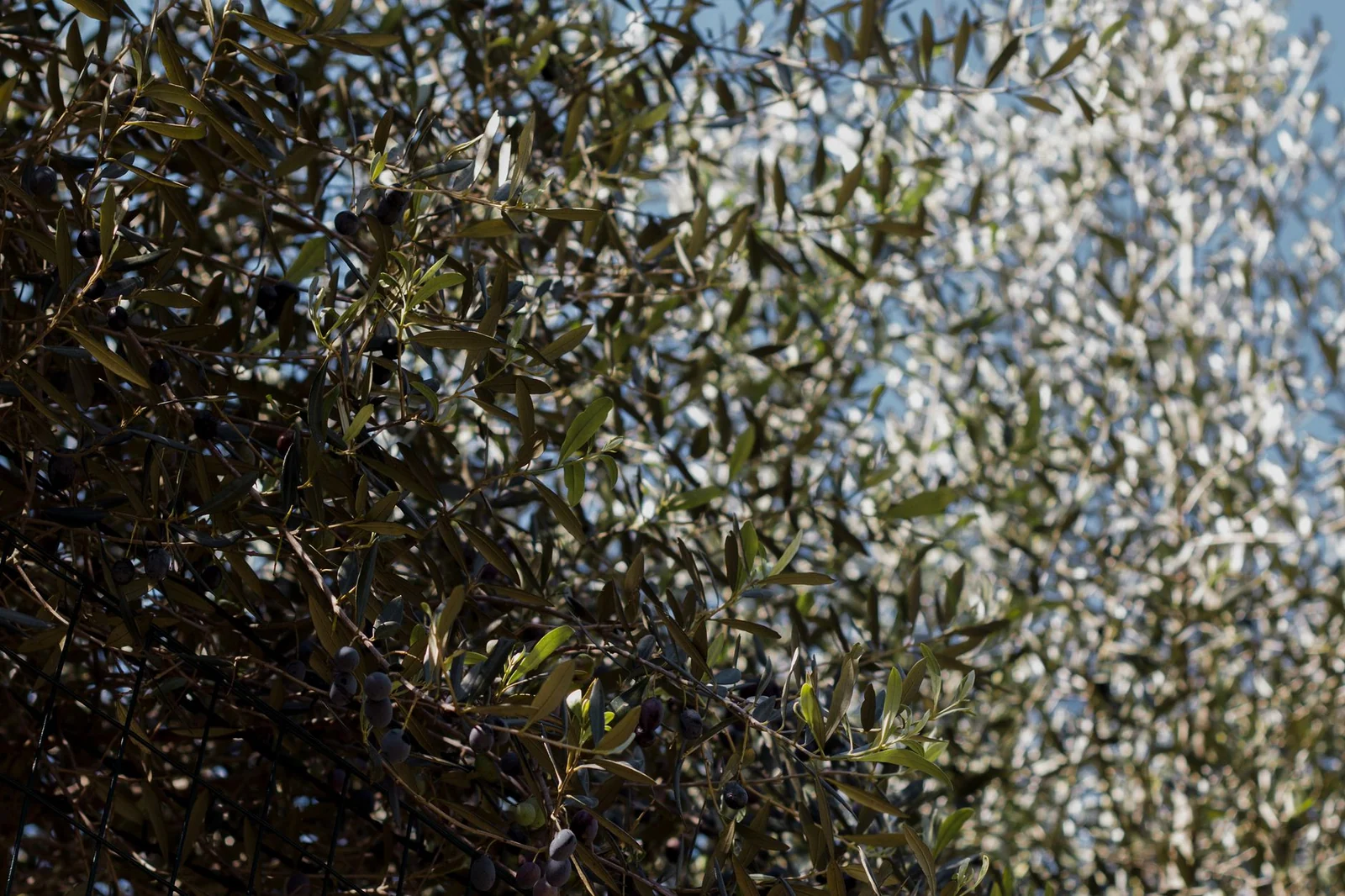
The olive year does not begin with the harvest; it ends with it. This calendar sets out the year of the tree and the grower month by month: when to prune, when it flowers, which olives are picked when.
⚠ These are typical ranges for Turkey and the Mediterranean basin; they shift by two or three weeks with altitude, region and the year's weather.
January — The end of harvest, the last days of pressing
Picking continues in late regions; mills press the final batches. New oil is left to settle. In colder areas this is the period of highest frost risk, and young saplings are protected.
February — Pruning
Once the danger of frost has passed, pruning begins. The aim is to let light into the tree and renew the previous year's growth. Cut branches and leaves are put to use; leaves are set aside for tea and fodder.
March — Pruning finished, feeding
Pruning ends. As the soil warms, feeding is done. ⚠ Excess nitrogen makes leaves, not fruit. Weed control and soil work belong to this month.
April — Budding
Flower buds appear. The tree's need for water begins to rise. Frost in this period can strike that year's crop directly.
May — Flowering
Small whitish flowers open in clusters. Pollination is by wind; having different varieties together markedly raises yield. ⚠ Extreme heat and dry wind during flowering reduce fruit set — the year's crop is largely decided in these weeks.
June — Fruit set and natural drop
Fertilised flowers become small fruit; the tree naturally sheds part of what it cannot carry. In irrigated groves water demand rises.
July — Fruit growth and heat stress
The fruit grows and the stone hardens. Drought and heat stress peak. The struggle against olive fly begins in these months.
August — Oil accumulation begins
Oil formation in the fruit accelerates. Preparations begin for early picking of green table olives. Olive fly pressure continues.
September — Green table olive harvest
Green table olives begin to be picked — full-sized but still green. Curing and cracked olive production start this month. It is still early for oil.
October — Early harvest and the opening of the mills
The olive oil harvest begins. Oil from early-picked green olives is more bitter, more pungent and richer in polyphenols; yield is lower but the price is higher. Mills open and the first trades appear on the exchanges.
November — The peak of the harvest
The fruit turns — from green to purple — and for most growers this is the ideal balance. Harvest and pressing are at their most intense. ⚠ Picked olives should be pressed within 24 hours; acidity rises in fruit left waiting.
December — Late harvest, black table olives
Fully ripe black olives are picked; oil content is at its highest and polyphenols at their lowest. Black table olive curing and dry-salt production belong to this period. New season oils start reaching the shelves.
At a glance
| Period | What happens |
|---|---|
| February - March | Pruning, feeding |
| April - May | Budding and flowering — the weeks that decide the crop |
| June - August | Fruit growth, oil accumulation, pest control |
| September | Green table olive harvest |
| October - November | Olive oil harvest and pressing |
| December - January | Late harvest, black table olives, close of pressing |
Related: the olive harvest · how to grow an olive tree · how olives are cured · cold pressing
One rating per visitor; you can change yours at any time. Ratings are real reader votes — no seeded or default scores.
Related
 Article
Otur olive
Otur is a recorded variety of the Black Sea. Described in the source.
Article
Otur olive
Otur is a recorded variety of the Black Sea. Described in the source.
 Article
Gölvala olive
Gölvala is a recorded variety of the Black Sea. No measured pomological data published.
Article
Gölvala olive
Gölvala is a recorded variety of the Black Sea. No measured pomological data published.
 Article
Adana Topağı: the olive cultivar that needs the least cold
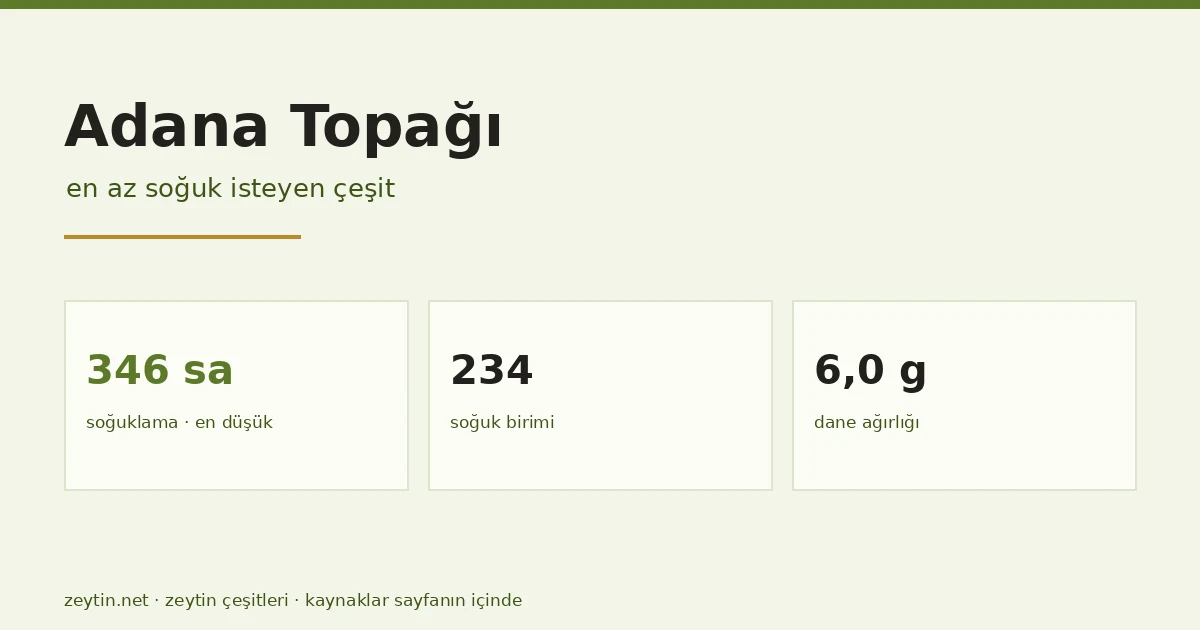
The lowest chilling requirement among cultivars tested: 346 hours, 234 chill units. Why that matters as winters warm, and its 6-gram fruit.
Article
Adana Topağı: the olive cultivar that needs the least cold
The lowest chilling requirement among cultivars tested: 346 hours, 234 chill units. Why that matters as winters warm, and its 6-gram fruit.
 Article
Patos olive
Patos is a recorded variety of the Black Sea. Described in the source.
Article
Patos olive
Patos is a recorded variety of the Black Sea. Described in the source.