Tukaş plans an olive plant in Manyas: 2,000 tonnes a year, a 14.7 million lira ÇED application
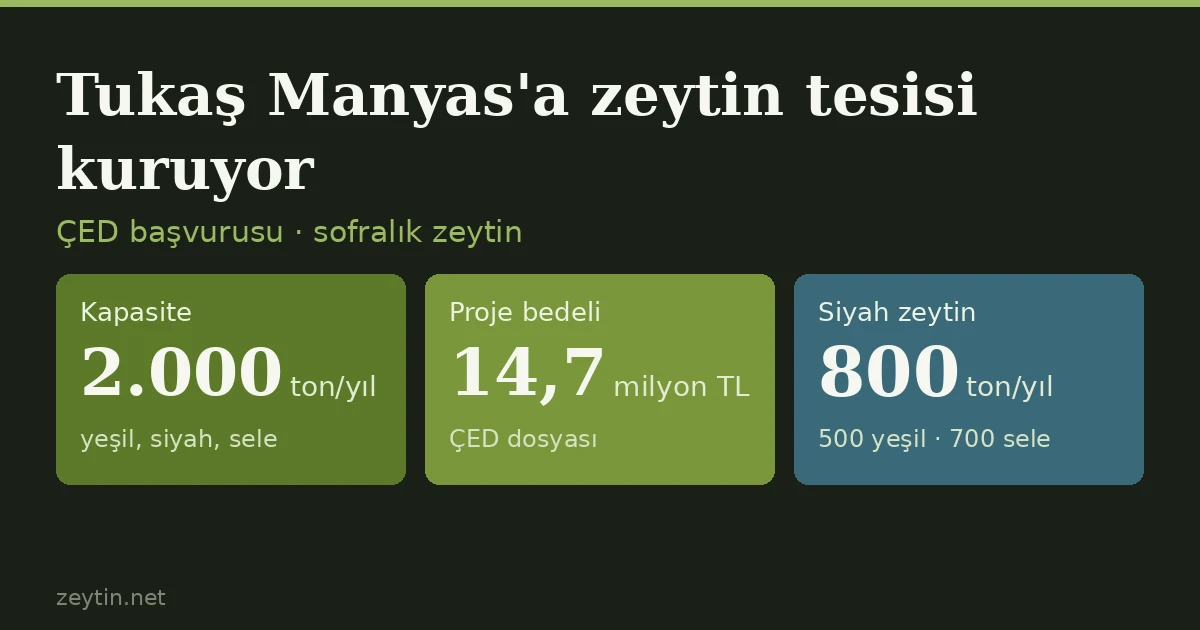
The Okullu brothers, owners of Tukaş Gıda and Cem Zeytin, have applied for an ÇED for a 2,000-tonne-a-year table olive processing and packing plant on the factory site in Manyas, Balıkesir: 500 tonnes green, 800 tonnes black, 700 tonnes sele olives; project cost 14.7 million lira.
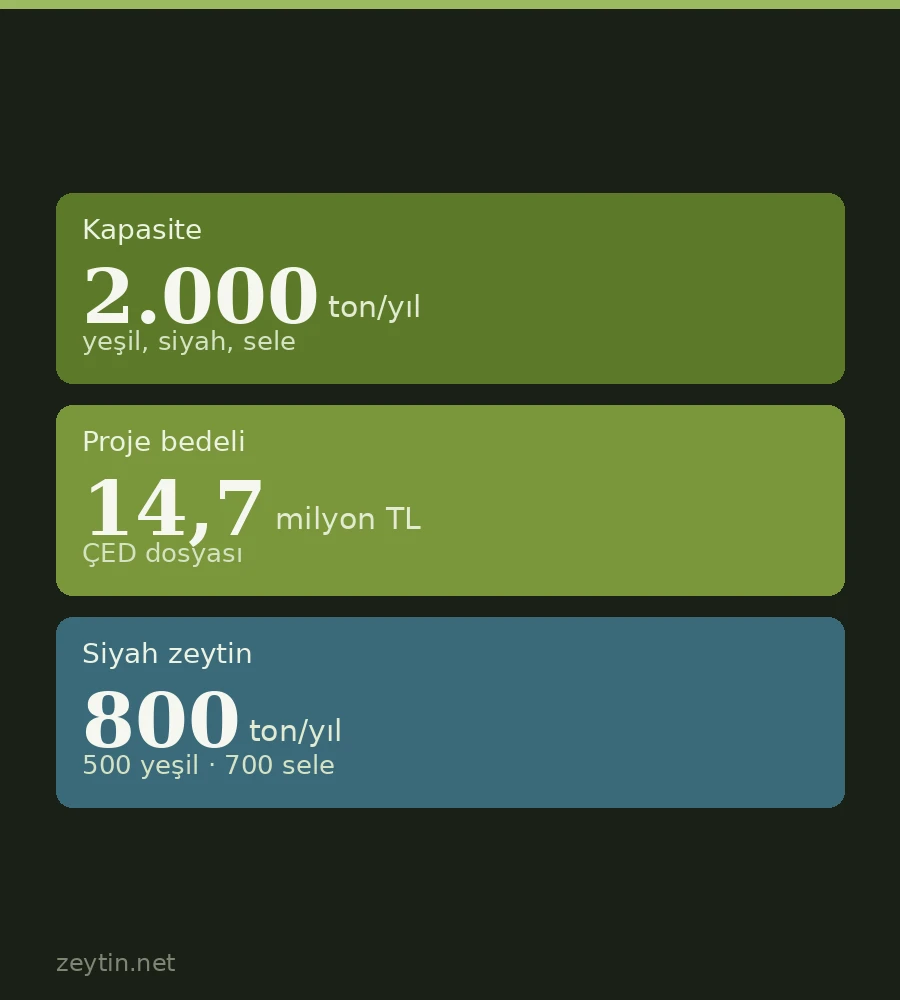
The brothers Cem and Cengiz Okullu, owners of Tukaş Gıda and of Cem Zeytin, which makes private-label olives for supermarket chains, have applied for an environmental impact assessment (ÇED) to build an olive processing and packing plant with an annual capacity of 2,000 tonnes at the Tukaş factory in Manyas, Balıkesir. The project cost is 14.7 million lira. The report was published on 11 November 2026; the figures come from the information in the ÇED file.
This is a table olive investment; the report does not mention olive oil production.
What will the plant process?
According to the ÇED file, the 2,000-tonne annual capacity is split among three products:
| Product | Annual capacity (tonnes) | Share |
|---|---|---|
| Green olives | 500 | 25% |
| Black olives | 800 | 40% |
| Sele olives | 700 | 35% |
| Total | 2,000 | 100% |
The percentage shares are our calculation from the tonnages in the report. The report says the olives will first be processed in a pre-preparation unit and then turned into pitted, unpitted and sliced products according to customer orders.
Why Manyas?
The plant will not go on a new site but within the existing Tukaş factory at Yeniköy neighbourhood, Manyas. The factory currently makes tomato paste, canned food, roasted vegetables, frozen food, ready meals, boiled products and corn. According to the report, the company aims to add olive processing to this portfolio.
The Okullu brothers already have a history with olives. The report says olives are produced at Cem Zeytin's facilities in Edremit and that Tukaş makes vegetables, pickles, roasted vegetables and olives at its factory in the Akhisar Olive Organised Industrial Zone. Manyas would then be the third address where the group handles olives. The report does not count it this way; that is our reading of the three place names it mentions.
Scale and financing
The report does not give a daily capacity; only the annual 2,000 tonnes.
For Cem Zeytin's financial position, see Cem Zeytin 9 ayda 486 milyon lira zarar etti. The report has nothing on Tukaş's or Cem Zeytin's accounts or on how the investment will be financed.
What the report does not say
- Which authority received the ÇED application, when, and at what stage it is.
- Daily capacity, headcount, completion date.
- Where the olives will be sourced and which varieties.
- Export or domestic sales plans.
What to watch
The outcome of the ÇED process (a "required" or "not required" decision) will show the investment's next step. For the registration structure of the table olive sector, see sofralık zeytin sektörü: 461 kayıtlı, 8.000 kayıt dışı.
One rating per visitor; you can change yours at any time. Ratings are real reader votes — no seeded or default scores.
Related
 Article
Harvest halted amid a record forecast: 50 lira for table olives in Akhisar, 10 for oil
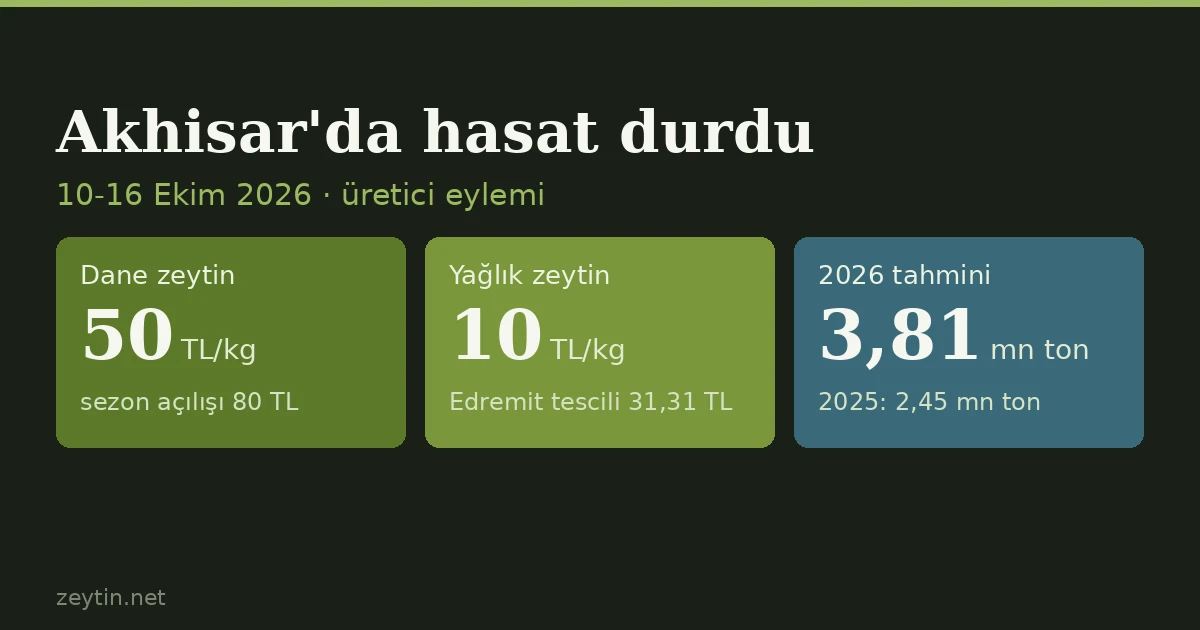
Growers in Akhisar halted the harvest for a week on 10 October. Table olive prices that opened the season at 80 lira fell to 50, and oil olives to 10 — below last season's table olive floor. In the same days the official first estimate puts production at 3.8 million tonnes.
 Article
Six jailed for taking produce without paying: the grower's most fragile moment is the start of harvest
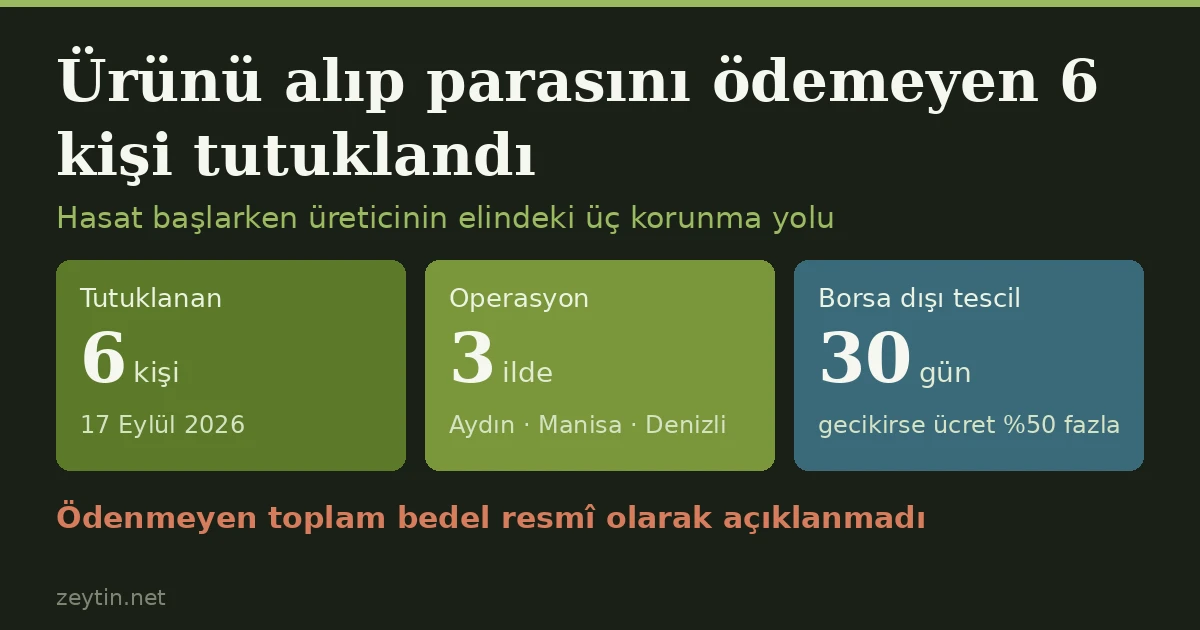
In Bozdoğan, Aydın, six people who bought olive oil, nuts and livestock from growers and failed to pay were caught in a simultaneous operation across three provinces on 15 September and jailed on 17 September. The method is a familiar one: the first purchase is paid in full, and once trust is established the large purchase is not. In the week harvest begins, growers have three concrete protections.
 Article
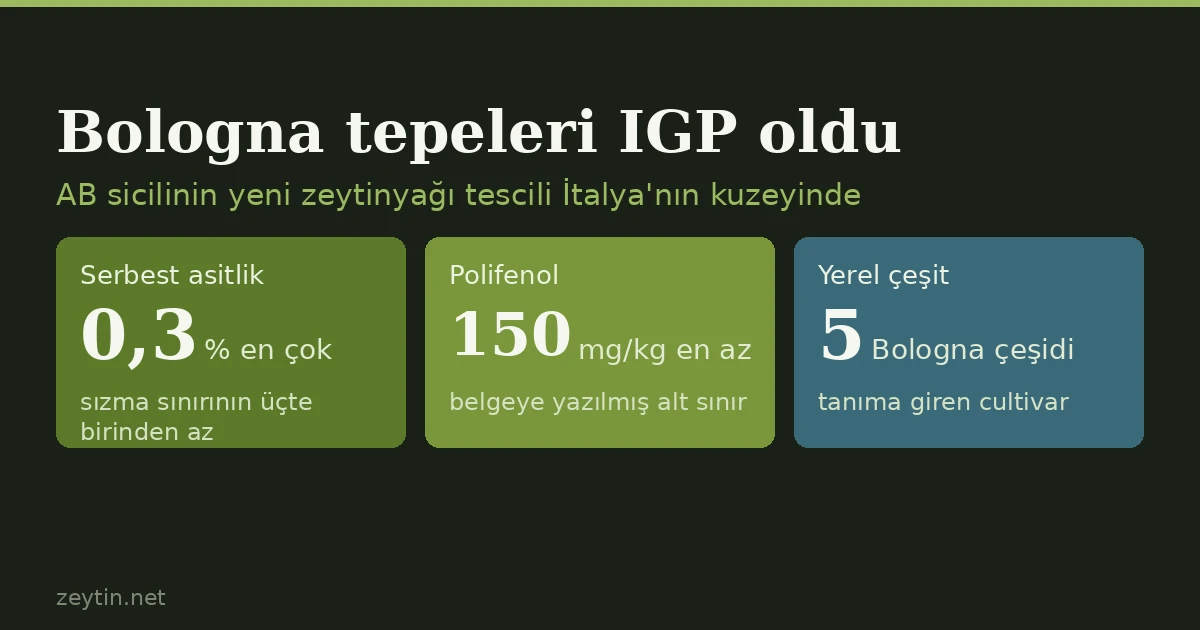
The EU's newest olive oil registration is in northern Italy: Olio dei Colli di Bologna gets PGI status
The European Commission has entered olive oil from the hills of Bologna into the Union register of geographical indications. The specification caps free acidity at 0.3 percent, well under a third of the legal limit for extra virgin, and writes five local Bolognese cultivars into the definition.
 Article
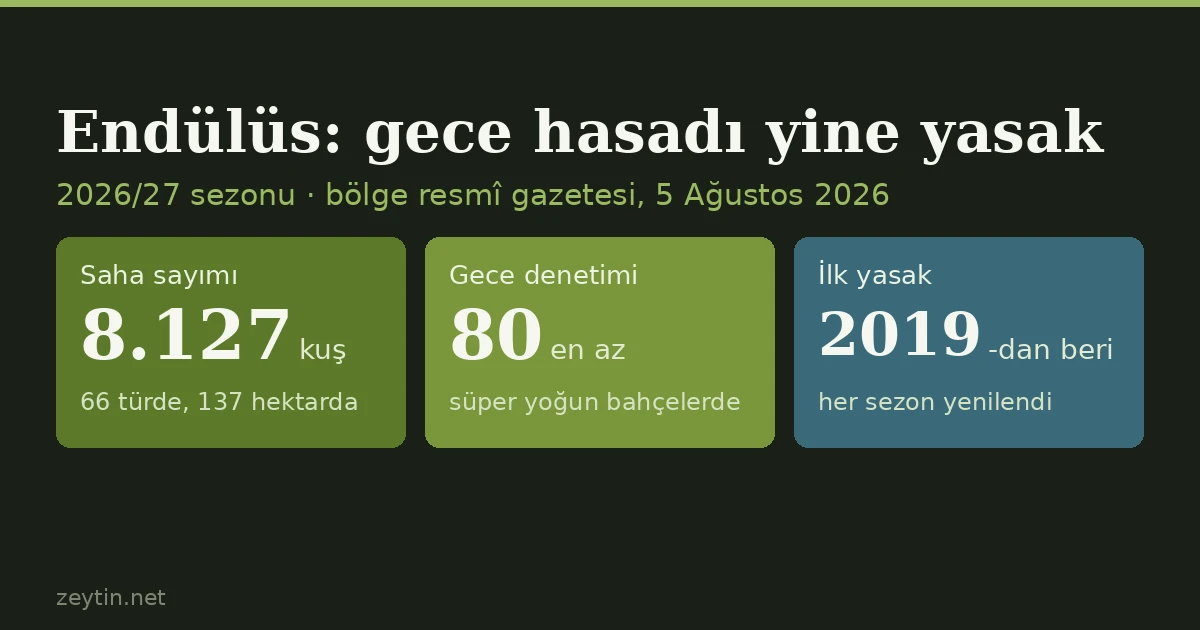
Andalusia bans night harvesting again for 2026/27: 8,127 birds counted on 137 hectares
Andalusia has again suspended night-time mechanical harvesting in super-intensive hedgerow olive groves for the 2026/27 season. The resolution is dated 30 July 2026, was published in the regional official gazette on 5 August and is valid for one year. The justification is field counting: 8,127 birds from 66 species on 137 hectares. The suspension was first introduced in 2019 and has been renewed every season since.