Marbil Yağ's composition proposal goes to creditors on 30 November: the 90-year-old Bilginoğlu brand in Torbalı at a critical point
The composition proposal of Marbil Yağ (Bilginoğlu), based in Torbalı, İzmir, Selesta Kozmetik and partner Levent Bilginoğulları will be negotiated at a creditors' meeting at company headquarters on 30 November 2026. The report gives no debt figure or proposal terms.
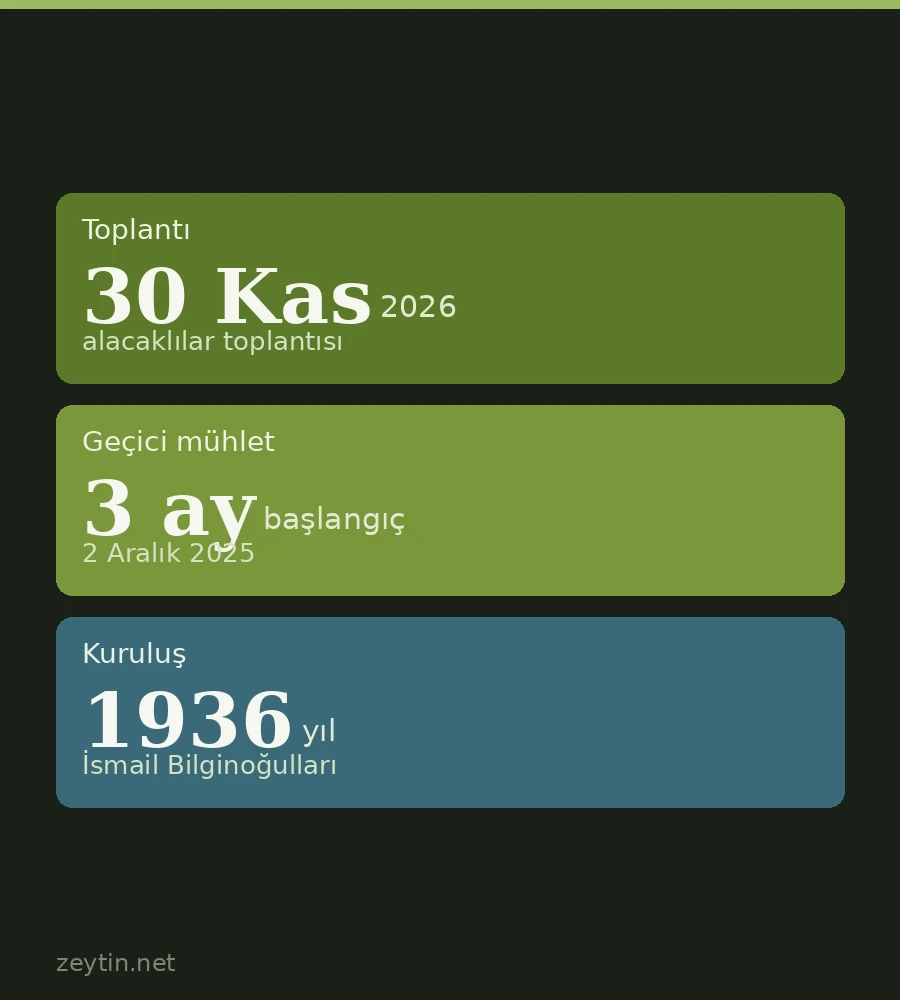
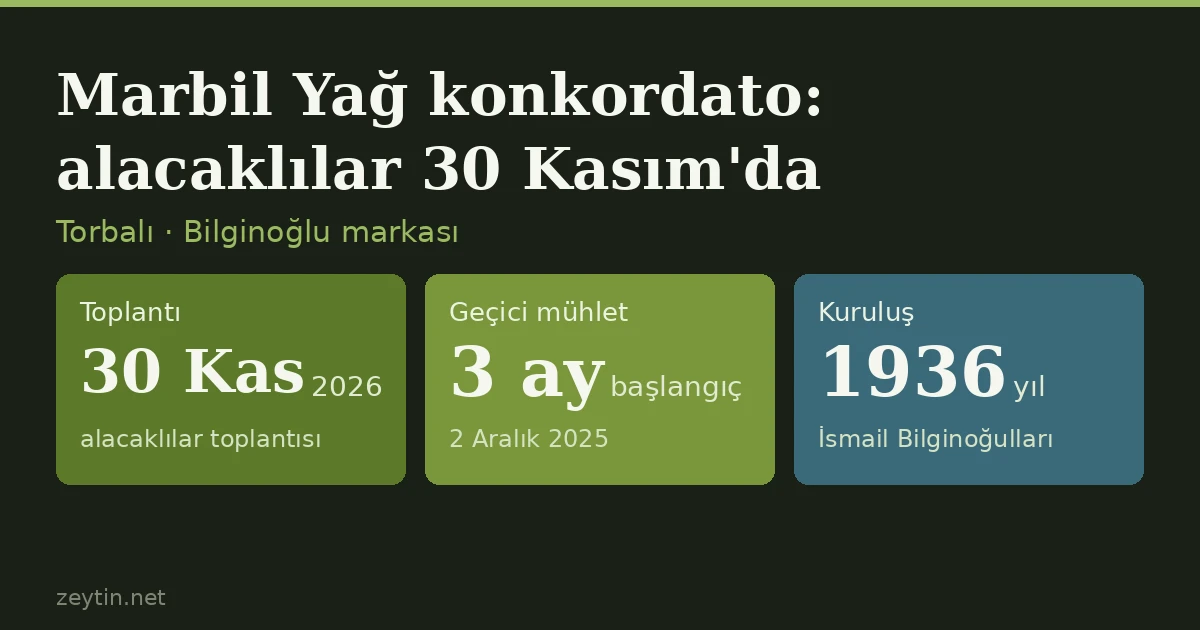
The creditors' meeting date has been set in the composition-with-creditors (konkordato) process of Marbil Yağ Sanayi ve Ticaret A.Ş., based in Torbalı, İzmir. According to a report that cites the notice on the Press Advertising Agency's official page, the composition proposal of Marbil Yağ, Selesta Kozmetik Gıda Sanayi ve Ticaret A.Ş. and company partner Levent Bilginoğulları will be negotiated at a meeting at the company headquarters on Monday, 30 November 2026. The report was published on 11 November 2026.
The company is known by the "Bilginoğlu" brand, and the report says it was founded in 1936 by İsmail Bilginoğulları.
How has the process gone?
The timeline that emerges from the report:
| Date | Stage |
|---|---|
| December 2025 | Composition application to the İzmir 1st Commercial Court of First Instance |
| From 2 December 2025 | Three-month provisional moratorium for Marbil Yağ, Selesta Kozmetik and Levent Bilginoğulları |
| Afterwards | One-year final moratorium for the three (the report gives no date) |
| From 16 November 2026 | Creditors may inspect the composition project and documents at company headquarters, 09:00-17:00 |
| 30 November 2026 | Creditors' meeting |
During the final moratorium, enforcement (haciz) cannot be carried out against the company's assets; the report describes this as an attempt to extend the company's commercial life. The report says that, after the one-year final moratorium, the process has reached the stage where the proposal is negotiated with creditors.
Meeting schedule
The times the report cites from the Press Advertising Agency notice:
| File | Creditor group | Time |
|---|---|---|
| Marbil Yağ | Unsecured creditors | 11:00-12:00 |
| Marbil Yağ | Secured (pledged) creditors | 12:00-12:30 |
| Selesta Kozmetik | Unsecured creditors | 12:30-13:00 |
| Levent Bilginoğulları | Unsecured creditors | 13:30-14:00 |
| Levent Bilginoğulları | Secured (pledged) creditors | 14:00-14:30 |
Individuals attending must bring identification; representatives of legal entities must bring current proof of representation and signature; proxies need powers of attorney with a specific authority to consent to the composition.
What the report says about the company
The report traces the Bilginoğulları family to a family that migrated to Türkiye from Crete. It says production continues at refinery and packaging facilities in Torbalı and İzmir, and that third- and fourth-generation family members sit in management.
What the report does not say
- The amount of debt and the number of creditors.
- The content of the composition proposal: maturity, payment ratio, form of restructuring.
- The start and end dates of the final moratorium, and the name of the commissioner.
- Production volumes and headcount.
Why it matters for the sector
This is not the first composition case in the olive sector. We covered the one-year final moratorium for the Akhisar table-olive firm in Akhisar'da konkordato: Baktat Zeytin'e bir yıllık kesin mühlet, and this year's results of the listed Cem Zeytin in Cem Zeytin 9 ayda 486 milyon lira zarar etti. The reports draw no link between these three files; reading them side by side is our choice.
What to watch
The result of the 30 November meeting, meaning whether creditors accept the proposal and what the court decides afterwards, will shape the company's future.
One rating per visitor; you can change yours at any time. Ratings are real reader votes — no seeded or default scores.
Related
 Article
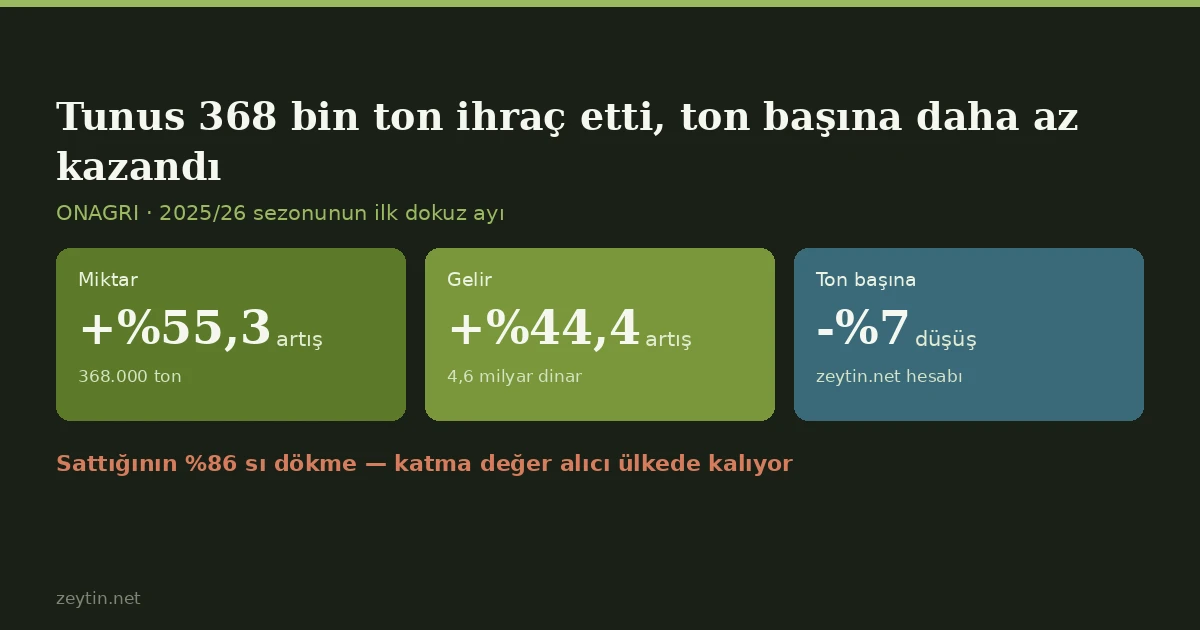
Tunisia exported 368,000 tonnes of olive oil — but earned less per tonne
Tunisia's agriculture observatory ONAGRI reports olive oil exports up 55.3% by volume and 44.4% by value in the first nine months of 2025/26. The gap between the two means about 7% less earned per tonne.
 Article
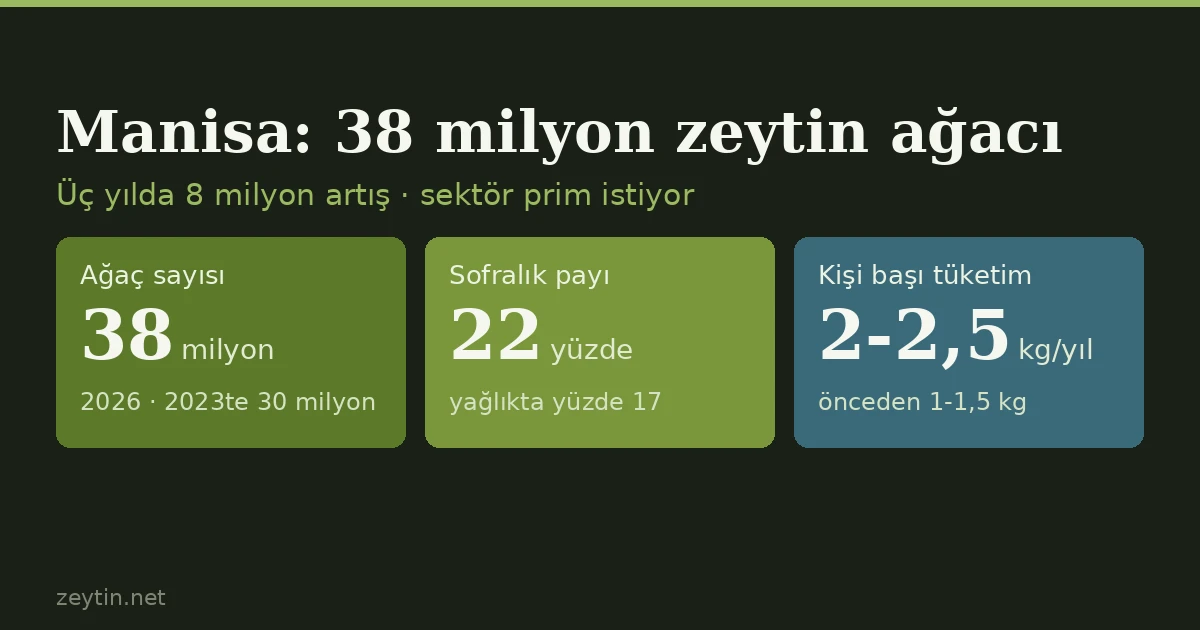
Manisa's olive trees reach 38 million: 8 million added in three years, sector asks for premium support
Manisa's olive tree count rose from 30 million in 2023 to 38 million in 2026. Data shared at a sector meeting hosted by the Manisa Commodity Exchange shows the province alone accounts for 17 percent of Turkey's oil-olive output and 22 percent of its table-olive output. The meeting also reported that annual per-capita olive oil consumption in Turkey has climbed from 1-1.5 kg to 2-2.5 kg. Exchange chairman Sadık Özkasap called for higher state support and premium incentives against the lower processing costs of Spain, Tunisia and Morocco.
 Article
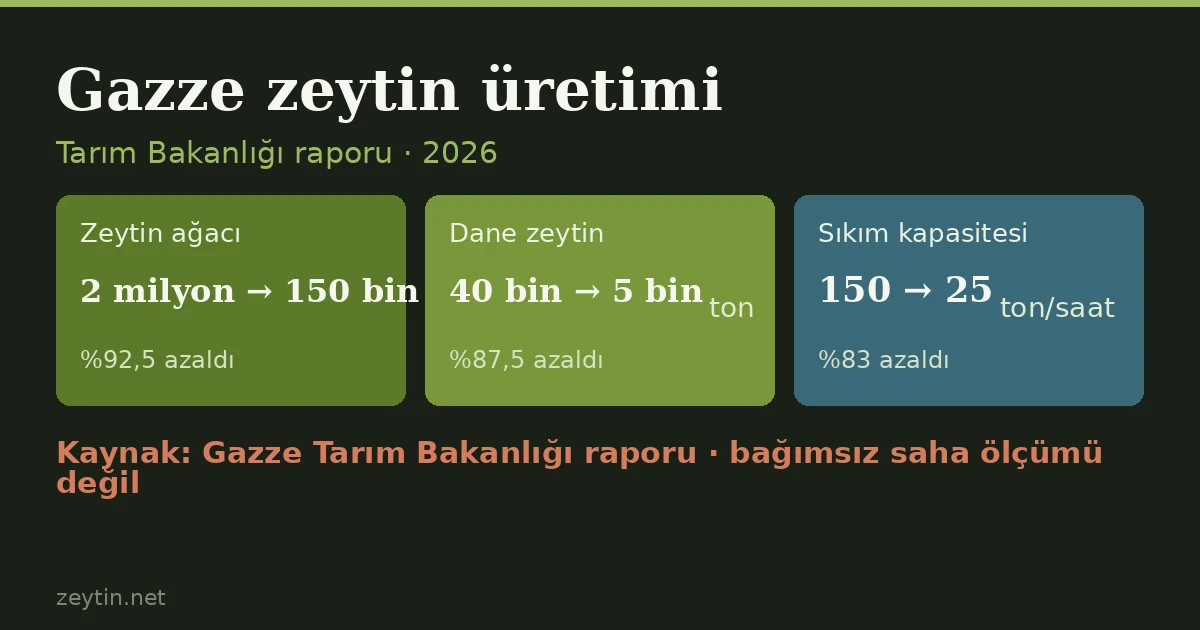
Gaza's olive report: 150,000 trees left of two million, production down 87.5%
According to a report from Gaza's Ministry of Agriculture, olive groves have shrunk from 50,000 dunums to 5,000 and the olive crop from 40,000 tonnes to 5,000. The loss is not confined to the grove: milling capacity has fallen from 150 tonnes an hour to 25, and the number of growers from 20,000 to 1,000.
 Article
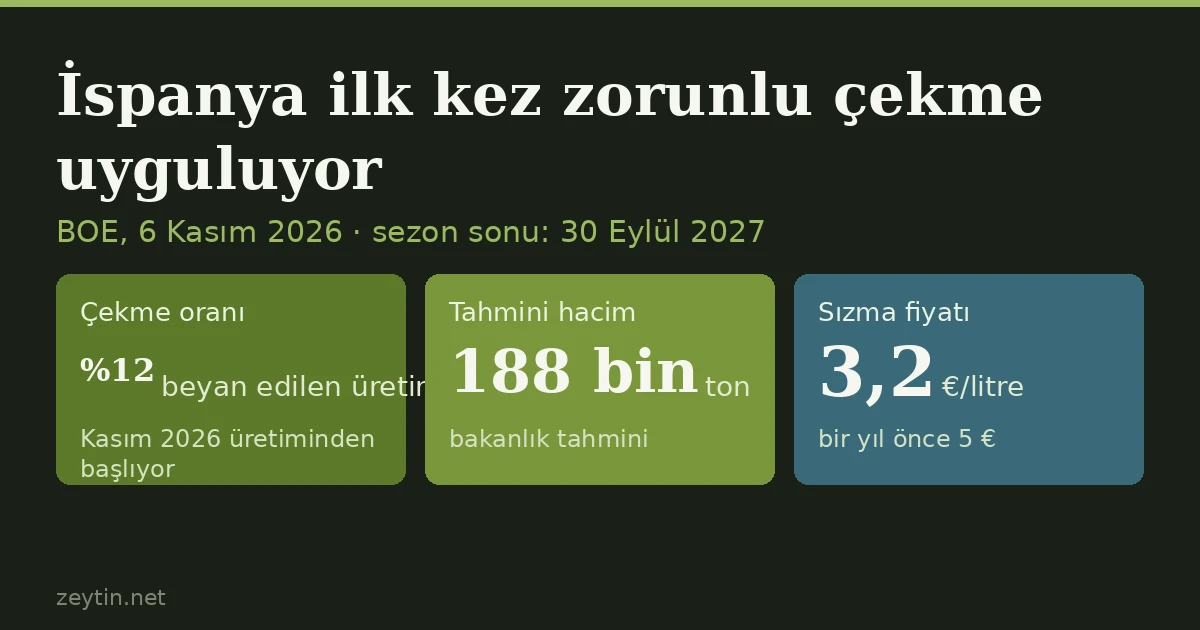
Spain activates mandatory olive oil withdrawal for the first time: 12% of output, about 188,000 tonnes held until September 2027
Spain's agriculture ministry published its decision in the BOE on 6 November: from November, mills must keep 12% of declared output in storage until 30 September 2027. The ministry estimates about 188,000 tonnes will be withdrawn; October early-harvest oils are exempt and mills receive no compensation.