Tukaş plans an olive plant in Manyas: 2,000 tonnes a year, a 14.7 million lira ÇED application
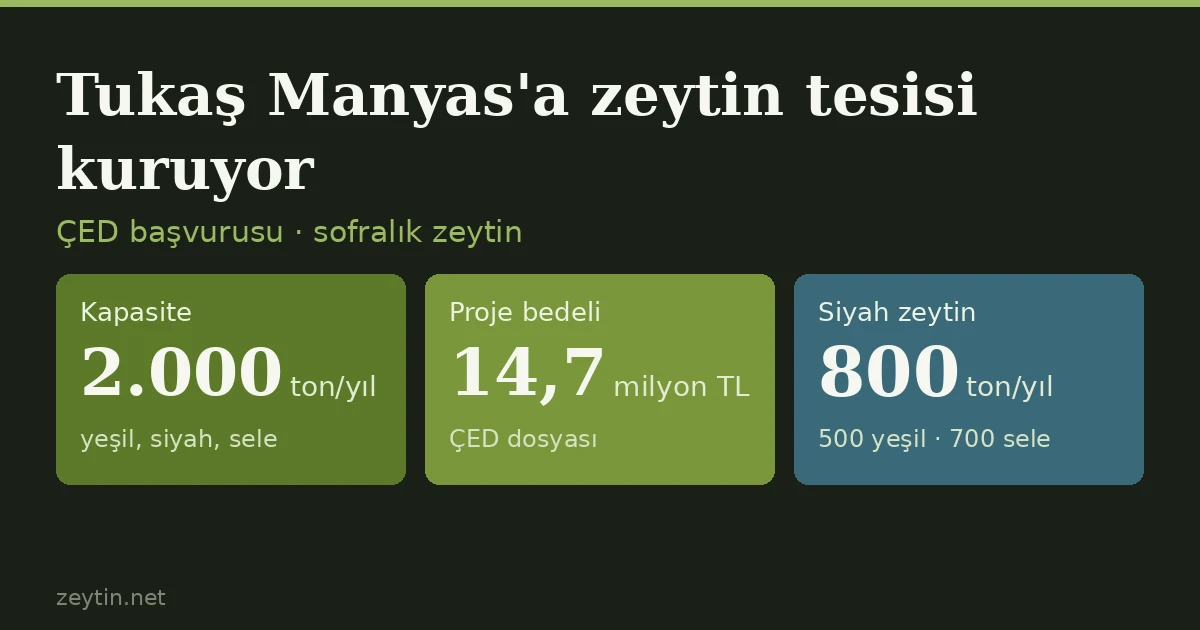
The Okullu brothers, owners of Tukaş Gıda and Cem Zeytin, have applied for an ÇED for a 2,000-tonne-a-year table olive processing and packing plant on the factory site in Manyas, Balıkesir: 500 tonnes green, 800 tonnes black, 700 tonnes sele olives; project cost 14.7 million lira.
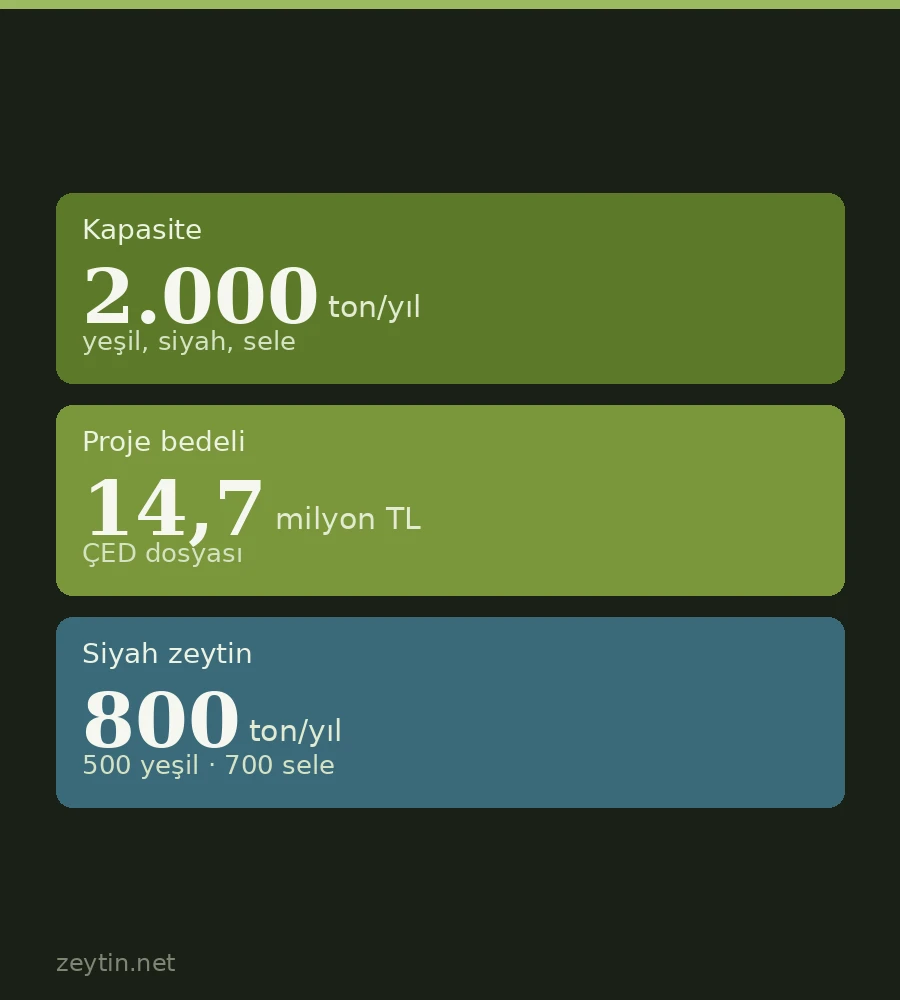
The brothers Cem and Cengiz Okullu, owners of Tukaş Gıda and of Cem Zeytin, which makes private-label olives for supermarket chains, have applied for an environmental impact assessment (ÇED) to build an olive processing and packing plant with an annual capacity of 2,000 tonnes at the Tukaş factory in Manyas, Balıkesir. The project cost is 14.7 million lira. The report was published on 11 November 2026; the figures come from the information in the ÇED file.
This is a table olive investment; the report does not mention olive oil production.
What will the plant process?
According to the ÇED file, the 2,000-tonne annual capacity is split among three products:
| Product | Annual capacity (tonnes) | Share |
|---|---|---|
| Green olives | 500 | 25% |
| Black olives | 800 | 40% |
| Sele olives | 700 | 35% |
| Total | 2,000 | 100% |
The percentage shares are our calculation from the tonnages in the report. The report says the olives will first be processed in a pre-preparation unit and then turned into pitted, unpitted and sliced products according to customer orders.
Why Manyas?
The plant will not go on a new site but within the existing Tukaş factory at Yeniköy neighbourhood, Manyas. The factory currently makes tomato paste, canned food, roasted vegetables, frozen food, ready meals, boiled products and corn. According to the report, the company aims to add olive processing to this portfolio.
The Okullu brothers already have a history with olives. The report says olives are produced at Cem Zeytin's facilities in Edremit and that Tukaş makes vegetables, pickles, roasted vegetables and olives at its factory in the Akhisar Olive Organised Industrial Zone. Manyas would then be the third address where the group handles olives. The report does not count it this way; that is our reading of the three place names it mentions.
Scale and financing
The report does not give a daily capacity; only the annual 2,000 tonnes.
For Cem Zeytin's financial position, see Cem Zeytin 9 ayda 486 milyon lira zarar etti. The report has nothing on Tukaş's or Cem Zeytin's accounts or on how the investment will be financed.
What the report does not say
- Which authority received the ÇED application, when, and at what stage it is.
- Daily capacity, headcount, completion date.
- Where the olives will be sourced and which varieties.
- Export or domestic sales plans.
What to watch
The outcome of the ÇED process (a "required" or "not required" decision) will show the investment's next step. For the registration structure of the table olive sector, see sofralık zeytin sektörü: 461 kayıtlı, 8.000 kayıt dışı.
One rating per visitor; you can change yours at any time. Ratings are real reader votes — no seeded or default scores.
Related
 Article
Skilled operators for olive mills: training ends in Milas, Muğla trains women operators
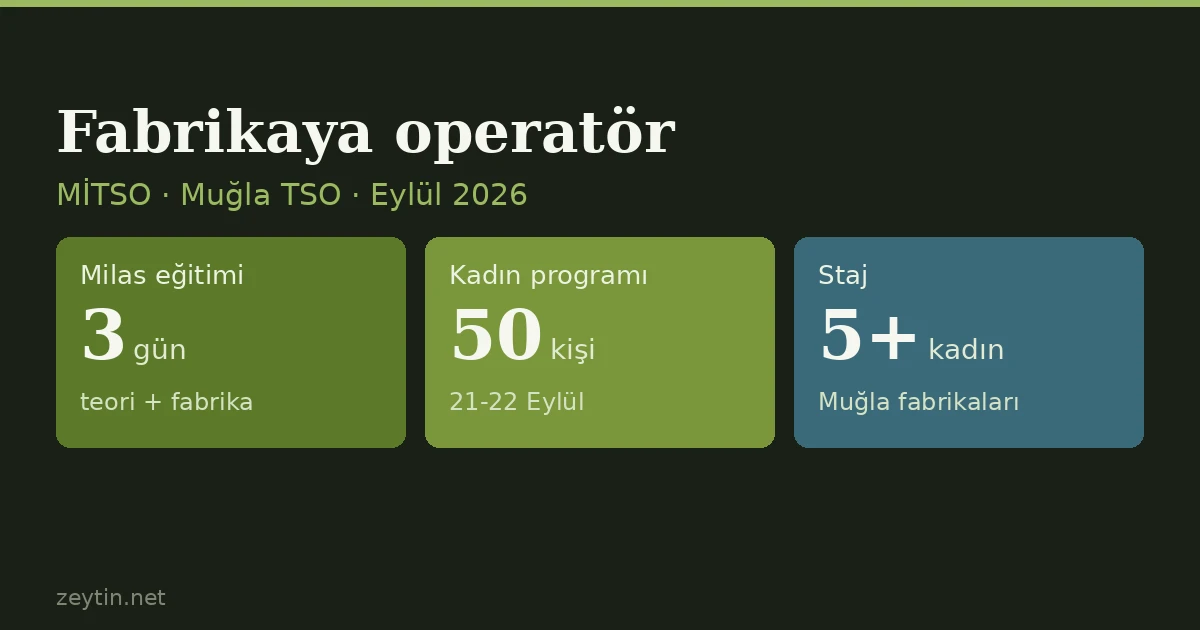
Ahead of the harvest, two training programmes in Muğla focus on operators, the most critical link in olive mills. A three-day operator course run by MİTSO, Milas Tariş and HAUS Makine has ended in Milas, and the Muğla Chamber of Commerce and Industry is launching a 50-place "Women's Hands in Industry" programme to train women as mill operators.
 Article
Spain steps back from vetoing Deoleo's sale: the door opens for Italy's Coricelli
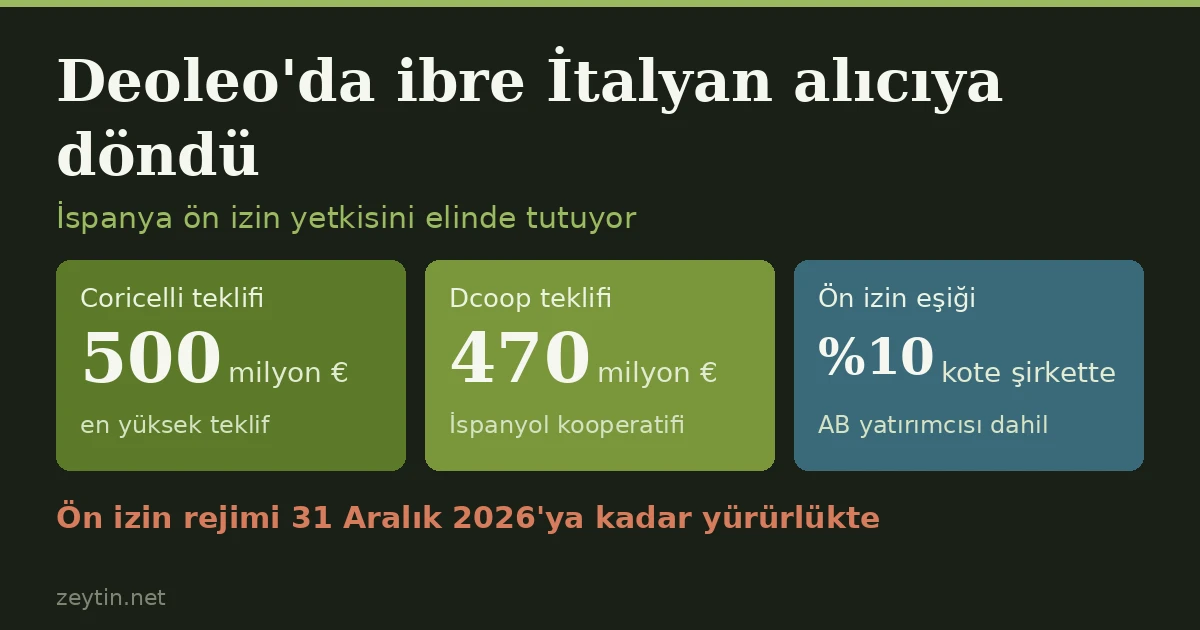
Madrid's position on the sale of the world's largest olive oil bottler has shifted: in early September a Spanish buyer was preferred, and on 18 September Italy's Coricelli was reported to be seen as the best-positioned candidate. The government's lever is a foreign investment screening regime that covers EU investors too and runs to 31 December 2026. Because Deoleo is a major bulk buyer, the outcome matters to Turkish exporters.
 Article
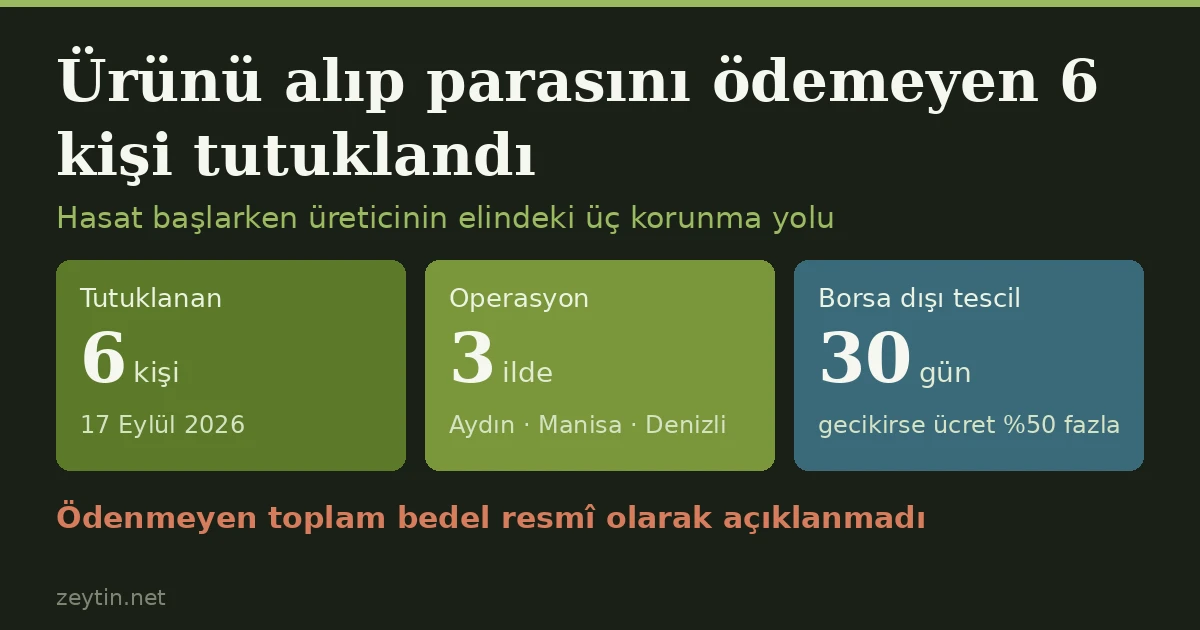
Six jailed for taking produce without paying: the grower's most fragile moment is the start of harvest
In Bozdoğan, Aydın, six people who bought olive oil, nuts and livestock from growers and failed to pay were caught in a simultaneous operation across three provinces on 15 September and jailed on 17 September. The method is a familiar one: the first purchase is paid in full, and once trust is established the large purchase is not. In the week harvest begins, growers have three concrete protections.
 Article
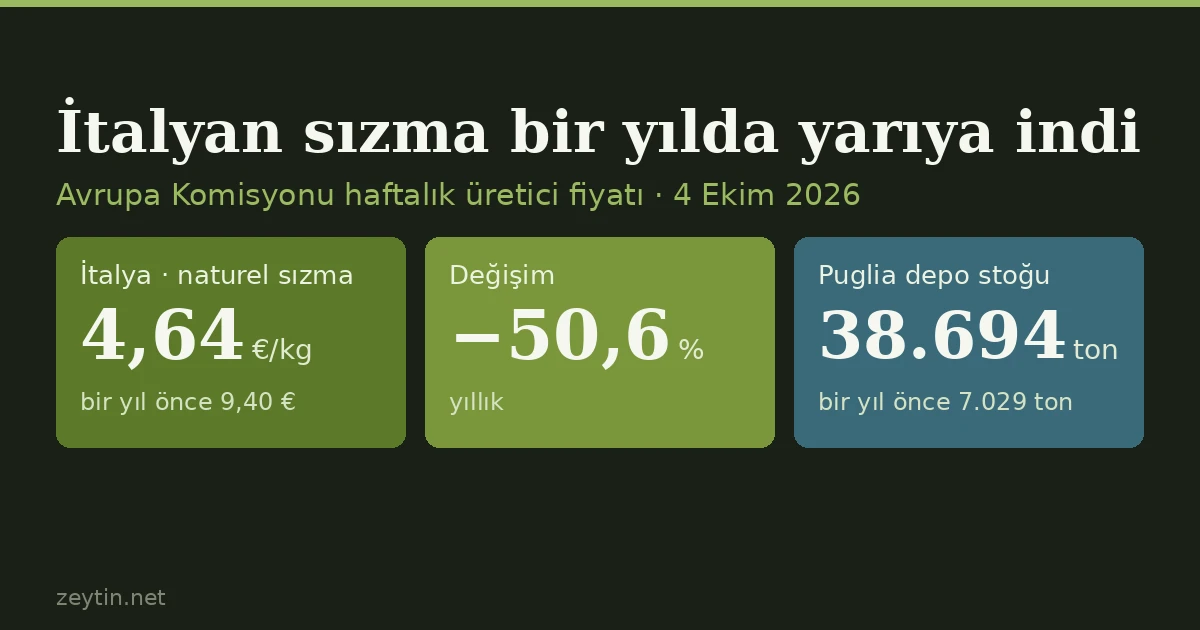
Italian extra virgin has halved in a year: growers in Puglia set a Monday noon deadline
According to the European Commission's weekly producer prices, Italian extra virgin olive oil fell to €4.64 a kilo in the week of 4 October; a year earlier, in the same week, it was €9.40. Growers in Puglia have taken to the streets in the opening days of the harvest, holding sit-ins in Corato and Bitonto and giving the government until noon on 12 October to respond. Italian extra virgin stored in the region's warehouses has risen fivefold in a year.