The History of Olive Oil Soap
From Aleppo to Marseille, Castile to Ayvalık: how olive oil became soap, and how that trade built cities.
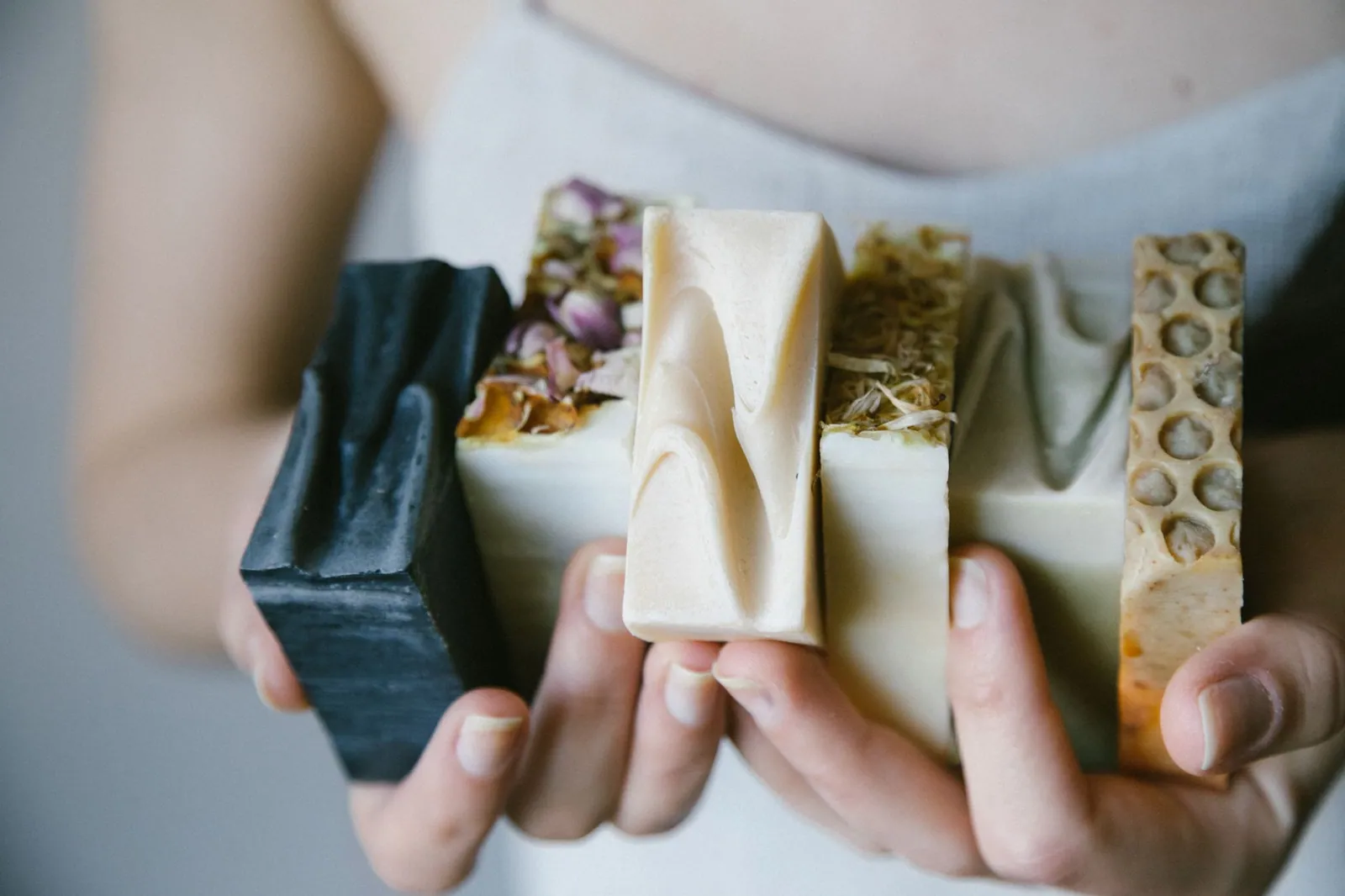
Soap is born from the reaction of a fat with an alkali; chemistry calls it saponification. Around the Mediterranean the abundant fat was olive oil, and the source of alkali was the ash of coastal plants. With both raw materials at hand, soap became a product of this basin.
Aleppo soap
Among the oldest known examples of hard soap is Aleppo soap. It is made by boiling olive oil and laurel (ghar) oil with a sodium alkali; cooked in large pans, poured out to cool, cut into cubes and stamped with the maker's mark.
Its most decisive stage is curing: the cubes are stacked and left in the air for anything from six months to two years. The outside fades to a pale beige while the inside stays green — split a bar and you see both colours, the classic way of judging whether it is genuine. The higher the proportion of laurel oil, the more prized the soap.
Castile soap
The white soap made in Spain, particularly in Castile, from olive oil alone became known across Europe as a luxury. In northern Europe soap was at that time made largely from animal tallow; set beside it in colour and smell, olive oil soap was in another class entirely. The name "Castile soap" is still used today for soaps made from vegetable oils.
Marseille soap
The French city of Marseille established itself at the centre of the Mediterranean soap trade in the 17th century. A regulation issued in 1688 fixed the composition of soap entitled to the name savon de Marseille and forbade the use of animal fat — requiring the soap to rest on vegetable oil, principally olive oil.
It is an early instance of a product name being tied to a quality condition, and can be read as an ancestor of today's geographical indications. The raised lettering and the oil-percentage stamp on a classic Marseille block continue that tradition.
Anatolia and Ayvalık
In the Ottoman lands soap production was interwoven with the olive regions. Ayvalık, Edremit, Crete and Tripoli were known for their soap works. Soap was not only a cleaning product but a durable, portable commodity: it did not spoil, it stacked, and it travelled to distant markets.
Ayvalık's 19th-century wealth is directly bound up with this production; most of the stone buildings on its shore are oil mills and soap works. More in Ayvalık and Edremit.
The pomace left over from pressing was put to use as well: the oil extracted from it was the raw material of lower-grade soap. No part of the olive was thrown away.
How it is made
The outline of the traditional method has not changed:
1. Olive oil is heated in a large cauldron with an alkaline solution.
2. The mixture is boiled for hours, sometimes days, until saponification is complete.
3. It is washed with brine to separate out excess alkali and glycerine.
4. The hot paste is poured onto the floor or into moulds and left to cool.
5. Once set it is cut, stamped and cured in the air for months.
The length of curing determines the hardness and life of the soap; a soap hurried through melts away quickly.
Today
Olive oil soap lost market share as industrial detergents spread, but it did not disappear. Aleppo soap production was badly hit by the war in Syria; some makers continue producing in other countries.
In Turkey traditional soap making continues on a small scale along the Ayvalık-Edremit line. What comes from each part of the tree is gathered together in products of the olive.
One rating per visitor; you can change yours at any time. Ratings are real reader votes — no seeded or default scores.
Related
 Article
The Olive in Religion
The tree sworn by in the Qur'an, blended into the holy anointing oil of the Torah, and burned in the lamp. The olive holds a shared place in all three faiths.
Article
The Olive in Religion
The tree sworn by in the Qur'an, blended into the holy anointing oil of the Torah, and burned in the lamp. The olive holds a shared place in all three faiths.
 Article
The oil was a medicine: two thousand years of olive oil in medicine and folk practice
For most of its history olive oil was not food but lamp fuel, soap, ointment and medicine. Rome's four grades are the ancestor of today's label — and much of what survives in folk medicine is two thousand years old.
Article
The oil was a medicine: two thousand years of olive oil in medicine and folk practice
For most of its history olive oil was not food but lamp fuel, soap, ointment and medicine. Rome's four grades are the ancestor of today's label — and much of what survives in folk medicine is two thousand years old.
 Article
Gemlik-Orhangazi Olive Festival, 10-13 September: what the registration says about the name
Gemlik and Orhangazi are holding their olive festivals together for the first time, on 10-13 September 2026. Dropping “Gemlik Olive” from the name drew criticism. The registered area under record no 76 covers four districts: Gemlik, İznik, Orhangazi and Mudanya.
Article
Gemlik-Orhangazi Olive Festival, 10-13 September: what the registration says about the name
Gemlik and Orhangazi are holding their olive festivals together for the first time, on 10-13 September 2026. Dropping “Gemlik Olive” from the name drew criticism. The registered area under record no 76 covers four districts: Gemlik, İznik, Orhangazi and Mudanya.
 Article
The olive in scripture and folk belief: verses, hadiths and myths
The olive in scripture and folk narrative: what the sources actually say, and what is only tradition. Where there is no source, we say so.
Article
The olive in scripture and folk belief: verses, hadiths and myths
The olive in scripture and folk narrative: what the sources actually say, and what is only tradition. Where there is no source, we say so.