Table Olive Varieties
From Gemlik to Kalamata, Manzanilla to Castelvetrano: the world's best-known table olives and what each is good for.
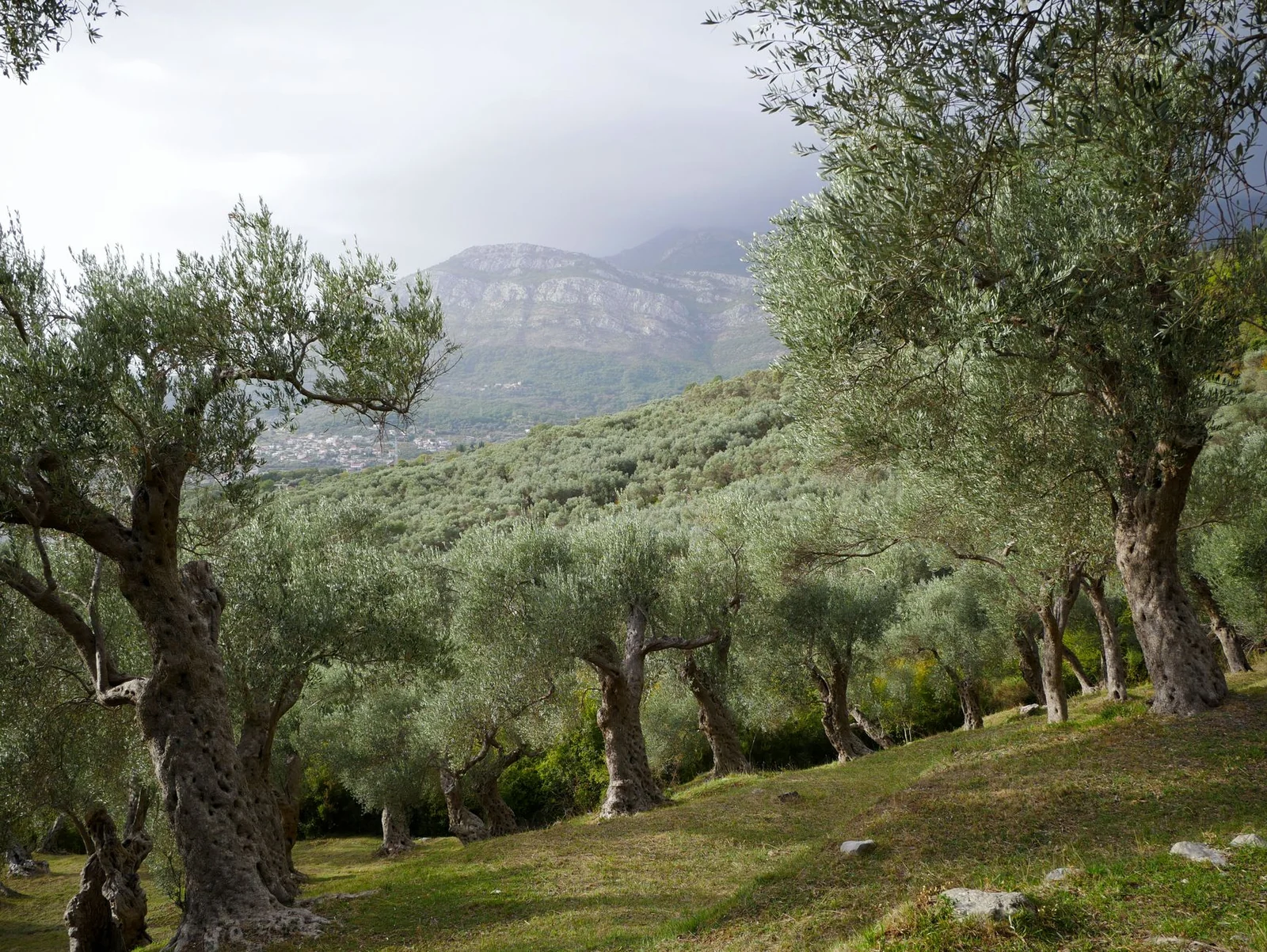
Olive varieties fall broadly into two groups: oil olives and table olives. What separates them is the size of the fruit, the ratio of flesh to stone, and whether the texture holds up in brine. Some varieties serve both purposes.
Turkey
Gemlik. Turkey's best-known table olive. Small to medium, round, with a high flesh ratio and rich in oil. It turns black when ripe; this is the breakfast olive. Very well suited to dry-salt curing.
Domat. Large, pale green, firm-fleshed. Preferred for stuffed olives and cracked green olives. Common along the Aydın-Akhisar line.
Uslu (Akhisar). Large and fleshy; suited to both green and black brining, and a significant part of Turkey's table olive production.
Ayvalık. Primarily an oil variety, but picked early it also serves as a green table olive. Its aroma is pronounced.
Memecik. The most widespread variety in the Aegean; mainly for oil, with the larger fruit used at table.
Nizip Yağlık. The variety of the south-east; despite the name it is eaten as a table olive locally too.
Greece
Kalamata. Almond-shaped, deep purple-black, known for its distinctive fruity and faintly vinegary taste. Produced by natural brining, without heat treatment. The classic of the Greek salad.
Halkidiki. Large, pale green, firm-fleshed. One of the most widely used varieties in the world for stuffed olives.
Spain
Manzanilla. Small to medium, round, with a crisp texture. The world's best-selling green table olive; the martini and tapas olive is usually this one.
Gordal (Sevillano). The name means "the fat one" — very large, meaty and slightly sweet. A visually striking meze olive.
Italy
Castelvetrano. Sicily's bright green, buttery, almost sweet olive. It sees only a short, gentle cure and carries very little bitterness.
Cerignola. Puglia's enormous olive, found in red, green and black types.
Taggiasca. Liguria's small, dark, intensely flavoured olive, used both at table and for oil.
France
Niçoise. Small and dark with a firm stone. The olive that gives salade niçoise its name.
Picholine. Long, green, firm and sharply flavoured; a favourite aperitif olive.
North Africa and the Levant
Beldi (Morocco). Dry-salt cured, wrinkled, intensely flavoured black olive.
Nabali / Souri (Levant). Regional varieties used both at table and for oil.
Which for what?
- Breakfast: Gemlik, dry-cured olives, Beldi
- Greek salad: Kalamata
- Stuffed olives: Halkidiki, Domat, Manzanilla
- Meze platter: Gordal, Castelvetrano, Cerignola
- Cooking (casseroles, pasta): Kalamata, Taggiasca, Niçoise
- Paste and tapenade: Kalamata or ripe black olives
When buying, read the ingredients list: it is the surest way of telling whether black olives have been darkened.
One rating per visitor; you can change yours at any time. Ratings are real reader votes — no seeded or default scores.
Related
 Article
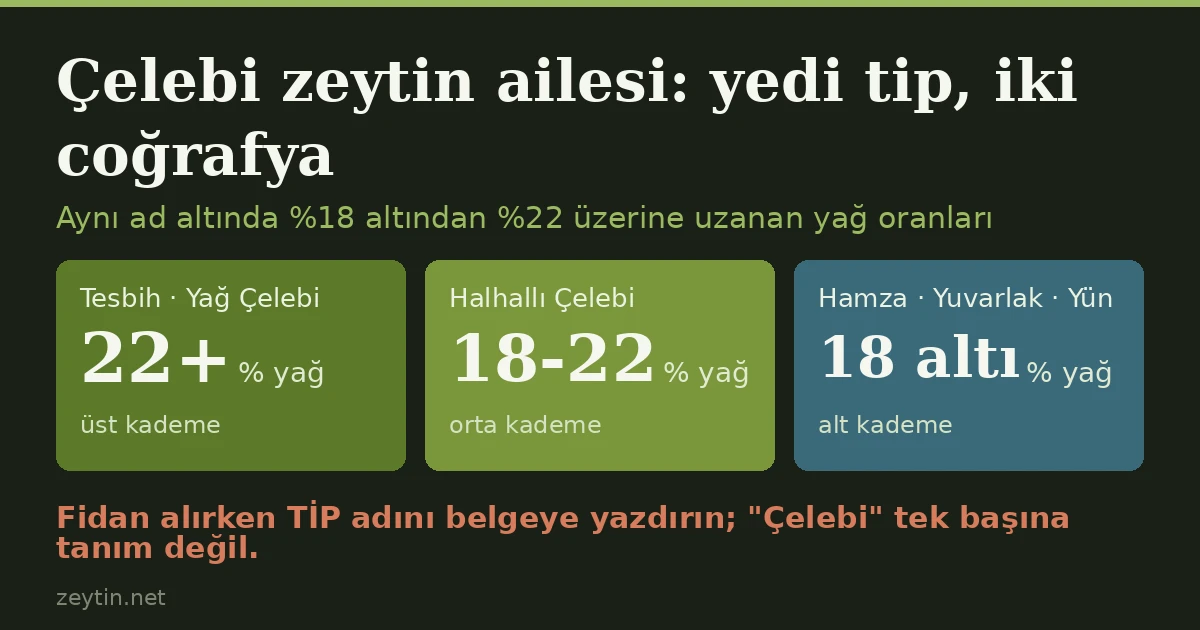
The Çelebi olive family: seven types, two separate geographies
Çelebi is not one variety but a family name. Tesbih Çelebi yields above 22 percent oil while Hamza, Yuvarlak and Yün Çelebi stay under 18. Measured values for seven types.
Article
The Çelebi olive family: seven types, two separate geographies
Çelebi is not one variety but a family name. Tesbih Çelebi yields above 22 percent oil while Hamza, Yuvarlak and Yün Çelebi stay under 18. Measured values for seven types.
 Article
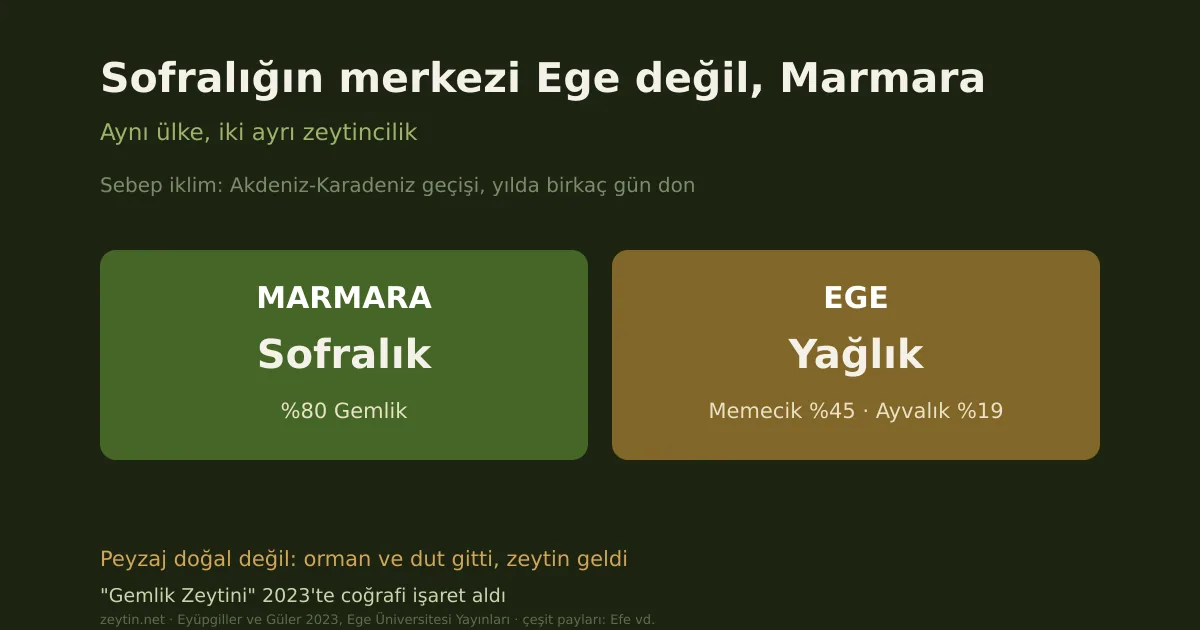
Olive growing in Marmara: the home of the table olive
The table olive's home is not the Aegean but Marmara: 80% of the region's crop is Gemlik. The reason is climate.
Article
Olive growing in Marmara: the home of the table olive
The table olive's home is not the Aegean but Marmara: 80% of the region's crop is Gemlik. The reason is climate.
 Article
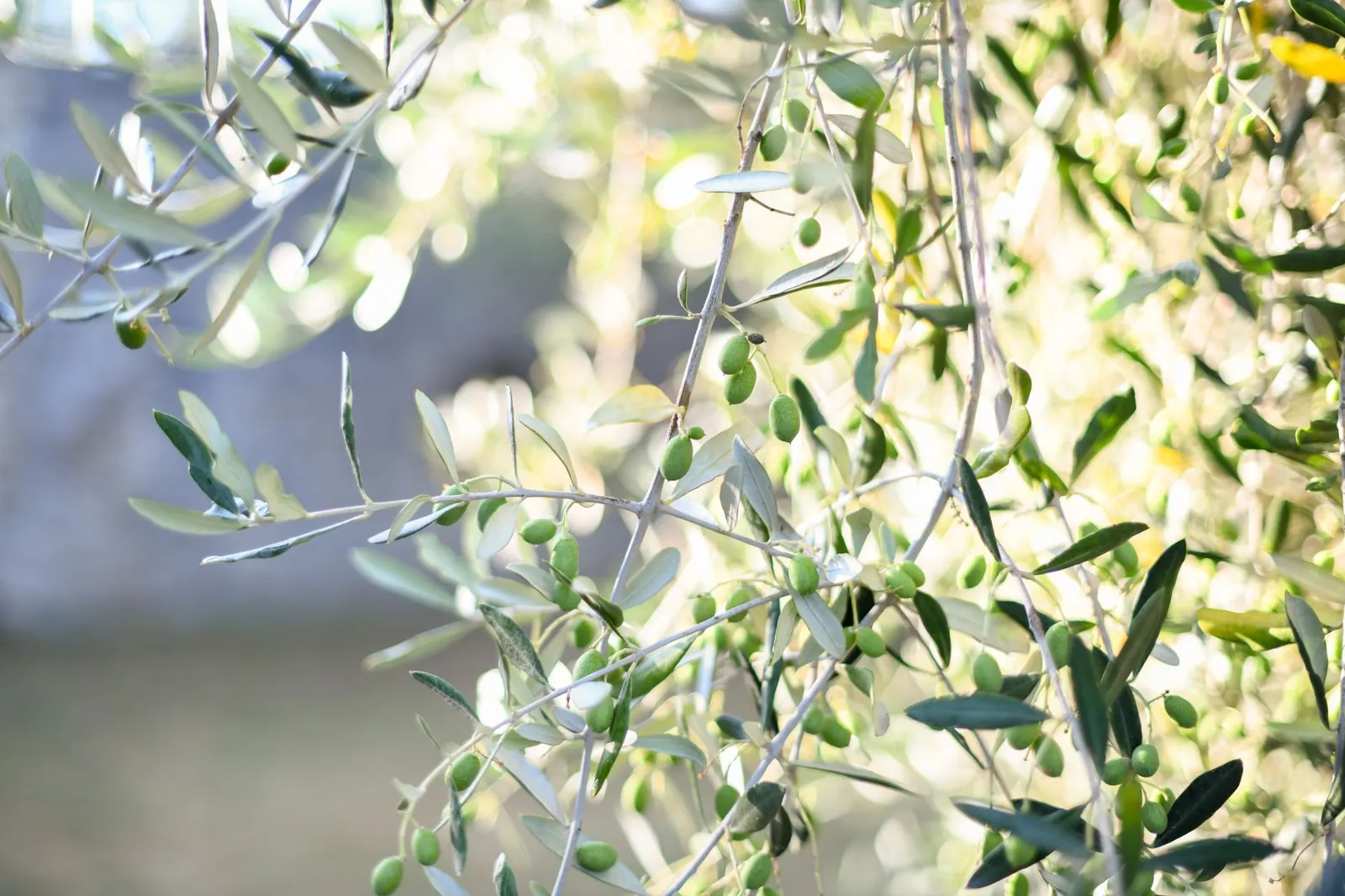
Olive Oil Soap: How It Is Made, Its Types and How to Choose
How saponification works, why curing takes months, and how to recognise genuine olive oil soap.
Article
Olive Oil Soap: How It Is Made, Its Types and How to Choose
How saponification works, why curing takes months, and how to recognise genuine olive oil soap.
 Article
How long does an olive tree live?
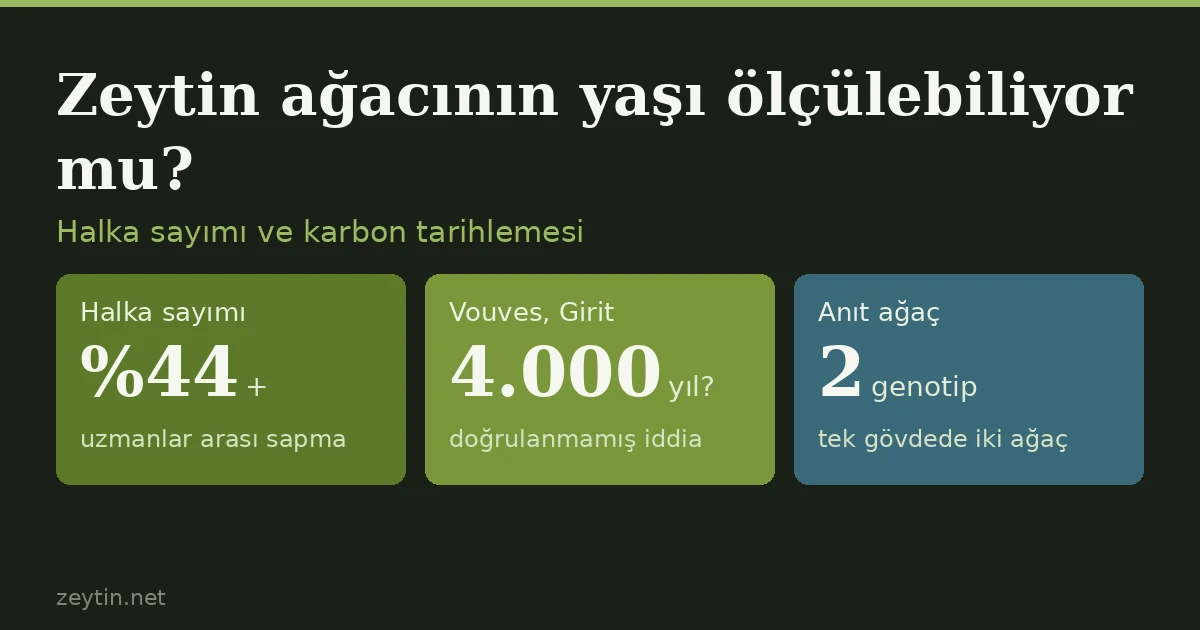
There are plenty of "thousand-year-old olive" signs and almost no measurements. Counting annual rings does not work on olive: when ten experts in five laboratories were given the same samples, their ring counts differed by more than 44%. Radiocarbon dating carries its own trap. So does the tree have a real age limit — and what does it mean that Crete's famous monumental olive turns out to consist of two different genotypes?
Article
How long does an olive tree live?
There are plenty of "thousand-year-old olive" signs and almost no measurements. Counting annual rings does not work on olive: when ten experts in five laboratories were given the same samples, their ring counts differed by more than 44%. Radiocarbon dating carries its own trap. So does the tree have a real age limit — and what does it mean that Crete's famous monumental olive turns out to consist of two different genotypes?