Olive Oil Prices: Week 38 of 2026
Week 38 of 2026: Turkish exchange prices, European producer prices and exchange rates side by side.
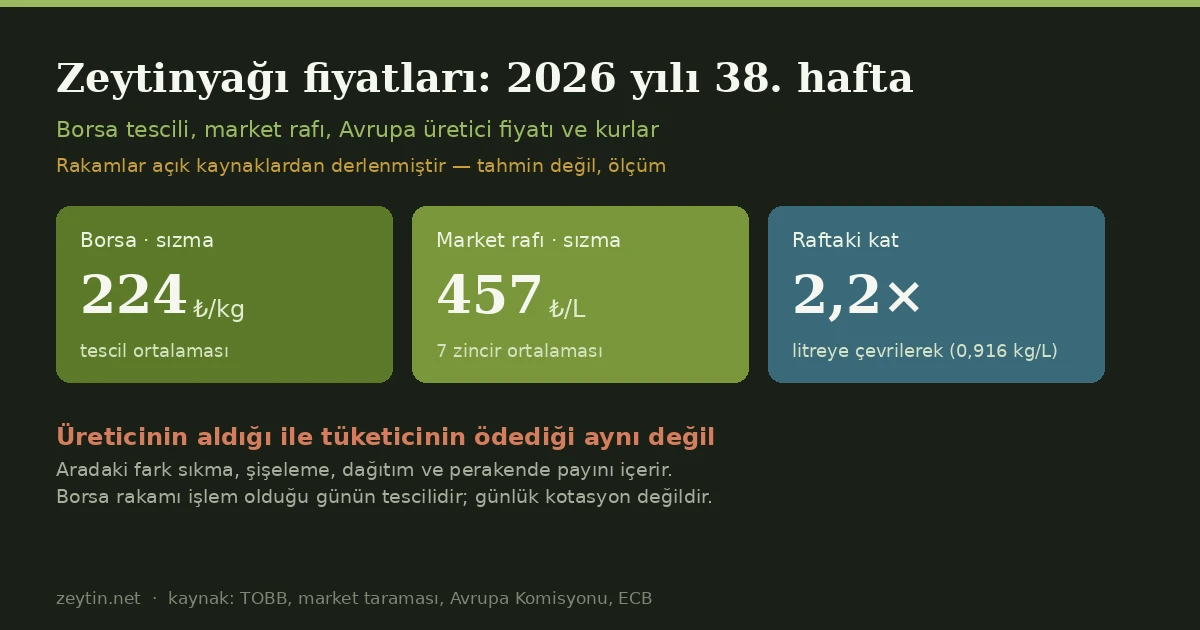
This bulletin brings together current prices from four open sources: trades registered at Turkish commodity exchanges (TOBB), retail prices on Turkish supermarket shelves, weekly producer prices in Europe (European Commission) and exchange rates (European Central Bank). The figures below are those available when the bulletin was prepared.
Turkey: registered exchange prices
| Product | Exchange | Average TL/kg | Trade date |
|---|---|---|---|
| Extra virgin olive oil | Aydın | 216,71 | 07.09.2026 |
| Extra virgin olive oil | Edremit | 251,99 | 09.09.2026 |
| Extra virgin olive oil | Nazilli | 202,37 | 10.09.2026 |
| Crude olive oil | Aydın | 183,48 | 07.09.2026 |
| Crude olive oil | Edremit | 158,40 | 30.07.2026 |
| Crude olive oil | Gaziantep | 250,00 | 06.08.2026 |
| Crude olive oil | Nazilli | 200,00 | 09.09.2026 |
| Olive oil (cooking) | Edremit | 225,00 | 19.08.2026 |
| Black olives, extra-extra | Edremit | 270,00 | 19.06.2026 |
| Green olives, special | Aydın | 70,00 | 14.05.2026 |
| Green olives, special | Edremit | 200,00 | 03.09.2026 |
| Olives for oil | Edremit | 38,00 | 26.06.2026 |
| Black olives, brined | Aydın | 97,84 | 06.04.2026 |
| Black olives, brined | Edremit | 150,00 | 03.09.2026 |
⚠ These are not daily quotations but prices registered on the day that product actually traded; dates differ because the olive is seasonal.
Turkey: supermarket shelf
| Product | Unit | Lowest | Average | Highest | Chains |
|---|---|---|---|---|---|
| Green table olives | ₺/kg | 111,88 | 366,26 | 1293,82 | 7 |
| Black table olives | ₺/kg | 109,50 | 338,67 | 904,84 | 6 |
| Extra virgin olive oil | ₺/L | 249,00 | 456,82 | 1185,80 | 7 |
| Riviera olive oil (refined blend) | ₺/L | 199,00 | 339,12 | 879,60 | 6 |
| Olive paste | ₺/kg | 225,00 | 475,94 | 1073,16 | 4 |
Prices are stripped of package size and shown per unit: oils by the litre, table olives and paste by the kilogram. Surveyed on 30.08.2026. The exchange price is what the producer receives; this is what the shopper pays, and the gap covers milling, bottling, distribution and retail margin.
Europe: weekly producer prices (extra virgin)
| Country | €/kg | Weekly change | Week ending |
|---|---|---|---|
| Spain | 3,49 | ▲ %0,8 | 06.09.2026 |
| Italy | 4,85 | → %0,0 | 06.09.2026 |
| Portugal | 3,62 | ▲ %5,1 | 06.09.2026 |
| Croatia | 10,50 | ▼ %-1,9 | 06.09.2026 |
Exchange rates (11.09.2026)
- 1 EUR = 56,3329 TRY
- 1 EUR = 1,1592 USD
- 1 USD = 48,5964 TRY (cross rate)
What stands out this week
A figure frozen for three weeks in Aydın was replaced: a 30% fall. For extra virgin, the Aydın row had been stuck at ₺307.60/kg from 18 August; a new registration on 7 September brought it to ₺216.71/kg (−29.6%). This does not mean the price lost a third in a week — the old row had simply gone stale, and the new trade showed the real level. Edremit also eased from ₺268.47 to ₺251.99 (−6.1%), while Nazilli held almost flat at ₺202.37.
The striking consequence is that the gap with Europe closed. Spanish extra virgin was €3.49/kg; at this week's rate (₺56.3329) that is ₺196.6/kg. Aydın's new figure is only 10.2% above it. In the same comparison last week, Aydın stood 58% above. The gap closed because the Turkish data refreshed, not because Europe moved.
On the shelf, green table olives broke away. Their supermarket average rose from ₺342.40/kg to ₺366.26/kg (+7.0%), while black table olives (₺338.67) and extra virgin oil (₺456.82/L) were essentially unchanged. The cheapest shelf prices held again: ₺249.00/L for extra virgin, ₺109.50/kg for black olives.
In Europe, Portugal stood out at +5.1% (€3.45 to €3.62/kg), Italy did not move at €4.85, and Croatia eased slightly. The lira was flat against the euro.
A note on comparison
The Turkish and European figures are not directly comparable: the European data is a weekly average producer price, the Turkish data the price of individual registered trades. Anyone comparing them must also account for the exchange rate and the difference in dates.
For current tables see the market page.
One rating per visitor; you can change yours at any time. Ratings are real reader votes — no seeded or default scores.
Related
 Article
What is flavoured olive oil, and what should you look for on the label?
Flavoured olive oil is not a separate grade but an existing grade with spices, plants, fruit or vegetables added. The Turkish Food Codex requires the flavour name to be printed as large as the product name; yet the same communiqué does not apply sensory criteria to flavoured oils, meaning defects are not officially measured. Production methods, the botulism risk with fresh garlic, shelf life, and what to ask when buying.
 Article
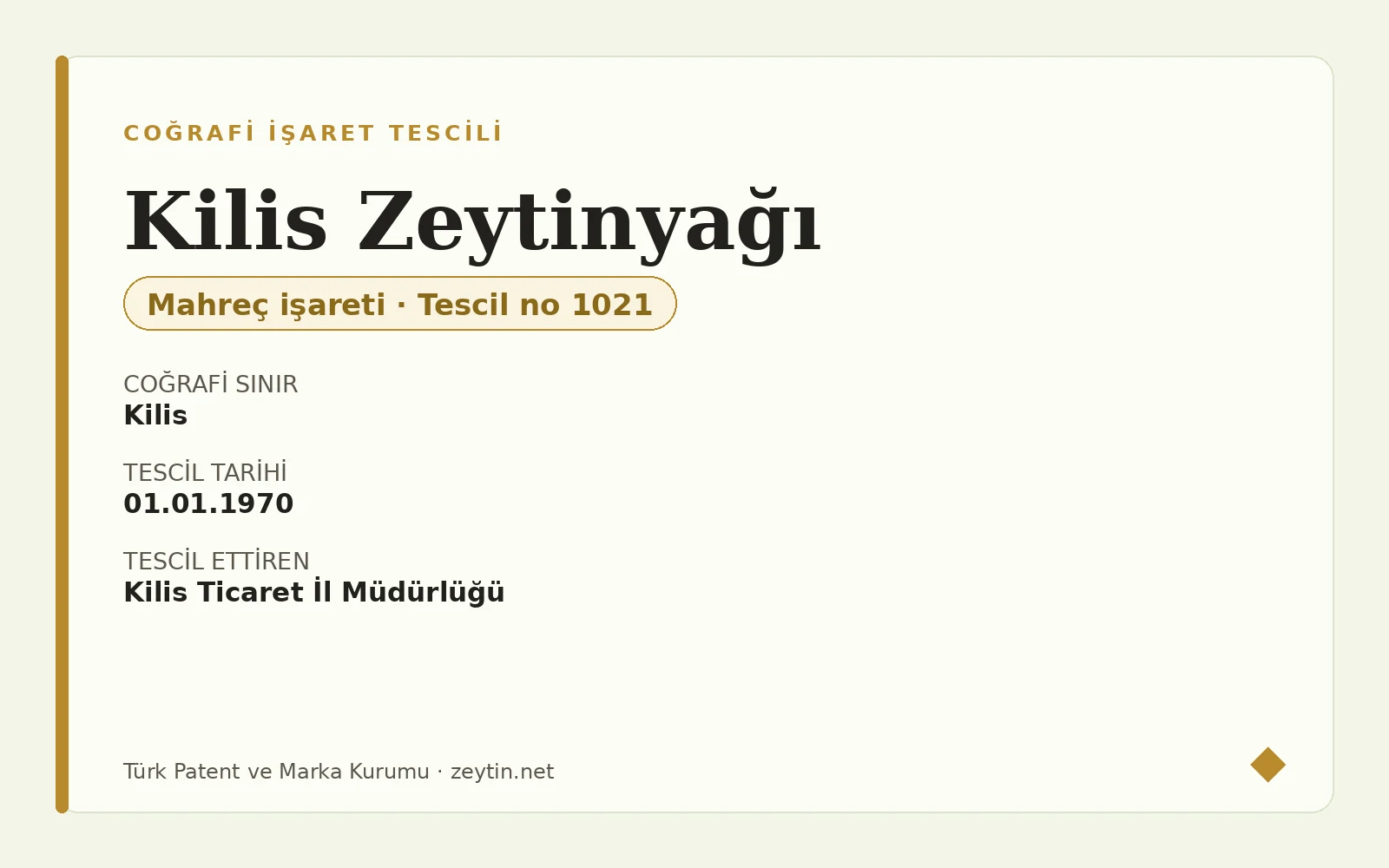
Kilis Olive Oil: a cultivar reaching 33% oil
Registered in 2020. The Kilis Yağlık cultivar runs about 33% oil, far above the Turkish average. Small round fruit, thin skin, small stone.
 Article
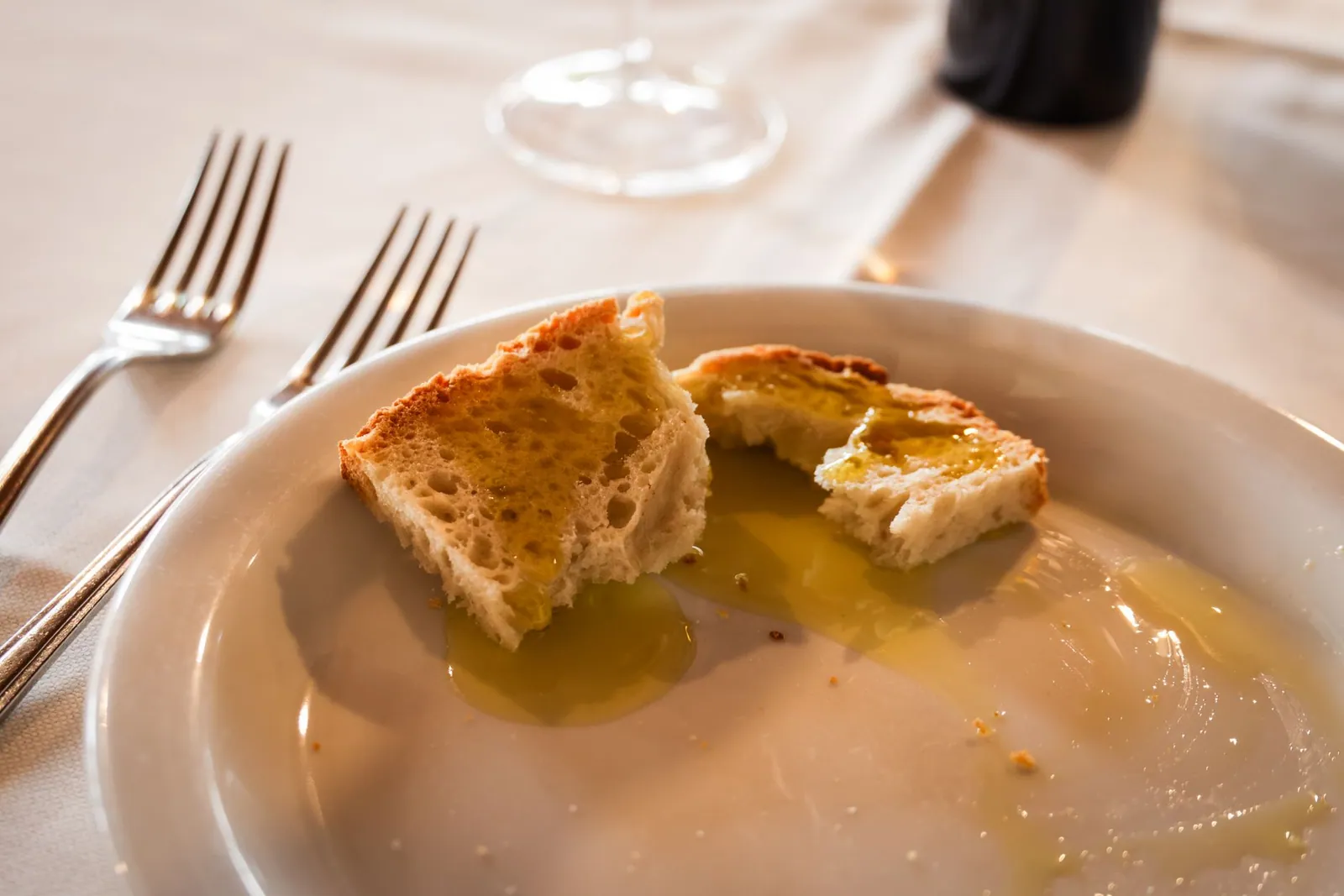
How to Tell Good Olive Oil
Bitterness is a mark of quality, not a defect. Colour tells you nothing. The three attributes tasting panels look for, and a simple test at home.
 Article
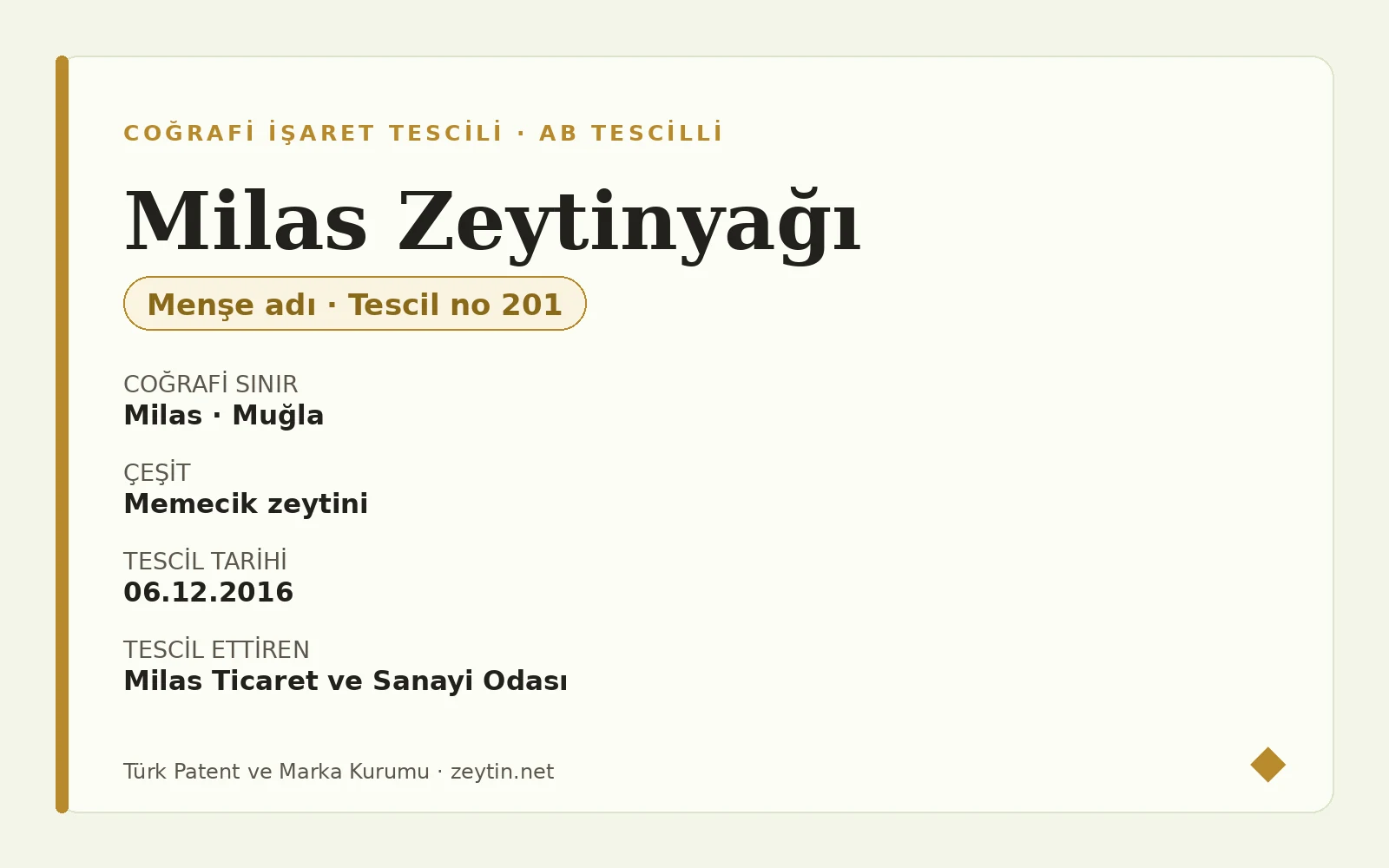
Milas Olive Oil: a press bed dated to 2000 BC
Registered in the European Union as well. The certificate's archaeological anchor is a press bed cut into rock at Pilavtepe — four thousand years old.