Olea europaea: the botany of the olive tree
The olive's scientific name and classification, why its leaves are silver, its floral structure, the layers of its fruit, its root system and lifespan — and how the wild oleaster relates to the orchard olive.
The olive is a tree everyone in the Mediterranean recognises but few know botanically. Its scientific name is Olea europaea and it belongs to the Oleaceae — the olive family — which makes it a relative of lilac, ash and jasmine. This article describes the tree itself: its leaf, flower, fruit, root and lifespan, apart from any question of cultivation.
Name and classification
The full scientific name is Olea europaea L. The trailing "L." credits Carl Linnaeus, who named the species in 1753. Its classification runs as follows:
| Rank | Taxon |
|---|---|
| Family | Oleaceae (olive family) |
| Genus | Olea |
| Species | Olea europaea L. |
| Cultivated variety | var. europaea — the orchard olive |
| Wild variety | var. sylvestris — the oleaster or wild olive |
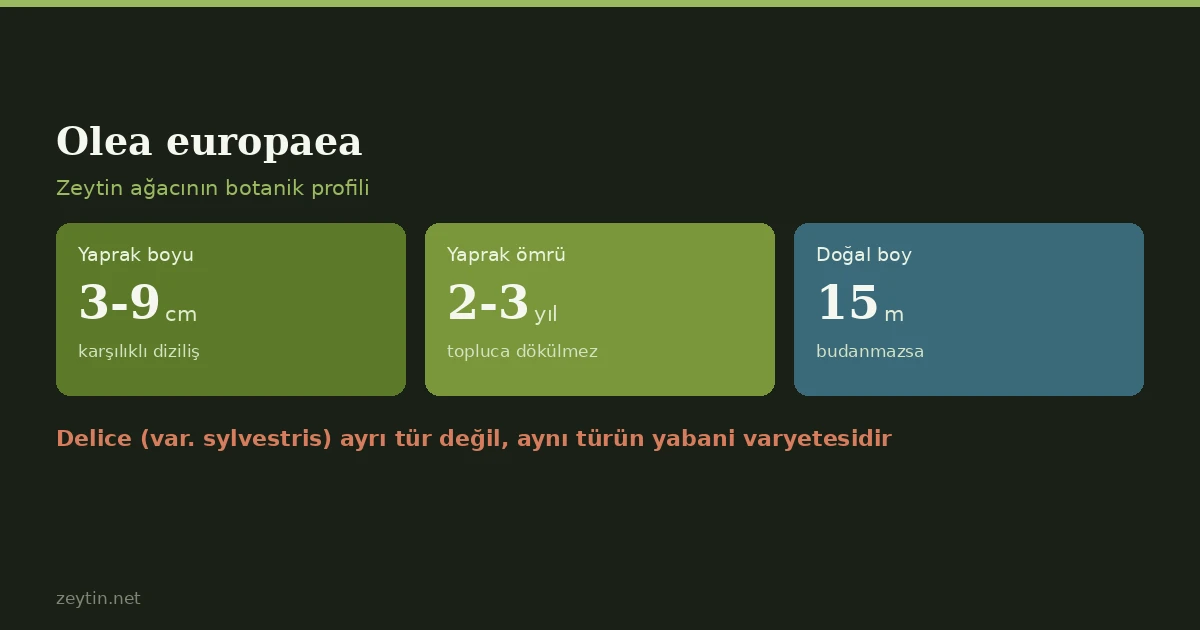
That two-way split matters in practice: the oleaster is the wild form of the same species, not a separate one. This is why a cultivated variety grafts successfully onto a wild seedling — a common way of establishing groves in Türkiye. See rooting olive cuttings and wild rootstock and grafting olive trees.
The genus name Olea shares a root with the Latin oleum, "oil" — the same root that gives English "oil" and "oleic".
The shape of the tree
The olive is evergreen: it does not shed its leaves all at once, so it stays green through winter. Left alone it can reach 15 metres, though orchard trees are pruned far lower. In modern high-density groves they are held to 2.5–3 metres.
The trunk is smooth and grey in young trees; in old ones it becomes hollowed, twisted and deeply fluted. Ancient olives are frequently hollow inside and continue to live and crop in that state.
The root system is spreading rather than deep. Roots concentrate in the top metre of soil and extend well beyond the canopy. This lets the olive hold on in shallow, stony ground — and is equally why it cannot tolerate heavy, waterlogged, airless soils.
Where trunk meets soil there is usually a woody swelling known as the basal burl or ovuli. It carries dormant buds, so when the top of the tree is killed by frost or felling, new shoots emerge from it. This is much of the mechanical explanation for the olive's thousand-year lifespan.
The leaf
The olive leaf is the tree's most recognisable part:
- Opposite arrangement: leaves emerge in pairs, directly facing one another.
- 3–9 cm long, elliptic to lance-shaped.
- Dark green above, silvery beneath. The silver comes from a dense layer of stellate (star-shaped) hairs. They cut water loss and reflect light, and are among the main reasons the olive tolerates drought.
- Thick and leathery, coated in a waxy layer.
- They live 2–3 years, shedding in sequence rather than together, so the tree is never bare.
The silver shimmer of a grove in the wind is simply the underside of the leaves turning to view.
The flower
The olive flowers in spring — generally May in Türkiye. Flowers are not borne singly but in panicles rising from the leaf axils, with 10–40 flowers each.
Each flower is small and cream-white, with a four-lobed calyx, four petals and two stamens. The olive is wind-pollinated and needs no bees; the pollen is very light and travels for kilometres.
Two things stand out about olive flowering. First, the tree blooms heavily but sets only a small fraction of those flowers as fruit; the rest drop, before or after fertilisation. The tree is built around that loss — trouble begins when something interferes with fertilisation. Hot dry wind or rain during bloom can determine the crop on its own.
Second, the olive is andromonoecious: the same tree carries both perfect flowers, with working male and female parts, and staminate flowers whose pistil has aborted, leaving only male function. That abortion is not random — it is one way the tree allocates fruit to the resources it can actually carry. Not every flower in a panicle is even a candidate for fruit.
Most varieties are self-incompatible or set poorly on their own pollen, so a grove of a single variety crops badly. Pollinator varieties are interplanted for this reason; which variety needs which pollinator is given on the variety pages.
The fruit
Botanically the olive is a drupe — the same fruit type as the cherry, plum and peach. It has three layers:
- Exocarp: the skin, turning from green through straw, pink and purple to black as it ripens.
- Mesocarp: the flesh. This is what is eaten and where most of the oil sits.
- Endocarp: the hard stone enclosing the seed.
Fruit length across the species runs about 2–2.5 cm, but the spread between varieties is enormous. Among the varieties we have measured, fruit weight ranges from 0.96 g to 9.44 g — roughly tenfold — and flesh ratio from 67% to 91%. Those two numbers largely decide whether a variety is grown for oil or for the table.
Olives cannot be eaten off the tree. The reason is a phenolic compound called oleuropein, which gives the raw fruit its fierce bitterness. Brining, dry-salting and water-changing are all methods of removing it.
Lifespan and growth
The olive grows slowly and lives a long time. Trees of several hundred years are unremarkable, and individuals reckoned to exceed a thousand years exist around the Mediterranean. Ageing them is difficult, because the hollow trunk usually destroys any countable ring sequence.
A seed-grown olive comes into bearing late. Groves are therefore established from cuttings or grafts, which both preserves the variety and shortens the wait for a crop.
Climate requirements
The olive is a subtropical plant tied to the Mediterranean climate, bounded by two limits.
Cold. The olive is frost-sensitive; hard winters damage branches and severe ones kill whole trees. Türkiye's olive map is largely drawn by this boundary — see where olives grow in Türkiye.
Chilling requirement. The olive needs a set period of winter cold to initiate flower buds. Without a cool enough winter it will not flower the following year, which is why olives are not grown in the tropics. See the chilling requirement in olives.
The band between those two limits is shifting as the climate warms; for the current position see climate change and the olive.
One rating per visitor; you can change yours at any time. Ratings are real reader votes — no seeded or default scores.
Related
 Article
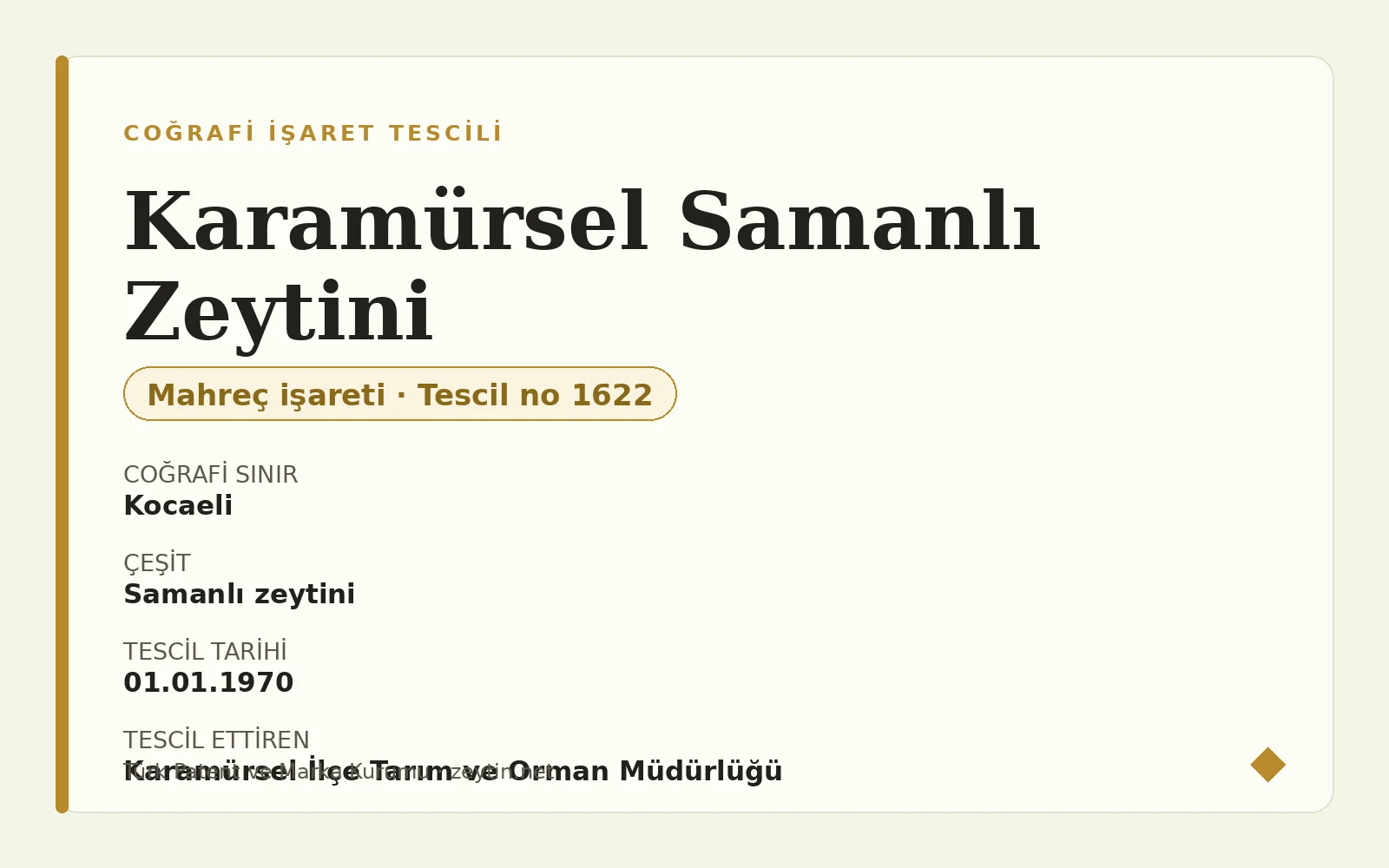
Karamürsel Samanlı Olive: low bitterness earns it the name “sweet olive”
Registered in 2024. Its oleuropein content of 6-8% is low, so it debitters quickly and is locally called the sweet olive. Its skin is 0.2-0.4 mm.
Article
Karamürsel Samanlı Olive: low bitterness earns it the name “sweet olive”
Registered in 2024. Its oleuropein content of 6-8% is low, so it debitters quickly and is locally called the sweet olive. Its skin is 0.2-0.4 mm.
 Article
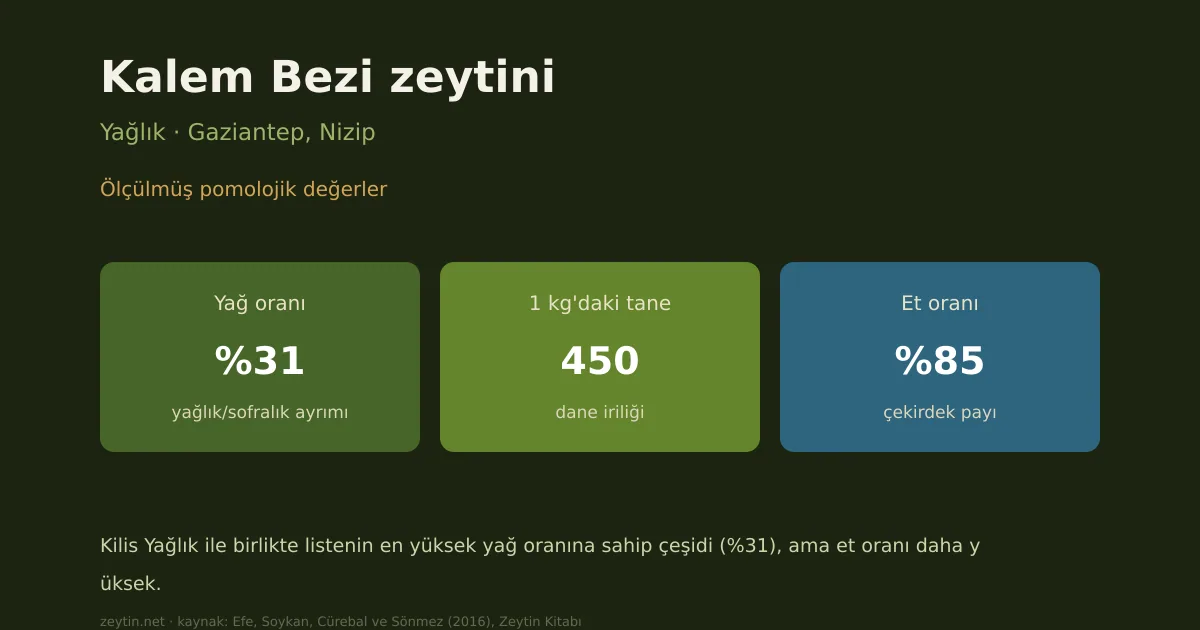
Kalem Bezi olive: characteristics, oil content and growing areas
Tied with Kilis Yağlık for the highest oil content on the list (31%), but with a better flesh ratio.
Article
Kalem Bezi olive: characteristics, oil content and growing areas
Tied with Kilis Yağlık for the highest oil content on the list (31%), but with a better flesh ratio.
 Article
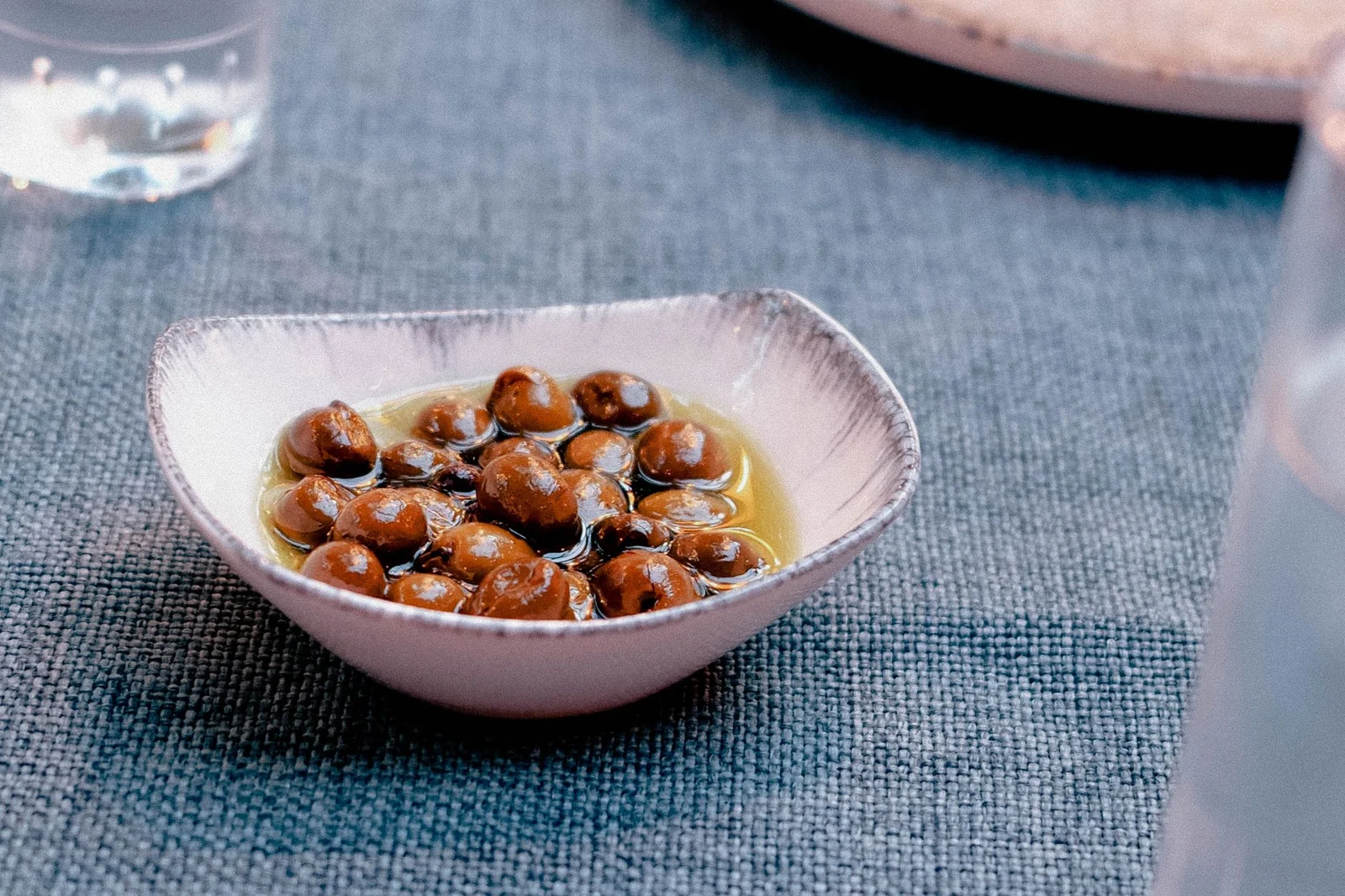
Which table olive variety is best?
The leading varieties for black and green table olives, measured fruit weights, and how curing affects quality.
Article
Which table olive variety is best?
The leading varieties for black and green table olives, measured fruit weights, and how curing affects quality.
 Article
Nizip Yağlık olive: characteristics, oil content and growing areas
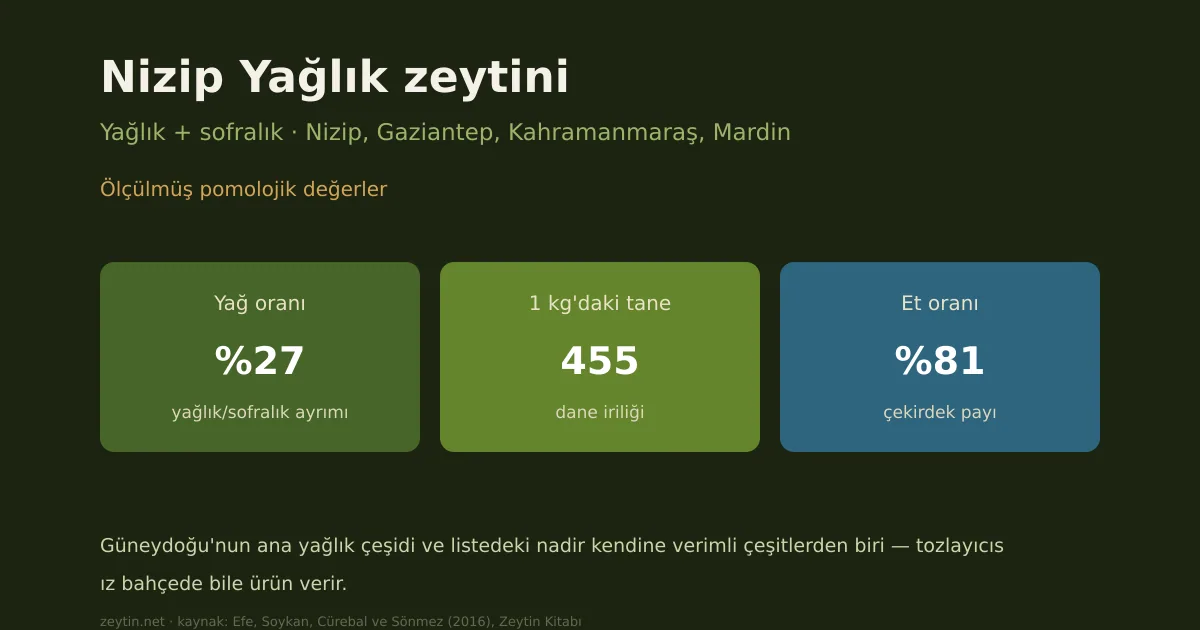
The southeast's main oil variety and one of the rare self-fertile cultivars on the list — it crops even without a pollinator.
Article
Nizip Yağlık olive: characteristics, oil content and growing areas
The southeast's main oil variety and one of the rare self-fertile cultivars on the list — it crops even without a pollinator.