How to store freshly pressed olive oil: settling, sediment and the right container
Oil fresh from the mill is cloudy and contains water and fruit particles. It is left to settle for a few weeks somewhere cool and dark in a container filled to the top, then the clear oil is separated from the sediment and moved into tins or dark glass. Oil left sitting on its sediment for months spoils.

From October onwards, drums and jerry cans line up outside Turkey's olive mills. Growers take home the oil from their own olives, and consumers carry home a tin of "this year's oil" bought from someone they know. This oil is a different product from the bottle on a supermarket shelf: it has not yet been settled, is often unfiltered, and is cloudy and alive. If it is not handled correctly in the first weeks, even the best oil can become defective within a few months.
We covered the general storage rules in how to store olive oil. This page focuses only on the first months of freshly pressed oil.

Why is new oil cloudy?
Oil leaving the mill has passed through the decanter and centrifuge but is not completely clean. Three things remain suspended in it:
- Water droplets. From the fruit's own water and the water used in processing.
- Fruit particles. Tiny fragments of flesh and skin.
- Waxes and some solid compounds. They make the oil look even cloudier in cool weather.
Cloudiness is not a sign of spoilage. On the contrary, it shows that the oil is new. But if those particles stay in the oil for a long time, problems begin.
The real risk: sediment
Over time, water and fruit particles sink to the bottom and form sediment. Sediment is an environment in which microorganisms can work: within months it ferments and rots. That process gives the oil a defective smell and taste that tasters call "muddy sediment". Such oil no longer qualifies as extra virgin; it is one of the most common tasting defects.
That is why the most important rule for new oil is this: oil is not left sitting on its sediment for months.
The first weeks, step by step
1. Fill the container to the top. Air left above the oil increases its contact with oxygen. If a drum is only half full, move the oil into a smaller container.
2. Keep it somewhere cool and dark. The best range for oil is 14-18 °C. A pantry, cellar or unheated room is ideal; a balcony or a sunny windowsill is not.
3. Leave it undisturbed. For the sediment to settle, the container must not be moved. The time needed varies with conditions; a few weeks is usually enough.
4. Separate the clear oil. Once the oil has clearly settled, transfer the upper part into another container without stirring up the bottom. A tank with a tap above the sediment level makes this easy; with a drum you need to siphon with a hose or pour very slowly.
5. Do not keep the sediment. The cloudy layer left at the bottom can be used in cooking within a few days or discarded. It is never poured back into the clean oil.
People storing large quantities repeat the process once more, a month or two later. The second separation yields much less sediment.
Which container?
| Container | Suitability | Note |
|---|---|---|
| Stainless steel tank | Best | Lightproof; one with a tap makes separating sediment easy |
| Tin | Very good | Blocks light completely; decant into a small bottle once opened |
| Dark glass | Good | For daily use; keep somewhere cool and dark |
| Plastic drum | Transport only | Lets oxygen through; not suitable for long-term storage |
| Clear glass or plastic bottle | Not suitable | Light spoils oil quickly |
The healthiest approach is to move oil bought from the mill in a plastic drum into a tin or steel tank once it has settled.
Why is new oil so bitter?
Freshly pressed extra virgin oil is often noticeably bitter and peppery in the throat. This is a sign of high polyphenols, not a defect. As the months pass, bitterness and pungency soften and the oil becomes more balanced. So the taste of new oil in its first weeks is not a full guide to how you will find it through the year.
Filtered or unfiltered?
Some mills filter the oil before handing it over. Filtered oil largely avoids the sediment problem and keeps longer. Unfiltered oil can have a more intense aroma in the first months, but it leaves the settling and separating to you. If you plan to store oil for a long time, either filtered oil or careful settling is essential. The mill-scale equivalent of settling is described in how cold-pressed olive oil is made.
What if it freezes in winter?
In a cool pantry, oil that thickens, turns white or partly solidifies is normal. It does not mean the oil has spoiled; it returns to its usual state at room temperature. Thawing frozen oil quickly in hot water or next to a stove, however, is not a good idea.
How soon should it be used?
Olive oil does not improve with age. Well-stored oil is at its best in the first 12-18 months after harvest. Buying more than a year's supply means you will still be finishing the old oil when next season's arrives.
If you want to be sure of the quality, you can take a sample from the clear oil you have separated and send it to a laboratory. We explained how acidity is measured and how to take a sample in a separate article.
Reading notes
Settling time depends on how cloudy the oil is, the size of the container and the ambient temperature. The steps here are intended for household and small-grower scale.
One rating per visitor; you can change yours at any time. Ratings are real reader votes — no seeded or default scores.
Related
 Article
What happens if fly-damaged olives go into the oil?
If fly-struck olives reach the mill, the oil drops a grade: free acidity and peroxide rise, phenolics fall, and sensory analysis turns up fermentative defects plus the "grubby" attribute. Turkey's official integrated pest management instruction sets the action threshold at 3-4 percent of 800-1,000 fruits for oil olives and 1 percent for brining olives. Infested fruit cannot be sorted out at the mill; the decision is made in the grove and in the timing. This article explains exactly what fly damage changes in the oil, what share is manageable, and why an infested batch should be milled separately.
 Article
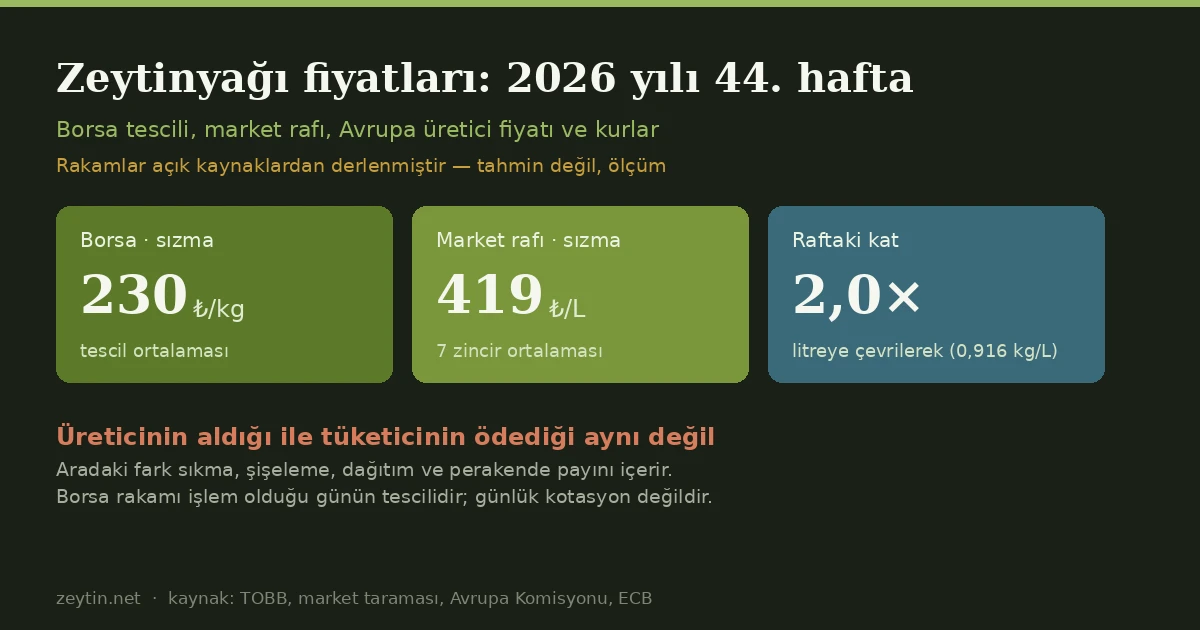
Olive Oil Prices: Week 44 of 2026
Week 44 of 2026: Turkish exchange prices, European producer prices and exchange rates side by side.
 Article
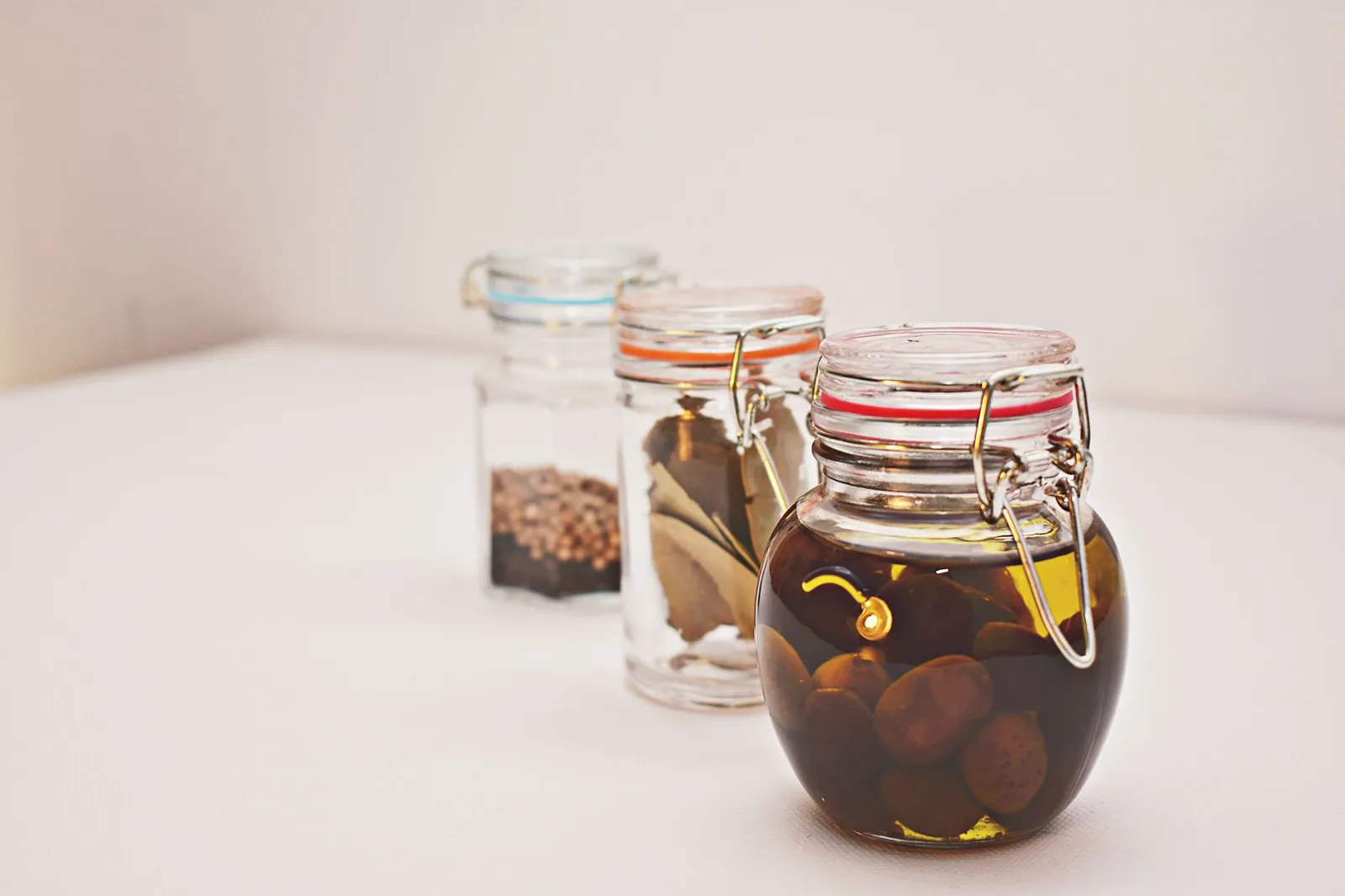
How to Store Olive Oil
Light, heat, air and time — the four enemies of olive oil. Why the bottle next to your stove is in the worst possible place.
 Article
Soma Olive Oil: how a cooler climate lifts yield in a lignite basin
Registered in 2023. Mean temperature 15.3 °C; the certificate ties that relative coolness to yields reaching 796 kg/da. Free acidity 0.18-0.55.