Erdek Kapıdağ Olive Oil: an oil whose grade changes in dry years
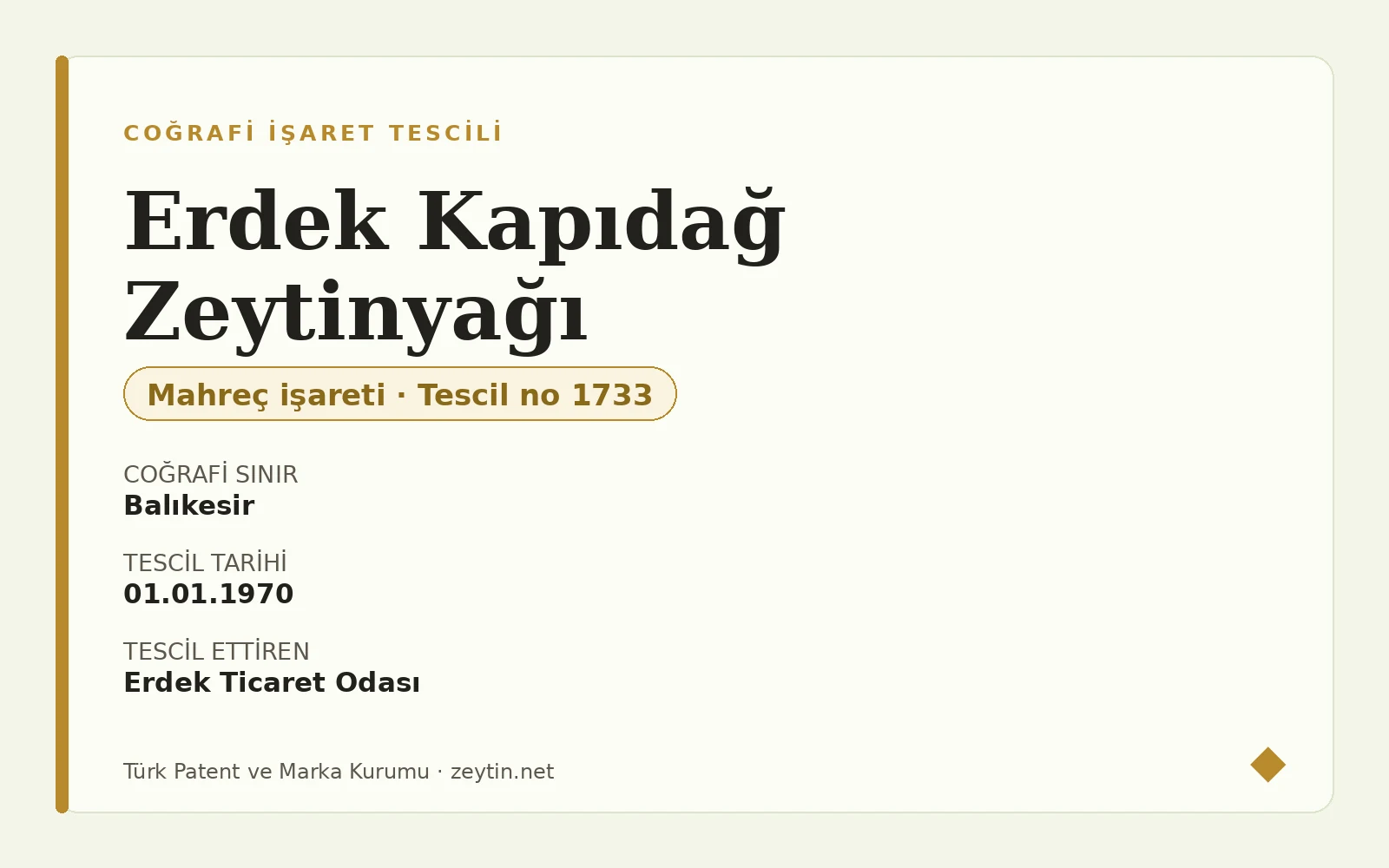
Registered in 2024. The certificate admits something rare: in dry periods the oil can fall from extra virgin to virgin grade.
Registration documents describe a product at its best. The certificate for Erdek Kapıdağ Olive Oil also records an exception: in dry years the oil can change grade.
The record
| Registration no | 1733 |
| Protection from | 29.12.2023 |
| Type | Geographical indication |
| Registered by | Erdek Chamber of Commerce |
| Area | The Erdek district of Balıkesir |
| Cultivars | Erdek Yağlık · Gemlik · Erdek Su |
An honest provision
t; Depending on climatic conditions it generally falls in the extra virgin class, but particularly in dry periods it falls into the virgin olive oil category.
This is a rare admission in a registration. Extra virgin means acidity ≤0.8%, virgin ≤2.0%. Drought creates water stress in the fruit and acidity rises. Rather than concealing this, the certificate writes it into the definition.
A blend of three cultivars
The oil is obtained as a blend of Erdek Yağlık, Gemlik and Erdek Su. It is one of the registrations not resting on a single cultivar — the blend reflects how the local groves are actually planted.
At room temperature it is clear and flowing, its colour running from green to yellow. Fruitiness varies from medium to high, with bitterness and pungency present.
Aroma compounds
| Compound | % | Perception |
|---|---|---|
| 3-hexen-1-ol | 3 – 10 | green, green apple |
| 2-hexen-1-ol | 1 – 35 | banana, leafy, green-fruity, bitter |
| 1-hexanol | 0.5 – 12 | fruity, freshly cut grass |
| E-3-hexenyl acetate | 1 – 10 | green, banana |
| Hexyl acetate | 0.5 – 4 | sweet fruity |
| Limonene | 0.5 – 3 | lemon |
| E-β-ocimene | 0 – 3 | fruity-leafy |
| E,E-farnesene | 0.5 – 3 | green |
Recording which perception each compound produces is a level of detail rarely seen in aroma tables.
Why here
Erdek lies in a temperate belt; the certificate says this acts as a natural air conditioner, and that the loamy soils contribute. Edincik Olive and Edincik Su Olive Oil are registered around the same gulf.
The criteria the document binds
The registration does not only protect a name; it defines the product numerically:
| Criterion | Value in the document |
|---|---|
| Free acidity (as oleic acid) | max %2 |
| Processing temperature | max 27 °C |
Capping processing at 27 °C is what cold extraction means in practice: above that threshold yield rises but aroma compounds and phenolics are lost.
Inspection. The inspection body convenes with at least 4 kişi. Members: Erdek Ticaret Odası, Zeytin Tarım Satış Kooperatifi ve Erdek Ziraat Odası. Results are reported under Industrial Property Law no. 6769 and submitted to the Turkish Patent and Trademark Office.
The production steps in the document
The registration describes production step by step. The document's own sequence:
1. Zeytinlerin taşınması — Zeytinlerin fabrikalara taşınması; gıda ile temasa ve havalandırmaya uygun plastik kasalar ile yapılır.
2. Zeytinlerin temizlemesi ve yıkanması — Hasat sonrası zeytinlerde mevcut olabilecek ince dal, toprak, toz, taş ve diğer bitkisel materyaller gibi yabancı maddeler hava akımı ve basınçlı su (içilebilir nitelikte) sirkülasyonu ile ayıklanır.
3. Zeytinlerin kırılması — Zeytinler, kırıcı üniteler ile kırılır, parçalanır.
4. Zeytinlerin yoğrulması — Kırıcıdan çıkan zeytin hamuru yoğurucuya aktarılır ve burada hamurun bünyesinde yer alan küçük yağ damlacıklarının birleşerek büyümesi sağlanır.
5. Sıvı ve katı fazın ayrılması — Sıvı ve katı fazın ayrılmasında 2 fazlı santrifüj dekantörler kullanılır.
6. Kara suyun zeytinyağından ayrılması — Santrifüj sistemi ile elde edilen yağ-kara su karışımındaki kara suyun ayrılması için separatör (dikey santrifüj dekantörü) kullanılır.
7. Zeytinyağının depolanması ve ambalajlanması — Erdek Kapıdağ Zeytinyağının depolanmasında genellikle paslanmaz çelik veya krom nikel kaplı tanklar kullanılır.
That this sequence is binding is what separates a geographical indication from a trade mark: a mark says who produced something, a geographical indication also sets down how it must be produced.
Its place in Balıkesir's olive production
| Item | Value |
|---|---|
| Fruit production | 314,189 t |
| — for oil | 268,283 t |
| — for the table | 45,905 t |
| Olive oil production | 47,618 t |
| Trees | 11,345 thousand |
| Yield per tree | 27.7 kg |
85% of the province's fruit goes to oil. An oil-based registration matches how the province actually produces.
One rating per visitor; you can change yours at any time. Ratings are real reader votes — no seeded or default scores.
Related
 Article
What Does Acidity Mean in Olive Oil?
The 0.3% or 0.8% on the label has nothing to do with sour taste. Acidity tells you the condition of the fruit before pressing.
 Article
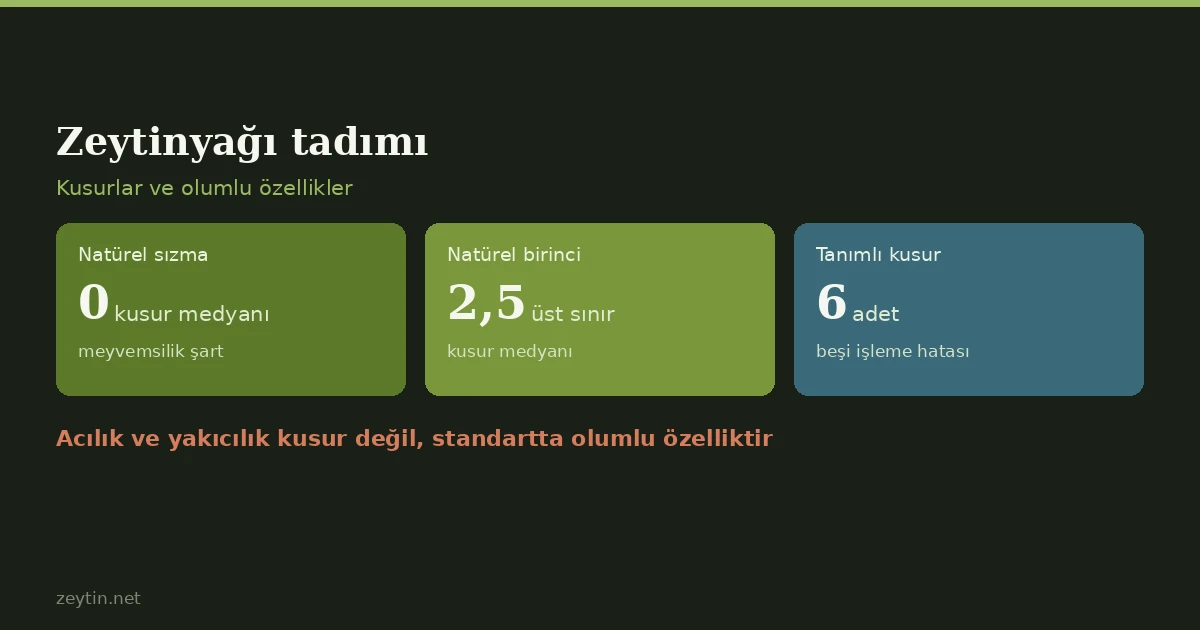
Tasting olive oil: defects and positive attributes
Laboratory tests alone do not make an oil extra virgin — it must pass a tasting panel. The three positive attributes, the six defects in the standard, and what each one says about how the oil was made.
 Article
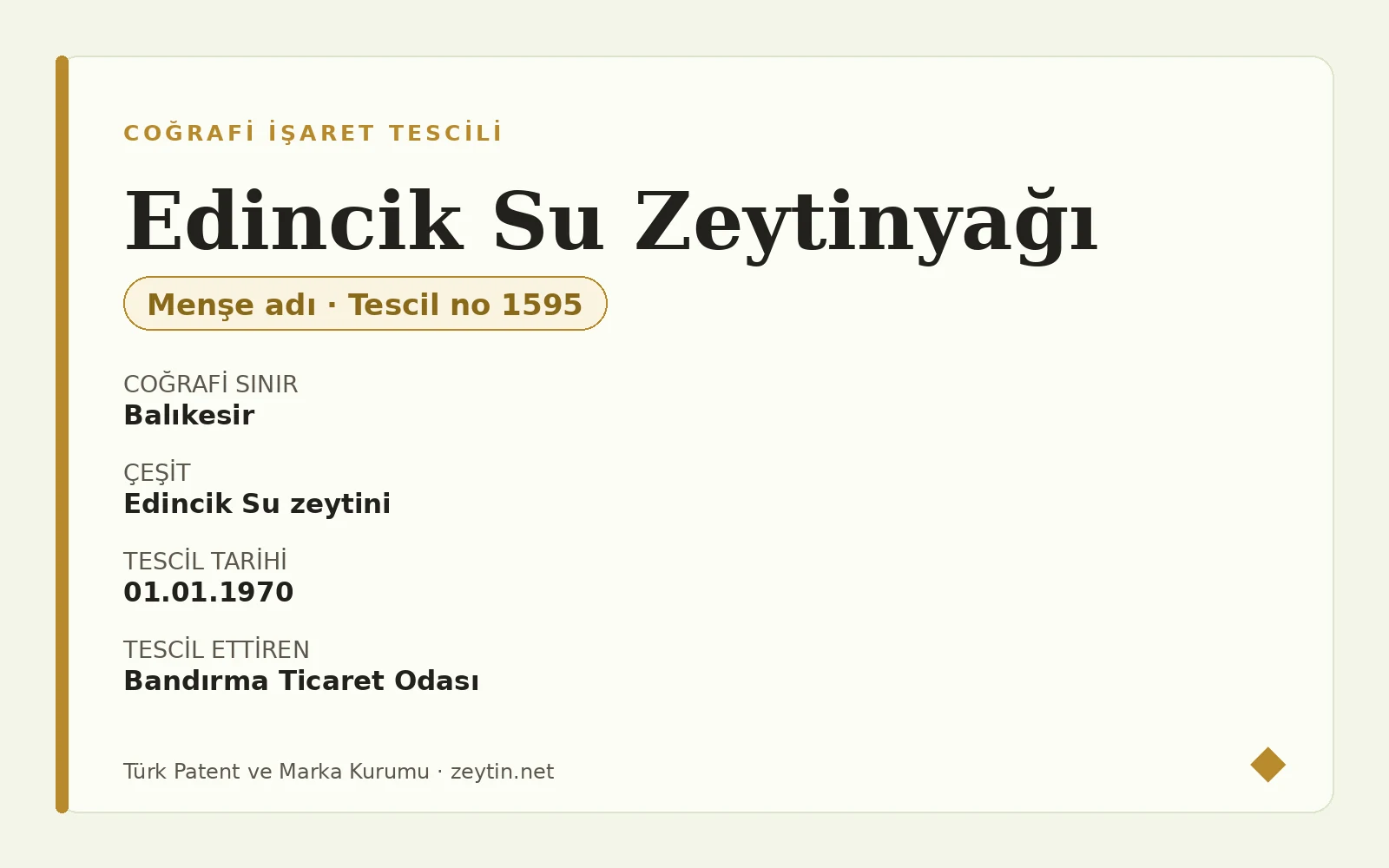
Edincik Su Olive Oil: ripening slowed by the sea
Registered in 2024. The certificate attributes aroma intensity to one cause: near the Erdek gulf the olives develop slowly and ripen late.
 Article
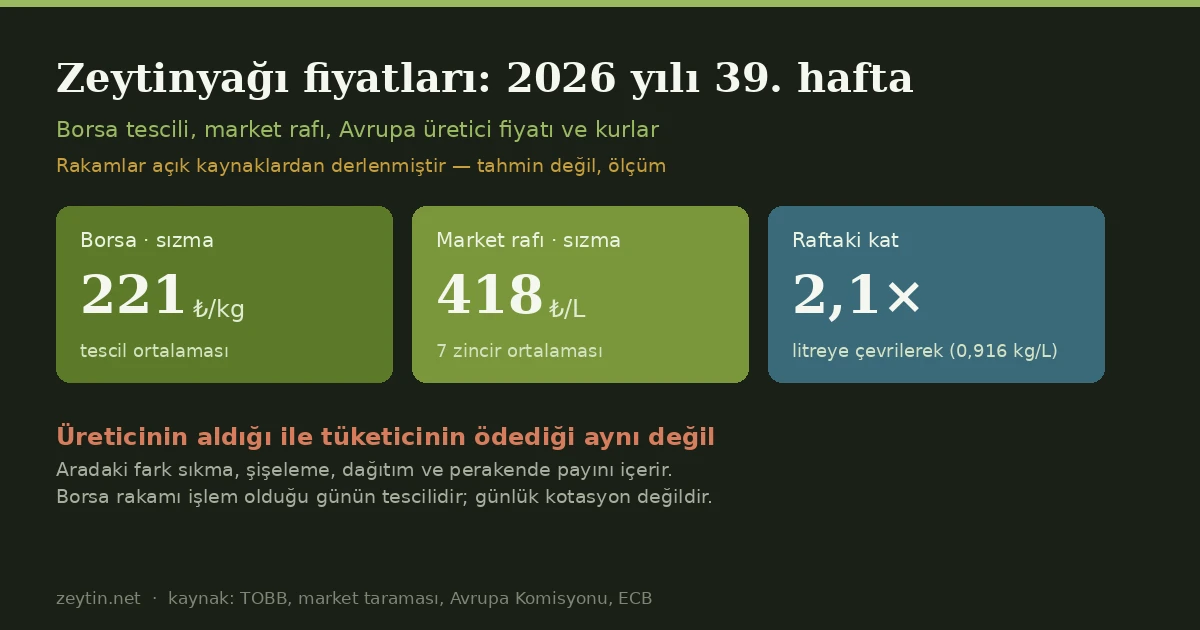
Olive Oil Prices: Week 39 of 2026
Week 39 of 2026: Turkish exchange prices, European producer prices and exchange rates side by side.