Does olive oil protect against cancer? What the meta-analyses and PREDIMED show
One meta-analysis found 31% less cancer at the highest olive oil intake; prospective studies found no significant difference per 25 g a day. PREDIMED is promising for breast cancer but rests on few cases. The figures and why the methods differ.
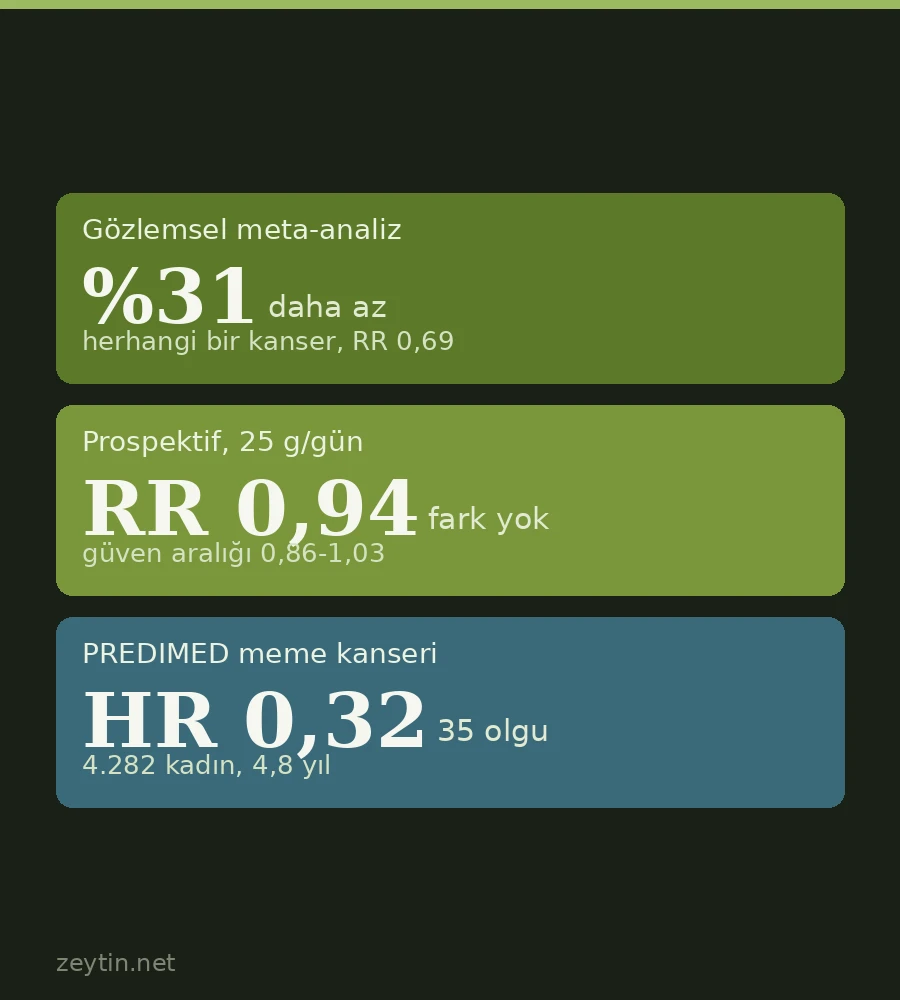
Short answer: the evidence does not point one way. One meta-analysis of observational studies found that people with the highest olive oil intake had a 31% lower likelihood of any cancer. A larger meta-analysis restricted to prospective cohorts found no significant difference per 25 grams of olive oil a day. The one randomised trial (PREDIMED) showed a strong reduction in breast cancer, but it rests on very few cases. So it is too early to say olive oil "protects", and there is no reason to say it does nothing either.
Below we go through what each study found, why the results differ, and what it means at the table.
The figures
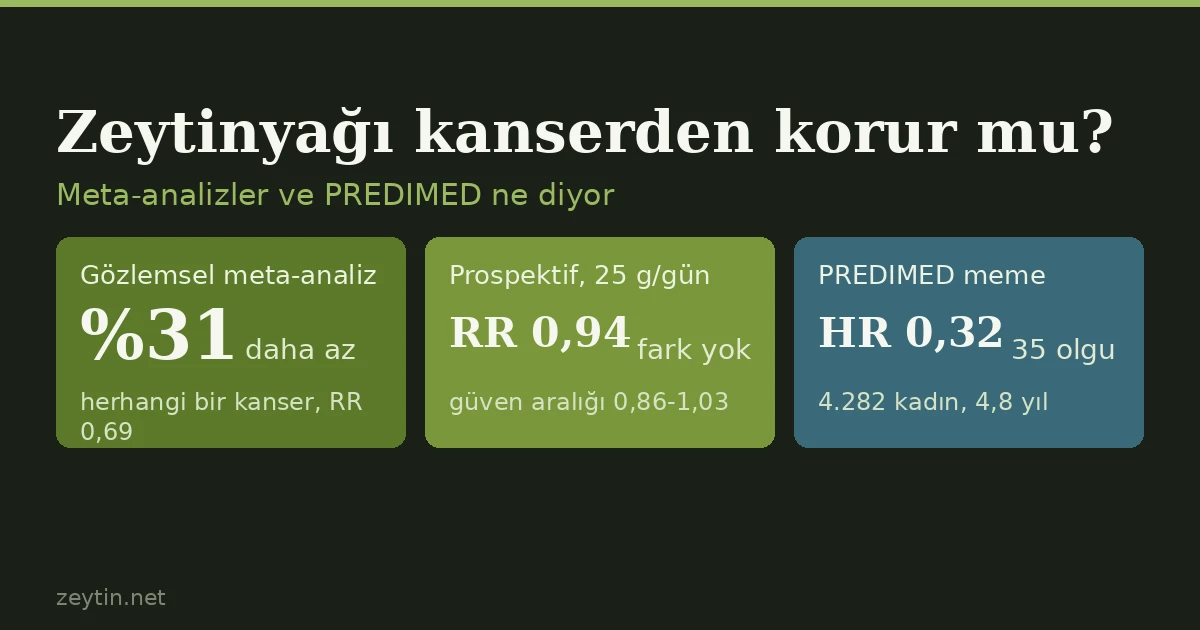
| Study | Type and size | Finding |
|---|---|---|
| Markellos et al. 2022, PLoS One | Meta-analysis, 45 studies (37 case-control, 8 cohort) | Highest intake, any cancer: RR 0.69 (95% CI 0.62-0.77) |
| Martínez-González et al. 2022, Clinical Nutrition | Meta-analysis of prospective studies, 1,285,064 people, 58,892 new cancer cases | Per 25 g a day: RR 0.94 (0.86-1.03), not significant |
| Sealy et al. 2021, British Journal of Nutrition | Breast cancer meta-analysis, 10 observational studies | Per 14 g a day: OR 0.93 (0.83-1.04), not significant; very low certainty |
| Toledo et al. 2015, JAMA Internal Medicine | PREDIMED sub-analysis, 4,282 women, median 4.8 years | Breast cancer on the extra-virgin olive oil diet: HR 0.32 (0.13-0.79); 35 cases |
The favourable meta-analysis: 31%
The review by Markellos and colleagues, published in PLoS One in 2022, searched the literature up to May 2020. Forty-five studies went into the pooled analysis: 37 were case-control studies (17,369 cancer cases and 28,294 controls) and 8 were cohort studies (12,461 new cases among 929,771 people). Comparing the highest with the lowest olive oil intake, the pooled relative risk for any cancer was 0.69, roughly 31% lower.
Subgroups pointed the same way: 0.67 for breast cancer, 0.77 for gastrointestinal cancers, 0.74 for upper aerodigestive tract cancers and 0.46 for urinary tract cancers. The authors say the effect appeared in both Mediterranean and non-Mediterranean participants, and they call for more prospective cohorts and large randomised trials.
The more cautious meta-analysis: no difference
Martínez-González and colleagues asked a different question in Clinical Nutrition in 2022: what do studies that measure olive oil intake first and then follow people for years actually show? They ran separate meta-analyses for cardiovascular disease, type 2 diabetes, cancer and all-cause mortality. Follow-up in the included studies ranged from 3.7 to 28 years. The cancer analysis covered 1,285,064 participants and 58,892 new cases. For every additional 25 grams of olive oil a day the relative risk was 0.94, but the confidence interval included 1 (0.86-1.03), so there was no statistically significant association.
The same review gave clearer results elsewhere: for the same 25 grams, 16% lower risk of cardiovascular disease, 22% lower risk of type 2 diabetes and 11% lower all-cause mortality. So olive oil's benefit is not dismissed in this analysis; for cancer, the association is either absent or cannot be separated from noise with the data available. The authors also note that the reasons for differences between studies were not always apparent, so results moved around from study to study. For the heart side, see olive oil and heart health.
Why do the two results differ?
Of the 45 studies in the favourable meta-analysis, 37 are case-control studies. In that design, people who already have a cancer diagnosis are asked about their past diet and compared with healthy people. Recalling years-old eating habits invites error, and people who are ill may not remember with the same care as those who are not. In prospective cohorts, diet is recorded before anyone becomes ill, which is why the second meta-analysis is generally treated as the sturdier one. That still does not prove olive oil is ineffective: cancer is not one disease, effects may differ between cancers, and a single pooled "cancer" figure can blur that.
Breast cancer: the most discussed area
Sealy and colleagues, in the British Journal of Nutrition in 2021, looked only at breast cancer. In two prospective studies the highest versus lowest intake gave an OR of 0.48, but the interval was very wide (0.09-2.70); in eight case-control studies it was 0.76 (0.54-1.06). In the dose-response analysis, a 14-gram increment gave 0.93 (0.83-1.04). Heterogeneity between studies was high, and the authors rated the certainty of the evidence as "very low". A possible inverse association exists, but it is not established.
PREDIMED: the one randomised trial
PREDIMED was a large randomised trial in Spain among people at high cardiovascular risk. In the breast cancer analysis, 4,282 women aged 60 to 80 were assigned to a Mediterranean diet supplemented with extra-virgin olive oil, a Mediterranean diet supplemented with nuts, or a low-fat control diet. Over a median follow-up of 4.8 years, 35 breast cancer cases were confirmed. The rate per 1,000 person-years was 1.1 in the olive oil group, 1.8 in the nut group and 2.9 in the control group. Compared with control, the hazard ratio was 0.32 (0.13-0.79) for the olive oil group and 0.59 (0.26-1.35) for the nut group.
The authors describe it as the first randomised trial to show an effect of a long-term dietary intervention on breast cancer incidence. They also stress three caveats: breast cancer was a prespecified secondary outcome, the analysis rests on few cases, and the findings need confirming in longer and larger studies. The reduction in the nut group was not significant. The journal also published a correction notice (erratum) for the paper in 2018; the figures here are from the summary of the original report.
One more point: participants were not simply given olive oil, their whole diet changed. How much of the effect comes from the oil and how much from a pattern heavy in vegetables, legumes and fish cannot be separated in this design. For the overall pattern, see what is the Mediterranean diet.
So what should you do?
- Do not treat olive oil as a way to prevent or treat cancer. The evidence points to an association, not to cause and effect; anyone receiving cancer treatment should discuss dietary changes with their oncologist.
- If you want the possible benefit, the sensible route is to replace solid fats with olive oil and build the whole diet around vegetables and legumes. For amounts, see how much olive oil a day.
- Studies do not always separate "olive oil" from "extra-virgin olive oil". The oil used in PREDIMED was extra-virgin; for the role of phenolic compounds, see oleocanthal and polyphenols.
- A label or advertisement saying olive oil "prevents cancer" is not supported by this data. For the general picture, see what are the benefits of olive oil.
Summary
Some studies looking for a link between olive oil and cancer point to a protective effect, but the methodologically sturdier prospective analysis finds no significant difference. In breast cancer the randomised trial is promising but rests on few cases. The most honest sentence today is this: olive oil is a healthy part of Mediterranean-style eating, but it has not been proven to protect against cancer on its own.
t; This article is general information; consult your doctor for diagnosis and treatment.
One rating per visitor; you can change yours at any time. Ratings are real reader votes — no seeded or default scores.
Related
 Article
What Are the Benefits of Olives? What Do They Actually Provide?
What olives do and do not provide. Fat, fibre, vitamin E, iron and polyphenols — without overstatement, with portions, and without skipping salt.
 Article
Is Olive Oil Suitable for Frying?
The most argued kitchen question. Smoke point is not the only measure; what really matters is how well the oil resists oxidation.
 Article
Olive leaf tea: how to make it and what the evidence says
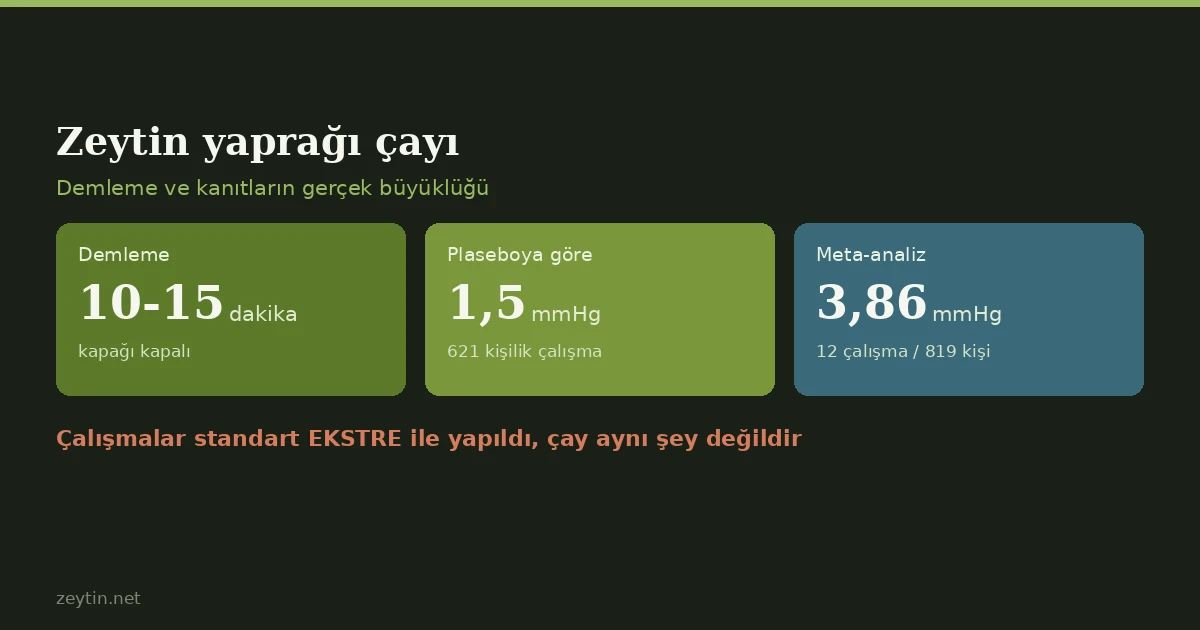
The leaf carries oleuropein and other phenolics. Blood pressure trials show a modest effect, but all used standardised extracts — tea is not the same thing. Steeping, drying and cautions.
 Article
What does drinking olive oil on an empty stomach actually do?
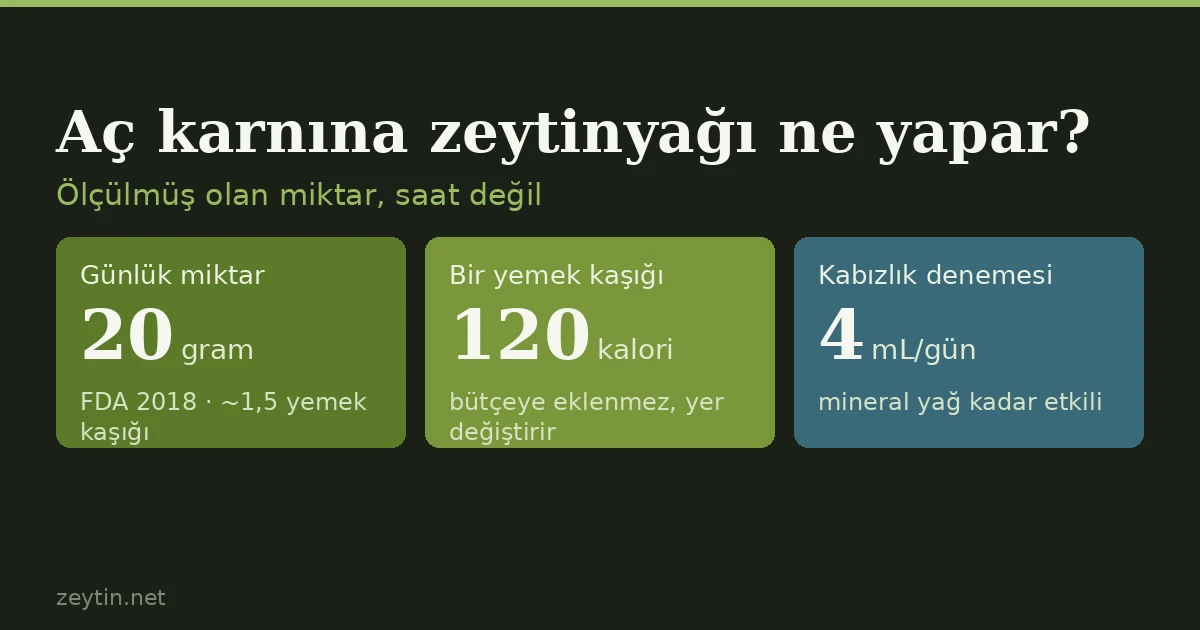
A spoonful of olive oil in the morning is a common habit, but there is no proven separate benefit to taking it on an empty stomach. What actually happens in the body, which claims have been measured and which are myth: the gallbladder, constipation, the calorie arithmetic and the truth about "liver flush" stones.