Does an olive oil and lemon cleanse work? What the evidence says
No measured benefit as a mixture: no evidence it flushes gallstones, slims or detoxes; the 'stones' after a flush are soap-like lumps of oil.
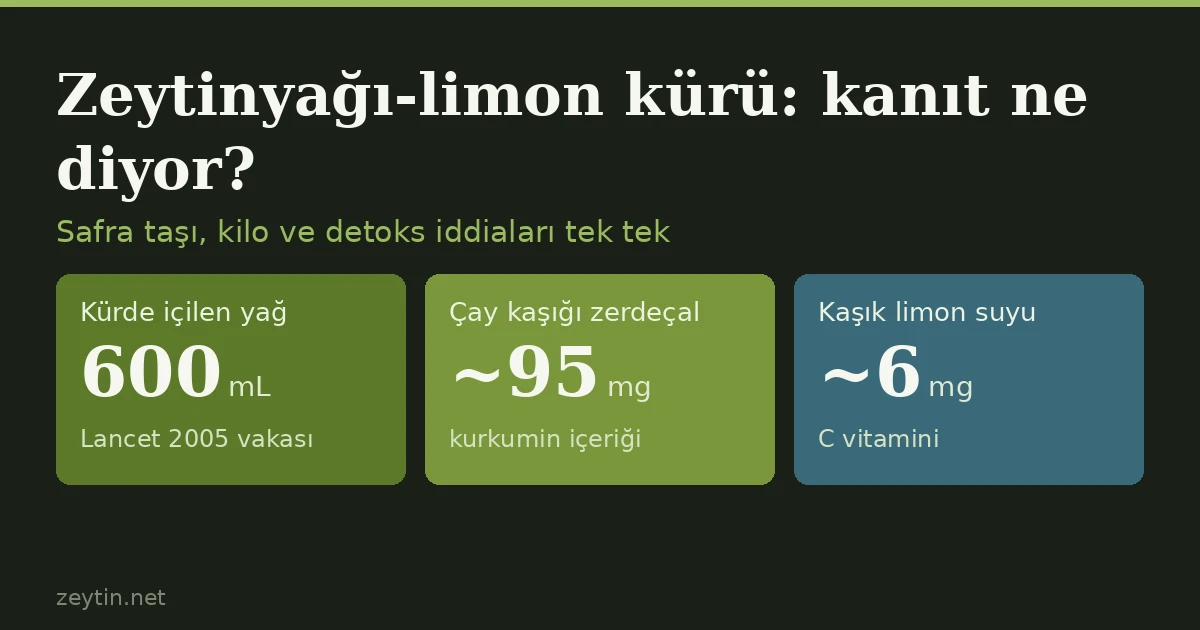
The short answer: taken as a mixture, as a "cleanse", olive oil and lemon juice have no measured benefit. No human study shows that the combination flushes gallstones, causes weight loss or "detoxes" the body. The "stones" people report after a flush have been shown not to be stones at all, but soap-like lumps formed from the oil itself. Each ingredient has things genuinely known about it, but those belong to everyday eating, not to a cure.
Below we take the most common claims one at a time, including the versions with black seed and turmeric added.
| Claim | State of the evidence |
|---|---|
| Flushes out gallstones | Not supported; analysis showed the passed lumps were not gallstones (The Lancet, 2005) |
| "Cleanses the liver", detoxes | Not supported; no randomised controlled trial of commercial detox diets in humans was found (2015 review) |
| Causes weight loss | No study of the mixture; one tablespoon of oil adds about 120 calories |
| Adding black seed makes it slimming | Small trials of black seed supplements show a modest weight difference; low-quality evidence, mixture never tested |
| Oil "activates" turmeric's curcumin | Curcumin is very poorly absorbed; we found no clean human study isolating the effect of a plain spoonful of oil |
Are the "stones" passed after a flush really gallstones?
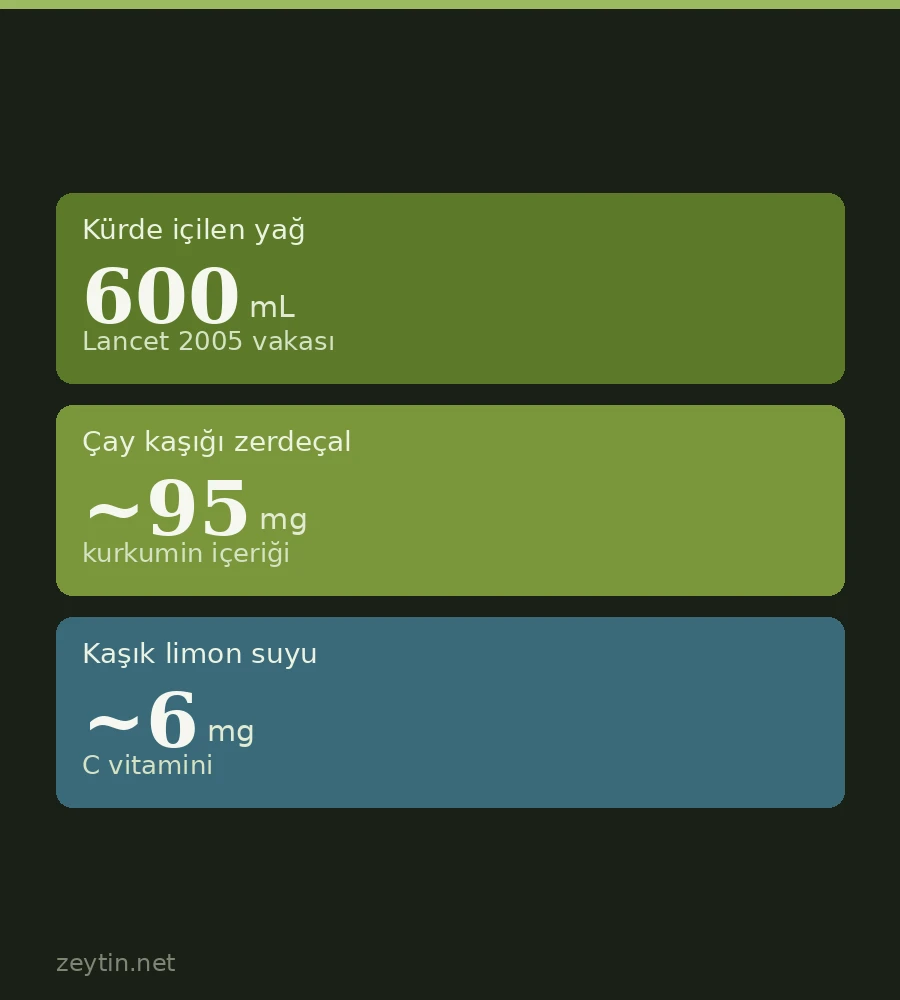
No. The question was examined in a 2005 case letter in The Lancet by Sies and Brooker. The greenish lumps a patient passed after drinking olive oil and lemon juice contained none of the main components of gallstones: no cholesterol, no bilirubin, no calcium. The authors then mixed oleic acid with lemon juice, added a little potassium hydroxide, and produced similar soft lumps in the laboratory. What people see is oil that has partly turned to soap during digestion, not evidence that anything was cleared out of the gallbladder. We describe that experiment in more detail in our piece on drinking olive oil on an empty stomach.
What does a large fat load mean for someone with gallstones?
This is where the cleanse itself matters. When fat reaches the small intestine, the hormone cholecystokinin is released and the gallbladder contracts. If there are stones in the gallbladder, that contraction can push one towards the bile duct, which is how the pain doctors call biliary colic begins. The US National Institute of Diabetes and Digestive and Kidney Diseases (NIDDK) notes that gallbladder attacks often follow heavy meals and that the pain can last several hours.
Flush recipes ask for far more than any ordinary meal. The patient in the Lancet letter had drunk 600 mL of olive oil, which by rough arithmetic is around 4,800 calories, taken in glassfuls rather than spoonfuls. The very thing done to "pass" stones is the thing that makes a stone more likely to move.
Does an olive oil and lemon mixture help with weight loss?
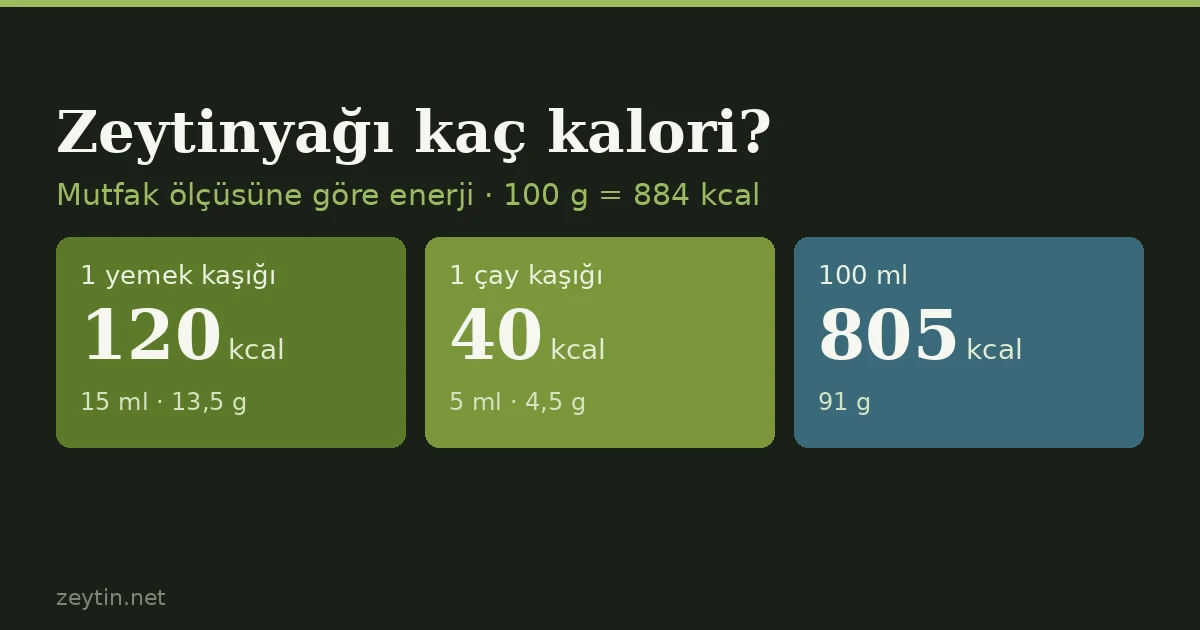
We could not find a clinical study that tested this mixture for weight loss. The arithmetic, though, is plain: a tablespoon of olive oil carries about 120 calories (calorie table). Lemon juice adds almost nothing; the US Department of Agriculture (USDA) food database lists 22 calories per 100 grams.
A morning spoonful that is added on top of the rest of the day's food simply means extra calories. The measured benefit of olive oil appears when it replaces saturated fats such as butter, not when it is piled on top of them. We work through that substitution in how much olive oil a day.
How well founded are "detox" and the "liver cleanse"?
One of the most cited assessments of detox regimes is a review by Klein and Kiat, published in the Journal of Human Nutrition and Dietetics in 2015. The authors examined popular detox diets and concluded there is very little clinical evidence to support them. The few studies reporting positive results had flawed methods and small samples. To the authors' knowledge, no randomised controlled trial had tested the effectiveness of commercial detox diets in humans.
Olive oil and lemon recipes share the same gap: they never say which substance is removed, or how much. If nothing is measured, nothing can be shown to have gone down.
Does adding black seed change anything?
The effect of black seed (Nigella sativa) on body weight has been studied separately. A 2018 meta-analysis in the Journal of Ethnopharmacology by Namazi and colleagues pooled 11 placebo-controlled trials. People taking black seed supplements lost on average 2.11 kg more body weight and 3.52 cm more waist circumference than those on placebo. The authors themselves cautioned that the results varied widely between studies and that high-quality trials were few, so the findings should be read with care.
None of this transfers directly to an olive oil, lemon and black seed mixture. What was tested was a measured dose of a supplement. The mixture itself has not been tested.
Does taking turmeric with oil improve absorption?
The turmeric compound that gets the most attention is curcumin, and its main problem is absorption. A 2007 review in Molecular Pharmaceutics by Anand and colleagues summarises that curcumin is poorly absorbed from the gut and quickly metabolised and eliminated. In a 1998 study in Planta Medica by Shoba and colleagues, volunteers given 2 grams of pure curcumin had blood levels that were either very low or undetectable. Adding 20 mg of piperine, the active compound in black pepper, to the same dose raised the amount reaching the blood roughly twentyfold.
Kitchen quantities are far below that. A 2006 study that analysed 28 spice products in the United States found that pure turmeric powder averaged 3.14% curcumin by weight. A teaspoon of ground turmeric weighs 3 grams according to the USDA, which works out to roughly 95 mg of curcumin, about one twentieth of the 2 grams in the pure curcumin trial.
As for the oil: curcumin is fat-soluble, and there are studies reporting that specially designed fat-based formulations improve its absorption. Those, however, are trials of industrial products. We found no solid human study that isolated the effect of simply taking turmeric with a spoonful of olive oil.
So what is actually known?
On the olive oil side. The PREDIMED trial in Spain divided 7,447 people aged 55 to 80 at high cardiovascular risk into three groups: a Mediterranean diet supplemented with extra virgin olive oil, a Mediterranean diet supplemented with nuts, and a control group advised to cut down on fat. In the reanalysis published in the New England Journal of Medicine in 2018, over a median follow-up of 4.8 years, major cardiovascular events (heart attack, stroke or cardiovascular death) were about 31% less frequent in the olive oil group than in the control group. Two caveats matter. The original 2013 report was withdrawn because of deviations in randomisation, and the results were republished with analyses that account for them. And what was tested was a whole dietary pattern, not a morning mixture. Our article on what the Mediterranean diet is sets out that context.
On the regulatory side, the only approved health claim specific to olive oil in the European Union concerns its polyphenols. Under the European Food Safety Authority (EFSA) assessment of 2011 and EU Regulation 432/2012, olive oil polyphenols contribute to the protection of blood lipids from oxidative stress. The claim may only be used for oils containing at least 5 mg of hydroxytyrosol and its derivatives per 20 grams, with a daily intake of 20 grams (oleocanthal and polyphenols).
On the lemon side. According to the USDA, raw lemon juice contains 38.7 mg of vitamin C per 100 grams. One lemon yields about 48 grams of juice, or roughly 19 mg of vitamin C. The tablespoon of juice typical of a cleanse supplies around 6 mg. EFSA's 2013 population reference intake for adults is 95 mg a day for women and 110 mg for men, so a tablespoon covers about one twentieth of it. Lemon does have one measurable job alongside food: under an approved EU claim, vitamin C increases iron absorption. That is a hint about where lemon belongs, which is next to a meal rather than in a spoonful of oil.
A brief safety note
People with gallstones or other gallbladder disease, and anyone taking blood-thinning medication (case reports describe interactions between turmeric and these drugs), should talk to their doctor before starting a cleanse like this. We have gathered olive oil's other possible downsides separately.
One rating per visitor; you can change yours at any time. Ratings are real reader votes — no seeded or default scores.
Related
 Article
How many calories are in olive oil? Tablespoon, teaspoon and 100 ml
One tablespoon of olive oil has about 120 calories and one teaspoon about 40. Extra virgin, refined blends and sunflower oil carry almost the same energy. A measure table, plus how to count it in salads and cooked dishes.
 Article
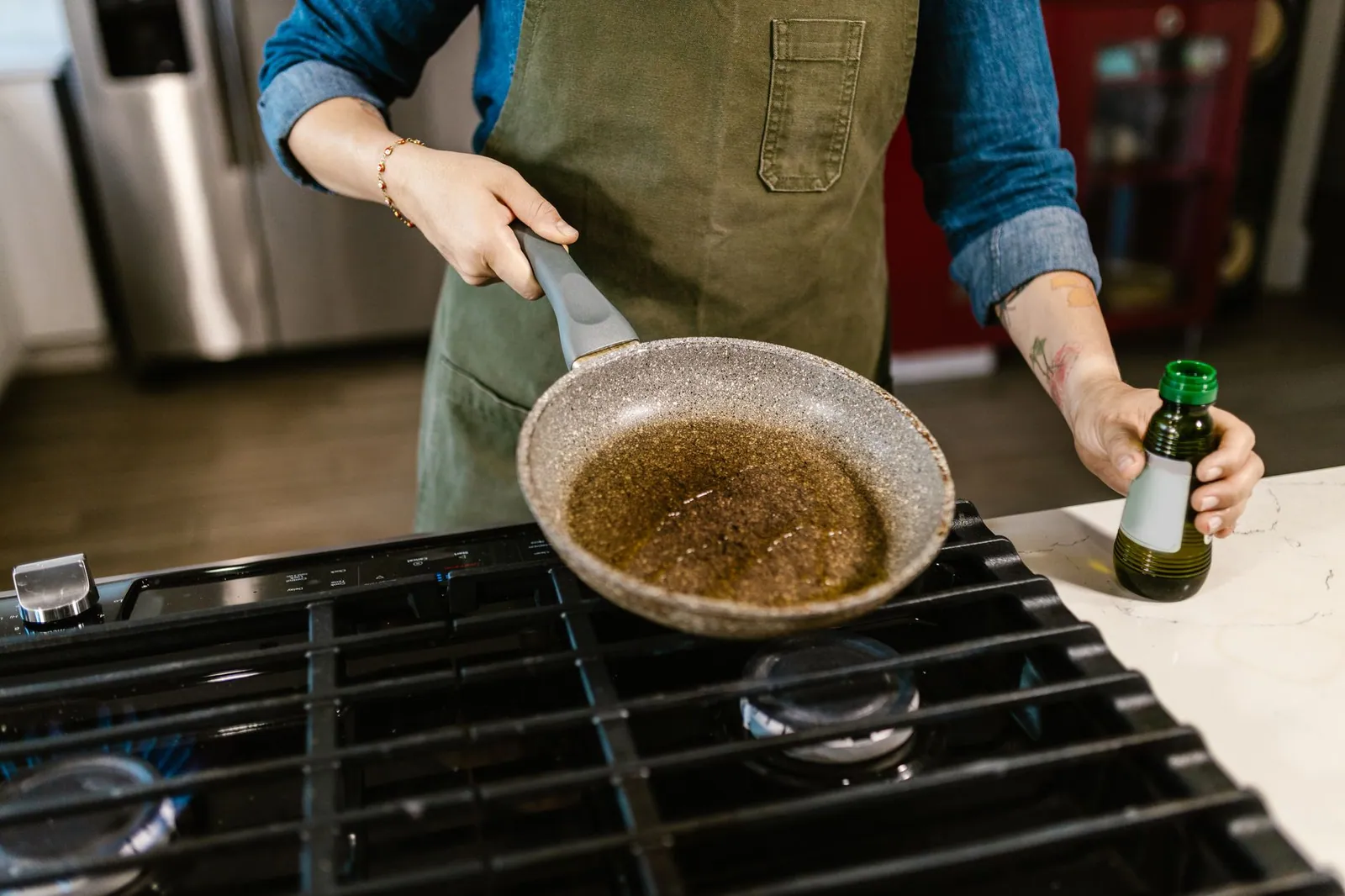
Is Olive Oil Suitable for Frying?
The most argued kitchen question. Smoke point is not the only measure; what really matters is how well the oil resists oxidation.
 Article
How Much Olive Oil a Day?
Olive oil being healthy does not make it unlimited. A practical look at portions, calories and the logic of replacement.
 Article
What Is the Mediterranean Diet?
Not a weight-loss plan but a pattern of eating. The basics of the Mediterranean way of eating, recognised by UNESCO, and where olive oil sits within it.