Antalya Tavşan Yüreği Olive: a registration named after the shape of its fruit
Registered in 2018. Fruit and stone are heart-shaped; picked green, its oil runs 9-20.2%, rising to 25% at black maturity.
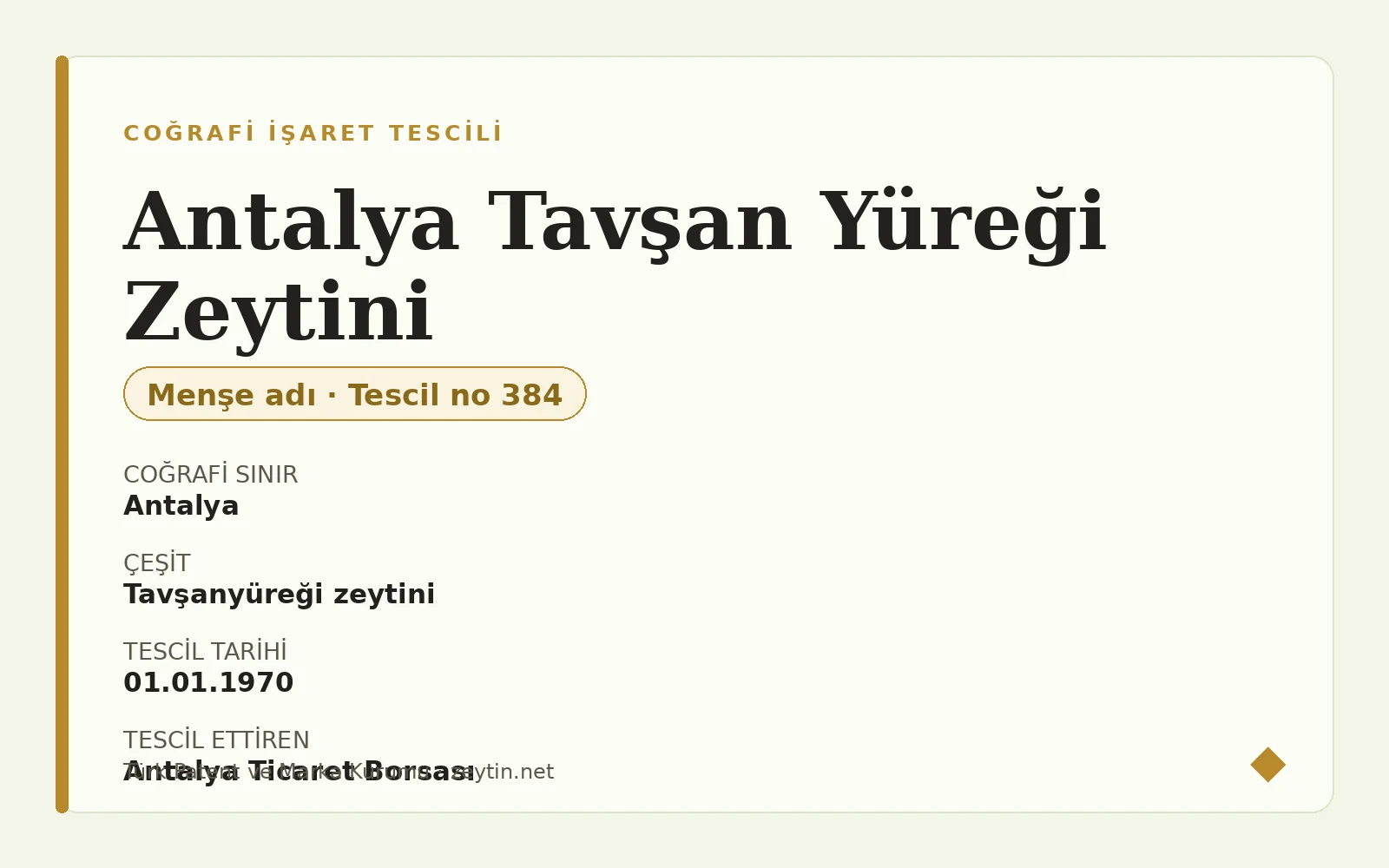
Olive cultivars usually carry the name of a place. Tavşan Yüreği — “hare's heart” — takes its name from the shape of its fruit, and the certificate records that shape as a distinguishing feature.
The record
| Registration no | 384 |
| Registration date | 06.09.2018 |
| Application | C2014/033 · 04.06.2014 |
| Type | Designation of origin |
| Registered by | Antalya Commodity Exchange |
| Area | The province of Antalya |
| Cultivar | Tavşanyüreği |
The shape
According to the certificate fruit and stone are oval, symmetric and heart-shaped, with the widest point towards the stalk. The distinguishing features listed are the ease with which the stone leaves the flesh, the very large fruit, and the lateral and longitudinal symmetry that gives the heart shape.
Why it is picked green
Mills usually press olives at black maturity. Antalya Tavşan Yüreği is picked before it blackens, and the consequence is measurable:
| Stage | Oil content |
|---|---|
| Green maturity (harvest) | 9 – 20.2% |
| Black maturity | reaches 25% |
The cultivar does not go to oil because it is picked before the oil accumulates; it is generally taken for brining.
Measured values
| Criterion | Value |
|---|---|
| Fruits per kilogram | 210 – 224 |
| Weight of 100 fruits | 370 – 608 g |
| Weight of 100 stones | 70 – 105 g |
| Flesh ratio | 77 – 88% |
| Stone ratio | 14 – 23% |
| Fruit length | 18.62 – 27.60 mm |
| Fruit width | 15.03 – 19.32 mm |
| Stone length | 13 – 17 mm |
| Stone width | 8 – 10 mm |
| Moisture (green maturity) | 65 – 68% |
| Dry matter in juice | 15.3% average |
At green maturity the flesh is firm — suited to table processing.
The tree
Growth is vigorous, forming a medium-sized, rounded crown with spreading, dense branches. Crown height is 5.5-6 m. Flowering shoots are grey-green, with internodes of medium length and medium pubescence. Leaves are medium-sized, long and narrow, elliptical-lanceolate, with a concave curvature along the long axis of the blade.
The cultivar is obtained from grafted plants or from rooted cuttings.
In short
Antalya Tavşan Yüreği Olive is a large, heart-shaped green table olive particular to Antalya. The instructive part of the certificate is that it gives oil content as two separate figures by harvest stage — showing what the same fruit becomes depending on when it is picked.
The production steps in the document
The registration describes production step by step. The document's own sequence:
1. Dikim Sonrası Bakım — Dikim sırasında ve bunu takip eden yıllarda yetiştirme tekniklerine özen gösterilir.
2. Sofralık Zeytin Hazırlığı — Dalından elle hasadı yapılıp kasalara toplanan zeytinler elekten geçirilerek boylaması yapılır.
3. Salamura Suyu Hazırlığı — Zeytinlerin acısının alınıp işlenerek yenilebilmesi ve korunması için içme suyu ile belirli oranlardaki kaya tuzu ya da deniz tuzu ve rengini, sertliğini koruması için limontuzu kullanımı (%4 oranında) ile salamura çözeltisi oluşturulur.
That this sequence is binding is what separates a geographical indication from a trade mark: a mark says who produced something, a geographical indication also sets down how it must be produced.
The cultivar behind it, measured
The registration is granted to a place, but the cultivar the definition rests on has measurable values:
| Property | Value |
|---|---|
| Meyve ağırlığı | 3,7-6,08 g |
| 1 kg’daki tane sayısı | 210-224 |
| Et oranı | %77-88 |
| Yağ oranı | %9-20,2 |
| Meyve boyu | 18,62-27,6 mm |
| Meyve eni | 15,03-19,32 mm |
| Çekirdek ağırlığı | 0,7-1,05 g |
At 9-20.2% the oil content sits mid-range; yield alone is not the argument here, aroma is.
Its place in Antalya's olive production
| Item | Value |
|---|---|
| Fruit production | 73,032 t |
| — for oil | 62,062 t |
| — for the table | 10,970 t |
| Olive oil production | 10,344 t |
| Trees | 4,873 thousand |
| Yield per tree | 15.0 kg |
85% of the province's fruit goes to oil — so this table-olive registration defines a niche outside the main flow.
One rating per visitor; you can change yours at any time. Ratings are real reader votes — no seeded or default scores.
Related
 Article
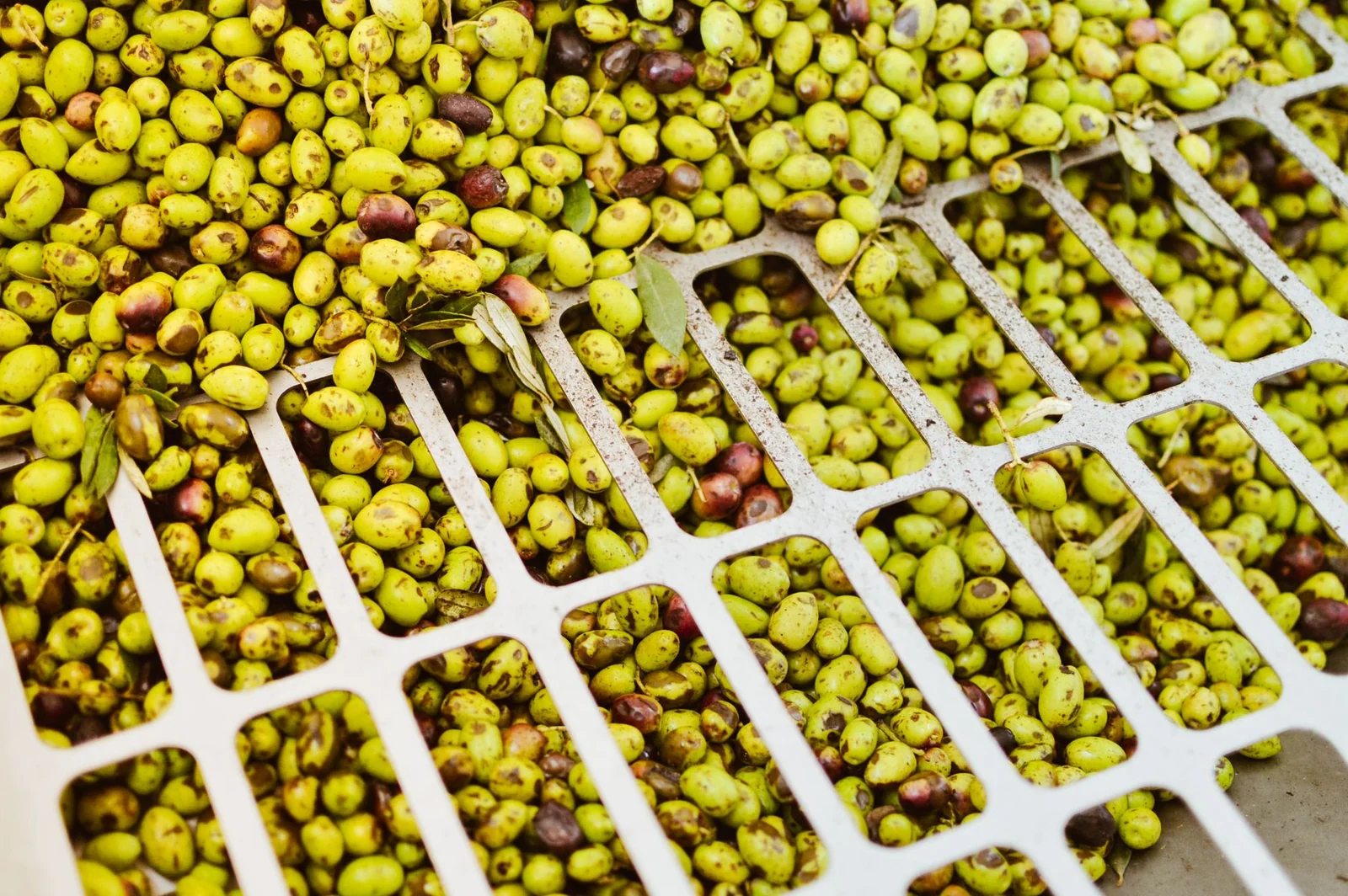
Which is Turkey's best-quality olive?
Quality criteria and measured values for Turkey's main olive varieties — fruit weight, oil content and intended use.
 Article
Akhisar Domat Olive: the specification behind stuffed olives
Registered in 2010. The certificate sets calibre separately for each product form — 170-290 for stuffed, 110-260 for cocktail. One cultivar, different sizes.
 Article
Olive and Olive Oil Glossary
Oleuropein, lampante, pomace, malaxation, designation of origin… Short, verifiable definitions of olive and olive oil terms.
 Article
The Edincik Su olive: the third black-table cultivar
One of the three cultivars widely processed as black table olives in Turkey, alongside Gemlik and Uslu. The cultivar of the Bandırma area.